Benzimidazole and Imidazole Derivatives
Benzimidazole is a compound consisting of a benzene ring fused to an imidazole ring, a five-membered structure containing two nitrogen atoms. Benzimidazole derivatives, such as albendazole, are known for their antiparasitic and antifungal activity, used in the treatment of parasitic infections and certain parasitic diseases in animals and humans. Imidazole, on the other hand, is a five-membered structure with two nitrogen atoms found in various biologically active compounds. Imidazole derivatives, such as metronidazole, have antimicrobial and antiparasitic properties. These compounds are also used in the pharmaceutical industry for treating bacterial infections, parasitic diseases, and some fungal infections, as well as in organic chemistry as catalysts.
At CymitQuimica, we offer high-purity benzimidazoles and imidazoles for research in medicinal chemistry, pharmacology, and biotechnology.
Found 10375 products of "Benzimidazole and Imidazole Derivatives"
Sort by
Purity (%)
0
100
|
0
|
50
|
90
|
95
|
100
2-[[(4-Chloro-3-methyl-2-pyridinyl)methyl]sulfinyl]-1H-benzimidazole
CAS:<p>2-[[(4-Chloro-3-methyl-2-pyridinyl)methyl]sulfinyl]-1H-benzimidazole (CAS No. 168167-42-8) is a synthetic compound that is used as an analytical reference standard for HPLC. It is also used in the study of drug metabolism, and it has been shown to induce natural oxidation in vitro. 2-[(4-Chloro-3-methylpyridinium)methylsulfinyl]-1Hbenzimidazole is an impurity found in pharmaceutical products that are synthesized from 1-(2,4,6trichlorophenyl)-3-[(4chloromethyl)phenyl]urea.</p>Formula:C14H12ClN3OSPurity:Min. 95 Area-%Color and Shape:Brown PowderMolecular weight:305.78 g/molOxybutynin EP impurity B
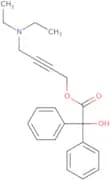
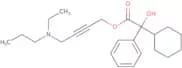
CAS:<p>Oxybutynin EP impurity B is a metabolite of oxybutynin and is a natural product. It is used as an analytical reference substance, to develop new drugs, and in pharmacopoeia in order to measure the purity of oxybutynin. The compound is synthesized by chemical synthesis and can be used as a standard for HPLC analysis.</p>Purity:Min. 95%Oxybutynin EP Impurity E
CAS:<p>Oxybutynin EP Impurity E is a research and development impurity standard that is used in the synthesis of Oxybutynin. It can be synthesized by reacting 2-chloro-4-nitroaniline with potassium tert-butoxide, followed by acetylation with acetic anhydride. The purity and structure of this compound have been verified by gas chromatography, mass spectrometry, and melting point analysis. This impurity standard has a CAS number of 1215677-72-7.<br>Oxybutynin EP Impurity E is used as a drug product for the treatment of overactive bladder, urinary incontinence, and painful bladder syndrome/interstitial cystitis. It also helps to reduce pain due to spinal cord injury or multiple sclerosis. <br>The pharmacopoeia name for this compound is 4-(2-Chloroethyl)-1H-imidazoleacetic acid. It has been found to be</p>Formula:C23H33NO3Purity:Min. 95%Molecular weight:371.51 g/molDonepezil benzyl bromide (donepezil impurity)
CAS:<p>Donepezil benzyl bromide is a by-product of donepezil hydrochloride, which is an industrially important drug used to treat Alzheimer's disease. It has been shown to be more efficient than its hydrochloride form. Donepezil benzyl bromide is a crystalline substance that is insoluble in water and soluble in organic solvents such as acetone or ethanol. The compound can be purified through recrystallization from an appropriate solvent.</p>Formula:C31H36BrNO3Purity:Min. 95%Molecular weight:550.53 g/molOxybutynin impurity C
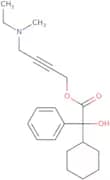
CAS:<p>Oxybutynin impurity C is a metabolite of the drug product Oxybutynin (CAS No. 1199574-70-3). It is an analytical standard for HPLC, and a natural impurity in the synthesis of Oxybutynin. This is a synthetic compound that has been shown to be metabolized through oxidation by cytochrome P450 enzymes, reduction by glutathione reductase, or conjugation with glucuronic acid. Oxybutynin impurity C has been used as an analytical reference material for drug development and research and development.</p>Purity:Min. 95%Carbamazepine impurity
CAS:<p>Carbamazepine is a drug that has been used to treat epileptic seizures and trigeminal neuralgia. Impurities in the drug are removed by using chromatographic methods, such as high-performance liquid chromatography (HPLC). The rotarod test is an animal model of motor coordination and balance that can be used to assess the effects of drugs on these functions. Carbamazepine impurities may cause depression and have an epileptic effect on animals. Chronic exposure to carbamazepine can lead to drug reactions and gene polymorphisms, which may alter the metabolism of the drug. Analytical methods for determining carbamazepine impurities include HPLC, gas chromatography mass spectrometry (GC-MS), and thin-layer chromatography (TLC).</p>Formula:C15H14N2OPurity:Min. 95%Molecular weight:238.28 g/molSolifenacin Impurity D
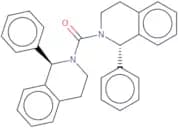
CAS:<p>Solifenacin Impurity D is a synthetic impurity of solifenacin. Solifenacin is an anti-cholinergic drug used to treat overactive bladder and urinary incontinence. The purity of this product is 99%. It is soluble in methanol, ethanol, chloroform, and acetone. Solifenacin Impurity D can be used as a reference material for analytical purposes or as an impurity standard in the development of new drugs.</p>Formula:C31H28N2OPurity:Min. 96 Area-%Color and Shape:White PowderMolecular weight:444.57 g/mol2,12-Dihydro-1,3-dimethyl-9-methoxy-12-thioxobenzo [4,5] pyrido [1,2-c] imidazo [1,2-a] imidazol-2-one
CAS:<p>2,12-Dihydro-1,3-dimethyl-9-methoxy-12-thioxobenzo [4,5] pyrido [1,2-c] imidazo [1,2-a] imidazol-2-one is a synthetic compound that has not been evaluated in humans. This compound is an impurity standard for the synthesis of an API. The purity of this compound is >98% and it has been shown to be stable under acidic conditions.</p>Formula:C16H13N3O2SPurity:Min. 95%Molecular weight:311.36 g/molAlbendazole sulfone
CAS:<p>Albendazole sulfone is a metabolite of the drug albendazole. It is used as an analytical standard to measure the concentration of albendazole in human plasma and urine samples. The concentration-time curve for albendazole sulfone can be determined using a nonlinear regression analysis, with the rate constant being calculated from the slope and intercept. This method has been shown to be accurate for predicting pharmacokinetic parameters in humans. Albendazole sulfone is also used as a probe in wastewater treatment studies, where it binds to colloidal gold particles that are used to visualize the removal of small particles by microorganisms.</p>Formula:C12H15N3O4SPurity:Min. 95 Area-%Color and Shape:PowderMolecular weight:297.33 g/mol(R)-1-Phenyl-1,2,3,4-tetrahydroisoquinoline
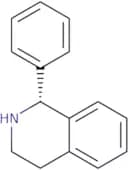
CAS:<p>(R)-1-Phenyl-1,2,3,4-tetrahydroisoquinoline is a chiral molecule with four stereocenters. It is synthesized by the reaction of sulfamic acid and cyclohexene in the presence of p-toluenesulfonic acid. The product formed is then dehydrogenated to produce (R)-1-phenyl-1,2,3,4-tetrahydroisoquinoline. This compound is soluble in organic solvents such as benzene and ethane and can be used as an acceptor for chiral stationary phases.</p>Formula:C15H15NPurity:Min. 95%Color and Shape:PowderMolecular weight:209.29 g/molPantoprazole N-oxide
CAS:<p>Pantoprazole is a proton pump inhibitor that inhibits the gastric acid secretion by blocking the hydrogen/potassium ATPase enzyme in the stomach. Pantoprazole N-oxide, a prodrug of pantoprazole, is converted to pantoprazole after administration and has been shown to be more stable than pantoprazole. It has been shown to have tissue-specific effects, with high concentrations found in gastrointestinal tissues such as the abomasum, ileum, and colon. Pantoprazole N-oxide is also found in plasma samples at low levels. This drug may be useful for ulceration because it prevents heartburn caused by excess stomach acid.</p>Formula:C16H15F2N3O5SPurity:Min. 95%Color and Shape:PowderMolecular weight:399.37 g/mol1-[[3-Methyl-4-(2,2,2-trifluoroethoxy)-2-pyridinyl]methyl]-2-[[[3-methyl-4-(2,2,2-trifluoroethoxy)-2-pyridinyl]methyl]sulfinyl]-1H-b enzimidazole
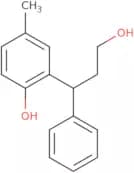
CAS:<p>1-[[3-Methyl-4-(2,2,2-trifluoroethoxy)-2-pyridinyl]methyl]-2-[[[3-methyl-4-(2,2,2-trifluoroethoxy)-2-pyridinyl]methyl]sulfinyl]-1H-b enzimidazole is an impurity of a drug product. It is a metabolite that has been shown to be present in human plasma and urine. This compound is synthetically produced and is not found in nature. It has been shown to have niche applications in both analytical chemistry and pharmacopoeia.</p>Formula:C25H22F6N4O3SPurity:Min. 95%Molecular weight:572.52 g/mol2-Hydroxy-5-methyl-γ-phenylbenzenepropanol
CAS:<p>2-Hydroxy-5-methylphenylbenzenepropanol is an aliphatic phenol that is used as a treatment for benzene poisoning. It is also used as a precursor to other compounds, such as the chlorides and alkylates of 2-hydroxy-5-methylphenylbenzenepropanol. This compound can be synthesized by reacting ethyl benzoylacetate with diisopropylamine in the presence of oxygen and chlorine gas. It is often immobilized using nutrients, l-tartaric acid, or cinnamic acid.</p>Formula:C16H18O2Purity:Min. 95%Molecular weight:242.31 g/mol1-Phenyl-1,2,3,4-tetrahydro-isoquinoline
CAS:<p>1-Phenyl-1,2,3,4-tetrahydro-isoquinoline is a synthetic compound which has been used as a lead compound for the development of drugs with dopamine β-hydroxylase inhibitory activity. In vitro studies have shown that 1-phenyl-1,2,3,4-tetrahydro-isoquinoline inhibits human serum dopamine β-hydroxylase and can be used to study the possible role of this enzyme in Parkinson's disease. This drug is racemized in the body and has been found to be effective against Parkinson's disease in rats. It is also an enantiomer that has industrial applications for the production of polyurethane foam insulation coatings.</p>Formula:C15H15NPurity:Min. 95%Color and Shape:PowderMolecular weight:209.29 g/mol(R,R)-Solifenacin succinate
CAS:<p>(R,R)-Solifenacin succinate is a pharmaceutical agent that acts as an antimuscarinic drug. It has been shown to be effective in wastewater treatment, where it was found to reduce the amount of solifenacin and optimised organic chemicals in the water. This drug has also been shown to have antagonist properties against the muscarinic receptor M3.</p>Formula:C23H26N2O2•C4H6O4Purity:Min. 95%Color and Shape:PowderMolecular weight:480.55 g/molAlbendazole impurity F
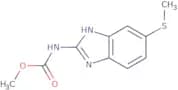
CAS:<p>Albendazole is an anti-helminthic drug that is structurally classified as a benzimidazole. It has been shown to be effective against a variety of helminths, including roundworms, pinworms, hookworms, and tapeworms. Albendazole impurity F is an analytical standard for the determination of albendazole in pharmaceutical products by HPLC. It also serves as a reference substance to establish the purity of drug products containing albendazole and its metabolites. Albendazole impurity F is not considered to be a metabolite of albendazole because it has been shown to be stable under acidic conditions and can be synthesized from other starting materials.</p>Formula:C10H11N3O2SPurity:Min. 95%Molecular weight:237.28 g/molOmeprazole Impurity 65
<p>Impurity 65 is an impurity of Omeprazole, a drug used to treat gastroesophageal reflux disease and peptic ulcer. Impurity 65 is a metabolite of Omeprazole that can be found in the drug product at a concentration up to 0.5%. It has been shown to have anti-inflammatory effects and can be used as a research and development standard for HPLC analysis. Impurity 65 is also used as an impurity standard in the USP pharmacopoeia and other pharmacopoeias around the world.</p>Formula:C17H17N3O4Purity:Min. 95%Molecular weight:327.33 g/mol2-(3-(1-Benzylpiperidin-4-yl)-2-oxopropyl)-4,5-dimethoxybenzoic acid
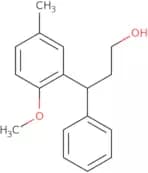
CAS:<p>2-(3-(1-Benzylpiperidin-4-yl)-2-oxopropyl)-4,5-dimethoxybenzoic acid is a synthetic compound that is being researched as a potential drug product. It is an impurity standard for HPLC and has been used in the past to develop drugs. The chemical structure of this compound closely resembles that of the natural metabolite 4,5-dimethoxybenzoic acid, which is found in plants such as thyme. 2-(3-(1-Benzylpiperidin-4-yl)-2-oxopropyl)-4,5-dimethoxybenzoic acid has shown to inhibit human cytochrome P450 enzymes, which may lead to serious side effects when taken orally.</p>Formula:C24H29NO5Purity:Min. 95%Molecular weight:411.49 g/mol2-Methoxy-5-methyl-γ-phenylbenzenepropanol
CAS:<p>2-Methoxy-5-methyl-gamma-phenylbenzenepropanol is a synthetic compound that is used as an intermediate in the synthesis of coumarin derivatives. Reaction with sulfonating agents produces sulfones, and reaction with borohydride reagents produces boronates. The synthesis of 2-methoxy-5-methyl-gamma-phenylbenzenepropanol can be accomplished by the reduction of diphenyl ethers with lithium aluminum hydride or borohydride. The reduction can also be carried out using lanthanum oxide and potassium borohydride. The reaction proceeds smoothly at room temperature in nonpolar solvents.<br>2-Methoxy-5-methyl-gamma-phenylbenzenepropanol reacts with chloride to produce the corresponding chlorides, which are useful intermediates for the synthesis of tolterodine tartrate, a drug used to treat urinary inc</p>Formula:C17H20O2Purity:Min. 95%Molecular weight:256.34 g/molN-Desalkyl itraconazole
CAS:<p>N-Desalkyl itraconazole is a triazole antifungal drug that belongs to the group of medicines. It is used in the treatment of systemic mycoses, including blastomycosis and histoplasmosis. N-Desalkyl itraconazole has been shown to inhibit the growth of fungi by interfering with their cell membranes and inhibiting their production of ergosterol. Calibration studies have shown that this drug binds to human liver microsomes and plasma proteins, as well as transporters such as P-glycoprotein. These interactions may influence its pharmacokinetics, which can be determined using a bioanalytical method.</p>Formula:C31H30Cl2N8O4Purity:Min. 95%Molecular weight:649.53 g/mol
![2-[[(4-Chloro-3-methyl-2-pyridinyl)methyl]sulfinyl]-1H-benzimidazole](/_next/image/?url=https%3A%2Fstatic.cymitquimica.com%2Fproducts%2F3D%2Fthumb-webp%2FIC21226.webp&w=3840&q=75)



![2,12-Dihydro-1,3-dimethyl-9-methoxy-12-thioxobenzo [4,5] pyrido [1,2-c] imidazo [1,2-a] imidazol-2…](/_next/image/?url=https%3A%2Fstatic.cymitquimica.com%2Fproducts%2F3D%2Fthumb-webp%2FID57925.webp&w=3840&q=75)

![1-[[3-Methyl-4-(2,2,2-trifluoroethoxy)-2-pyridinyl]methyl]-2-[[[3-methyl-4-(2,2,2-trifluoroethoxy)…](/_next/image/?url=https%3A%2Fstatic.cymitquimica.com%2Fproducts%2F3D%2Fthumb-webp%2FIM25689.webp&w=3840&q=75)