Benzimidazole and Imidazole Derivatives
Benzimidazole is a compound consisting of a benzene ring fused to an imidazole ring, a five-membered structure containing two nitrogen atoms. Benzimidazole derivatives, such as albendazole, are known for their antiparasitic and antifungal activity, used in the treatment of parasitic infections and certain parasitic diseases in animals and humans. Imidazole, on the other hand, is a five-membered structure with two nitrogen atoms found in various biologically active compounds. Imidazole derivatives, such as metronidazole, have antimicrobial and antiparasitic properties. These compounds are also used in the pharmaceutical industry for treating bacterial infections, parasitic diseases, and some fungal infections, as well as in organic chemistry as catalysts.
At CymitQuimica, we offer high-purity benzimidazoles and imidazoles for research in medicinal chemistry, pharmacology, and biotechnology.
Found 10345 products of "Benzimidazole and Imidazole Derivatives"
Sort by
Purity (%)
0
100
|
0
|
50
|
90
|
95
|
100
2-Methyl-3,4-dimethoxy pyridine hydrochloride
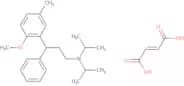
CAS:<p>2-Methyl-3,4-dimethoxy pyridine hydrochloride is an analytical standard that is used as a reference compound in the pharmaceutical industry to identify impurities in drug products. It also has a niche use as an API impurity and HPLC standard. 2-Methyl-3,4-dimethoxy pyridine hydrochloride is used as an intermediate for the synthesis of other drugs, including benzodiazepines and beta blockers. It is also used in research and development for its high purity. This chemical is natural or synthetic in origin but can be custom synthesized to meet specific requirements. 2-Methyl-3,4-dimethoxy pyridine hydrochloride also has CAS number 1210824-88-6.</p>Formula:C8H11NO2HClPurity:Min. 95%Molecular weight:189.64 g/mol2-Methoxy-5-methyL-N,N-bis(1-methyLethyL)-γ-phenyLbenzenepropanamine fumarate
CAS:<p>2-Methoxy-5-methyL-N,N-bis(1-methyLethyl)-gamma-phenyLbenzenepropanamine fumarate (DMXBPC) is an analgesic that has been shown to be a potent inhibitor of the cytosolic phospholipase A2 and is also cytotoxic. DMXBPC has significant cholinergic activity and can inhibit the synthesis of prostaglandins in the prostate gland. DMXBPC binds to the pyridine ring of DOPA and inhibits its conversion to dopamine. The enantiomers of DMXBPC have different effects on inhibition of phospholipase A2, with the (+) form being more potent than the (-) form. This is due to the fact that (+)DMXBPC binds more tightly to the enzyme than (-)DMXBPC does.</p>Formula:C23H33NOPurity:Min. 95%Molecular weight:339.51 g/molAlbendazole impurity F
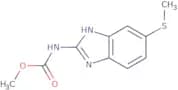
CAS:<p>Albendazole is an anti-helminthic drug that is structurally classified as a benzimidazole. It has been shown to be effective against a variety of helminths, including roundworms, pinworms, hookworms, and tapeworms. Albendazole impurity F is an analytical standard for the determination of albendazole in pharmaceutical products by HPLC. It also serves as a reference substance to establish the purity of drug products containing albendazole and its metabolites. Albendazole impurity F is not considered to be a metabolite of albendazole because it has been shown to be stable under acidic conditions and can be synthesized from other starting materials.</p>Formula:C10H11N3O2SPurity:Min. 95%Molecular weight:237.28 g/mol1-Phenyl-1,2,3,4-tetrahydro-isoquinoline
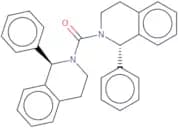
CAS:<p>1-Phenyl-1,2,3,4-tetrahydro-isoquinoline is a synthetic compound which has been used as a lead compound for the development of drugs with dopamine β-hydroxylase inhibitory activity. In vitro studies have shown that 1-phenyl-1,2,3,4-tetrahydro-isoquinoline inhibits human serum dopamine β-hydroxylase and can be used to study the possible role of this enzyme in Parkinson's disease. This drug is racemized in the body and has been found to be effective against Parkinson's disease in rats. It is also an enantiomer that has industrial applications for the production of polyurethane foam insulation coatings.</p>Formula:C15H15NPurity:Min. 95%Color and Shape:PowderMolecular weight:209.29 g/mol4-Methyl-2-[3-[(1-methylethyl)amino]-1-phenylpropyl]phenol
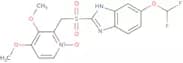
CAS:<p>4-Methyl-2-[3-[(1-methylethyl)amino]-1-phenylpropyl]phenol is a synthetic impurity standard that is used in the synthesis of drug products. This compound is also known as 4-methyl-2-[3-[(1-methylethyl)amino]-1-phenylpropyl]phenol and has a CAS number of 480432-14-2. It is used to verify the purity of drugs and drug products. 4MMPP can be found in pharmacopoeia, drug development, and metabolite studies. This compound is a research and development product for niche markets. 4MMPP can be obtained through custom synthesis or by synthesis.</p>Formula:C19H25NOPurity:Min. 95%Molecular weight:283.41 g/molPantoprazole sulfone N-oxide
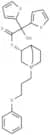
CAS:<p>Pantoprazole sulfone N-oxide is a prodrug that is converted to the active form pantoprazole in the stomach where it inhibits gastric acid secretion. Pantoprazole sulfone N-oxide has been shown to be genotoxic, and can cause polyvinyl chloride to degrade when stored together. Reconstituted solution of this drug should be used within 24 hours after reconstitution, as the chemical stability of this drug decreases rapidly. Validation studies have been conducted on different analytical methods for determining pantoprazole concentrations in reconstituted solutions, and these methods have been harmonized with those published by the United States Pharmacopeia (USP). The pump inhibitor activity of pantoprazole sulfone N-oxide has been demonstrated in dogs, and it is also useful for treating acid reflux disease in humans. Pantoprazole sulfone N-oxide is unstable at high temperatures (>25°C), so should not be refrigerated or</p>Formula:C16H15F2N3O6SPurity:Min. 95%Molecular weight:415.37 g/mol(1R,3S,5S)-3-(2-Hydroxy-2,2-di(thiophen-2-yl)acetoxy)-8,8-dimethyl-8-azabicyclo[3.2.1]oct-6-en bromide
CAS:<p>The human red blood cell (RBC) is a non-nucleated cell in the human blood that carries oxygen to the body's cells. The erythrocyte is characterized by its biconcave shape and its lack of organelles. It has a volume of about 80 fL, and a diameter of about 7 micrometers. The RBCs are produced in bone marrow from precursor cells that differentiate into erythroid progenitor cells. This drug binds to the hemoglobin molecules in the red blood cells and alters their shape, causing an increase in their deformability. In addition, this drug decreases the viscosity of the plasma outside of the red blood cell, which increases its extravascular sensitivity. Evaluations have been performed on low doses to evaluate sensitivities within capillaries with microscopy parameters such as magnification and resolution. These evaluations have shown that this drug can be used for quantifying changes in capillary size due to low doses (</p>Formula:C19H22NO3S2·BrPurity:Min. 95%Molecular weight:456.42 g/molSolifenacin Impurity D
CAS:<p>Solifenacin Impurity D is a synthetic impurity of solifenacin. Solifenacin is an anti-cholinergic drug used to treat overactive bladder and urinary incontinence. The purity of this product is 99%. It is soluble in methanol, ethanol, chloroform, and acetone. Solifenacin Impurity D can be used as a reference material for analytical purposes or as an impurity standard in the development of new drugs.</p>Formula:C31H28N2OPurity:Min. 96 Area-%Color and Shape:White PowderMolecular weight:444.57 g/mol1-Deoxy-4-O-β-D-galactopyranosyl-1-[(4R)-4-(2-methylpropyl)-2-oxo-1-pyrrolidinyl]-β-D-fructopyranose/furanose
CAS:<p>Lactose conjugate degradation product of pregabalin</p>Formula:C20H35NO11Purity:Min. 95%Color and Shape:PowderMolecular weight:465.49 g/molN-Desalkyl itraconazole
CAS:<p>N-Desalkyl itraconazole is a triazole antifungal drug that belongs to the group of medicines. It is used in the treatment of systemic mycoses, including blastomycosis and histoplasmosis. N-Desalkyl itraconazole has been shown to inhibit the growth of fungi by interfering with their cell membranes and inhibiting their production of ergosterol. Calibration studies have shown that this drug binds to human liver microsomes and plasma proteins, as well as transporters such as P-glycoprotein. These interactions may influence its pharmacokinetics, which can be determined using a bioanalytical method.</p>Formula:C31H30Cl2N8O4Purity:Min. 95%Molecular weight:649.53 g/molOxybutynin EP Impurity E
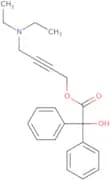
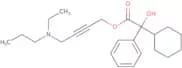
CAS:<p>Oxybutynin EP Impurity E is a research and development impurity standard that is used in the synthesis of Oxybutynin. It can be synthesized by reacting 2-chloro-4-nitroaniline with potassium tert-butoxide, followed by acetylation with acetic anhydride. The purity and structure of this compound have been verified by gas chromatography, mass spectrometry, and melting point analysis. This impurity standard has a CAS number of 1215677-72-7.<br>Oxybutynin EP Impurity E is used as a drug product for the treatment of overactive bladder, urinary incontinence, and painful bladder syndrome/interstitial cystitis. It also helps to reduce pain due to spinal cord injury or multiple sclerosis. <br>The pharmacopoeia name for this compound is 4-(2-Chloroethyl)-1H-imidazoleacetic acid. It has been found to be</p>Formula:C23H33NO3Purity:Min. 95%Molecular weight:371.51 g/molN,N-Dimethylaminoethyl-a-(1-Hydroxycyclopentyl)phenylacetate hydrochloride
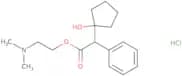
CAS:Controlled Product<p>N,N-Dimethylaminoethyl-a-(1-Hydroxycyclopentyl)phenylacetate hydrochloride (DMAEA) is a drug that is used as an ophthalmic. It has been shown to be safe and effective in patients with chronic open angle glaucoma, and it may also have some efficacy for the treatment of other conditions such as uveitis and retinal detachment. DMAEA is thought to work by binding to the DNA in the eye’s optic nerve cells and blocking the production of leukotrienes. This drug has also been shown to have anti-inflammatory properties.</p>Formula:C17H26ClNO3Purity:Min. 95%Color and Shape:PowderMolecular weight:327.85 g/mol6-Methyl-4-phenyl-3,4-dihydro-1-benzopyran-2-one
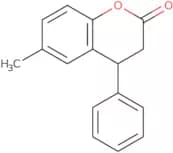
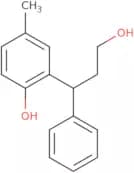
CAS:<p>6-Methyl-4-phenyl-3,4-dihydro-1-benzopyran-2-one is an analog of the natural product zearalenone, which can be used as an acid catalyst for the synthesis of various pharmaceuticals. It has a linear range and is structurally similar to a number of other analogs. The chloride ion is involved in the optimization of the extraction parameters and can be replaced by other c1-4 alkyl groups. 6-Methyl-4-phenyl-3,4-dihydro-1 -benzopyran 2 one is typically prepared using a preparative high performance liquid chromatography technique that involves dehydration.</p>Formula:C16H14O2Purity:Min. 95%Molecular weight:238.28 g/mol2-Hydroxy-5-methyl-γ-phenylbenzenepropanol
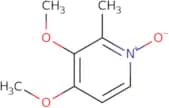
CAS:<p>2-Hydroxy-5-methylphenylbenzenepropanol is an aliphatic phenol that is used as a treatment for benzene poisoning. It is also used as a precursor to other compounds, such as the chlorides and alkylates of 2-hydroxy-5-methylphenylbenzenepropanol. This compound can be synthesized by reacting ethyl benzoylacetate with diisopropylamine in the presence of oxygen and chlorine gas. It is often immobilized using nutrients, l-tartaric acid, or cinnamic acid.</p>Formula:C16H18O2Purity:Min. 95%Molecular weight:242.31 g/mol3,4-Dimethoxy-2-methylpyridine-N-oxide
CAS:<p>3,4-Dimethoxy-2-methylpyridine-N-oxide is a potent inhibitor of somatostatin, which is known to play a role in the regulation of cancer cell growth and apoptosis. This compound has been shown to inhibit the activity of human kinases, including those involved in tumor cell proliferation. 3,4-Dimethoxy-2-methylpyridine-N-oxide is an anticancer agent that can be used to treat various types of cancer. It has also been found to have inhibitory effects on urine quetiapine and Chinese hamster ovary cells. The compound is a potent analog of kinase inhibitors and can be used as a lead compound for developing new drugs with anticancer properties.</p>Formula:C8H11NO3Purity:Min. 95%Molecular weight:169.18 g/molAmino albendazole
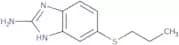
CAS:<p>Albendazole is a sulfoxide anthelmintic drug that is used to treat worm infections in livestock and pets. Albendazole inhibits the synthesis of the parasitic cell membrane, which disrupts the integrity of the cell and leads to death. The analytical method for measuring albendazole includes extraction with hexane followed by analysis using gas chromatography. In humans, albendazole may be used to treat cancer, especially when it occurs in cavities or fatty tissues. It can also be used as a treatment for certain types of parasitic infections, such as toxoplasmosis, amebiasis, and cysticercosis. Albendazole is absorbed well after oral administration and plasma concentrations are proportional to dosage levels. The most common side effects are nausea and headache.</p>Formula:C10H13N3SPurity:Min. 95%Molecular weight:207.3 g/molSolifenacin EP impurity F succinate
CAS:<p>Solifenacin is an anti-cholinergic drug that has been shown to have a potent antagonistic effect on muscarinic receptors. It is used in the treatment of overactive bladder, urinary incontinence, and irritable bowel syndrome. Solifenacin succinate is a metabolite of solifenacin and it has been found to be an antagonist of M3 muscarinic receptors. The presence of solifenacin and its metabolites in wastewater can interfere with treatment processes by inhibiting the removal of other organic chemicals such as tamsulosin hydrochloride. Optimisation studies for solifenacin production have shown that famotidine can be used as a process aid to reduce solifenacin impurities. Famotidine is also an antagonist of M3 muscarinic receptors and can be used to remove solifenacin from wastewater. Analytes detected in wastewater samples include solifenacin, famot</p>Formula:C27H32N2O6Purity:Min. 95%Molecular weight:480.55 g/mol2-[[(4-Chloro-3-methyl-2-pyridinyl)methyl]sulfinyl]-1H-benzimidazole
CAS:<p>2-[[(4-Chloro-3-methyl-2-pyridinyl)methyl]sulfinyl]-1H-benzimidazole (CAS No. 168167-42-8) is a synthetic compound that is used as an analytical reference standard for HPLC. It is also used in the study of drug metabolism, and it has been shown to induce natural oxidation in vitro. 2-[(4-Chloro-3-methylpyridinium)methylsulfinyl]-1Hbenzimidazole is an impurity found in pharmaceutical products that are synthesized from 1-(2,4,6trichlorophenyl)-3-[(4chloromethyl)phenyl]urea.</p>Formula:C14H12ClN3OSPurity:Min. 95 Area-%Color and Shape:Brown PowderMolecular weight:305.78 g/mol2,12-Dihydro-1,3-dimethyl-8-methoxy-12-thioxobenzo [4,5] pyrido [1,2-c] imidazo [1,2-a] imidazol-2-one
CAS:<p>2,12-Dihydro-1,3-dimethyl-8-methoxy-12-thioxobenzo [4,5] pyrido [1,2-c] imidazo [1,2-a] imidazol-2-one is a metabolite of the drug 2-[2-(4,5,-dihydroimidazo[1,2a]imidazol -2(3H)-yl)ethoxy]-N-(methylsulfonyl)benzamide. It can be used as an impurity standard for the manufacture of drugs and as a research chemical.</p>Formula:C16H13N3O2SPurity:Min. 95%Molecular weight:311.36 g/mol(4R)-1-(4-O-b-D-Galactopyranosyl-b-D-glucopyranosyl)-4-(2-methylpropyl)-2-pyrrolidinone
CAS:<p>(4R)-1-(4-O-b-D-Galactopyranosyl-b-D-glucopyranosyl)-4-(2-methylpropyl)-2-pyrrolidinone is a synthetic, impurity standard and research and development compound. (4R)-1-(4-O-b-D-Galactopyranosyl-b-D-glucopyranosyl)-4-(2-methylpropyl)-2pyrrolidinone is used as an analytical reference in the synthesis of other compounds. It is also used in drug development for the treatment of tuberculosis. This product has a high purity level and is pharmacopoeia grade.</p>Formula:C20H35NO11Purity:Min. 95%Molecular weight:465.49 g/mol2-[[(4-Methoxy-3-methyl-2-pyridinyl)methyl]sulfinyl]-1H-benzimidazole
CAS:<p>2-[(4-Methoxy-3-methyl-2-pyridinyl)methyl]sulfinyl]-1H-benzimidazole is a synthetic, impurity standard that is used in the synthesis of drug products. It has been shown to inhibit the metabolism of drugs and may be used as a marker for drug metabolism. This compound may also be used as a marker in analytical studies to assess the purity of a drug product. 2-[(4-Methoxy-3-methyl-2-pyridinyl)methyl]sulfinyl]-1H-benzimidazole has not been evaluated for safety or efficacy.</p>Formula:C15H15N3O2SPurity:Min. 95%Molecular weight:301.36 g/molOxybutynin EP impurity B
CAS:<p>Oxybutynin EP impurity B is a metabolite of oxybutynin and is a natural product. It is used as an analytical reference substance, to develop new drugs, and in pharmacopoeia in order to measure the purity of oxybutynin. The compound is synthesized by chemical synthesis and can be used as a standard for HPLC analysis.</p>Purity:Min. 95%Desdifluoromethoxy hydroxy pantoprazole
CAS:<p>Desdifluoromethoxy hydroxy pantoprazole is a synthetic compound that is used as an impurity standard for the drug product Pantoprazole. It has a purity of ≥98% and is stable under ambient conditions. Desdifluoromethoxy hydroxy pantoprazole is not active on its own, but it is a metabolite of pantoprazole. It can be used to study the metabolism of pantoprazole.</p>Formula:C15H15N3O4SPurity:Min. 95%Molecular weight:333.36 g/molEthyl (S)-1-phenyl-1,2,3,4-tetrahydro-2-isoquinolinecarboxylate
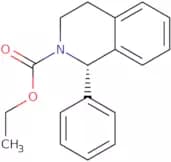
CAS:<p>Ethyl (S)-1-phenyl-1,2,3,4-tetrahydro-2-isoquinolinecarboxylate is an analytical standard used to identify impurities in drug products. It is a metabolite of the drug product and has been shown to be safe for human consumption. The compound is a synthetic chemical that is not found naturally in the environment. CAS No. 180468-42-2</p>Formula:C18H19NO2Purity:Min. 95%Molecular weight:281.35 g/molPantoprazole impurity
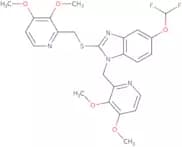
CAS:<p>Pantoprazole is a proton pump inhibitor. It is used in the treatment of gastroesophageal reflux disease and other conditions involving excessive stomach acid production. The chemical name for Pantoprazole impurity is (E)-1-(4-chlorophenyl)ethyl-3-[(pyrrolidin-2-yl)oxy]propanediol. This substance is an enantiomer of pantoprazole, which has been determined to be inactive. Pantoprazole impurity can be identified by its melting point, crystallizing habit, and optical rotation. Active carbon filtration can be used to remove this substance from the final product.</p>Formula:C24H24F2N4O5SPurity:Min. 95%Molecular weight:518.53 g/molZolazepam
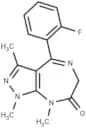
CAS:<p>Zolazepam (CI 716), a pyrazole and diazazone derivative, is a benzodiazepine-like veterinary anesthetic.</p>Formula:C15H15FN4OColor and Shape:SolidMolecular weight:286.3(R,R)-Glycopyrrolate
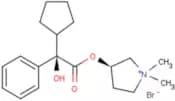
CAS:<p>(R,R)-Glycopyrrolate is an agent of anticholinergic, has the ability to reduce the frequency of drooling in vivo with developmental disabilities.</p>Formula:C19H28BrNO3Purity:98%Color and Shape:SolidMolecular weight:398.34(S)-4-(2-Methylpropyl)-2-pyrrolidinone
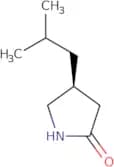
CAS:Controlled Product<p>(S)-4-(2-Methylpropyl)-2-pyrrolidinone is a lactam that has been synthesized in the laboratory. It is an organic solvent that is used in the synthesis of other compounds. The compound has a potential for producing impurities, such as isopropyl and phosphite, during synthesis. (S)-4-(2-Methylpropyl)-2-pyrrolidinone can be synthesized by reacting 2-methylpropionic acid with one equivalent of methylamine. This reaction takes place in an organic solvent and requires kinetic control to avoid side reactions.</p>Formula:C8H15NOPurity:Min. 95%Color and Shape:PowderMolecular weight:141.21 g/molOmeprazole Sodium
CAS:<p>Omeprazole Sodium is a proton pump inhibitor(PPI) and suppresses gastric acid secretion.</p>Formula:C17H18N3NaO3SPurity:99.84%Color and Shape:Clear In WaterMolecular weight:367.4Prochloraz
CAS:<p>Prochloraz: broad-spectrum imidazole fungicide; blocks placental aromatase (IC50=40nM), estrogen/androgen receptors; activates aryl hydrocarbon receptors.</p>Formula:C15H16Cl3N3O2Purity:99.75% - 99.79%Color and Shape:Colorless SolidMolecular weight:376.67Metopimazine
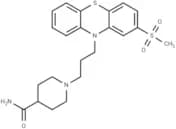
CAS:<p>Metopimazine is a selective and peripherally restricted dopamine D3 and D2 receptors antagonist.</p>Formula:C22H27N3O3S2Purity:98%Color and Shape:SolidMolecular weight:445.6Abeprazan
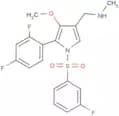
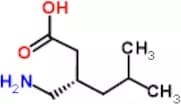
CAS:<p>Abeprazan is a potassium-competitive acid blocker targeting acid-related diseases without acid activation.</p>Formula:C19H17F3N2O3SPurity:98%Color and Shape:SolidMolecular weight:410.41Pregabalin CV
CAS:Controlled Product<p>Amino-acids and their esters other than those containing more than one kind of oxygen function, excluding aromatic amino-acids, nesoi</p>Formula:C8H17NO2Color and Shape:Off-White PowderMolecular weight:159.12593Pantoprazole sulphide
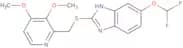
CAS:<p>Pantoprazole sulphide is a benzimidazole derivative that has been synthesized in an asymmetric synthesis. The purified compound was characterized by its nmr spectra, which showed the presence of the carboethoxy group and the chromatographic method. The compound belongs to a family of inhibitors known as benzimidazole derivatives and has shown inhibitory activity against a number of bacterial species including Staphylococcus aureus, Clostridium perfringens, and Mycobacterium tuberculosis. Pantoprazole sulphide has been used as an inhibitor to treat gastric acid pump disorders such as Zollinger-Ellison syndrome. It is also used for treating pathological conditions such as duodenal ulcers or gastroesophageal reflux disease.</p>Formula:C16H15F2N3O3SPurity:Min. 95%Color and Shape:PowderMolecular weight:367.37 g/molIsopropyl 2-hydroxy-2-phenylacetate
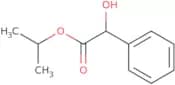
CAS:<p>Isopropyl 2-hydroxy-2-phenylacetate is an inorganic acid that is used as a solvent and as a reagent for sample preparation. It has been shown to be able to dissolve hydroxy methyl cellulose, which is a common component of membranes. In addition, it can be used as an electrospray ionization source and has been shown to have a phase transition temperature of -24 degrees Celsius. Isopropyl 2-hydroxy-2-phenylacetate has also been shown to inhibit the action of cholic acid on kinetics in high-performance liquid chromatography. This chemical compound also contains an ethyl group, which may be due to its derivation from acetone.</p>Formula:C11H14O3Purity:Min. 95%Molecular weight:194.23 g/mol5,6-Dimethoxy-2-(4-pyridylmethylene)-1-indanone
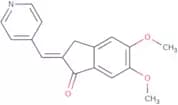
CAS:<p>5,6-Dimethoxy-2-(4-pyridylmethylene)-1-indanone is a hydroxide that is obtained by the reflux of 4-hydroxybenzaldehyde with an alkali metal hydroxide. It can be used in the synthesis of benzylated donepezil hydrochloride. 5,6-Dimethoxy-2-(4-pyridylmethylene)-1-indanone condenses with pyridinecarboxaldehyde to produce 1-(4'-pyridylmethylene)indane. This reaction produces a mixture of products, including benzoic acid and the indane derivative.</p>Formula:C17H15NO3Purity:Min. 95%Molecular weight:281.31 g/molMorinidazole
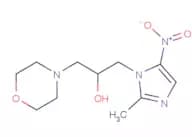
CAS:<p>Morinidazole has antibacterial properties for researching anaerobic infections like appendicitis and PID.</p>Formula:C11H18N4O4Purity:98.92% - 99.82%Color and Shape:SolidMolecular weight:270.29(1-Nitroethyl)benzene
CAS:<p>(1-Nitroethyl)benzene is a chloride that belongs to the family of muscarinic receptor antagonists. Its amide form is used in medicine as an antiviral agent, and it has been shown to be effective against HIV. (1-Nitroethyl)benzene also binds to the adenosine A3 receptor, which inhibits autoimmune diseases by preventing the proliferation of lymphocytes. The nitro group on this molecule can undergo a number of chemical reactions, including addition with alkylsulfonyl chloride or nitration with nitric acid.</p>Formula:C8H9NO2Purity:Min. 95%Color and Shape:PowderMolecular weight:151.16 g/molTroriluzole
CAS:<p>Troriluzole is a glutamate modulator with anticancer activity and is used in the study of spinocerebellar ataxia.</p>Formula:C15H16F3N5O4SPurity:97.14%Color and Shape:SolidMolecular weight:419.38(S)-Rabeprazole sodium
CAS:<p>(S)-Rabeprazole sodium is an anticancer drug that acts as a kinase inhibitor. It is an analog of Rabeprazole and has been shown to inhibit the growth of cancer cells in vitro and in vivo. (S)-Rabeprazole sodium inhibits the activity of kinases, which are enzymes that play a key role in cell signaling pathways. This inhibition leads to apoptosis, or programmed cell death, in cancer cells. (S)-Rabeprazole sodium has been tested against various types of cancer, including Chinese hamster ovary cells and tumor xenografts in mice. It has also been shown to inhibit elastin degradation, which is important for preventing metastasis of cancer cells. (S)-Rabeprazole sodium may be a promising candidate for the development of new anticancer drugs that target specific kinases and proteins involved in cancer cell growth and survival.</p>Formula:C18H21N3O3S•NaPurity:Min. 95%Molecular weight:382.43 g/molOrphenadrine
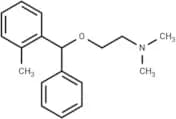
CAS:<p>Orphenadrine is a noncompetitive N-methyl-D-aspartate (NMDA) receptor antagonist that inhibits clonal HERG channels in a concentration-dependent manner,</p>Formula:C18H23NOPurity:98.91% - 99.11%Color and Shape:SolidMolecular weight:269.38L-163491
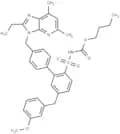
CAS:<p>L-163491: partial agonist at angiotensin II receptor type 1, less so at type 2, used in research, may treat viral lung inflammation.</p>Formula:C36H40N4O5SColor and Shape:SolidMolecular weight:640.79Aclidinium
CAS:<p>Aclidinium, a dual-action compound, serves as a long-acting muscarinic antagonist and a β2-adrenoceptor (β2-AR) agonist, exhibiting bronchodilator properties. It effectively reduces lung hyperinflation, enhances lung function, and prolongs exercise endurance time. This compound is commonly utilized in studies focusing on chronic obstructive pulmonary disease (COPD).</p>Formula:C26H30NO4S2Color and Shape:SolidMolecular weight:484.65rac-4,5-Dehydropregabalin (3-(aminomethyl)-5-methylhex-4-enoic acid)
CAS:<p>Amino-acids and their esters other than those containing more than one kind of oxygen function, excluding aromatic amino-acids, nesoi</p>Formula:C8H15NO2Color and Shape:Off-White SolidMolecular weight:157.11028Isobutylglutarmonoamide (R-isomer) ((R)-3-(2-amino-2-oxoethyl)-5-methylhexanoic acid)
CAS:<p>Acyclic amides (including acyclic carbamates) and their derivatives and salts thereof, nesoi</p>Formula:C9H17NO3Color and Shape:Off-White SolidMolecular weight:187.12084Desmethoxy Omeprazole (2-(((3,5-dimethylpyridin-2-yl)methyl)sulfinyl)-5-methoxy-1H-benzo[d]imidazole; 2-[(RS)-[(3,5-Dimethylpyridin-2-yl)methyl]sulfinyl]-5-methoxy-1H-benzimidazole) (DISCONTINUED)
CAS:<p>Compounds containing an unfused pyridine ring in the structure, nesoi</p>Formula:C16H17N3O2SColor and Shape:White Off-White SolidMolecular weight:315.10415Donepezil Quaternary Salt (Donepezilbenzyl Bromide) (1,1-dibenzyl-4-((5,6-dimethoxy-1-oxo-2,3-dihydro-1H-inden-2-yl)methyl)piperidin-1-ium, bromide; 1,1-dibenzyl-4-[(5,6-dimethoxy-1-oxoindan-2-yl)methyl]piperidinium, bromide)
CAS:<p>Compounds containing an unfused pyridine ring in the structure, nesoi</p>Formula:C31H36BrNO3Color and Shape:White Off-White SolidMolecular weight:549.18786Pregabalin Lactose Conjugate Impurity
Formula:C20H35NO11Color and Shape:Off-White SolidMolecular weight:465.50Ref: 4Z-P-2719
Discontinued productRef: 4Z-D-0331
Discontinued productRef: 4Z-I-070014
Discontinued product



![4-Methyl-2-[3-[(1-methylethyl)amino]-1-phenylpropyl]phenol](/_next/image/?url=https%3A%2Fstatic.cymitquimica.com%2Fproducts%2F3D%2Fthumb-webp%2FIM27501.webp&w=3840&q=75)
![(1R,3S,5S)-3-(2-Hydroxy-2,2-di(thiophen-2-yl)acetoxy)-8,8-dimethyl-8-azabicyclo[3.2.1]oct-6-en bro…](/_next/image/?url=https%3A%2Fstatic.cymitquimica.com%2Fproducts%2F3D%2Fthumb-webp%2FIH42882.webp&w=3840&q=75)
![1-Deoxy-4-O-β-D-galactopyranosyl-1-[(4R)-4-(2-methylpropyl)-2-oxo-1-pyrrolidinyl]-β-D-fructopyrano…](/_next/image/?url=https%3A%2Fstatic.cymitquimica.com%2Fproducts%2F3D%2Fthumb-webp%2FID63811.webp&w=3840&q=75)


![2-[[(4-Chloro-3-methyl-2-pyridinyl)methyl]sulfinyl]-1H-benzimidazole](/_next/image/?url=https%3A%2Fstatic.cymitquimica.com%2Fproducts%2F3D%2Fthumb-webp%2FIC21226.webp&w=3840&q=75)
![2,12-Dihydro-1,3-dimethyl-8-methoxy-12-thioxobenzo [4,5] pyrido [1,2-c] imidazo [1,2-a] imidazol-2…](/_next/image/?url=https%3A%2Fstatic.cymitquimica.com%2Fproducts%2F3D%2Fthumb-webp%2FID57924.webp&w=3840&q=75)

![2-[[(4-Methoxy-3-methyl-2-pyridinyl)methyl]sulfinyl]-1H-benzimidazole](/_next/image/?url=https%3A%2Fstatic.cymitquimica.com%2Fproducts%2F3D%2Fthumb-webp%2FIM21228.webp&w=3840&q=75)