Benzimidazole and Imidazole Derivatives
Benzimidazole is a compound consisting of a benzene ring fused to an imidazole ring, a five-membered structure containing two nitrogen atoms. Benzimidazole derivatives, such as albendazole, are known for their antiparasitic and antifungal activity, used in the treatment of parasitic infections and certain parasitic diseases in animals and humans. Imidazole, on the other hand, is a five-membered structure with two nitrogen atoms found in various biologically active compounds. Imidazole derivatives, such as metronidazole, have antimicrobial and antiparasitic properties. These compounds are also used in the pharmaceutical industry for treating bacterial infections, parasitic diseases, and some fungal infections, as well as in organic chemistry as catalysts.
At CymitQuimica, we offer high-purity benzimidazoles and imidazoles for research in medicinal chemistry, pharmacology, and biotechnology.
Found 10355 products of "Benzimidazole and Imidazole Derivatives"
Sort by
Purity (%)
0
100
|
0
|
50
|
90
|
95
|
100
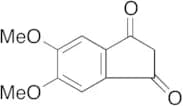
5,6-Dimethoxyindane-1,3-dione
CAS:Controlled ProductFormula:C11H10O4Color and Shape:NeatMolecular weight:206.191-(1H-Benzo[d]imidazol-2-yl)-3-methyl-4-oxo-1,4-dihydropyridine-2-carboxylic acid (>75%)
CAS:<p>Impurity Rabeprazole EP Impurity C<br>Applications 1-(1H-Benzo[d]imidazol-2-yl)-3-methyl-4-oxo-1,4-dihydropyridine-2-carboxylic acid (>75%) (Rabeprazole EP Impurity C) is a Rabeprazole (R070500) impurity. A degradation product formed in stressed tablets of Rabeprazole sodium.<br>References Kommanaboyina, B., et al.: Drug Dev. Ind. Pharm., 25, 857 (1999), Carswel, C., et al.: Drugs, 61, 2327 (2001), Garcia, C., et al.: J. Pharm. Biomed. Anal., 46, 88 (2008),<br></p>Formula:C14H11N3O3Purity:>75%Color and Shape:NeatMolecular weight:269.26Isopropyl Itraconazole
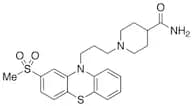
CAS:Controlled ProductFormula:C34H36Cl2N8O4Color and Shape:NeatMolecular weight:691.61Metopimazine
CAS:<p>Applications Metopimazine (MPZ) is used to prevent emesis during chemotherapies. Antiemetic.<br>References Catz, P., et al.: Int. J. Pharm., 58, 93 (1990), Sato, K., et al.: J. Pharm. Sci., 80, 104 (1991), Herrstedt, J., et al.: Cancer Chemother. Pharmacol., 33, 53 (1996), Sigsgaard, T., et al.: J. Clin. Onc., 19, 2091 (2001),<br></p>Formula:C22H27N3O3S2Color and Shape:Off White SolidMolecular weight:445.6010-Methoxy-5H-dibenz[b,f]azepine-5-carbonyl chloride
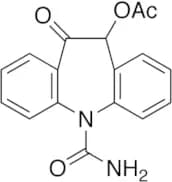
CAS:Controlled ProductFormula:C16H12ClNO2Color and Shape:NeatMolecular weight:286.0010-Acetyloxy Oxcarbazepine
CAS:Controlled Product<p>Applications An intermediate in the preparation of Carbamazepine metabolites.<br>References Heckendorn, R., et al.: Helv. Chimica Acta, 70, 1955 (1987),<br></p>Formula:C17H14N2O4Color and Shape:NeatMolecular weight:310.30Nitroguanidine (Wetted with water >20%)
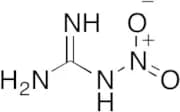
CAS:Controlled Product<p>Applications Nitroguanidine is used in the prediction of heats of detonation of energetic compounds from their molecular structure. It is also used in the synthetic preparation of imidacloprid-d4 (I274992), which is a neonicotinoid.<br> E0<br>References Keshavarz, M.H., et al.: Propellant, Explosives, Pyrotechnics, 37, 93 (2012); Chauzat, M., et al.: Env. Entomol., 38, 514 (2009), Patial, A., et al.: Env. Ecol., 27, 320 (2009), Fernandez-Bayo, J., et al.: J. Agric., Food Chem., 57, 5435 (2009), Tomizawa, M., et al.: J. Med. Chem., 52, 3735 (2009), Chem. and Eng. News 90: 10 (2012)<br></p>Formula:CH4N4O2Color and Shape:White To Off-WhiteMolecular weight:104.07N-Desethyl N-Methyl rac-Rivastigmine
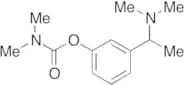
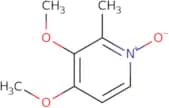
CAS:<p>Impurity Rivastigmin USP Related Compound B<br>Applications N-Desethyl N-Methyl rac-Rivastigmine (Rivastigmin USP Related Compound B) is an impurity in the synthesis of Rivastigmine (R541000) a brain selective acetylcholinesterase inhibitor. Nootropic.<br>References Rosler, M., et al.: Brit. Med. J., 318, 633 (1999), Enz, A., et al.: Prog. Brain Res., 98, 431 (1993),<br></p>Formula:C13H20N2O2Color and Shape:Clear ColourlessMolecular weight:236.313,4-Dimethoxy-2-methylpyridine-N-oxide
CAS:<p>3,4-Dimethoxy-2-methylpyridine-N-oxide is a potent inhibitor of somatostatin, which is known to play a role in the regulation of cancer cell growth and apoptosis. This compound has been shown to inhibit the activity of human kinases, including those involved in tumor cell proliferation. 3,4-Dimethoxy-2-methylpyridine-N-oxide is an anticancer agent that can be used to treat various types of cancer. It has also been found to have inhibitory effects on urine quetiapine and Chinese hamster ovary cells. The compound is a potent analog of kinase inhibitors and can be used as a lead compound for developing new drugs with anticancer properties.</p>Formula:C8H11NO3Purity:Min. 95%Molecular weight:169.18 g/mol1-Deoxy-4-O-β-D-galactopyranosyl-1-[(4R)-4-(2-methylpropyl)-2-oxo-1-pyrrolidinyl]-β-D-fructopyranose/furanose
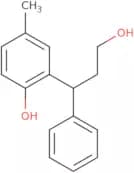
CAS:<p>Lactose conjugate degradation product of pregabalin</p>Formula:C20H35NO11Purity:Min. 95%Color and Shape:PowderMolecular weight:465.49 g/mol2-Hydroxy-5-methyl-γ-phenylbenzenepropanol
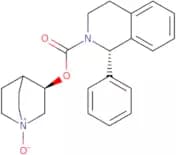
CAS:<p>2-Hydroxy-5-methylphenylbenzenepropanol is an aliphatic phenol that is used as a treatment for benzene poisoning. It is also used as a precursor to other compounds, such as the chlorides and alkylates of 2-hydroxy-5-methylphenylbenzenepropanol. This compound can be synthesized by reacting ethyl benzoylacetate with diisopropylamine in the presence of oxygen and chlorine gas. It is often immobilized using nutrients, l-tartaric acid, or cinnamic acid.</p>Formula:C16H18O2Purity:Min. 95%Molecular weight:242.31 g/molSolifenacin N-oxide
CAS:<p>Solifenacin N-oxide is an anti-cholinergic agent that has been shown to be effective in the treatment of overactive bladder. Solifenacin N-oxide is a prodrug that is hydrolyzed in vivo to solifenacin, its active form. The compound reversibly binds to muscarinic receptors and inhibits the release of acetylcholine. Solifenacin N-oxide has been shown to have low levels of impurities and is highly soluble in water. It was also found to be stable when stored at room temperature for two months. This drug has a high flow rate and moderate retention time, which makes it suitable for reversed-phase liquid chromatography (RPLC). RPLC is a chromatographic technique that separates compounds by size, hydrophobicity, or charge.</p>Formula:C23H26N2O3Purity:Min. 95%Color and Shape:White PowderMolecular weight:378.46 g/mol2-[[(4-Methoxy-3-methyl-2-pyridinyl)methyl]sulfinyl]-1H-benzimidazole
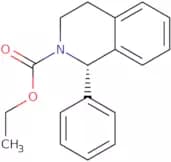
CAS:<p>2-[(4-Methoxy-3-methyl-2-pyridinyl)methyl]sulfinyl]-1H-benzimidazole is a synthetic, impurity standard that is used in the synthesis of drug products. It has been shown to inhibit the metabolism of drugs and may be used as a marker for drug metabolism. This compound may also be used as a marker in analytical studies to assess the purity of a drug product. 2-[(4-Methoxy-3-methyl-2-pyridinyl)methyl]sulfinyl]-1H-benzimidazole has not been evaluated for safety or efficacy.</p>Formula:C15H15N3O2SPurity:Min. 95%Molecular weight:301.36 g/molEthyl (S)-1-phenyl-1,2,3,4-tetrahydro-2-isoquinolinecarboxylate
CAS:<p>Ethyl (S)-1-phenyl-1,2,3,4-tetrahydro-2-isoquinolinecarboxylate is an analytical standard used to identify impurities in drug products. It is a metabolite of the drug product and has been shown to be safe for human consumption. The compound is a synthetic chemical that is not found naturally in the environment. CAS No. 180468-42-2</p>Formula:C18H19NO2Purity:Min. 95%Molecular weight:281.35 g/molPantoprazole impurity
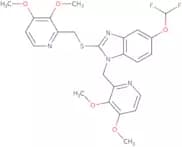
CAS:<p>Pantoprazole is a proton pump inhibitor. It is used in the treatment of gastroesophageal reflux disease and other conditions involving excessive stomach acid production. The chemical name for Pantoprazole impurity is (E)-1-(4-chlorophenyl)ethyl-3-[(pyrrolidin-2-yl)oxy]propanediol. This substance is an enantiomer of pantoprazole, which has been determined to be inactive. Pantoprazole impurity can be identified by its melting point, crystallizing habit, and optical rotation. Active carbon filtration can be used to remove this substance from the final product.</p>Formula:C24H24F2N4O5SPurity:Min. 95%Molecular weight:518.53 g/mol6-Methyl-4-phenyl-3,4-dihydro-1-benzopyran-2-one
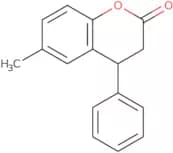
CAS:<p>6-Methyl-4-phenyl-3,4-dihydro-1-benzopyran-2-one is an analog of the natural product zearalenone, which can be used as an acid catalyst for the synthesis of various pharmaceuticals. It has a linear range and is structurally similar to a number of other analogs. The chloride ion is involved in the optimization of the extraction parameters and can be replaced by other c1-4 alkyl groups. 6-Methyl-4-phenyl-3,4-dihydro-1 -benzopyran 2 one is typically prepared using a preparative high performance liquid chromatography technique that involves dehydration.</p>Formula:C16H14O2Purity:Min. 95%Molecular weight:238.28 g/molN,N-Dimethylaminoethyl-a-(1-Hydroxycyclopentyl)phenylacetate hydrochloride
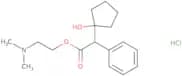
CAS:Controlled Product<p>N,N-Dimethylaminoethyl-a-(1-Hydroxycyclopentyl)phenylacetate hydrochloride (DMAEA) is a drug that is used as an ophthalmic. It has been shown to be safe and effective in patients with chronic open angle glaucoma, and it may also have some efficacy for the treatment of other conditions such as uveitis and retinal detachment. DMAEA is thought to work by binding to the DNA in the eye’s optic nerve cells and blocking the production of leukotrienes. This drug has also been shown to have anti-inflammatory properties.</p>Formula:C17H26ClNO3Purity:Min. 95%Color and Shape:PowderMolecular weight:327.85 g/mol7-Hydroxyhyoscyamine
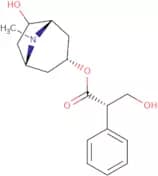
CAS:<p>7-Hydroxyhyoscyamine is an antibacterial agent that is used in the treatment of bacterial infections. It has been shown to inhibit the growth of a number of bacteria including Staphylococcus aureus, Streptococcus pyogenes, and Escherichia coli. 7-Hydroxyhyoscyamine has been shown to be more potent than 6-hydroxyhyoscyamine (6-OH Hya) for inhibiting protein synthesis in the bacteria. The compound does not have any psychoactive effects, unlike atropine sulfate, which is also an alkaloid found in plants from the Solanaceae family. 7-Hydroxyhyoscyamine can be synthesized by reacting atropine with nitrous acid or hydrochloric acid. This synthetic process leads to n-oxides as impurities, which can be removed by using a reversed phase high performance liquid chromatography (RP HPLC). Validation of this</p>Formula:C17H23NO4Purity:Min. 95%Color and Shape:PowderMolecular weight:305.4 g/mol

![1-(1H-Benzo[d]imidazol-2-yl)-3-methyl-4-oxo-1,4-dihydropyridine-2-carboxylic acid (>75%)](/_next/image/?url=https%3A%2Fstatic.cymitquimica.com%2Fproducts%2FTR%2Fthumb-webp%2FB203960.webp&w=3840&q=75)

![10-Methoxy-5H-dibenz[b,f]azepine-5-carbonyl chloride](/_next/image/?url=https%3A%2Fstatic.cymitquimica.com%2Fproducts%2FTR%2Fthumb-webp%2FM100100.webp&w=3840&q=75)

![1-Deoxy-4-O-β-D-galactopyranosyl-1-[(4R)-4-(2-methylpropyl)-2-oxo-1-pyrrolidinyl]-β-D-fructopyrano…](/_next/image/?url=https%3A%2Fstatic.cymitquimica.com%2Fproducts%2F3D%2Fthumb-webp%2FID63811.webp&w=3840&q=75)
![2-[[(4-Methoxy-3-methyl-2-pyridinyl)methyl]sulfinyl]-1H-benzimidazole](/_next/image/?url=https%3A%2Fstatic.cymitquimica.com%2Fproducts%2F3D%2Fthumb-webp%2FIM21228.webp&w=3840&q=75)