Benzimidazole and Imidazole Derivatives
Benzimidazole is a compound consisting of a benzene ring fused to an imidazole ring, a five-membered structure containing two nitrogen atoms. Benzimidazole derivatives, such as albendazole, are known for their antiparasitic and antifungal activity, used in the treatment of parasitic infections and certain parasitic diseases in animals and humans. Imidazole, on the other hand, is a five-membered structure with two nitrogen atoms found in various biologically active compounds. Imidazole derivatives, such as metronidazole, have antimicrobial and antiparasitic properties. These compounds are also used in the pharmaceutical industry for treating bacterial infections, parasitic diseases, and some fungal infections, as well as in organic chemistry as catalysts.
At CymitQuimica, we offer high-purity benzimidazoles and imidazoles for research in medicinal chemistry, pharmacology, and biotechnology.
Found 10375 products of "Benzimidazole and Imidazole Derivatives"
Sort by
Purity (%)
0
100
|
0
|
50
|
90
|
95
|
100
Metronidazole β-D-Glucuronide
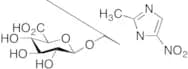
CAS:Controlled Product<p>Stability Hygroscopic<br>Applications A metabolite of Metronidazole.<br>References Kokwaro, G.O., et al.: Biochem. Pharmacol., 45, 1243 (1993), Sidelmann, U.G. , et al.: Xenobiotica, 26, 709 (1996),<br></p>Formula:C12H17N3O9Color and Shape:NeatMolecular weight:347.284-Hydroxy Midazolam-d5 Methanoate
CAS:Controlled Product<p>Applications A labelled metabolite of Midazolam (M343000).<br>References Ha, H., et al.: Ther. Drug Monit., 15, 338 (1993), Thummel, K., et al.: J. Pharmacol. Exp. Ther., 271, 557 (1994), Kim, R., et al.: Pharm. Res., 16, 408 (1999), Maurer, H., et al.: Anal. Bioanal. Chem., 381, 110 (2005), Smink, B., et al.: J. Anal. Toxicol., 30, 478 (2006),<br></p>Formula:C19H12D5ClFN3O2Color and Shape:NeatMolecular weight:378.84Metopimazine
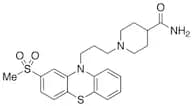
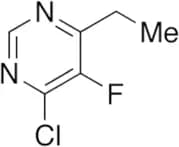
CAS:<p>Applications Metopimazine (MPZ) is used to prevent emesis during chemotherapies. Antiemetic.<br>References Catz, P., et al.: Int. J. Pharm., 58, 93 (1990), Sato, K., et al.: J. Pharm. Sci., 80, 104 (1991), Herrstedt, J., et al.: Cancer Chemother. Pharmacol., 33, 53 (1996), Sigsgaard, T., et al.: J. Clin. Onc., 19, 2091 (2001),<br></p>Formula:C22H27N3O3S2Color and Shape:Off White SolidMolecular weight:445.604-Chloro-6-ethyl-5-fluoropyrimidine
CAS:Controlled Product<p>Applications A pyrimidine derivative used as a building block in the preparation of bio-active compounds such as broad-spectrum triazole antifungal agents.<br>References Butters, M. et al.: Org. Proc. Res. Dev., 5, 28 (2001); Tong, L. et al.: Zhong. Yao., 8, 280 (2010);<br></p>Formula:C6H6ClFN2Color and Shape:NeatMolecular weight:160.582-(2-Butyl)-4-{4-[4-(4-methyloxy-phenyl)-piperazin-1-yl]-phenyl}-2,4-dihydro-[1,2,4]-triazol-3-one
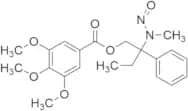
CAS:Controlled Product<p>Impurity Itraconazole EP Impurity A<br>Applications 2-(2-Butyl)-4-{4-[4-(4-methyloxy-phenyl)-piperazin-1-yl]-phenyl}-2,4-dihydro-[1,2,4]-triazol-3-one (Itraconazole EP Impurity A) is an intermediate of Itraconazole.<br></p>Formula:C23H29N5O2Color and Shape:BeigeMolecular weight:407.51Trimebutine EP Impurity E-Nitroso
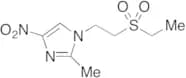
Controlled ProductFormula:C21H26N2O6Color and Shape:NeatMolecular weight:402.4414-Nitro-5-desnitro Tinidazole
CAS:Controlled Product<p>Impurity Tinidazole EP Impurity B<br>Applications 4-Nitro-5-desnitro Tinidazole (Tinidazole EP Impurity B) is an impurity in the synthesis of Tinidazole (T443900), antiprotozoal (Trichomonas, Giardia); antiamebic; antibacterial.<br>References Miller, M.W., et al.: J. Med. Chem., 13, 849 (1970), Oderdea, G., et al.: Gut, 33, 1328 (1992),<br></p>Formula:C8H13N3O4SColor and Shape:NeatMolecular weight:247.27Prazepam
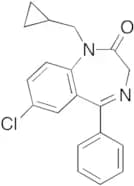
CAS:Controlled Product<p>Applications Prazepam, is a benzodiazepine derivative drug having anxiolytic, anticonvulsant, sedative and skeletal muscle relaxant properties.<br>References Shader R. I., et al.: Ciba. Found. Symp., (74), 141 (1979); Jacqmin, P., et al.: Neuropsychobiology, 19 (4), 186 (1988);<br></p>Formula:C19H17ClN2OColor and Shape:Off-WhiteMolecular weight:324.80(S)-Modafinil-d10
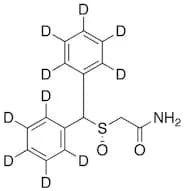
CAS:Controlled Product<p>Applications Labelled (S)-Modafinil. Used for treatment of excessive sleepiness, α1-adrenoceptor agonist.<br>References Saletu, B., et al.: Int. J. Clin. Pharmacol. Res., 9, 183 (1989), Chemelli, R.M., et al.: Cell, 98, 437 (1999), Purnell, M., et al.: J. Sleep Res., 11, 219 (2002), Dinges, D., et al.: Curr. Med. Res. Opin., 22, 159 (2006)<br></p>Formula:C15D10H5NO2SColor and Shape:NeatMolecular weight:283.41N-Acetylethanolamine
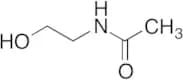
CAS:<p>Applications N-Acetylethanolamine can be used as an antistatic agent, foam boosting agent, hair conditioning humectant, skin conditioning surfactant and viscosity controlling agent in cosmetics industry. It is a non-tacky glycerine alternative for use in skin and hair care.<br>References Hough, L., et al.: J. Chem. Soc., 7923994-3997 (1957); Auzanneau, F-I, et al.: J. Chem. Soc., 10, 2831-2834 (1990);<br></p>Formula:C4H9NO2Purity:~90%Color and Shape:NeatMolecular weight:103.122-[[(4-Methoxy-3-methyl-2-pyridinyl)methyl]sulfinyl]-1H-benzimidazole
CAS:<p>2-[(4-Methoxy-3-methyl-2-pyridinyl)methyl]sulfinyl]-1H-benzimidazole is a synthetic, impurity standard that is used in the synthesis of drug products. It has been shown to inhibit the metabolism of drugs and may be used as a marker for drug metabolism. This compound may also be used as a marker in analytical studies to assess the purity of a drug product. 2-[(4-Methoxy-3-methyl-2-pyridinyl)methyl]sulfinyl]-1H-benzimidazole has not been evaluated for safety or efficacy.</p>Formula:C15H15N3O2SPurity:Min. 95%Molecular weight:301.36 g/molTiotropium Bromide EP Impurity G
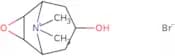
CAS:<p>Tiotropium Bromide EP Impurity G is an anticholinergic bronchodilator that is used in the treatment of asthma. Tiotropium Bromide EP Impurity G has been shown to have long-acting properties, with a half-life of about 20 hours. It has a high affinity for the muscarinic receptor and acts as a competitive antagonist at this site. Tiotropium Bromide EP Impurity G also has a cavity, which may be necessary for its activity.</p>Formula:C9H6BrNO2Purity:Min. 95%Molecular weight:240.05 g/molOxybutynin EP impurity A
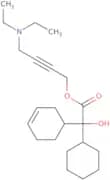
CAS:<p>Oxybutynin EP impurity A is a metabolite of oxybutynin, an antispasmodic drug. It has been shown to have immunomodulatory effects in a rat model of adjuvant arthritis. Oxybutynin EP impurity A is the major metabolite of oxybutynin and has been shown to be pharmacologically active in humans.</p>Purity:Min. 95%6-Methyl-4-phenyl-3,4-dihydro-1-benzopyran-2-one
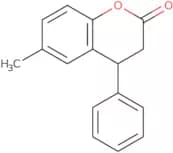
CAS:<p>6-Methyl-4-phenyl-3,4-dihydro-1-benzopyran-2-one is an analog of the natural product zearalenone, which can be used as an acid catalyst for the synthesis of various pharmaceuticals. It has a linear range and is structurally similar to a number of other analogs. The chloride ion is involved in the optimization of the extraction parameters and can be replaced by other c1-4 alkyl groups. 6-Methyl-4-phenyl-3,4-dihydro-1 -benzopyran 2 one is typically prepared using a preparative high performance liquid chromatography technique that involves dehydration.</p>Formula:C16H14O2Purity:Min. 95%Molecular weight:238.28 g/molDonepezil benzyl bromide (donepezil impurity)
CAS:<p>Donepezil benzyl bromide is a by-product of donepezil hydrochloride, which is an industrially important drug used to treat Alzheimer's disease. It has been shown to be more efficient than its hydrochloride form. Donepezil benzyl bromide is a crystalline substance that is insoluble in water and soluble in organic solvents such as acetone or ethanol. The compound can be purified through recrystallization from an appropriate solvent.</p>Formula:C31H36BrNO3Purity:Min. 95%Molecular weight:550.53 g/molDesdifluoromethoxy hydroxy pantoprazole
CAS:<p>Desdifluoromethoxy hydroxy pantoprazole is a synthetic compound that is used as an impurity standard for the drug product Pantoprazole. It has a purity of ≥98% and is stable under ambient conditions. Desdifluoromethoxy hydroxy pantoprazole is not active on its own, but it is a metabolite of pantoprazole. It can be used to study the metabolism of pantoprazole.</p>Formula:C15H15N3O4SPurity:Min. 95%Molecular weight:333.36 g/mol7-Hydroxyhyoscyamine
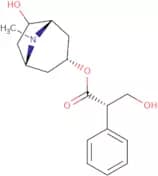
CAS:<p>7-Hydroxyhyoscyamine is an antibacterial agent that is used in the treatment of bacterial infections. It has been shown to inhibit the growth of a number of bacteria including Staphylococcus aureus, Streptococcus pyogenes, and Escherichia coli. 7-Hydroxyhyoscyamine has been shown to be more potent than 6-hydroxyhyoscyamine (6-OH Hya) for inhibiting protein synthesis in the bacteria. The compound does not have any psychoactive effects, unlike atropine sulfate, which is also an alkaloid found in plants from the Solanaceae family. 7-Hydroxyhyoscyamine can be synthesized by reacting atropine with nitrous acid or hydrochloric acid. This synthetic process leads to n-oxides as impurities, which can be removed by using a reversed phase high performance liquid chromatography (RP HPLC). Validation of this</p>Formula:C17H23NO4Purity:Min. 95%Color and Shape:PowderMolecular weight:305.4 g/molAmino albendazole sulfone
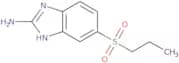
CAS:<p>Amino albendazole sulfone is an anthelmintic drug that is used to treat worm infestations in animals. It is the active metabolite of fenbendazole sulfone and has a terminal half-life of 12 hours in humans. Amino albendazole sulfone can be prepared by chromatographic methods, such as liquid chromatography or gas chromatography, and it can be analyzed with a fluorescence detector. This drug has been shown to have a concentration–time curve following administration to rats and results in an increase in the number of worms eliminated from the body.</p>Formula:C10H13N3O2SPurity:Min. 95%Molecular weight:239.3 g/molEthyl (S)-1-phenyl-1,2,3,4-tetrahydro-2-isoquinolinecarboxylate
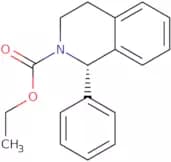
CAS:<p>Ethyl (S)-1-phenyl-1,2,3,4-tetrahydro-2-isoquinolinecarboxylate is an analytical standard used to identify impurities in drug products. It is a metabolite of the drug product and has been shown to be safe for human consumption. The compound is a synthetic chemical that is not found naturally in the environment. CAS No. 180468-42-2</p>Formula:C18H19NO2Purity:Min. 95%Molecular weight:281.35 g/mol


![2-(2-Butyl)-4-{4-[4-(4-methyloxy-phenyl)-piperazin-1-yl]-phenyl}-2,4-dihydro-[1,2,4]-triazol-3-one](/_next/image/?url=https%3A%2Fstatic.cymitquimica.com%2Fproducts%2FTR%2Fthumb-webp%2FB693320.webp&w=3840&q=75)
![2-[[(4-Methoxy-3-methyl-2-pyridinyl)methyl]sulfinyl]-1H-benzimidazole](/_next/image/?url=https%3A%2Fstatic.cymitquimica.com%2Fproducts%2F3D%2Fthumb-webp%2FIM21228.webp&w=3840&q=75)