Benzimidazole and Imidazole Derivatives
Benzimidazole is a compound consisting of a benzene ring fused to an imidazole ring, a five-membered structure containing two nitrogen atoms. Benzimidazole derivatives, such as albendazole, are known for their antiparasitic and antifungal activity, used in the treatment of parasitic infections and certain parasitic diseases in animals and humans. Imidazole, on the other hand, is a five-membered structure with two nitrogen atoms found in various biologically active compounds. Imidazole derivatives, such as metronidazole, have antimicrobial and antiparasitic properties. These compounds are also used in the pharmaceutical industry for treating bacterial infections, parasitic diseases, and some fungal infections, as well as in organic chemistry as catalysts.
At CymitQuimica, we offer high-purity benzimidazoles and imidazoles for research in medicinal chemistry, pharmacology, and biotechnology.
Found 10376 products of "Benzimidazole and Imidazole Derivatives"
Sort by
Purity (%)
0
100
|
0
|
50
|
90
|
95
|
100
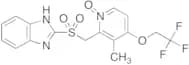
Lansoprazole Sulfone N-Oxide
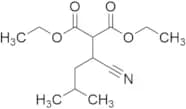
CAS:Controlled Product<p>Applications An impurity of Lansoprazole.<br>References Barradell, L., et al.: Drugs, 44, 225 (1992), Aydogmus, Z., et al.: Acta Pharm. Sci., 48, 45 (2006), El-Sherif, Z., et al.: Chem. Pharm. Bull., 54, 814 (2006),<br></p>Formula:C16H14F3N3O4SColor and Shape:WhiteMolecular weight:401.361,3-Diethyl 2-(1-cyano-3-methylbutyl)propanedioate
CAS:Controlled ProductFormula:C13H21NO4Color and Shape:NeatMolecular weight:255.311-(1H-Benzo[d]imidazol-2-yl)-3-methyl-4-oxo-1,4-dihydropyridine-2-carboxylic acid (>75%)
CAS:<p>Impurity Rabeprazole EP Impurity C<br>Applications 1-(1H-Benzo[d]imidazol-2-yl)-3-methyl-4-oxo-1,4-dihydropyridine-2-carboxylic acid (>75%) (Rabeprazole EP Impurity C) is a Rabeprazole (R070500) impurity. A degradation product formed in stressed tablets of Rabeprazole sodium.<br>References Kommanaboyina, B., et al.: Drug Dev. Ind. Pharm., 25, 857 (1999), Carswel, C., et al.: Drugs, 61, 2327 (2001), Garcia, C., et al.: J. Pharm. Biomed. Anal., 46, 88 (2008),<br></p>Formula:C14H11N3O3Purity:>75%Color and Shape:NeatMolecular weight:269.264-Hydroxy Midazolam-d5 Methanoate
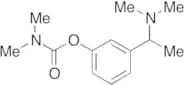
CAS:Controlled Product<p>Applications A labelled metabolite of Midazolam (M343000).<br>References Ha, H., et al.: Ther. Drug Monit., 15, 338 (1993), Thummel, K., et al.: J. Pharmacol. Exp. Ther., 271, 557 (1994), Kim, R., et al.: Pharm. Res., 16, 408 (1999), Maurer, H., et al.: Anal. Bioanal. Chem., 381, 110 (2005), Smink, B., et al.: J. Anal. Toxicol., 30, 478 (2006),<br></p>Formula:C19H12D5ClFN3O2Color and Shape:NeatMolecular weight:378.84N-Desethyl N-Methyl rac-Rivastigmine
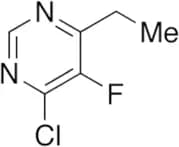
CAS:<p>Impurity Rivastigmin USP Related Compound B<br>Applications N-Desethyl N-Methyl rac-Rivastigmine (Rivastigmin USP Related Compound B) is an impurity in the synthesis of Rivastigmine (R541000) a brain selective acetylcholinesterase inhibitor. Nootropic.<br>References Rosler, M., et al.: Brit. Med. J., 318, 633 (1999), Enz, A., et al.: Prog. Brain Res., 98, 431 (1993),<br></p>Formula:C13H20N2O2Color and Shape:Clear ColourlessMolecular weight:236.314-Chloro-6-ethyl-5-fluoropyrimidine
CAS:Controlled Product<p>Applications A pyrimidine derivative used as a building block in the preparation of bio-active compounds such as broad-spectrum triazole antifungal agents.<br>References Butters, M. et al.: Org. Proc. Res. Dev., 5, 28 (2001); Tong, L. et al.: Zhong. Yao., 8, 280 (2010);<br></p>Formula:C6H6ClFN2Color and Shape:NeatMolecular weight:160.583-Hydroxy-1-methyl-1-Azoniabicyclo[2.2.2]octane Bromide
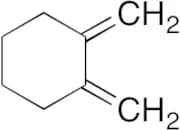
CAS:Controlled Product<p>Applications 3-Hydroxy-1-methyl-1-Azoniabicyclo[2.2.2]octane is an impurity in the synthesis of Clidinium Bromide (C576250), an anticholinergic. Used as an antispasmodic.<br>References Zhang, L., et al.: Pharm. Res., 25, 1902 (2008), Sanderson, H., et al.: Toxicol Lett., 187, 84 (2009),<br></p>Formula:C8H16BrNOColor and Shape:NeatMolecular weight:222.121,2-Bismethylenecyclohexane (~75%)
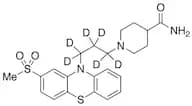
CAS:Controlled ProductFormula:C8H12Purity:~75%Color and Shape:NeatMolecular weight:108.18Metopimazine-d6
CAS:Controlled Product<p>Applications Labelled Metopimazine (MPZ) is used to prevent emesis during chemotherapies. Antiemetic.<br>References Catz, P., et al.: Int. J. Pharm., 58, 93 (1990), Sato, K., et al.: J. Pharm. Sci., 80, 104 (1991), Herrstedt, J., et al.: Cancer Chemother. Pharmacol., 33, 53 (1996), Sigsgaard, T., et al.: J. Clin. Onc., 19, 2091 (2001),<br></p>Formula:C22H21D6N3O3S2Color and Shape:NeatMolecular weight:451.64(2Z)-2-[Cyano(2,3-dichlorophenyl)methylene]hydrazinecarboximidamide
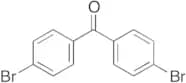
CAS:Controlled ProductFormula:C9H7Cl2N5Color and Shape:NeatMolecular weight:256.094,4'-Dibromobenzophenone
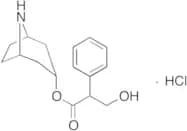
CAS:Controlled Product<p>Applications 4,4'-Dibromobenzophenone is a reagent used in the synthesis of polyelectrolytes which serve as fluorescent visualizers for intracellular imaging with good biocompatibility.<br>References Hu, R., et al.: Chem. Asian J., 8, 2436-2445 (2013)<br></p>Formula:C13H8Br2OColor and Shape:Yellow Orange To BrownMolecular weight:340.01Noratropine Hydrochloride
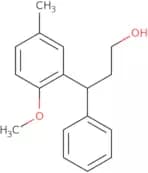
CAS:Controlled Product<p>Stability Hygroscopic<br>Applications A metabolite of Atropine (A794625). Two metabolites of Atropine (apoatropine and noratropine) were found in rat urine.<br>References Xu, A., et al.: J. Pharm. Biomed. Anal., 14, 33 (1995), Cherkaoui, S., et al.: J. Pharm. Biomed. Anal., 17, 1167 (1998),<br></p>Formula:C16H21NO3·HClColor and Shape:BrownMolecular weight:311.802-Methoxy-5-methyl-γ-phenylbenzenepropanol
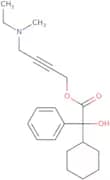
CAS:<p>2-Methoxy-5-methyl-gamma-phenylbenzenepropanol is a synthetic compound that is used as an intermediate in the synthesis of coumarin derivatives. Reaction with sulfonating agents produces sulfones, and reaction with borohydride reagents produces boronates. The synthesis of 2-methoxy-5-methyl-gamma-phenylbenzenepropanol can be accomplished by the reduction of diphenyl ethers with lithium aluminum hydride or borohydride. The reduction can also be carried out using lanthanum oxide and potassium borohydride. The reaction proceeds smoothly at room temperature in nonpolar solvents.<br>2-Methoxy-5-methyl-gamma-phenylbenzenepropanol reacts with chloride to produce the corresponding chlorides, which are useful intermediates for the synthesis of tolterodine tartrate, a drug used to treat urinary inc</p>Formula:C17H20O2Purity:Min. 95%Molecular weight:256.34 g/molOxybutynin impurity C
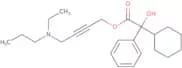
CAS:<p>Oxybutynin impurity C is a metabolite of the drug product Oxybutynin (CAS No. 1199574-70-3). It is an analytical standard for HPLC, and a natural impurity in the synthesis of Oxybutynin. This is a synthetic compound that has been shown to be metabolized through oxidation by cytochrome P450 enzymes, reduction by glutathione reductase, or conjugation with glucuronic acid. Oxybutynin impurity C has been used as an analytical reference material for drug development and research and development.</p>Purity:Min. 95%Desdifluoromethoxy hydroxy pantoprazole
CAS:<p>Desdifluoromethoxy hydroxy pantoprazole is a synthetic compound that is used as an impurity standard for the drug product Pantoprazole. It has a purity of ≥98% and is stable under ambient conditions. Desdifluoromethoxy hydroxy pantoprazole is not active on its own, but it is a metabolite of pantoprazole. It can be used to study the metabolism of pantoprazole.</p>Formula:C15H15N3O4SPurity:Min. 95%Molecular weight:333.36 g/molOxybutynin EP Impurity E
CAS:<p>Oxybutynin EP Impurity E is a research and development impurity standard that is used in the synthesis of Oxybutynin. It can be synthesized by reacting 2-chloro-4-nitroaniline with potassium tert-butoxide, followed by acetylation with acetic anhydride. The purity and structure of this compound have been verified by gas chromatography, mass spectrometry, and melting point analysis. This impurity standard has a CAS number of 1215677-72-7.<br>Oxybutynin EP Impurity E is used as a drug product for the treatment of overactive bladder, urinary incontinence, and painful bladder syndrome/interstitial cystitis. It also helps to reduce pain due to spinal cord injury or multiple sclerosis. <br>The pharmacopoeia name for this compound is 4-(2-Chloroethyl)-1H-imidazoleacetic acid. It has been found to be</p>Formula:C23H33NO3Purity:Min. 95%Molecular weight:371.51 g/mol2-Hydroxy-5-methyl-γ-phenylbenzenepropanol
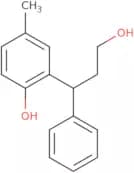
CAS:<p>2-Hydroxy-5-methylphenylbenzenepropanol is an aliphatic phenol that is used as a treatment for benzene poisoning. It is also used as a precursor to other compounds, such as the chlorides and alkylates of 2-hydroxy-5-methylphenylbenzenepropanol. This compound can be synthesized by reacting ethyl benzoylacetate with diisopropylamine in the presence of oxygen and chlorine gas. It is often immobilized using nutrients, l-tartaric acid, or cinnamic acid.</p>Formula:C16H18O2Purity:Min. 95%Molecular weight:242.31 g/mol7-Hydroxyhyoscyamine
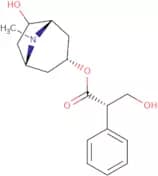
CAS:<p>7-Hydroxyhyoscyamine is an antibacterial agent that is used in the treatment of bacterial infections. It has been shown to inhibit the growth of a number of bacteria including Staphylococcus aureus, Streptococcus pyogenes, and Escherichia coli. 7-Hydroxyhyoscyamine has been shown to be more potent than 6-hydroxyhyoscyamine (6-OH Hya) for inhibiting protein synthesis in the bacteria. The compound does not have any psychoactive effects, unlike atropine sulfate, which is also an alkaloid found in plants from the Solanaceae family. 7-Hydroxyhyoscyamine can be synthesized by reacting atropine with nitrous acid or hydrochloric acid. This synthetic process leads to n-oxides as impurities, which can be removed by using a reversed phase high performance liquid chromatography (RP HPLC). Validation of this</p>Formula:C17H23NO4Purity:Min. 95%Color and Shape:PowderMolecular weight:305.4 g/molLansoprazole impurity H
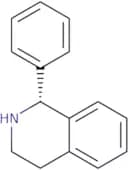
CAS:<p>Lansoprazole impurity H is a metabolite of lansoprazole, a proton pump inhibitor that inhibits the production of stomach acid. Lansoprazole impurity H is used in research and development as an analytical standard to measure lansoprazole concentrations in drug products. It is also used as an impurity standard for pharmacopoeia purposes. Lansoprazole impurity H is not known to be toxic, but it has not been evaluated for carcinogenicity or reproductive toxicity.</p>Formula:C23H16F3N5OSPurity:90%MinMolecular weight:467.47 g/mol(R)-1-Phenyl-1,2,3,4-tetrahydroisoquinoline
CAS:<p>(R)-1-Phenyl-1,2,3,4-tetrahydroisoquinoline is a chiral molecule with four stereocenters. It is synthesized by the reaction of sulfamic acid and cyclohexene in the presence of p-toluenesulfonic acid. The product formed is then dehydrogenated to produce (R)-1-phenyl-1,2,3,4-tetrahydroisoquinoline. This compound is soluble in organic solvents such as benzene and ethane and can be used as an acceptor for chiral stationary phases.</p>Formula:C15H15NPurity:Min. 95%Color and Shape:PowderMolecular weight:209.29 g/mol

![1-(1H-Benzo[d]imidazol-2-yl)-3-methyl-4-oxo-1,4-dihydropyridine-2-carboxylic acid (>75%)](/_next/image/?url=https%3A%2Fstatic.cymitquimica.com%2Fproducts%2FTR%2Fthumb-webp%2FB203960.webp&w=3840&q=75)

![3-Hydroxy-1-methyl-1-Azoniabicyclo[2.2.2]octane Bromide](/_next/image/?url=https%3A%2Fstatic.cymitquimica.com%2Fproducts%2FTR%2Fthumb-webp%2FH946585.webp&w=3840&q=75)
![(2Z)-2-[Cyano(2,3-dichlorophenyl)methylene]hydrazinecarboximidamide](/_next/image/?url=https%3A%2Fstatic.cymitquimica.com%2Fproducts%2FTR%2Fthumb-webp%2FC979120.webp&w=3840&q=75)