


Benzimidazole and Imidazole Derivatives
Benzimidazole is a compound consisting of a benzene ring fused to an imidazole ring, a five-membered structure containing two nitrogen atoms. Benzimidazole derivatives, such as albendazole, are known for their antiparasitic and antifungal activity, used in the treatment of parasitic infections and certain parasitic diseases in animals and humans. Imidazole, on the other hand, is a five-membered structure with two nitrogen atoms found in various biologically active compounds. Imidazole derivatives, such as metronidazole, have antimicrobial and antiparasitic properties. These compounds are also used in the pharmaceutical industry for treating bacterial infections, parasitic diseases, and some fungal infections, as well as in organic chemistry as catalysts.
At CymitQuimica, we offer high-purity benzimidazoles and imidazoles for research in medicinal chemistry, pharmacology, and biotechnology.
Found 10376 products of "Benzimidazole and Imidazole Derivatives"
Sort by
Purity (%)
0
100
|
0
|
50
|
90
|
95
|
100
4-Desmethoxypropoxyl-4-chloro Rabeprazole Sulfide
CAS:Controlled Product<p>Applications A process impurity of Rabeprazole (R070500).<br>References Pingili, R.R., et al.: Pharmazie, 60, 814 (2005),<br></p>Formula:C14H12ClN3SColor and Shape:NeatMolecular weight:289.781',4-Dihydroxy Midazolam
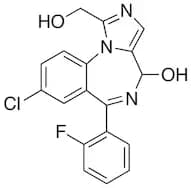
CAS:Controlled Product<p>Applications A metabolite of Midazolam (M343000).<br>References Soucek, P., et al.: Xenobiotica, 22, 83 (1992), Ghosal, A., et al.: Drug Metab. Dispos., 24, 940 (1996), Kobayashi, K., et al.: Biochem. Pharmacol., 63, 889 (2002),<br></p>Formula:C18H13ClFN3O2Color and Shape:NeatMolecular weight:357.77(S)-Aclidinium Bromide
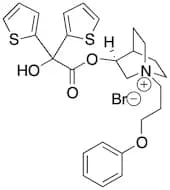
CAS:Controlled Product<p>Applications (S)-Aclidinium Bromide is an isomer of Aclidinium Bromide (A190180) a novel long-acting antimuscarinic bronchodilator in phase II clinical trials for the treatment of chronic obstructive pulmonary disease (1,2).<br>References (1) Gupta, V. and Singh, D.: Expert Rev Respir Med. 6, 581 (2012)(2) De La Motte, S., et al.: Int. J. Clin. Pharmacol. Therap., 50,403 (2012)<br></p>Formula:C26H30BrNO4S2Color and Shape:Off-WhiteMolecular weight:564.552,4-Dicyano-3-(2-methylpropyl)-pentanediamide (Mixture of Diastereomers)
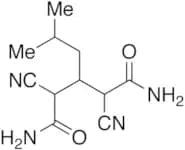
CAS:Controlled Product<p>Stability Hygrscopic<br>Applications 2,4-Dicyano-3-(2-methylpropyl)-pentanediamide is an impurity of Pregabalin (P704800), a GABA (A602920) analogue used as an anticonvulsant.<br>References Hoekstra, M.S., et al.: Org. Proc. Rec. Deve., 1, 26 (1997); Lowry, O., et al.: J. Biol. Chem., 193, 265 (1951); Gerlach, M., et al.: Brain Res., 741, 142 (1996); Taylor, C.P., at al.: Epilepsy Res., 14, 11 (1993), Field, M.J., et al.: Pain, 80, 391 (1999)<br></p>Formula:C11H16N4O2Color and Shape:NeatMolecular weight:236.274-Hydroxy Triazolam
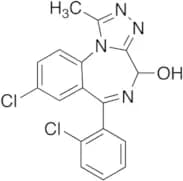
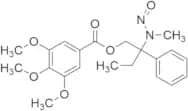
CAS:Controlled Product<p>Stability Light Sensitive<br>Applications A metabolite of Triazolam (T767380).<br>References Gall, M., et al.: J. Med. Chem., 21, 1290 (1978), Jones, H., et al.: Drug Metab. Dispos., 32, 973 (2004), Hallifax, D., et al.: Drug Metab. Dispos., 33, 1852 (2005).<br></p>Formula:C17H12Cl2N4OColor and Shape:NeatMolecular weight:359.21Trimebutine EP Impurity E-Nitroso
Controlled ProductFormula:C21H26N2O6Color and Shape:NeatMolecular weight:402.4412,2'-Ethylenedianiline
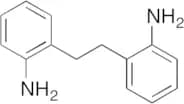
CAS:Controlled Product<p>Applications 2,2'-Ethylenedianiline is used as a reagent to synthesize Oxcarbazepine (O869250), a broad-specturm, second-generation anticonvulsant drug that is used to treat partial and complex partial seizures in children and adults. 2,2'-Ethylenedianiline is also used as a reagent to prepare a series of triterpines (e.g. Lupeol [L474850]), compounds that have chemopreventative activity.<br>References Asmaa, M., et al.: Pac. J. Cancer Prevent., 15, 475 (2014); Kalis, M. & Huff, N.: Clin. Ther., 23, 680 (2001); Malke, S., et al.: Pharm. Sci., 69, 211 (2007); Schmidt, D. & Elger, C.: Epil. Beh., 5, 627 (2004)<br></p>Formula:C14H16N2Color and Shape:NeatMolecular weight:212.295,6-Dimethoxyindane-1,3-dione
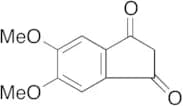
CAS:Controlled ProductFormula:C11H10O4Color and Shape:NeatMolecular weight:206.19rac-6-Chloro Voriconazole
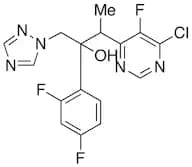
CAS:Controlled Product<p>Applications An achiral intermediate of Voriconazole (V760000).<br> Not a dangerous good if item is equal to or less than 1g/ml and there is less than 100g/ml in the package<br>References Ferretti, R., et al.: Chromatographia, 47, 649 (1998),<br></p>Formula:C16H13ClF3N5OColor and Shape:NeatMolecular weight:383.76N-Nitroso Albendazole (mixtures of regional isomers)
Controlled ProductFormula:C13H16N4O3SColor and Shape:NeatMolecular weight:616.7124'-Desmethoxy Omeprazole
CAS:Controlled Product<p>Applications 4'-Desmethoxy Omeprazole is one of two impurities in the synthesis of Esomeprazole, an anti-ulcerative drug for treatment of acid-related diseases.<br>References Liu, X., et al.: Lat. Am. J. Pharm., 34, 1265-1268 (2015);<br></p>Formula:C16H17N3O2SColor and Shape:NeatMolecular weight:315.3910-Methoxy-5H-dibenz[b,f]azepine-5-carbonyl chloride
CAS:Controlled ProductFormula:C16H12ClNO2Color and Shape:NeatMolecular weight:286.002-(3-(1-Benzylpiperidin-4-yl)-2-oxopropyl)-4,5-dimethoxybenzoic acid
CAS:<p>2-(3-(1-Benzylpiperidin-4-yl)-2-oxopropyl)-4,5-dimethoxybenzoic acid is a synthetic compound that is being researched as a potential drug product. It is an impurity standard for HPLC and has been used in the past to develop drugs. The chemical structure of this compound closely resembles that of the natural metabolite 4,5-dimethoxybenzoic acid, which is found in plants such as thyme. 2-(3-(1-Benzylpiperidin-4-yl)-2-oxopropyl)-4,5-dimethoxybenzoic acid has shown to inhibit human cytochrome P450 enzymes, which may lead to serious side effects when taken orally.</p>Formula:C24H29NO5Purity:Min. 95%Molecular weight:411.49 g/molPantoprazole impurity
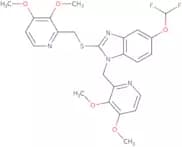
CAS:<p>Pantoprazole is a proton pump inhibitor. It is used in the treatment of gastroesophageal reflux disease and other conditions involving excessive stomach acid production. The chemical name for Pantoprazole impurity is (E)-1-(4-chlorophenyl)ethyl-3-[(pyrrolidin-2-yl)oxy]propanediol. This substance is an enantiomer of pantoprazole, which has been determined to be inactive. Pantoprazole impurity can be identified by its melting point, crystallizing habit, and optical rotation. Active carbon filtration can be used to remove this substance from the final product.</p>Formula:C24H24F2N4O5SPurity:Min. 95%Molecular weight:518.53 g/molOmeprazole Impurity 65
<p>Impurity 65 is an impurity of Omeprazole, a drug used to treat gastroesophageal reflux disease and peptic ulcer. Impurity 65 is a metabolite of Omeprazole that can be found in the drug product at a concentration up to 0.5%. It has been shown to have anti-inflammatory effects and can be used as a research and development standard for HPLC analysis. Impurity 65 is also used as an impurity standard in the USP pharmacopoeia and other pharmacopoeias around the world.</p>Formula:C17H17N3O4Purity:Min. 95%Molecular weight:327.33 g/mol7-Hydroxyhyoscyamine
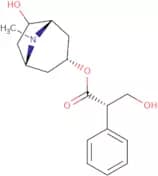
CAS:<p>7-Hydroxyhyoscyamine is an antibacterial agent that is used in the treatment of bacterial infections. It has been shown to inhibit the growth of a number of bacteria including Staphylococcus aureus, Streptococcus pyogenes, and Escherichia coli. 7-Hydroxyhyoscyamine has been shown to be more potent than 6-hydroxyhyoscyamine (6-OH Hya) for inhibiting protein synthesis in the bacteria. The compound does not have any psychoactive effects, unlike atropine sulfate, which is also an alkaloid found in plants from the Solanaceae family. 7-Hydroxyhyoscyamine can be synthesized by reacting atropine with nitrous acid or hydrochloric acid. This synthetic process leads to n-oxides as impurities, which can be removed by using a reversed phase high performance liquid chromatography (RP HPLC). Validation of this</p>Formula:C17H23NO4Purity:Min. 95%Color and Shape:PowderMolecular weight:305.4 g/molSolifenacin Impurity D
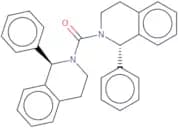
CAS:<p>Solifenacin Impurity D is a synthetic impurity of solifenacin. Solifenacin is an anti-cholinergic drug used to treat overactive bladder and urinary incontinence. The purity of this product is 99%. It is soluble in methanol, ethanol, chloroform, and acetone. Solifenacin Impurity D can be used as a reference material for analytical purposes or as an impurity standard in the development of new drugs.</p>Formula:C31H28N2OPurity:Min. 96 Area-%Color and Shape:White PowderMolecular weight:444.57 g/molLansoprazole impurity H
CAS:<p>Lansoprazole impurity H is a metabolite of lansoprazole, a proton pump inhibitor that inhibits the production of stomach acid. Lansoprazole impurity H is used in research and development as an analytical standard to measure lansoprazole concentrations in drug products. It is also used as an impurity standard for pharmacopoeia purposes. Lansoprazole impurity H is not known to be toxic, but it has not been evaluated for carcinogenicity or reproductive toxicity.</p>Formula:C23H16F3N5OSPurity:90%MinMolecular weight:467.47 g/molN-Desalkyl itraconazole
CAS:<p>N-Desalkyl itraconazole is a triazole antifungal drug that belongs to the group of medicines. It is used in the treatment of systemic mycoses, including blastomycosis and histoplasmosis. N-Desalkyl itraconazole has been shown to inhibit the growth of fungi by interfering with their cell membranes and inhibiting their production of ergosterol. Calibration studies have shown that this drug binds to human liver microsomes and plasma proteins, as well as transporters such as P-glycoprotein. These interactions may influence its pharmacokinetics, which can be determined using a bioanalytical method.</p>Formula:C31H30Cl2N8O4Purity:Min. 95%Molecular weight:649.53 g/mol2,12-Dihydro-1,3-dimethyl-9-methoxy-12-thioxobenzo [4,5] pyrido [1,2-c] imidazo [1,2-a] imidazol-2-one
CAS:<p>2,12-Dihydro-1,3-dimethyl-9-methoxy-12-thioxobenzo [4,5] pyrido [1,2-c] imidazo [1,2-a] imidazol-2-one is a synthetic compound that has not been evaluated in humans. This compound is an impurity standard for the synthesis of an API. The purity of this compound is >98% and it has been shown to be stable under acidic conditions.</p>Formula:C16H13N3O2SPurity:Min. 95%Molecular weight:311.36 g/mol




![10-Methoxy-5H-dibenz[b,f]azepine-5-carbonyl chloride](/_next/image/?url=https%3A%2Fstatic.cymitquimica.com%2Fproducts%2FTR%2Fthumb-webp%2FM100100.webp&w=3840&q=75)


![2,12-Dihydro-1,3-dimethyl-9-methoxy-12-thioxobenzo [4,5] pyrido [1,2-c] imidazo [1,2-a] imidazol-2…](/_next/image/?url=https%3A%2Fstatic.cymitquimica.com%2Fproducts%2F3D%2Fthumb-webp%2FID57925.webp&w=3840&q=75)