Purines and Pyrimidine Derivatives
Purines have a bicyclic structure, consisting of a six-membered ring fused to a five-membered ring, both containing nitrogen atoms in key positions. Purine derivatives, such as adenine and guanine, are essential for the formation of DNA and RNA. These compounds have therapeutic applications in cancer and viral disease treatments by inhibiting cell replication. Pyrimidines, on the other hand, have a monocyclic six-membered structure with two nitrogen atoms. Their derivatives, such as cytosine, thymine, and uracil, are also essential components of DNA and RNA and are used in chemotherapy and antiviral treatments.
At CymitQuimica, we offer purine and pyrimidine derivatives for research in molecular biology, genomics, and the development of innovative therapies.
Found 8902 products of "Purines and Pyrimidine Derivatives"
Sort by
Purity (%)
0
100
|
0
|
50
|
90
|
95
|
100
Urea-urethane Compound (~85%)
CAS:Controlled Product<p>Applications Urea-urethane Compound is a reaction product of 4,4'-sulfonylbis[benzenamine] and 2,4-TDI.<br></p>Formula:C42H36N6O8SPurity:~80%Color and Shape:NeatMolecular weight:784.84Pemetrexed Methyl Ester
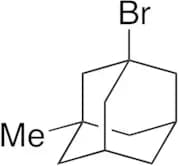
CAS:Controlled Product<p>Applications Protected Pemetrexed.<br></p>Formula:C22H25N5O6Color and Shape:NeatMolecular weight:455.46381-Bromo-3-methyladamantane
CAS:Controlled ProductFormula:C11H17BrColor and Shape:NeatMolecular weight:229.162,2,2-Trichloro-acetic Acid
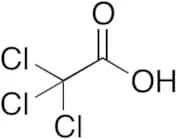
CAS:<p>Applications 2,2,2-Trichloro-acetic Acid is an acetic acid analogue used for the precipitation of macromolecules including proteins, DNA and RNA as well as for cosmetic treatments.<br> Not a dangerous good if item is equal to or less than 1g/ml and there is less than 100g/ml in the package<br>References Wiley D. et al.: Clin. Infect. Dis., 35m S210 (2002);<br></p>Formula:C2HCl3O2Color and Shape:Colourless To Off-WhiteMolecular weight:163.391,3,5-Trimethyladamantane
CAS:Controlled Product<p>Applications An alkyladamantane derivative that are biotransformed via strains of Pseudomonas. It is used to study alkyladamantane adsorption on graphitized thermal carbon black.<br>References Yashkin, S.N. et al.: Rus. Che,. Bull., 57, 2472 (2008); Slepen’kin, A. et al.: Nefeckhim., 33, 406 (1993);<br></p>Formula:C13H22Color and Shape:NeatMolecular weight:178.314-[6-(3-Methoxy-phenyl)-pyridin-3-yl]-pyrimidin-2-ylamine
Purity:95.0%Molecular weight:278.31500244140625Nicotinamide 1,N6-Ethenoadenine Dinucleotide
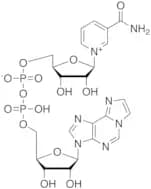
CAS:<p>Applications A fluorescent analog of Nicotinamide Adenine Dinucleotide as a coenzyme for glutamate dehydrogenase.<br>References Gafni, A., et al.: Biochemistry, 20, 6041 (1981), Creedon, K., et al.: J. Biol. Chem., 269, 16364 (1994), Seley, K., et al.: Bioorg. Med. Chem., 6, 797 (1998),<br></p>Formula:C23H27N7O14P2Color and Shape:NeatMolecular weight:687.4465(S)-N-(1-Amino-5-guanidino-1-oxopentan-2-yl)benzamide hydrochloride
CAS:Formula:C13H20ClN5O2Purity:95.0%Color and Shape:SolidMolecular weight:313.792-(4-Chlorophenyl)amino-4-phenylpyrimidine
CAS:Purity:95.0%Color and Shape:Solid, No data available.Molecular weight:281.739990234375Tri-POC Tenofovir Dimer (>90%)
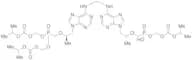
CAS:Controlled Product<p>Stability Very Hygroscopic<br>Applications Tri-POC Tenofovir Dimer is a dimer of Tenofovir Disoproxil (T018505), an acyclic phosphonate nucleotide analogue; reverse transcriptase inhibitor. Used as an anti-HIV agent. Antiviral. It is also used in the preparation of phosphocitrate for the treatment of rheumatoid and osteoarthritis in the elderly.<br>References Turhanen, P. et al.: J. Org. Chem., 72, 1468 (2007);<br></p>Formula:C34H52N10O17P2Purity:>90%Color and Shape:White To Light BeigeMolecular weight:934.78Methyl 2-(2-((6-(2-cyanophenoxy)pyrimidin-4-yl)oxy)phenyl)acetate
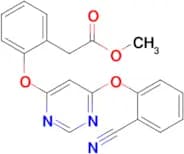
CAS:Purity:98%Molecular weight:361.356994628906251-Methyl-4-[5-(2-methylsulfamoylethyl)-1H-indol-3-yl]pyridinium Chloride
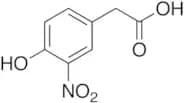
Controlled Product<p>Impurity Naratriptan pyridinium Impurity<br>Stability Hygroscopic<br>Applications Naratriptan (N378730) impurity.<br></p>Formula:C17H20ClN3O2SColor and Shape:NeatMolecular weight:365.884-Hydroxy-3-nitrophenylacetic Acid
CAS:Controlled Product<p>Applications A metabolite of Nitrotyrosine (N597000), which is excreted in the urine.<br>References van der Vliet, A., et al.: J. Biol. Chem., 272, 7617 (1997), Tabrizi-Fard, M., et al.: Drug Metab. Dispos., 27, 429 (1999), Souza, J., et al.: Arch. Biochem. Biophys., 380, 360 (2000),<br></p>Formula:C8H7NO5Color and Shape:NeatMolecular weight:197.14Dihydro Caffeic Acid 3-O-β-D-Glucuronide Diammonium Salt
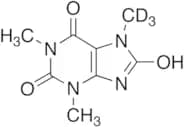
CAS:Controlled Product<p>Stability Hygroscopic<br>Applications Dihydro Caffeic Acid 3-O-β-D-Glucuronide is a glucuronide metabolite of Caffeic Acid (C080000).<br>References Clifford, M., et al.: J .Agric. Food Chem., 53, 3821 (2005), Lafay, S., et al.: J. Nutr., 136, 1192 (2006), Poquet, L., et al.: Drug Metab. Dispos., 36, 190 (2008)<br></p>Formula:C15H18O10•2NH3Color and Shape:NeatMolecular weight:358.30217031,3,7-Trimethyluric Acid-d3
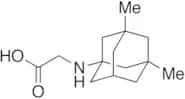
CAS:Controlled Product<p>Stability Store in freezer<br>Applications A caffeine metabolite.<br>References Regal, K.A., et al.: J. of Chromatography B, 708, 75 (1998)<br></p>Formula:C82H3H7N4O3Color and Shape:NeatMolecular weight:213.21Memantine Glycine
CAS:Controlled Product<p>Stability Hygroscopic<br>Applications An impurity of the antiparkinsonian and antispasmodic agent Memantine (M218000).<br>References Rystov, L. et al.: J. Pharmac. Biomed. Anal., 56, 887 (2011);<br></p>Formula:C14H23NO2Color and Shape:NeatMolecular weight:237.34L-Phenyl-d5-alanine-2,3,3-d3
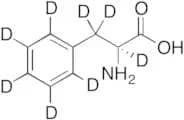
CAS:Controlled Product<p>Applications L-Phenyl-d5-alanine-2,3,3-d3 is an isotope labelled compound of L-Phenylalanine (P319415). L-Phenylalanine (Aspartame EP Impurity C) is an essential amino acid. L-Phenylalanine is biologically converted into L-tyrosine, another one of the DNA-encoded amino acids, which in turn is converted to L-DOPA and further converted into dopamine, norepinephrine, and epinephrine. L-Phenylalanine is produced for medical, feed, and nutritional applications such as in the preparation of Aspartame. Neuroprotective product.<br>References Hollunger, G. et al.: Acta Pharmacol. Toxicol., 34, 391 (1974); Bagchi, S.P. et al.: Biochem. Pharmacol., 26, 900 (1977)<br></p>Formula:C9D8H3NO2Color and Shape:NeatMolecular weight:173.24Urea-13C,15N2
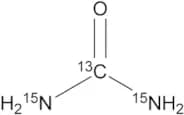
CAS:Controlled Product<p>Applications Labelled Urea. Physiological regulator of nitrogen excretion in mammals; synthesized in the liver as an end-product of protein catabolism and excreted in urine. Also occurs normally in skin. Emollient; diuretic.<br>References Demetriou, A., et al.: Science, 233, 1190 (1986), Aebischer, P., et al.: Nat. Med., 2, 696 (1996), Prakash, S., et al.: Biotechnol. Bioeng., 46, 621 (1995),<br></p>Formula:CH415N2OColor and Shape:NeatMolecular weight:63.03



![4-[6-(3-Methoxy-phenyl)-pyridin-3-yl]-pyrimidin-2-ylamine](/_next/image/?url=https%3A%2Fstatic.cymitquimica.com%2Fproducts%2F10%2Fthumb-webp%2FF511274.webp&w=3840&q=75)



![1-Methyl-4-[5-(2-methylsulfamoylethyl)-1H-indol-3-yl]pyridinium Chloride](/_next/image/?url=https%3A%2Fstatic.cymitquimica.com%2Fproducts%2FTR%2Fthumb-webp%2FM321050.webp&w=3840&q=75)