


Flavonoids and Polyphenols
Flavonoids are phenolic compounds that contain a structure of 15 carbon atoms, consisting of two aromatic rings linked by a three-carbon bridge. Polyphenols are a broader class of organic compounds containing multiple phenolic groups. Both groups have potent antioxidant properties, allowing them to protect cells from damage caused by free radicals. Flavonoids are commonly found in fruits, vegetables, and tea and are associated with improved cardiovascular health and the prevention of chronic diseases. Polyphenols also have applications in cancer prevention and brain health promotion.
At CymitQuimica, we offer high-quality flavonoids and polyphenols for research in chemistry, pharmacology, and biomedicine.
Found 17012 products of "Flavonoids and Polyphenols"
Sort by
Purity (%)
0
100
|
0
|
50
|
90
|
95
|
100
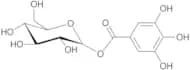
b-Glucogallin
CAS:Controlled Product<p>Stability Moisture Sensitive<br>Applications β-Glucogallin is used as a novel aldose reductase (ALR2) inhibitor, one of the factors regulating the secondary complications arising from diabetes mellitus.<br>References Puppala, M. et al.: PLoS. One., 7, 31399 (2012);<br></p>Formula:C13H16O10Color and Shape:NeatMolecular weight:332.261-Bromo-3,5-dimethoxy-4-fluorobenzene
CAS:Formula:C8H8BrFO2Purity:98%Color and Shape:SolidMolecular weight:235.052Curcumin
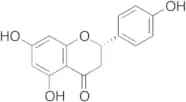
CAS:<p>Applications A natural phenolic compound. Potent anti-tumor agent having anti-inflammatory and antioxidant properties. Induces apoptosis in cancer cells and inhibits phorbol ester-induced protein kinase C (PKC) activity. Reported to inhibit production of inflammatory cytokines by peripheral blood monocytes and alveolar macrophages. Potent inhibitor of EGFR tyrosine kinase and IκB kinase. Inhibits inducible nitric oxide synthase (iNOS), cycloxygenase and lipoxygenase. Easily penetrates into the cytoplasm of cells, accumulating in membranous structures such as plasma membrane, endoplasmic reticulum and nuclear envelope.Curcumin is currently being examined as a possible therapeutic for the treatment of Alzheimers disease. Neuroprotective. Dyes and metabolites.<br>References Srinivasan, et al.: J. Pharm. Pharmacol., 5, 448 (1953), Tu, B., et al.: J .Cell Biol., 164, 341 (2004), Xu, G., et al.: Biochemistry, 44, 9817 (2005), Johnson, J., et al.: Cancer Lett., 255, 170 (2007), Chem. and Eng. News 90(31), 44 (2012)<br></p>Formula:C21H20O6Color and Shape:OrangeMolecular weight:368.38(S)-Naringenin
CAS:<p>Applications (S)-Naringenin, an active flavanone, maintains antioxidative, anti-inflammatory and antitumorigenic activities. Used in the treatment of praquat (PQ)-induced oxidative stress.<br>References Podder, B. et al.: J. Microbiol. Biotech., 24, 605 (2014); Abd El Azim, M. et al.: Org. Chem. An Ind. J., 10,410 (2014);<br></p>Formula:C15H12O5Color and Shape:Light BrownMolecular weight:272.25Isoorientin
CAS:<p>Applications Isoorientin is a flavonoid compound that can be isolated from the passion flower, and several other species of plants. Isoorientin has also shown to exert antioxidant, anti-nociceptive, anti-inflammatory and gastroprotective activities in several studies.<br>References Alves, S.F., et al.: J. Pharma. Rsch., 4, 4621 (2011); Ma, X., et al.: J. Agri. Food. Chem., 60, 10844 (2012); Joubert, E., et al.: J. Agri. Food. Chem., 60, 9171 (2012);<br></p>Formula:C21H20O11Color and Shape:Yellow PowderMolecular weight:448.38Rutin
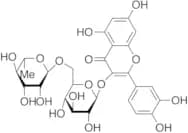
CAS:<p>Stability Hygroscopic<br>Applications Found in many plants, especially the buckwheat plant. Identity with Ilixanthin. Capillary protectant. Rutin is colored brown by tobacco enzyme under experimental conditions.<br>References Harrison, et al.: J. Am. Pharm. Assoc., 39, 557 (1950), Humphreys, et al.: Econ. Bot., 18, 195 (1964), Khalifa, T.I., et al.: Anal. Profiles Drug Subs., 12, 623 (1983).<br></p>Formula:C27H30O16Color and Shape:BeigeMolecular weight:610.52Triclosan-13C6
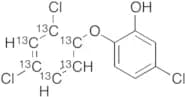
CAS:Controlled Product<p>Applications Isotope labelled Triclosan is used as bactericide and preservative for cosmetic and detergent compositions (1). Broadly used as an antiseptic and disinfectant (2). This compound is a contaminant of emerging concern (CECs). Drinking water contaminant candidate list 3 (CCL 3) compound as per United States Environmental Protection Agency (EPA). Environmental contaminants; Food contaminants.<br> Not a dangerous good if item is equal to or less than 1g/ml and there is less than 100g/ml in the package<br>References 1. Lindström, A. et al.: Environ. Sci. Technol. 2002 Jun 1;36(11):2322-9. 2. Ruszkiewicz, J. et al.: J. Toxicol. Environ. Health B. Crit. Rev. 2017;20(2):104-117.<br></p>Formula:C613C6H7Cl3O2Color and Shape:WhiteMolecular weight:295.5Carnosic Acid
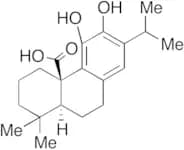
CAS:<p>Applications Carnosic Acid is a phenolic component of rosemary. It acts as a potent antioxdant and also has UV protective activity. Specifically protection for UV-A radiation and damage. Carnosic Acid also inhibits the free-radical chain reaction that leads to the oxidation of fats and oils, thereby stabilizing and increasing the shelf life of meats.<br>References Frankel, E. et al.: J. Agri. Food Chem., 44, 131 (1996); Offord, E. et al.: Free Rad Biol. Med., 32, 1293 (2002); Chem. and Eng. News Feb. 10, 2014 p. 13<br></p>Formula:C20H28O4Color and Shape:Yellow SolidMolecular weight:332.43Eugenol
CAS:Controlled Product<p>Stability Light Sensitive<br>Applications Eugenol is used in perfumes, flavorings, and essential oils. It is also used as a local antiseptic and anaesthetic. Eugenol is a dental compound which shows cytotoxicity to human oral squamous cell carcinoma and oral cells. When glucosylated, this compound exhibits anti-inflammatory activity.<br>References Koh, T. et al.: In Vivo, 27, 85 (2013); Zhang, P. et al.: Arch. Pharm. Res., 36, 109 (2013);<br></p>Formula:C10H12O2Color and Shape:YellowMolecular weight:164.204-(2,4-dimethoxyphenyl)-3H,4H,5H,6H,7H-imidazo[4,5-c]pyridine-6-carboxylic acid
CAS:Purity:95.0%Molecular weight:303.3179931640625Taspine
CAS:Controlled Product<p>Applications It is an alkaloid isolated from Radix et Rhizoma Leonticis. It shows various pharmaceutical properties: bacteriostatic, wound healing, cytotoxicity, immunosuppression, acetilcholinesterase inhibition, and inhibition of the activity of tumor angiogenesis.<br>References Perdue, G.P., et al.: J. Pharm. Sci., 68, 124 (1979), Tsacheva, I., et al.: J. Biosci., 59, 528 (2004), Zhang, Y., et al.: Cancer Lett., 262 103 (2008),<br></p>Formula:C20H19NO6Color and Shape:NeatMolecular weight:369.37(-)-Epicatechin Gallate
CAS:Controlled Product<p>Stability Light Sensitive<br>Applications One of the catechin isomers and a potent antioxidant that can modulate a wide range of membrane proteins. Its bilayer-modifying potency was tested using gramicidin A (gA) channels as probes. All the catechins alter gA channel function and modify bilayer properties, with a 500-fold range in potency. The gallate group causes current block, as evident by brief downward current transitions.<br>References Ingolfsson, H., et al.: FEBS Lett., 585, 3101 (2011),<br></p>Formula:C22H18O10Color and Shape:White To Off-WhiteMolecular weight:442.37(2E)-1-{[1,1'-biphenyl]-4-yl}-3-(2,3,4-trimethoxyphenyl)prop-2-en-1-one
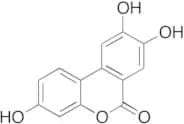
CAS:Purity:95.0%Molecular weight:374.4360046386719Urolithin C
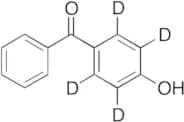
CAS:<p>Stability Hygroscopic<br>Applications Urolithin C is used in biological studies to evaluate the metabolite antioxidant activity.<br>References Ishimoto, H., et. al.: Bioorg. Med. Chem. Lett., 21, 5901 (2011);<br></p>Formula:C13H8O5Color and Shape:NeatMolecular weight:244.24-Hydroxybenzophenone-d4
CAS:Controlled Product<p>Applications 4-Hydroxybenzophenone-d4 is an isotopic analog of 4-Hydroxybenzophenone (H829305), a metabolite of benzophenone (B204980).<br>References Stocklinski, A. et al. Life Sciences 26, 365(1980)<br></p>Formula:C13H6D4O2Color and Shape:NeatMolecular weight:202.243-(4-METHOXYBENZYL)-1,3,7-TRIAZASPIRO[4.4]NONANE-2,4-DIONE HCL
Purity:95.0%Molecular weight:311.7699890136719





![4-(2,4-dimethoxyphenyl)-3H,4H,5H,6H,7H-imidazo[4,5-c]pyridine-6-carboxylic acid](/_next/image/?url=https%3A%2Fstatic.cymitquimica.com%2Fproducts%2F10%2Fthumb-webp%2FF522514.webp&w=3840&q=75)


![(2E)-1-{[1,1'-biphenyl]-4-yl}-3-(2,3,4-trimethoxyphenyl)prop-2-en-1-one](/_next/image/?url=https%3A%2Fstatic.cymitquimica.com%2Fproducts%2F10%2Fthumb-webp%2FF524246.webp&w=3840&q=75)
![3-(4-METHOXYBENZYL)-1,3,7-TRIAZASPIRO[4.4]NONANE-2,4-DIONE HCL](/_next/image/?url=https%3A%2Fstatic.cymitquimica.com%2Fproducts%2F10%2Fthumb-webp%2FF505848.webp&w=3840&q=75)