Flavonoids and Polyphenols
Flavonoids are phenolic compounds that contain a structure of 15 carbon atoms, consisting of two aromatic rings linked by a three-carbon bridge. Polyphenols are a broader class of organic compounds containing multiple phenolic groups. Both groups have potent antioxidant properties, allowing them to protect cells from damage caused by free radicals. Flavonoids are commonly found in fruits, vegetables, and tea and are associated with improved cardiovascular health and the prevention of chronic diseases. Polyphenols also have applications in cancer prevention and brain health promotion.
At CymitQuimica, we offer high-quality flavonoids and polyphenols for research in chemistry, pharmacology, and biomedicine.
Found 16994 products of "Flavonoids and Polyphenols"
Sort by
Purity (%)
0
100
|
0
|
50
|
90
|
95
|
100
3-(4-methoxyphenyl)-4-(4-methylphenyl)-4,5-dihydro-1H-1,2,4-triazole-5-thione
CAS:Purity:98%Molecular weight:297.38000488281253',3'',5',5''-Tetraiodophenolphthalein
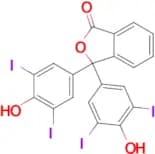
CAS:Purity:95.0%Color and Shape:Solid, Very pale yellow to pale yellow powderMolecular weight:821.9140014648438Honokiol
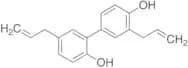
CAS:Controlled Product<p>Applications Honokiol is a small-molecule polyphenol isolated from the genus Magnolia. Recent studies show that Honokiol displays antiangiogenic, antiinflammatory, and antitumor properties in preclinical models, without appreciable toxicity. Honokiol has been shown to inhibit the bone metastatic growth of human prostate cancer cells.<br>References Fried, L.E. et al.: Antioxid. Redox Signal,. 11, 1139 (2009); Chen, X.R. et al.: Int. J. Oral Sci., 3, 34 (2011); Shigemura, K. et al.: Cancer, 109, 1279 (2007); Bai, X. et al.: J. Biol. Chem., 278, 35501 (2003);<br></p>Formula:C18H18O2Color and Shape:NeatMolecular weight:266.33Gallic Acid
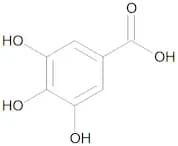
CAS:Controlled Product<p>Applications Gallic Acid exhibits a number of cellular effects including apoptosis and inhibits the growth of calf pulmonary arterial endothelial cell (CPAEC);Also, it is a polyphenol widely found in numerous fruits and vegetables that has been reported to exert anticancer effects, including apoptosis, against cancer cell lines.<br>References Park, W. H.: Mol. Med. Rep., 16, 7805-7812 (2017); Yang, C., et al.: RSC Adv., 8, 12449-12458 (2018)<br></p>Formula:C7H6O5Color and Shape:White To Light BrownMolecular weight:170.12Chlorogenic Acid
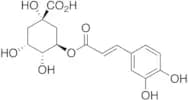
CAS:Controlled Product<p>Applications A major component of green coffee the extracts of which promote weight loss in overweight and obese people. Chlorogenic Acid is an important intermediate in lignin biosynthesis. Chlorogenic Acid is an antioxidant and an inhibitor of the tumor promoting activity of phorbol ester. It has protective effect against streptozotocin-nicotinamide generated oxidative stress induced diabetes and may also protect against cardiovascular disease.<br>References Chem. and Eng. News p. 20 April 15, 2013; Karthikesan, K. et al.: J. Func. Foods, 2, 134 (2010); Lincoln, W.M. et al.: Clin. Exp. Phamacol. Physiol., 27, 152 (2000); Gamborg, O.L. et al.: Can. J. Biochem., 45, 1451 (1967);<br></p>Formula:C16H18O9Color and Shape:NeatMolecular weight:354.314-(4-methoxybenzoyl)-8-methyl-1-oxa-4,8-diazaspiro[4.5]decane-3-carboxylic acid
CAS:Purity:95.0%Molecular weight:334.37200927734375(Z)-N-(1-Chloro-1-(4-methoxyphenyl)-3-oxo-3-(piperidin-1-yl)prop-1-en-2-yl)benzamide
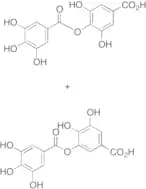
CAS:Purity:95.0%Molecular weight:398.8900146484375Mixture of p-Digallic Acid and m-Digallic Acid
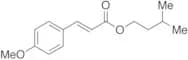
CAS:Controlled Product<p>Stability Hygroscopic<br>Applications Digallic Acid is an intermolecular ester of Gallic acid (G188900), a phenolic acid with antioxidant activity. Gallic acid was found to protect human cells against oxidative damage and showed cytotoxicity against cancer cells. Gallic Acid and its esters also show antiviral and antifungal activities.<br>References Yen, G. et al.: Food Chem., 79, 307 (2002); Chen, C. et al.: Mol. Nutrit. Food Res., 51, 962 (2007); Kratz, J. et al.: Mem. Inst. Oswaldo Cruz, 103, 437 (2008); Osborne, L. et al.: Infect. Immun., 33, 769 (1981)<br></p>Formula:MixtureVisitourWebsiteColor and Shape:NeatMolecular weight:Mixture - Visit our WebsiteIsoamyl 4-Methoxycinnamate
CAS:Controlled Product<p>Applications Isoamyl 4-Methoxycinnamate is used in the highly protective sunscreen composition against the UVA/UVB.<br>References Cuderman, P., et al: Anal. Bioanal. Chem., 387, 1343 (2007), Zhao, X., et al.: Environ. Sci. Technol., 42, 1201 (2008), Dubrovski, P., et al.: Text Res. J., 79, 351 (2009),<br></p>Formula:C15H20O3Color and Shape:NeatMolecular weight:248.32Glycitin
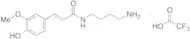
CAS:<p>Stability Hygroscopic<br>Applications A metabolite of isoflavone derivatives. A derivative of Glycitein. Inhibitor.<br>References Whalley, J.L., et al.: Bioorg. Med. Chem. Lett., 8, 1569 (1998), Song, T., et al.: J. Agric. Food Chem., 47, 1607 (1999),<br></p>Formula:C22H22O10Color and Shape:WhiteMolecular weight:446.40Feruloylputrescine Trifluoroacetic Acid Salt
CAS:Controlled Product<p>Stability Hygroscopic<br>Applications Feruloylputrescine is an effector of plant root systems, influencing development of nutrient gathering root systems. Inhibition of the formation of this compound causes the development of a dominant or ‘tap’ root.<br>References Ben-Hayyim G. et al.: FEBS Lett., 4, 145 (1994);<br></p>Formula:C14H20N2O3•C2HF3O2Color and Shape:NeatMolecular weight:264.3211402Quercetin 3-O-β-D-Glucuronide
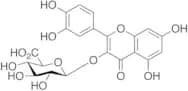
CAS:<p>Stability Very Hygroscopic<br>Applications Quercetin 3-O-β-D-Glucuronide is the major metabolite of Quercetin (Q509500).<br>References Ajay, M., et al.: Life Sci., 74, 603 (2003), Shen, S., et al.: Toxicol. Appl. Pharmacol., 197, 84 (2004), Amira, S., et al.: Eur. J. Pharmacol. 599, 126 (2008),<br></p>Formula:C21H18O13Color and Shape:NeatMolecular weight:478.362-Nitrophenol-3,4,5,6-d4
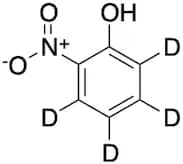
CAS:Controlled Product<p>Applications 2-Nitrophenol-3,4,5,6-d4 (CAS# 93951-78-1) is a useful isotopically labeled research compound.<br></p>Formula:C6D4HNO3Color and Shape:NeatMolecular weight:143.13(+/-)-Catechin xHydrate
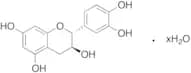
CAS:Controlled Product<p>Applications (+/-)-Catechin xHydrate is an antioxidant flavonoid.<br>References Liao, J. et al.: J. Agri. Food. Chem., 65, 3013 (2017);<br></p>Formula:C15H14O6Color and Shape:NeatMolecular weight:290.27Eupatilin
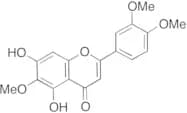
CAS:Controlled Product<p>Stability Hygroscopic<br>Applications Eupatilin maintains anticoagulant and antiplatelet activity isolated from the Artemisia princeps Pampanini flower.<br>References Ryu, R. et al.: Prev. Nutr. Food Sci., 18, 181 (2013);<br></p>Formula:C18H16O7Color and Shape:Light Yellow To BeigeMolecular weight:344.32



![4-(4-methoxybenzoyl)-8-methyl-1-oxa-4,8-diazaspiro[4.5]decane-3-carboxylic acid](/_next/image/?url=https%3A%2Fstatic.cymitquimica.com%2Fproducts%2F10%2Fthumb-webp%2FF525616.webp&w=3840&q=75)