


Flavonoids and Polyphenols
Flavonoids are phenolic compounds that contain a structure of 15 carbon atoms, consisting of two aromatic rings linked by a three-carbon bridge. Polyphenols are a broader class of organic compounds containing multiple phenolic groups. Both groups have potent antioxidant properties, allowing them to protect cells from damage caused by free radicals. Flavonoids are commonly found in fruits, vegetables, and tea and are associated with improved cardiovascular health and the prevention of chronic diseases. Polyphenols also have applications in cancer prevention and brain health promotion.
At CymitQuimica, we offer high-quality flavonoids and polyphenols for research in chemistry, pharmacology, and biomedicine.
Found 16994 products of "Flavonoids and Polyphenols"
Sort by
Purity (%)
0
100
|
0
|
50
|
90
|
95
|
100
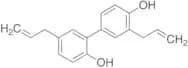
Honokiol
CAS:Controlled Product<p>Applications Honokiol is a small-molecule polyphenol isolated from the genus Magnolia. Recent studies show that Honokiol displays antiangiogenic, antiinflammatory, and antitumor properties in preclinical models, without appreciable toxicity. Honokiol has been shown to inhibit the bone metastatic growth of human prostate cancer cells.<br>References Fried, L.E. et al.: Antioxid. Redox Signal,. 11, 1139 (2009); Chen, X.R. et al.: Int. J. Oral Sci., 3, 34 (2011); Shigemura, K. et al.: Cancer, 109, 1279 (2007); Bai, X. et al.: J. Biol. Chem., 278, 35501 (2003);<br></p>Formula:C18H18O2Color and Shape:NeatMolecular weight:266.334-(2-methoxybenzoyl)-8-methyl-1-oxa-4-azaspiro[4.5]decane-3-carboxylic acid
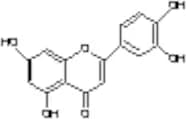
CAS:Purity:95.0%Molecular weight:333.3840026855469Luteolin
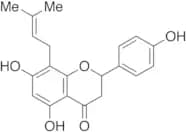
CAS:<p>Applications Hydroxylated flavone derivative with strong anti-oxidant and radical scavenging properties. Suggested to play a role in cancer prevention.<br>References Shimoi, L., et al.: Carcinogenesis, 15, 2669 (1994), Bors, W., et al.: Meth. Enzymol., 234, 420 (1994)Merck Index 12th ed. 5641<br></p>Formula:C15H10O6Color and Shape:NeatMolecular weight:286.24rac 8-Prenylnaringenin
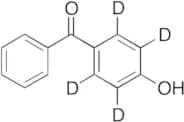
CAS:Controlled Product<p>Applications 8-Prenylnaringenin is a prenylflavonoid, a class on non-steroidal phytoestrogen that mimicks and/or modulating endogenous estrogens via estrogen receptor binding.<br>References Miyamoto, M. et al.: Planta Med., 64, 516 (1998); Kim, H.J. et al.: Arch. Pharm. Res., 31, 1241 (2008); Zierau, O. et al.: Mol. Cell. Endocrinol., 294, 92 (2008);<br></p>Formula:C20H20O5Color and Shape:Off White To Light YellowMolecular weight:340.374-Hydroxybenzophenone-d4
CAS:Controlled Product<p>Applications 4-Hydroxybenzophenone-d4 is an isotopic analog of 4-Hydroxybenzophenone (H829305), a metabolite of benzophenone (B204980).<br>References Stocklinski, A. et al. Life Sciences 26, 365(1980)<br></p>Formula:C13H6D4O2Color and Shape:NeatMolecular weight:202.24Scopoletin
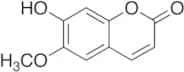
CAS:<p>Applications Scopoletin is the aglucone of Scopolin. Used for cosmetics, topical formulations, and foods. Dyes and metabolites.<br></p>Formula:C10H8O4Color and Shape:White To Light BrownMolecular weight:192.17(+)-[6]-Gingerol
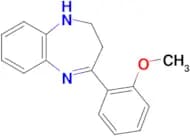
CAS:Controlled Product<p>Applications (+)-[6]-Gingerol is a bioactive compound found in ginger (Zingiber officinale) with antioxidant activity, which functions as an anti-inflammatory and antitumor agent. (+)-[6]-Gingerol down regulates proinflammatory cytokine release by macrophages. (+)-[6]-Gingerol has been shown to inhibit COX-2 expression by blocking the activation of p38 MAP kinase and NF-κB in phorbol ester-stimulated mouse skin.<br> Not a dangerous good if item is equal to or less than 1g/ml and there is less than 100g/ml in the package<br>References Aeschbach, R. et al.: Food Chem. Toxicol., 32, 31 (1994); Tripathi, S. et al.: J. Surg. Res., 130, 318 (2006); Kim, S.O., et al.: Oncogene 24, 2558 (2005);<br></p>Formula:C17H26O4Color and Shape:Dark Yellow SolidMolecular weight:294.394-(2-methoxyphenyl)-2,3-dihydro-1H-1,5-benzodiazepine
CAS:Purity:95.0%Molecular weight:252.31700134277344Isoorientin
CAS:<p>Applications Isoorientin is a flavonoid compound that can be isolated from the passion flower, and several other species of plants. Isoorientin has also shown to exert antioxidant, anti-nociceptive, anti-inflammatory and gastroprotective activities in several studies.<br>References Alves, S.F., et al.: J. Pharma. Rsch., 4, 4621 (2011); Ma, X., et al.: J. Agri. Food. Chem., 60, 10844 (2012); Joubert, E., et al.: J. Agri. Food. Chem., 60, 9171 (2012);<br></p>Formula:C21H20O11Color and Shape:Yellow PowderMolecular weight:448.381-Bromo-3,5-dimethoxy-4-fluorobenzene
CAS:Formula:C8H8BrFO2Purity:98%Color and Shape:SolidMolecular weight:235.052Triclosan-13C6
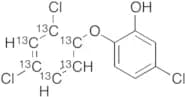
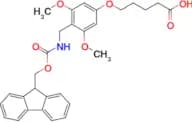
CAS:Controlled Product<p>Applications Isotope labelled Triclosan is used as bactericide and preservative for cosmetic and detergent compositions (1). Broadly used as an antiseptic and disinfectant (2). This compound is a contaminant of emerging concern (CECs). Drinking water contaminant candidate list 3 (CCL 3) compound as per United States Environmental Protection Agency (EPA). Environmental contaminants; Food contaminants.<br> Not a dangerous good if item is equal to or less than 1g/ml and there is less than 100g/ml in the package<br>References 1. Lindström, A. et al.: Environ. Sci. Technol. 2002 Jun 1;36(11):2322-9. 2. Ruszkiewicz, J. et al.: J. Toxicol. Environ. Health B. Crit. Rev. 2017;20(2):104-117.<br></p>Formula:C613C6H7Cl3O2Color and Shape:WhiteMolecular weight:295.55-(4-(((((9H-Fluoren-9-yl)methoxy)carbonyl)amino)methyl)-3,5-dimethoxyphenoxy)pentanoic acid
CAS:Purity:97%Molecular weight:505.5669860839844Carnosic Acid
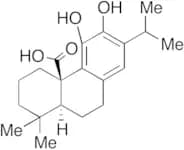
CAS:<p>Applications Carnosic Acid is a phenolic component of rosemary. It acts as a potent antioxdant and also has UV protective activity. Specifically protection for UV-A radiation and damage. Carnosic Acid also inhibits the free-radical chain reaction that leads to the oxidation of fats and oils, thereby stabilizing and increasing the shelf life of meats.<br>References Frankel, E. et al.: J. Agri. Food Chem., 44, 131 (1996); Offord, E. et al.: Free Rad Biol. Med., 32, 1293 (2002); Chem. and Eng. News Feb. 10, 2014 p. 13<br></p>Formula:C20H28O4Color and Shape:Yellow SolidMolecular weight:332.43Eugenol
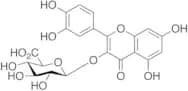
CAS:Controlled Product<p>Stability Light Sensitive<br>Applications Eugenol is used in perfumes, flavorings, and essential oils. It is also used as a local antiseptic and anaesthetic. Eugenol is a dental compound which shows cytotoxicity to human oral squamous cell carcinoma and oral cells. When glucosylated, this compound exhibits anti-inflammatory activity.<br>References Koh, T. et al.: In Vivo, 27, 85 (2013); Zhang, P. et al.: Arch. Pharm. Res., 36, 109 (2013);<br></p>Formula:C10H12O2Color and Shape:YellowMolecular weight:164.20Quercetin 3-O-β-D-Glucuronide
CAS:<p>Stability Very Hygroscopic<br>Applications Quercetin 3-O-β-D-Glucuronide is the major metabolite of Quercetin (Q509500).<br>References Ajay, M., et al.: Life Sci., 74, 603 (2003), Shen, S., et al.: Toxicol. Appl. Pharmacol., 197, 84 (2004), Amira, S., et al.: Eur. J. Pharmacol. 599, 126 (2008),<br></p>Formula:C21H18O13Color and Shape:NeatMolecular weight:478.364-(2,4-dimethoxyphenyl)-3H,4H,5H,6H,7H-imidazo[4,5-c]pyridine-6-carboxylic acid
CAS:Purity:95.0%Molecular weight:303.3179931640625

![4-(2-methoxybenzoyl)-8-methyl-1-oxa-4-azaspiro[4.5]decane-3-carboxylic acid](/_next/image/?url=https%3A%2Fstatic.cymitquimica.com%2Fproducts%2F10%2Fthumb-webp%2FF525596.webp&w=3840&q=75)

![(+)-[6]-Gingerol](/_next/image/?url=https%3A%2Fstatic.cymitquimica.com%2Fproducts%2FTR%2Fthumb-webp%2FG387205.webp&w=3840&q=75)



![4-(2,4-dimethoxyphenyl)-3H,4H,5H,6H,7H-imidazo[4,5-c]pyridine-6-carboxylic acid](/_next/image/?url=https%3A%2Fstatic.cymitquimica.com%2Fproducts%2F10%2Fthumb-webp%2FF522514.webp&w=3840&q=75)