


Flavonoids and Polyphenols
Flavonoids are phenolic compounds that contain a structure of 15 carbon atoms, consisting of two aromatic rings linked by a three-carbon bridge. Polyphenols are a broader class of organic compounds containing multiple phenolic groups. Both groups have potent antioxidant properties, allowing them to protect cells from damage caused by free radicals. Flavonoids are commonly found in fruits, vegetables, and tea and are associated with improved cardiovascular health and the prevention of chronic diseases. Polyphenols also have applications in cancer prevention and brain health promotion.
At CymitQuimica, we offer high-quality flavonoids and polyphenols for research in chemistry, pharmacology, and biomedicine.
Found 17015 products of "Flavonoids and Polyphenols"
Sort by
Purity (%)
0
100
|
0
|
50
|
90
|
95
|
100
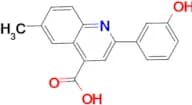
2-(3-hydroxyphenyl)-6-methylquinoline-4-carboxylic acid
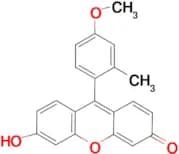
CAS:Purity:95.0%Molecular weight:279.29501342773446-HYDROXY-9-(4-METHOXY-2-METHYLPHENYL)-3H-XANTHEN-3-ONE
CAS:Purity:95.0%Molecular weight:332.35501098632814-(3,4,5-trimethoxybenzoyl)-1-oxa-4-azaspiro[4.5]decane-3-carboxylic acid
CAS:Purity:95.0%Molecular weight:379.408996582031253-(3-hydroxyphenyl)-3,4-dihydrobenzo[f]quinolin-1(2H)-one
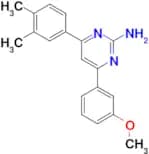
CAS:Purity:95.0%Color and Shape:Liquid, No data available.Molecular weight:289.33401489257814-(3,4-dimethylphenyl)-6-(3-methoxyphenyl)pyrimidin-2-amine
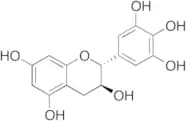
CAS:Purity:95.0%Molecular weight:305.3810119628906(+)-Gallocatechin
CAS:<p>Stability Hygroscopic<br>Applications (+)-Gallocatechin is antioxidant isomer of (-)-Gallocatechin (G188990), a potential cancer chemopreventive agent that inhibits the growth and adherence of P. gingivalis onto the buccal epithelial cells. An epimer of (-)-Epigallocatechin (E588940).<br>References Rychlik, J., et. al: J. Sci. Food Agr., 95, 1892 (2015); Guo, Q. et al.: Biochim. Biophys. Acta, 1427, 13 (1999); Sakanaka, S. et al.: Biosci. Biotechnol. Biochem., 60, 745 (1996)<br></p>Formula:C15H14O7Color and Shape:White To Light BrownMolecular weight:306.27Hesperetin 3’-O-β-D-Glucuronide
CAS:<p>Applications Hesperetin 3тАЩ-O-b-D-Glucuronide is one of the most abundant metabolite of Hesperetin (H289500) in vivo.<br>References van Zanden, J., et al.: Biochem. Pharmacol., 74, 345 (2007), Yanez, J., et al.: Biopharm. Drug Dispos., 29, 63 (2008), Brand, W., et al.: Drug Metab. Dispos., 38, 617 (2010),<br></p>Formula:C22H22O12Color and Shape:NeatMolecular weight:478.48-Methoxy-2-oxo-2H-chromene-3-carboxylic acid
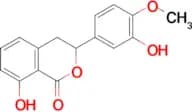
CAS:Purity:95.0%Color and Shape:Solid, solidMolecular weight:220.179992675781253,4-DIHYDRO-8-HYDROXY-3-(3-HYDROXY-4-METHOXYPHENYL) 1H-2-BENZOPYRAN-1-ONE
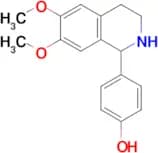
CAS:Purity:95.0%Color and Shape:SolidMolecular weight:286.28298950195314-(6,7-Dimethoxy-1,2,3,4-tetrahydro-isoquinolin-1-yl)-phenol
CAS:Purity:95.0%Molecular weight:285.3429870605469Scopoletin 7-O-Glucoside
CAS:Controlled Product<p>Applications Scopoletin 7-O-glucoside is a derivative of Scopoletin (S200500), a common constituent found in a variety of plants that has potential to regulate hyperthyroidism in rats. Scopoletin 7-O-glucoside is a compound that is obtained from the methanolic extract of the fresh underground parts of the flower Scopolia japonica.<br>References Okamura, S., et al.: Chem. Pharm. Bull., 40, 2981 (1992); Panda, S. & Kar, A.: Phytother. Res., 20, 1103 (2006)<br></p>Formula:C16H18O9Color and Shape:NeatMolecular weight:354.3098-ethyl-4-(2-methoxybenzoyl)-1-oxa-4,8-diazaspiro[4.5]decane-3-carboxylic acid
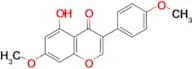
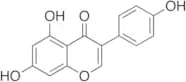
CAS:Purity:95.0%Molecular weight:348.39898681640625Genistein
CAS:Controlled Product<p>Stability Light Sensitive<br>Applications Exhibits specific inhibitory activity against tyrosine kinases,including autophosphorylation of epidermal growth factor receptor kinase (IC50 - 2.6uM). Also inhibits other protein kinases through competitive inhibition of ATP. Inhibits tumor cell proliferation and induces tumor cell differentiation. Produces cell-cycle arrest and apoptosis in Jurat T-leukemia cells. However, it prevents anti-CD3 monoclonal antibody-induced thymic apoptosis. Genistein also inhibits topoisomerase II activity in vitro. Genistein has also been shown to inhibit the action of GABA on recombinant GABAA receptors 2. uv(max)ethanol: 262.5 nm (e= 138). moderately sol. in hot alcohol<br>References Akiyama, T., et al.: J. Biol. Chem., 262, 5592 (1987), O'Dell, T.J., et al.: Nature, 353, 588 (1991), Aharonovits, O., et al.: Biochim Biophys. Acta, 1112, 181 (1992), Platanias, L.C., et al.: J. Biol. Chem., 267, 24053 (1992), Yoshida, H., et al.: Biochim. Biophys. Acta, 1137, 321 (1992), Uckun, F.M., et al.: Science, 267, 886 (1995), Merck Index 12th ed. 4395, Huang, R.Q.; Fang, M.J.; Dillon, G.H., Mol. Brain Res. 67: 177-183 (1999)<br></p>Formula:C15H10O5Color and Shape:Light YellowMolecular weight:270.243-AMINO-N-[(4-METHOXYPHENYL)METHYL]-4,6-DIMETHYLTHIENO[2,3-B]PYRIDINE-2-CARBOXAMIDE
CAS:Purity:95.0%Molecular weight:341.42999267578125

![4-(3,4,5-trimethoxybenzoyl)-1-oxa-4-azaspiro[4.5]decane-3-carboxylic acid](/_next/image/?url=https%3A%2Fstatic.cymitquimica.com%2Fproducts%2F10%2Fthumb-webp%2FF525526.webp&w=3840&q=75)
![3-(3-hydroxyphenyl)-3,4-dihydrobenzo[f]quinolin-1(2H)-one](/_next/image/?url=https%3A%2Fstatic.cymitquimica.com%2Fproducts%2F10%2Fthumb-webp%2FF314561.webp&w=3840&q=75)


![2-[5-(4-bromophenyl)-1H-pyrazol-3-yl]phenol](/_next/image/?url=https%3A%2Fstatic.cymitquimica.com%2Fproducts%2F10%2Fthumb-webp%2FF314136.webp&w=3840&q=75)

![8-ethyl-4-(2-methoxybenzoyl)-1-oxa-4,8-diazaspiro[4.5]decane-3-carboxylic acid](/_next/image/?url=https%3A%2Fstatic.cymitquimica.com%2Fproducts%2F10%2Fthumb-webp%2FF525696.webp&w=3840&q=75)

![3-AMINO-N-[(4-METHOXYPHENYL)METHYL]-4,6-DIMETHYLTHIENO[2,3-B]PYRIDINE-2-CARBOXAMIDE](/_next/image/?url=https%3A%2Fstatic.cymitquimica.com%2Fproducts%2F10%2Fthumb-webp%2FF513222.webp&w=3840&q=75)