Flavonoids and Polyphenols
Flavonoids are phenolic compounds that contain a structure of 15 carbon atoms, consisting of two aromatic rings linked by a three-carbon bridge. Polyphenols are a broader class of organic compounds containing multiple phenolic groups. Both groups have potent antioxidant properties, allowing them to protect cells from damage caused by free radicals. Flavonoids are commonly found in fruits, vegetables, and tea and are associated with improved cardiovascular health and the prevention of chronic diseases. Polyphenols also have applications in cancer prevention and brain health promotion.
At CymitQuimica, we offer high-quality flavonoids and polyphenols for research in chemistry, pharmacology, and biomedicine.
Found 17012 products of "Flavonoids and Polyphenols"
Sort by
Purity (%)
0
100
|
0
|
50
|
90
|
95
|
100
METHYL 4-[4-(HYDROXYMETHYL)-2-METHOXY-5-NITROPHENOXY]BUTANOATE
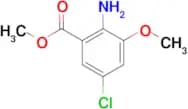
CAS:Purity:98%Molecular weight:299.2789917METHYL 2-AMINO-5-CHLORO-3-METHOXYBENZOATE
CAS:Purity:98%Color and Shape:SolidMolecular weight:215.6300049N-{9-[(2R,4S,5R)-5-{[bis(4-methoxyphenyl)(phenyl)methoxy]methyl}-4-hydroxyoxolan-2-yl]-6-oxo-6,9-dihydro-3H-purin-2-yl}-2-methylpropanamide
CAS:Purity:97%Molecular weight:639.70898443-[3-(2-Carboxyeth-1-en-1-yl)phenyl]prop-2-enoic acid
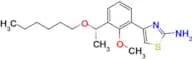
CAS:Purity:≥98%(HPLC)Color and Shape:SolidMolecular weight:218.2079926(S)-4-(3-(1-(HEXYLOXY)ETHYL)-2-METHOXYPHENYL)THIAZOL-2-AMINE
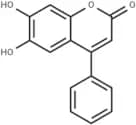
CAS:Purity:98%Molecular weight:334.480011Nordalbergin
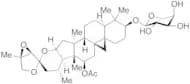
CAS:<p>Nordalbergin, a coumarin isolated from the bark of Dalbergia sissoo, can significantly induce the differentiation of HL-60 cells.</p>Formula:C15H10O4Purity:99.84% - 99.86%Color and Shape:SolidMolecular weight:254.2427-Deoxyactein
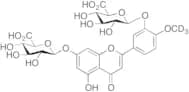
CAS:Controlled Product<p>Applications 27-Deoxyactein has shown stimulation of osteoblast function and inhibits bone resorbing mediators in the treatment of osteoporosis. It is a derivative of Actein (A191800), a gamma secretase modulators derived from botanicals.<br>References Choi, E. et al. J. App. Toxicol., 33, 190 (2010); Findeis, M. et al.: ACS. Chem. Neurosci., 3, 941 (2012); Einbond, L. et al.: Fund. Clin. Pharm., 23, 311 (2009);<br></p>Formula:C37H56O10Color and Shape:NeatMolecular weight:660.83Diosmetin 3',7-Diglucuronide-d3
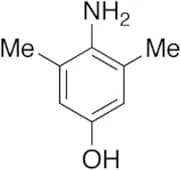
CAS:Controlled Product<p>Applications Diosmetin 3’,7-Diglucuronide-d3 is labelled Diosmetin 3’,7-Diglucuronide (D485040), a metabolite of Diosmetin (D485000) which is a flavonoid often administered in the treatment of chronic venous insufficiency, hemorrhoids, and related affections.<br>References Silverstro, L., et al.: Anal. Bioanal. Chem., 405, 8295 (2013); Boutin, J., et al.; Drug Metab. Dispos., 21, 1157 (1993)<br></p>Formula:C28H25D3O18Color and Shape:NeatMolecular weight:655.534-Amino-3,5-xylenol
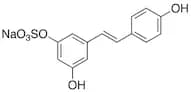
CAS:Controlled Product<p>Applications A major Lidocaine metabolite.<br> Not a dangerous good if item is equal to or less than 1g/ml and there is less than 100g/ml in the package<br>References Falany, C., et al.: Drug Metab. Disposition, 27, 1057 (1999), Gan, J., et al.: Chem. Res. Toxicol., 14, 672 (2001), Lienert, J., et al.: Envir. Sci. Technol., 41, 4471 (2007),<br></p>Formula:C8H11NOColor and Shape:NeatMolecular weight:137.18trans Resveratrol 3-Sulfate Sodium Salt
CAS:Controlled Product<p>Applications A metabolite of trans Resveratrol.<br>References Banerjee, S., et al.: Cancer Res., 62, 4945 (2002), Wang, L., et al.: J. Pharm. Sci., 93, 2448 (2004), Provinciali, M., et al.: Int. J. Cancer, 115, 36 (2005), Lancon, A., et al.: Drug Metab. Dispos., 35, 699 (2007),<br></p>Formula:C14H11NaO6SColor and Shape:NeatMolecular weight:330.29Genistein-2’,6’-d2
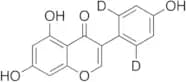
CAS:Controlled Product<p>Applications Exhibits specific inhibitory activity against tyrosine kinases,including autophosphorylation of epidermal growth factor receptor kinase (IC50 - 2.6uM). Also inhibits other protein kinases through competitive inhibition of ATP. Inhibits tumor cell proliferation and induces tumor cell differentiation. Produces cell-cycle arrest and apoptosis in Jurat T-leukemia cells. However, it prevents anti-CD3 monoclonal antibody-induced thymic apoptosis. Genistein also inhibits topoisomerase II activity in vitro. Genistein has also been shown to inhibit the action of GABA on recombinant GABAA receptors2. uv(max)ethanol: 262.5 nm (e= 138). moderately sol. in hot alcohol<br>References Akiyama, T., et al.: J. Biol. Chem., 262, 5592 (1987), O'Dell, T.J., et al.: Nature, 353, 588 (1991), Aharonovits, O., et al.: Biochim Biophys. Acta, 1112, 181 (1992), Platanias, L.C., et al.: J. Biol. Chem., 267, 24053 (1992), Yoshida, H., et al.: Biochim. Biophys. Acta, 1137, 321 (1992), Uckun, F.M., et al.: Science, 267, 886 (1995)Merck Index 12th ed. 43952. Huang, R.Q.; Fang, M.J.; Dillon, G.H., Mol. Brain Res. 67: 177-183 (1999)<br></p>Formula:C152H2H8O5Color and Shape:NeatMolecular weight:272.25

![METHYL 4-[4-(HYDROXYMETHYL)-2-METHOXY-5-NITROPHENOXY]BUTANOATE](/_next/image/?url=https%3A%2Fstatic.cymitquimica.com%2Fproducts%2F10%2Fthumb-webp%2FF842279.webp&w=3840&q=75)



![N-{9-[(2R,4S,5R)-5-{[bis(4-methoxyphenyl)(phenyl)methoxy]methyl}-4-hydroxyoxolan-2-yl]-6-oxo-6,9-d…](/_next/image/?url=https%3A%2Fstatic.cymitquimica.com%2Fproducts%2F10%2Fthumb-webp%2FF824102.webp&w=3840&q=75)
![3-[3-(2-Carboxyeth-1-en-1-yl)phenyl]prop-2-enoic acid](/_next/image/?url=https%3A%2Fstatic.cymitquimica.com%2Fproducts%2F10%2Fthumb-webp%2FF958507.webp&w=3840&q=75)
![4-Chloro-2-[(ethylamino)methyl]phenol](/_next/image/?url=https%3A%2Fstatic.cymitquimica.com%2Fproducts%2F10%2Fthumb-webp%2FF692664.webp&w=3840&q=75)