Quinones and Derivatives
Quinones are aromatic compounds containing a benzene ring system with two carbonyl groups in specific positions, forming a cyclohexene structure with oxygen. They are derived from compounds such as anthraquinone and 1,4-benzoquinone, which play important biological roles, including electron transfer in metabolic processes. Quinone derivatives, such as hydroquinones and antirheumatic agents, have applications in the pharmaceutical industry due to their antioxidant, antimicrobial, and anticancer properties. Additionally, quinones are used in the production of dyes and cosmetic products.
At CymitQuimica, we offer quinones and their derivatives for applications in organic chemistry, pharmaceuticals, and the cosmetic industry.
Found 24205 products of "Quinones and Derivatives"
Sort by
Purity (%)
0
100
|
0
|
50
|
90
|
95
|
100
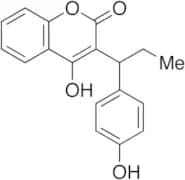
4’-Hydroxyphenprocoumon
CAS:Controlled Product<p>Applications 4’-Hydroxyphenprocoumon is a metabolite of the oral anticoagulant Phenprocoumon (P318820).<br>References De Vries, J. et al.: J. Chrom. Biomed. Appl., 529, 479 (1990);<br></p>Formula:C18H16O4Color and Shape:NeatMolecular weight:296.326-P-Toluidino-2-Naphthalenesulfonic Acid
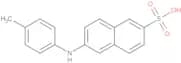
CAS:<p>M03677 - 6-P-Toluidino-2-Naphthalenesulfonic Acid</p>Formula:C17H15NO3SColor and Shape:Solid, PowderMolecular weight:313.3699951171875p-Toluic Acid
CAS:<p>Applications p-Toluic Acid is used as a reagent in the synthesis of several organic compounds including that of 2-aryl-1,3,4-oxadiazole derivatives which are potential antibacterial agents. Also used in the synthesis of 4-(bromomethyl) benzoic acid.<br>References Karimi, F., et al.: J. Chem. Pharm. Res., 7, 1028 (2015); Zheng, F., et al.: Guangdong Huagong, 42, 27 (2015);<br></p>Formula:C8H8O2Color and Shape:NeatMolecular weight:136.153-Hydroxy Benzopyrene
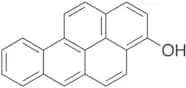
CAS:<p>Applications A metabolite of Benzopyrene (BaP), a carcinogenic component of tobacco smoke implicated in lung cancer.<br> Not a dangerous good if item is equal to or less than 1g/ml and there is less than 100g/ml in the package<br>References DiBiasio, K., et al.: Drug Metab. Dispos.,19, 227 (1991), Beach, J., et al.: J. Anal. Toxicol., 24, 670 (2000), Borman, S., et al.: Toxicol. Appl. Pharmacol., 167, 191 (2000), Tsai-Turton, M., et al.: Biol. Reprod., 77, 442 (2007),<br></p>Formula:C20H12OColor and Shape:NeatMolecular weight:268.31Vanillic Acid
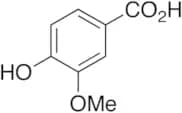
CAS:Controlled Product<p>Applications Vanillin, a compound widely used in foods, beverages, cosmetics and drugs, has been reported to exhibit multifunctional effects such as antimutagenic, antiangiogenetic, anti-colitis, anti-sickling, and antianalgesic effects. However, results of studies on the antioxidant activity of vanillin are not consistent.<br>References Ohta, T., et al.: Food Chem. Toxicol., 24, 51 (1986), Zhou, Y., et al.: Biochem. Pharmacol., 42, 1177 (1991), Santos, J., et al.: Mutat. Res., 444, 355 (1999),<br></p>Formula:C8H8O4Color and Shape:NeatMolecular weight:168.15Ref: 10-F764387
1gTo inquire2gTo inquire5gTo inquire10gTo inquire25gTo inquire250mgTo inquire500mgTo inquireAcenocoumarol
CAS:Controlled Product<p>Applications Vitamin K antagonist; structurally similar to Warfarin. Anticoagulant.<br>References Leroux, M., et al.: Therapie, 11, 85 (1956), Wheeler, C.R., et al.: J. Med. Chem., 22, 1122 (1979),<br></p>Formula:C19H15NO6Color and Shape:Off-WhiteMolecular weight:353.33Kojic Acid
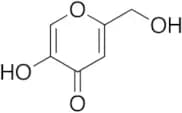
CAS:<p>Applications A naturally occurring chelation agent.<br>References Boonme, P., et al.: J. Biomed. Nanotechnol., 5, 373 (2009), Noh, J., et al.: Bioorg. Med. Chem., Lett., 19, 5586 (2009), Gohil, V., et al.: Nat. Biotechnol., 28, 249 (2010),<br></p>Formula:C6H6O4Color and Shape:NeatMolecular weight:142.11Indeno[1,2,3-cd]pyrene
CAS:<p>Applications Indeno[1,2,3-cd]pyrene is a polycyclic aromatic hydrocarbon (PAH) and a known carcinogen. Indeno[ 1,2,3-cd]pyrene is listed as a priority pollutant by the Environmental Protection Agency (EPA). Indeno[1,2,3-cd]pyrene has been detected in automobile engine exhaust, charcoal broiled foods, ground water, river sediments as well as cigarette smoke condensate.<br>References Rice, J.E. et al.: J. Org. Chem., 51, 2428 (1986); Smith, C.J. et al.: Food Clin. Toxicol., 38, 637 (2000); Panalaks, T.: J. Environ. Sci. Health. Part B Pest. Food Cont. Agric. Wastes, B11, 299 (1976);<br></p>Formula:C22H12Color and Shape:Light Yellow To Dark OrangeMolecular weight:276.33Trifloxystrobin
CAS:Controlled Product<p>Stability Moisture Sensitive<br>Applications Trifloxystrobin is a broad-spectrum foliar fungicide used in plant pritection. Trifloxystrobin functions by inhibiting fungal spore germination. Useful in cannabis testing kits as a component of pesticide mixes (P698235).<br> Not a dangerous good if item is equal to or less than 1g/ml and there is less than 100g/ml in the package<br>References Margot, P. et al.: Bright. Crop Prot. Conf. Pest Dis., 2, 375 (1998); Karadimos, D.A. et al.: Crop Prot., 24, 23 (2005); Prom, L.K. et al.: Plant Dis., 87, 252 (2003);<br></p>Formula:C20H19F3N2O4Color and Shape:NeatMolecular weight:408.374',5'-Bis(3-carboxyphenyl)-[1,1':2',1''-terphenyl]-3,3''-dicarboxylic acid
CAS:Purity:98%Molecular weight:558.5419921875Phthalic Anhydride
CAS:Controlled Product<p>Stability Moisture sensitive<br>Applications Phthalic Anhydride is an organic compound and the anhydride of phthalic acid (P384480). Phthalic Anhydride is an important industrial chemical commonly used in large-scale production of plasticizers for plastics. Recent research have also evaluated Phthalic Anhydride as potential antibacterial agent.<br>References Balaswamy, G., et al.: Intern. J. Chem. Sci., 10, 619 (2012);<br></p>Formula:C8H4O3Color and Shape:ColourlessMolecular weight:148.121-Phenanthrol
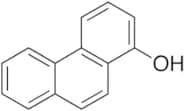
CAS:Controlled ProductFormula:C14H10OColor and Shape:Light Beige To Light BrownMolecular weight:194.23Bisphenol A-d6 Diglycidyl Ether
CAS:Controlled Product<p>Applications Labelled Bisphenol A derivative. A PPARγ antagonist; exhibits estrogenic activity.<br>References Krishnan, A.V., et al.: Endocrinology, 132, 2279 (1993), Steinmetz, R., et al.: Trends Endocrinol. Metab., 9, 124 (1998), Petersen, H., et al.: Eur. Food Res. Technol., 216, 355 (2003),<br></p>Formula:C21H18D6O4Color and Shape:Off-WhiteMolecular weight:346.45




![Indeno[1,2,3-cd]pyrene](/_next/image/?url=https%3A%2Fstatic.cymitquimica.com%2Fproducts%2FTR%2Fthumb-webp%2FI510960.webp&w=3840&q=75)


![4',5'-Bis(3-carboxyphenyl)-[1,1':2',1''-terphenyl]-3,3''-dicarboxylic acid](/_next/image/?url=https%3A%2Fstatic.cymitquimica.com%2Fproducts%2F10%2Fthumb-webp%2FF612551.webp&w=3840&q=75)