Phytochemicals
Phytochemicals are naturally occurring compounds found in plants, which are responsible for their color, flavor, and disease resistance. These bioactive compounds, including flavonoids, alkaloids, terpenoids, and polyphenols, are extensively researched for their health benefits, including antioxidant, anti-inflammatory, and anticancer effects. At CymitQuimica, we offer a wide range of phytochemicals for research in natural product development, disease prevention, and therapeutic applications.
Found 3392 products of "Phytochemicals"
Sort by
Purity (%)
0
100
|
0
|
50
|
90
|
95
|
100
Withanolide A
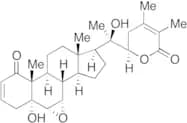
CAS:Controlled Product<p>Applications Withanolide A, is a neuritogenic steroid. It may act as deterrent for feeding insect larva and other herbivores. Withaferin A, causes activation of Notch2 and Notch4 in human breast cancer cells, and thus used as novel anticancer agents.<br>References Liffert, R., et al.: Chemical Science, 4, 2851 (2013); Lee. J., et al.: Breast Cancer, Res. treat., 136, 45 (2012);<br></p>Formula:C28H38O6Color and Shape:NeatMolecular weight:470.602-(Hydroxymethyl)butanoic Acid
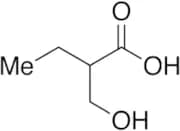
CAS:Controlled Product<p>Applications 2-(Hydroxymethyl)butanoic Acid was used as a substrate to study the activity of 2-methyl-3hydroxybutyryl-CoA dehydrogenase deficiency in patients and carriers.<br>References Garcia-Villoria., J., et al.: Clin. Biochem., 42, 27 (2009);<br></p>Formula:C5H10O3Color and Shape:NeatMolecular weight:118.13Lanosterol (Technical Grade)
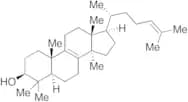
CAS:Controlled Product<p>Applications Lanosterol is a sterol cholesterol precursor that maintains a stable concentration in the cortex of rats during aging however concentrations of Lanosterol increases in the liver during aging. Lanosterol is found in Mushroom Inonotus obliquus (I.obliquus) which is known to have anti-inflammatory and anticancer properties.<br>References Smiljanic, K., et. al.: Lipids, 48, 1069 (2013); Ma, L., et. al.: Food Chem., 139, 503 (2013)<br></p>Formula:C30H50OColor and Shape:NeatMolecular weight:426.72Isopimaric Acid
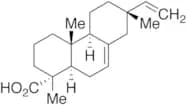
CAS:Controlled Product<p>Applications A potent novel activators of large-conductance Ca2+-activated K+ channel.<br> Not a dangerous good if item is equal to or less than 1g/ml and there is less than 100g/ml in the package<br>References Imaizumei, Y. et al.: Mol. Pharmacol., 62, 836 (2002); Chang, S. et al.: AM. J. Physiol., 298, F1416 (2010);<br></p>Formula:C20H30O2Purity:>90%Color and Shape:Off-WhiteMolecular weight:302.45Cyanidin 3-O-Rutinoside (75%)
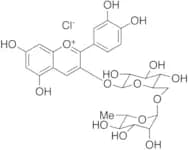
CAS:Controlled Product<p>Applications Cyanidin 3-O-Rutinoside retards absorption of carbohydrates by inhibition of α-glucosidase which may be useful as a potential inhibitor for prevention and treatment of diabetes mellitus.<br>References Raptis, S., et al.: Exp Clin Endocrinol Diabetes 2001, 109, S265,,Ceriello, A; Diabetes 2005, 54, 1,,Chiasson, J; Endocr Pract 2006, 12, 25,,,Misra, A; J Clin Endocrinol Metab 2008, 93, S9<br></p>Formula:C27H31O15·ClPurity:75%Color and Shape:NeatMolecular weight:630.98Palmatine Chloride
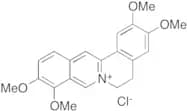
CAS:Controlled Product<p>Applications Palmatine Chloride is a protoberberine alkaloid, as a potential anti-inflammatory and anti-hypertensive agent.<br>References Bhadra, K. et al.: Med. Res. Rev., 31, 821 (2011)<br></p>Formula:C21H22NO4·ClColor and Shape:NeatMolecular weight:387.86Chelerythrine Chloride
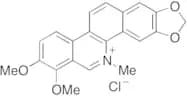
CAS:<p>Stability Hygroscopic<br>Applications Chelerythrine Chloride is a cell permeable protein kinase C (PKC) inhibitor.<br>References Song, L., et. al.: Brain Res., 1564, 52 (2014)<br></p>Formula:C21H18NO4·ClColor and Shape:YellowMolecular weight:383.82Berberine Sulfate
CAS:Formula:C40H36N2O12SPurity:>98.0%(T)(HPLC)Color and Shape:Light yellow to Yellow powder to crystalMolecular weight:768.79Monoammonium Glycyrrhizinate
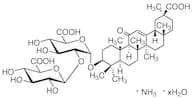
CAS:Formula:C42H65NO16Purity:>75.0%(HPLC)Color and Shape:White to Light yellow powder to crystalMolecular weight:839.97Cantharidin
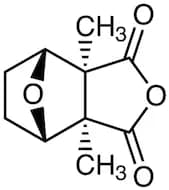
CAS:Formula:C10H12O4Purity:>98.0%(GC)Color and Shape:White to Almost white powder to crystalMolecular weight:196.20Bakuchiol
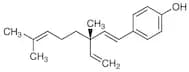
CAS:Formula:C18H24OPurity:>98.0%(HPLC)Color and Shape:Colorless to Yellow clear liquidMolecular weight:256.39Tomatine from Tomato
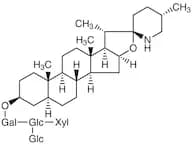
CAS:Formula:C50H83NO21Purity:>80.0%(HPLC)Color and Shape:White to Yellow to Orange powder to crystalMolecular weight:1,034.20Asiatic Acid
CAS:Formula:C30H48O5Purity:>97.0%(T)Color and Shape:White Solid FormMolecular weight:488.71Ginsenoside Rd
CAS:Formula:C48H82O18Purity:>98.0%(HPLC)Color and Shape:White to Almost white powder to crystalMolecular weight:947.17Betulinic Acid
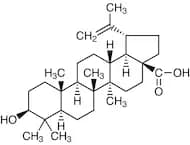
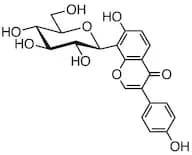
CAS:Formula:C30H48O3Purity:>97.0%(GC)(T)Color and Shape:White to Light yellow to Light orange powder to crystalMolecular weight:456.71Puerarin
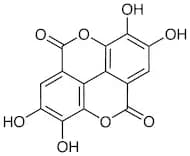
CAS:Formula:C21H20O9Purity:>98.0%(T)(HPLC)Color and Shape:White to Almost white powder to crystalMolecular weight:416.38Ellagic Acid
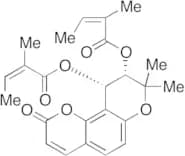
CAS:Formula:C14H6O8Purity:>95.0%(T)(HPLC)Color and Shape:White to Light yellow powder to crystalMolecular weight:302.19Praeruptorin B
CAS:Controlled Product<p>Stability Light Sensitive<br>Applications Praeruptorin B is a bioactive constituent of Peucedani Radix, a traditional Chinese medicinal herb used in the treatment of respiratory and pulmonary disorders.<br>References Song, Y. et al.: Rapid. Commun. Mass. Spect., 25, 719 (2011);<br></p>Formula:C24H26O7Color and Shape:NeatMolecular weight:426.46Quassin (Mixture of Quassin, Isoquassin and Neoquassin)
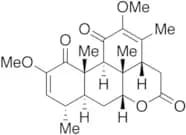
CAS:Controlled Product<p>Applications Quassin is a naturally occurring extract from quassia trees and is used in traditional chinese medicine for its antiulcerogenic properties. Quassin have also been used as an additive in soft drinks.<br>References Raji, Y., et al.: Afr. J. Trad. Comp. Alter. Med., 9, 112 (2012); Beutler, J.A., et al.: J. Nat. Prod., 72, 503 (2009);<br></p>Formula:C22H28O6Color and Shape:White PowderMolecular weight:388.4541Bergaptol
CAS:Controlled Product<p>Applications A hydroxylated psoralen that acts as a potent inhibitors of debenzylation activity of CYP3A4 enzyme with an IC50 value of 24.92 and 42.93 μM, respectively. Recent studies suggest that it may have antiproliferative and anticancer properties.<br>References Girennavar, B. et al.: Bororg. Med. Chem., 14, 3684 (2007); Girennavar, B. et al..: J. Food Sci., 72, C417 (2007); Joa, H. et al.: J. Nat. Prod., 74, 1513 (2011); Hirata, T. et al.: Bioorg. Med. Chem.<br></p>Formula:C11H6O4Color and Shape:NeatMolecular weight:202.16