Phytochemicals
Found 3416 products of "Phytochemicals"
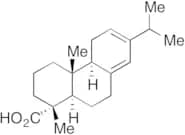
Levopimaric Acid
CAS:Controlled ProductStability Air Sensitive
Applications Levopimaric Acid is a major component of pine oleoresin. It is an abietane-type of diterpene resin acid and has antibacterial, cardiovascular, and antioxidant properties.
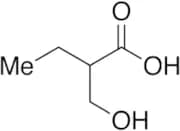
References Kersten, P. J., et al.: J. Chem. Ecol., 32(12), 2679-85 (2006)Formula:C20H30O2Color and Shape:White To Off-WhiteMolecular weight:302.452-(Hydroxymethyl)butanoic Acid
CAS:Controlled ProductApplications 2-(Hydroxymethyl)butanoic Acid was used as a substrate to study the activity of 2-methyl-3hydroxybutyryl-CoA dehydrogenase deficiency in patients and carriers.
References Garcia-Villoria., J., et al.: Clin. Biochem., 42, 27 (2009);Formula:C5H10O3Color and Shape:NeatMolecular weight:118.13JHSB3 , approximately 80%
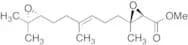
CAS:Controlled ProductApplications JHSB3 is an acyclic sesquiterpenoid that regulates many aspects of insect physiology. Juvenile Hormone regulate development, reproduction, diapause, and polyphenisms.
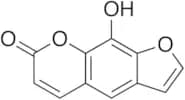
References Kotaki, T., et al.: Org. Let., 11, 5234 (2009); Riddiford, L.: Adv. Insect Physiol., 24, 213 (1994); Wyatt, G., Davey, K.: Adv. Insect Physiol., 26, 1 (1996); Nijhout, H.: Insect Hormones (Princeton Univ. Press, Princeton) (1994)Formula:C16H26O4Purity:80%Color and Shape:NeatMolecular weight:282.38Xanthotoxol
CAS:Controlled ProductApplications A hydroxylated psoralen that inhibits neutrophil infiltration and brain edema induced by focal cerebral ischemia-reperfusion injury in rats. A potentially useful antiarrhythmic agent. It has been shown to be effective in the prevention of ventricular fibrillation of mice induced by chloroform, of rats induced by calcium chloride, and in treatment of rat arrhythmia induced by aconitine. Recent studies show that it may also have antioxidant and anticancer activities.
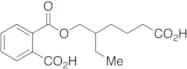
References Lian, Q. et al.: Zhongcaoyao, 27, 347 (1996); He, W. et al.: Zhong. Yao. Tong., 25, 668 (2009); Prasad, K.N. et al.: Food Chem., 118, 62 (2009);Formula:C11H6O4Color and Shape:NeatMolecular weight:202.16rac Mono(5-carboxy-2-ethylpentyl) Phthalate
CAS:Stability Very Hygroscopic
Applications Mono(5-carboxy-2-ethylpentyl) Phthalate is a metabolite of Bis(2-ethylhexyl) Phthalate (DEHP) (B433850).
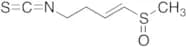
References Engel, S., et al.: NeuroToxicol., 30, 522 (2009), Hernandez-Diaz, S., et al.: Environ. Health Perspectives, 117, 185 (2009), Berman, T., et al.: Environ. Int., 35, 353 (2009),Formula:C16H20O6Color and Shape:Colourless To Light BrownMolecular weight:308.33Sulforaphene
CAS:Controlled ProductApplications Sulforaphene is an extract from the seeds of Raphanus sativus and displays anti-inflammatory and anti-cancer activity.
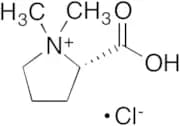
References Kim, K. et al.: J. Ethnopharmacol., 151, 503 (2014);Formula:C6H9NOS2Color and Shape:Colourless To YellowMolecular weight:175.27Stachydrine Chloride
CAS:Controlled ProductStability Hygroscopic
Applications Stachydrine Chloride is a constituent of the Chinese herb leonurus heterophyllus sweet. its used in clinics to support blood circulation and dispel blood stasis.
References Yin, J. et al.: Am. J. Chin. Med., 38, 157 (2010); Servillo, L. et al.: J. Cell. Biochem., 114, 2522 (2013);Formula:C7H14NO2·ClColor and Shape:Off-WhiteMolecular weight:179.64Mono[2-(carboxymethyl)hexyl] Phthalate
CAS:Controlled ProductStability Hygroscopic
Applications An oxidative metabolite of Bis(2-ethylhexyl)phthalate (DEHP) (B433850), as biomarker for human exposure assessment.
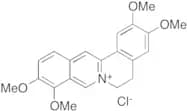
References Gray, T., et al.: Toxicol. Lett., 11, 141 (1982), Albro, P., et al.: Drug Metab. Rev., 21, 13 (1989), Gray, L., et al.: Toxicol. Sci., 58, 350 (2000),Formula:C16H20O6Color and Shape:Light Yellow To YellowMolecular weight:308.33Palmatine Chloride
CAS:Controlled ProductApplications Palmatine Chloride is a protoberberine alkaloid, as a potential anti-inflammatory and anti-hypertensive agent.
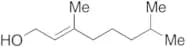
References Bhadra, K. et al.: Med. Res. Rev., 31, 821 (2011)Formula:C21H22NO4·ClColor and Shape:NeatMolecular weight:387.863,7-Dimethyl-2-octen-1-ol (cis trans mixture)
CAS:Controlled ProductApplications 3,7-Dimethyl-2-octen-1-ol, can be used as a fragrance, combined with other materials in deodorants.
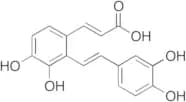
References Rastogi, S. C., et al.: Contact Dermatitis, 39, 293 (1998);Formula:C10H20OPurity:>90%Color and Shape:NeatMolecular weight:156.27Salvianolic Acid F
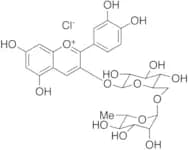
CAS:Controlled ProductFormula:C17H14O6Color and Shape:NeatMolecular weight:314.289Cyanidin 3-O-Rutinoside (75%)
CAS:Controlled ProductApplications Cyanidin 3-O-Rutinoside retards absorption of carbohydrates by inhibition of α-glucosidase which may be useful as a potential inhibitor for prevention and treatment of diabetes mellitus.
References Raptis, S., et al.: Exp Clin Endocrinol Diabetes 2001, 109, S265,,Ceriello, A; Diabetes 2005, 54, 1,,Chiasson, J; Endocr Pract 2006, 12, 25,,,Misra, A; J Clin Endocrinol Metab 2008, 93, S9Formula:C27H31O15·ClPurity:75%Color and Shape:NeatMolecular weight:630.98Sinapine Chloride
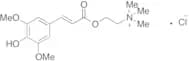
CAS:Controlled ProductApplications Sinapine, is an alkaloidal amine found in black mustard seeds. It is the choline ester of Sinapic Acid (S486800).It is also a phenolic-chloine conjugates, acting as anti-oxidants and acetylcholinesterase inhibitors, that can be used for the treatment of Alzheimer’s disease (AD).
References Tzagoloff, A., et al.: plant Physiology, 38, 202 (1963); Karvela, E., et al.: Food Chem., 110, 263 (2008),Formula:C16H24ClNO5Color and Shape:NeatMolecular weight:345.82Neodiosmin
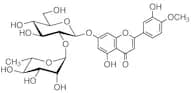
CAS:Formula:C28H32O15Purity:>95.0%(HPLC)Color and Shape:Light yellow to Yellow to Orange powder to crystalineMolecular weight:608.55Moronic Acid
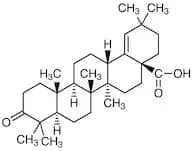
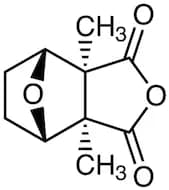
CAS:Formula:C30H46O3Purity:>96.0%(HPLC)Color and Shape:White to Almost white powder to crystalMolecular weight:454.70Cantharidin
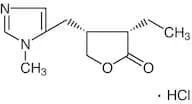
CAS:Formula:C10H12O4Purity:>98.0%(GC)Color and Shape:White to Almost white powder to crystalMolecular weight:196.20Pilocarpine Hydrochloride
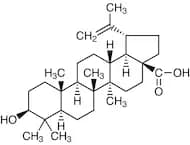
CAS:Formula:C11H16N2O2·HClPurity:>98.0%(T)(HPLC)Color and Shape:White to Almost white powder to crystalMolecular weight:244.72Betulinic Acid
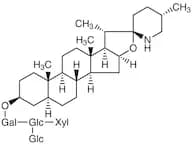
CAS:Formula:C30H48O3Purity:>97.0%(GC)(T)Color and Shape:White to Light yellow to Light orange powder to crystalMolecular weight:456.71Tomatine from Tomato
CAS:Formula:C50H83NO21Purity:>80.0%(HPLC)Color and Shape:White to Yellow to Orange powder to crystalMolecular weight:1,034.20

![Mono[2-(carboxymethyl)hexyl] Phthalate](/_next/image/?url=https%3A%2Fstatic.cymitquimica.com%2Fproducts%2FTR%2Fthumb-webp%2FM525585.webp&w=3840&q=75)