Metal Salts
Found 2872 products of "Metal Salts"
Copper Oxalate Hemihydrate
CAS:Controlled ProductApplications Copper Oxalate is an coordination compound used to engineer copper carbonate hydroxide photocatalysts.
References Xu, L., et al.: Int. J. Hydrogen. Energy., 39, 11486 (2014);Formula:C5H12N4Color and Shape:NeatMolecular weight:128.176Sodium Thiosulfate Pentahydrate
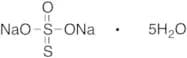
CAS:Applications Sodium Thiosulfate is used primarily as a medicament against cyanide poisoning, able to convert cyanide into thiocyanate, a reaction which is catalyzed by the enzyme Rhodanese. Antioxidant.
References Emuebie, O. et al: Aus. J. Basic App. Sci., 5, 507 (2011); Cambal, L. et al.: Chem. Res. Toxicol., 24, 1104 (2011); Lam, X. et al.: J. Pharm. Sci., 86, 1250 (1997);Formula:Na·O3S2·5H2OColor and Shape:NeatMolecular weight:248.18Sodium Butyrate-4,4,4-d3
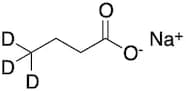
CAS:Controlled ProductApplications Sodium Butyrate-4,4,4-d3 (CAS# 347840-05-5) is a useful isotopically labeled research compound.
Formula:C4H4D3NaO2Color and Shape:NeatMolecular weight:113.11Potassium Dithiocarbazate
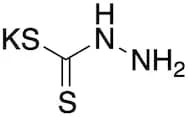
CAS:Controlled ProductApplications Potassium Dithiocarbazate is an intermediates in the synthesis of NSC 295642 (N900573), which acts as a potential inhiibitor of Caax protease disrupting yeast Ras localization.
References Manandhar, S. et al.: Yeast, 27, 327 (2010);Formula:CH3KN2S2Color and Shape:NeatMolecular weight:146.276β-Estradiol-d3 3-(β-D-Glucuronide) 17-Sulfate Dipotassium Salt
CAS:Controlled ProductFormula:C24D3H27K2O11SColor and Shape:NeatMolecular weight:607.769Sodium Tribromoacetate
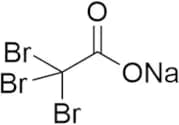
CAS:Controlled ProductApplications 2,2,2-Tribromoacetic acid sodium salt (cas# 1184-87-8) is a useful research chemical.
Formula:C2Br3NaO2Color and Shape:NeatMolecular weight:318.722Sodium 5-Phenyl-1,3,4-oxadiazole-2-carboxylate
CAS:Controlled ProductApplications sodium 5-phenyl-1,3,4-oxadiazole-2-carboxylate (cas# 1193387-87-9) is a useful research chemical for organic synthesis.
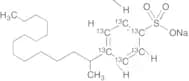
References Laurent, A., et al.: From PCT Int. Appl. (2011), WO 2011098904 A1 20110818Formula:C9H5N2O3NaColor and Shape:NeatMolecular weight:212.134-(2-Pentadecyl)phenyl-13C6 1-Sodium Sulfonate
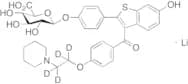
Controlled ProductFormula:C6C15H35NaO3SColor and Shape:NeatMolecular weight:396.512Raloxifene-d4 4’-β-D-Glucuronide Lithium Salt
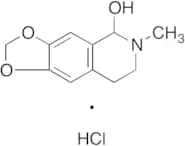
CAS:Controlled ProductFormula:C34D4H31NO10S·LiColor and Shape:NeatMolecular weight:660.673Hydrastinine Hydrochloride
CAS:Controlled ProductFormula:C11H13NO3·HClColor and Shape:NeatMolecular weight:243.687Lithium Fluoride
CAS:Controlled ProductApplications LITHIUM FLUORIDE (cas# 7789-24-4) is a useful research chemical.
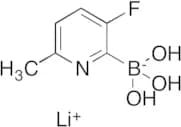
Formula:LiFColor and Shape:NeatMolecular weight:25.938Lithium (3-fluoro-6-methylpyridin-2-yl)trihydroxyborate
CAS:Controlled ProductApplications Lithium (3-fluoro-6-methylpyridin-2-yl)trihydroxyborate, is a building block used in the synthesis of chemical compounds.
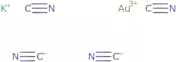
Formula:C6H8BFNO3·LiColor and Shape:NeatMolecular weight:178.883Potassium tetracyanoaurate(III)
CAS:Controlled ProductPotassium tetracyanoaurate(III) (K[AuCl4]) is a crystalline, intermetallic compound that has been used in the production of coatings, spherical particles, and electrochemical materials. The pentahydrate form has a diameter of 4.8-5.2 Å and a melting point of ~115°C. K[AuCl4] is stable in air and water but reacts with strong acids to form potassium chloride and potassium tetracyanocuprate(II). This substance also has an optimal pH range of 6-7 and an average solubility range of 0.05-0.1g/100mL at 20°C. The microstructure of K[AuCl4] is not well understood because it is difficult to isolate from other compounds during synthesis.
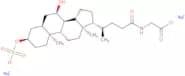
Formula:C4AuN4KPurity:Min. 95%Color and Shape:PowderMolecular weight:340.13 g/molGlycochenodeoxycholic acid 3-sulfate disodium salt
CAS:Please enquire for more information about Glycochenodeoxycholic acid 3-sulfate disodium salt including the price, delivery time and more detailed product information at the technical inquiry form on this pageFormula:C26H41NNa2O8SPurity:Min. 95%Color and Shape:PowderMolecular weight:573.65 g/molSodium decyl sulfate
CAS:Sodium decyl sulfate is a surfactant used in the preparation of biological samples for analysis using mass spectrometry. This compound forms a disulfide bond with cysteine residues on proteins, which can be cleaved by reducing agents such as dithiothreitol or mercaptoethanol. Sodium decyl sulfate also has potent antitumor activity and is used to treat autoimmune diseases such as multiple sclerosis. The thermal expansion of this compound is proportional to the vapor pressure of water over the range from 0-100°C, and it has been shown to have a constant pressure at temperatures below 100°C. Furthermore, sodium decyl sulfate has been found to be chiral and binds to receptor molecules that are hydrophobic in nature.
Formula:C10H21O4SNaPurity:Min. 95%Color and Shape:White PowderMolecular weight:260.33 g/molCopper(l) iodide
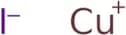
CAS:Copper(l) iodide is a copper salt that can be used in coatings and as an antimicrobial agent. Copper(l) iodide has been shown to have acute toxicity in rats, but no studies of chronic toxicity have been reported. The chemical composition of copper(l) iodide includes copper, iodine, and oxygen. Preparative methods for this compound include heating a mixture of copper sulfate and potassium iodide in the presence of air to produce a black precipitate. Copper(l) iodide can also be produced by the reaction of hydrogen peroxide with copper metal.
Formula:CuIPurity:Min. 95%Color and Shape:White PowderMolecular weight:190.45 g/molBis(perfluorohexyl)phosphinic acid sodium salt
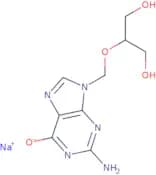
CAS:Please enquire for more information about Bis(perfluorohexyl)phosphinic acid sodium salt including the price, delivery time and more detailed product information at the technical inquiry form on this pageFormula:C12F26NaO2PPurity:Min. 95%Molecular weight:724.05 g/molGanciclovir sodium
CAS:Anti-viral; DNA polymerase inhibitor; dGTP competitive inhibitor
Formula:C9H13N5NaO4Purity:Min. 95%Molecular weight:278.22 g/mol(R)-(+)-(2,2-Bis(Diphenylphosphino)-1,1-binaphthyl)palladium(II)chloride
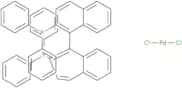
CAS:Controlled Product(R)-(+)-(2,2-Bis(Diphenylphosphino)-1,1-binaphthyl)palladium(II)chloride is a colorless solid that can be made into a crystalline form. It has a molecular weight of 518.8 g/mol and the chemical formula C12H14P4Cl2. The compound has four asymmetric carbon atoms and two stereocenters in the molecule. This compound is used as a catalyst for organic reactions and in the synthesis of other compounds. (R)-(+)-(2,2-Bis(Diphenylphosphino)-1,1-binaphthyl)palladium(II)chloride is soluble in ethanol and ether but insoluble in water. It reacts with oxygen to produce phosphorous acid and hydrogen chloride gas. This compound has been shown to have nuclear magnetic resonance spectra at room temperature with chemical shifts (Formula:C44H33Cl2P2PdPurity:Min. 95%Molecular weight:801.01 g/molLead dibromide
CAS:Lead dibromide is a non-radioactive catalyst that can be used in the organic synthesis of pharmaceuticals and other organic compounds. It is typically used as an oxidizing agent for the formation of carbon-carbon bonds. The electron microscopic study of lead dibromide reveals the presence of small, crystalline particles with a diameter of about 0.2 microns. Lead dibromide is soluble in allylation, n-dimethyl formamide, and trifluoroacetic acid and insoluble in water or polar solvents. This compound has been found to stabilize reactive intermediates in organic reactions, such as those involving ketones, epoxides, and nitriles.Formula:PbBr2Purity:Min. 95%Molecular weight:367.01 g/mol