Metal Salts
Found 2872 products of "Metal Salts"
Potassium dicyanoargenate
CAS:Controlled ProductPotassium dicyanoargenate is an organic acid that is a precursor to silver nanoparticles. This compound is typically used in the production of cellulose derivatives, and for the activation of polymerization reactions. Potassium dicyanoargenate can also be used to produce insoluble polymers and cationic surfactants by combining it with a metal ion, such as sodium carbonate or hydroxyl groups.
Formula:C2AgKN2Purity:Min. 95%Molecular weight:199 g/molBarium hydroxide
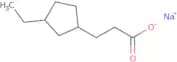
CAS:Barium hydroxide is a hydroxide salt that is used as an analytical reagent. It has been shown to be toxic to many organisms, including bacteria and fungi. Barium hydroxide is a strong base that reacts with glycol esters and zirconium oxide to form water vapor. The reaction mechanism of barium hydroxide is not well-understood. However, it may involve the formation of a complex between barium ions and copper chloride, which then reacts with oxygen to form hydrogen peroxide. Structural analysis of this compound reveals that it has high resistance against water vapor and metal hydroxides.Formula:BaH2O2Purity:Min. 95%Color and Shape:PowderMolecular weight:171.34 g/molSodium naphthenate
CAS:Sodium naphthenate is a sodium salt that is used as an intermediate in the production of polyvinyl chloride. It can be obtained by reacting ethylene diamine with sodium hydroxide and carbon dioxide. The reaction takes place at high temperatures and pressure, forming a solution of sodium carbonate, which is then hydrolyzed to form sodium naphthenate. This compound has been shown to have a low solubility in water and it can be purified by recrystallization or distillation. Sodium naphthenate is soluble in organic solvents such as acetone or chloroform. It has also been shown to be useful as a model system for studying transfer reactions between polycarboxylic acids and fatty acids, which are important processes in the manufacture of polyester resins.Formula:C10H17NaO2Color and Shape:Off-White PowderMolecular weight:192.23 g/molRhodium 5% on alumina
CAS:Rhodium 5% on alumina is a chemical catalyst that is used in the oxidation of hydrocarbons and the reduction of nitro compounds. It is used in the process of catalytic conversion of hydrocarbons to produce gasoline, diesel fuel, and other fuels. Rhodium 5% on alumina has high resistance to hydrochloric acid, water vapor, and acid complex. This catalyst has been shown to be an effective catalyst for hydrogenation reactions with boron nitride as a support material. Rhodium 5% on alumina also has analytical chemistry applications due to its ability to bind up blood group antigens from animal sources or human blood samples.Purity:Min. 95%[1,2-Bis(diphenylphosphino)ethane]dichloropalladium(II)
CAS:Controlled Product[1,2-Bis(diphenylphosphino)ethane]dichloropalladium(II) is a chemical compound that is insoluble in water and soluble in organic solvents. It is a reagent used to prepare other compounds. The synthesis of this compound involves the reaction of chloroform with dichloro[1,2-bis(diphenylphosphino)ethane]palladium (II). The resulting compound has a yellow color due to its ligands, which are amines or halides. This compound can be recrystallized from toluene or ether for use in preparative work. [1,2-Bis(diphenylphosphino)ethane]dichloropalladium(II) has been used as an analytical reagent for the determination of chloride and ligand content in some organic solvents.Formula:C26H24Cl2P2PdPurity:Min. 95%Molecular weight:575.74 g/mol7,7-Azo-3-a,12-a-dihydroxytaurocholanic acid sodium salt
CAS:Please enquire for more information about 7,7-Azo-3-a,12-a-dihydroxytaurocholanic acid sodium salt including the price, delivery time and more detailed product information at the technical inquiry form on this pageFormula:C26H42N3NaO6SPurity:Min. 95%Molecular weight:547.68 g/mol4-Methoxybenzyl chloride - stabilised with potassium carbonate
CAS:4-Methoxybenzyl chloride is a chemotherapeutic agent that inhibits the binding of inhibitor molecules to their target proteins. It has been shown to inhibit the binding of uridine and methanol solvent to their targets, which are enzymes in the synthesis of nucleic acids. The inhibition of these enzymes prevents DNA replication and protein synthesis, leading to cell death. 4-Methoxybenzyl chloride has been found to be effective in treating autoimmune diseases and solid tumours, as well as being an antimicrobial treatment for microbial infections. 4-Methoxybenzyl chloride is also used in chemical syntheses for its ability to undergo cationic polymerization and asymmetric synthesis.Formula:C8H9ClOPurity:Min. 95%Color and Shape:Colorless Clear LiquidMolecular weight:156.61 g/molSilver tetrafluoroborate
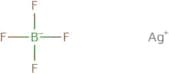
CAS:Silver tetrafluoroborate (AgBF) is a chemical reagent that is used in analytical chemistry and structural analysis. It has shown to be a stable complex with organic molecules, such as fatty acids, and has been used to study the properties of these compounds. AgBF is an inorganic salt that can be synthesized by reacting silver nitrate and barium fluoride in the presence of trifluoroacetic acid. This compound has also been found to form stable complexes with organic molecules containing a hydroxyl group or nitrogen atom. The structure of AgBF has been determined through X-ray crystal structures and electron diffraction patterns. The molecule consists of two symmetric chains joined by a central disulfide bond.
Formula:AgBF4Purity:Min. 95%Color and Shape:PowderMolecular weight:194.67 g/molBis (1,5-Cyclooctadiene) rhodium(I)tetrafluoroborate
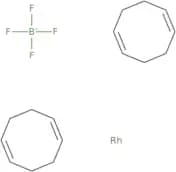
CAS:Bis (1,5-Cyclooctadiene) rhodium(I)tetrafluoroborate (BODIPY) is a catalyst that enhances the rate of hydrosilylation reactions. This catalyst has been shown to be effective in the synthesis of aryl chlorides from amines and aldehydes with high enantioselectivity. BODIPY is also immobilized on silica gel to create an active catalyst for asymmetric synthesis. The immobilization process on silica gel is done by reacting BODIPY with ammonium formate and amines. The resulting catalyst can be used for the synthesis of functionalized organic compounds, such as pyrrolidines, tetrahydrofurans, and thiophenes.Formula:C16H24BF4RhPurity:Min. 95%Molecular weight:406.07 g/molPotassium tetracyanoaurate(III)
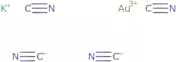
CAS:Controlled ProductPotassium tetracyanoaurate(III) (K[AuCl4]) is a crystalline, intermetallic compound that has been used in the production of coatings, spherical particles, and electrochemical materials. The pentahydrate form has a diameter of 4.8-5.2 Å and a melting point of ~115°C. K[AuCl4] is stable in air and water but reacts with strong acids to form potassium chloride and potassium tetracyanocuprate(II). This substance also has an optimal pH range of 6-7 and an average solubility range of 0.05-0.1g/100mL at 20°C. The microstructure of K[AuCl4] is not well understood because it is difficult to isolate from other compounds during synthesis.
Formula:C4AuN4KPurity:Min. 95%Color and Shape:PowderMolecular weight:340.13 g/molBenzylbis(triphenylphosphine)palladium(II) Chloride
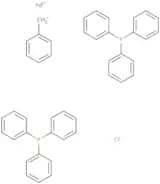
CAS:Controlled ProductBenzylbis(triphenylphosphine)palladium(II) Chloride is an organic compound that contains a benzene and palladium complex. The anion of this compound is chloride and it has been used as a reagent in the preparation of nitroarenes, porphyrin complexes, and various other organic compounds. This salt is insoluble in water and organic solvents, and it has been used as a sensor for chloride ions. Benzylbis(triphenylphosphine)palladium(II) Chloride’s color changes from green to red in the presence of chloride ions, which can be detected by potentiometric titration or colorimetric analysis.Formula:C43H37ClP2PdPurity:Min. 95%Molecular weight:757.57 g/molLithium thiocyanate hydrate
CAS:Lithium thiocyanate hydrate is a crystalline compound that consists of lithium, sulfur, and oxygen. It has been shown to have antihypertensive activity, which may be due to the inhibition of the enzyme angiotensin-converting enzyme (ACE). Lithium thiocyanate hydrate is used in pharmaceutical preparations as a coagulant and solvent. Crystals of this compound are formed by reacting lithium chloride with hexafluoroisopropanol in an aqueous solution containing metal ions. The crystals are macrocyclic structures consisting of alternating layers of lithium thiocyanate and sulfoxide groups. These groups form hydrogen bonds between adjacent layers, leading to the formation of the crystals' crystalline structure.Formula:LiSCN·xH2OPurity:(%) Min. 99.9%Color and Shape:White PowderMonosodium succinate
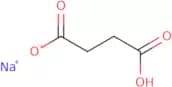
CAS:Monosodium succinate is a salt that inhibits the growth of antibiotic-resistant strains of bacteria. It is a chemical that has been shown to be stable in acidic environments and during logarithmic growth phase. Monosodium succinate has been used as a monoclonal antibody against the bladder wall, where it binds to acidic phosphotungstic acid. This binding prevents the formation of an enzyme-inhibitor complex with the enzyme cell wall synthesis that is required for cell wall biosynthesis, inhibiting protein synthesis and cell division. Monosodium succinate has also been shown to have metabolic disorders properties through its ability to inhibit uptake and increase sodium carbonate levels in urine.Formula:C4H5NaO4Purity:Min. 95%Molecular weight:140.07 g/molDL-Lactic acid sodium salt, 60% w/w syrup
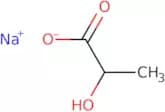
CAS:Lactic acid is a natural product that has been used for many years as an antimicrobial agent in wastewater treatment. It is also used in the food industry to prevent the growth of bacteria and fungi, and as a preservative. Lactic acid has been shown to have a physiological effect on locomotor activity, which may be due to its ability to convert pyruvate into lactate. Lactic acid also inhibits the growth of some bacterial strains by increasing the disulfide bond formation between two cysteine residues. The sodium salt form of lactic acid is more soluble than the acid form and can be used as an experimental model for studying sodium-lactate interactions. Sodium lactate is used in maternal blood transfusions to increase blood pH levels during labor, and is also added to water vapor for humidification purposes.
Formula:C3H5O3NaColor and Shape:Colorless Clear LiquidMolecular weight:112.06 g/molSulfaquinoxaline sodium salt
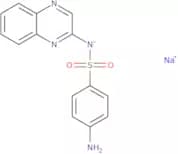
CAS:Sulfaquinoxaline sodium salt is a dpp-iv inhibitor that has been shown to be effective in the treatment of inflammatory bowel disease. The drug inhibits the enzyme dipeptidyl peptidase 4, which is involved in the degradation of immunoreactive insulin and glucagon-like peptide-1. Sulfaquinoxaline sodium salt produces an antimicrobial effect by inhibiting microbial growth and also has a synergic effect with other antibiotics such as amoxicillin. As well as being used to treat bowel diseases, sulfaquinoxaline sodium salt is also used for sample preparation before DNA or RNA extraction. It can be used as a co-substrate with sodium carbonate to precipitate proteins in biological samples, such as urine or stool samples, or wastewater before treatment.
Formula:C14H12NaN4O2SPurity:Min. 95%Molecular weight:323.33 g/molEthynylferrocene
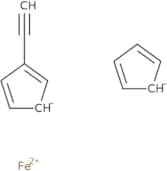
CAS:Ethynylferrocene is a molecule that has a redox potential and can be reduced to ferrocene by hydrogen-reducing agents. Ethynylferrocene can also undergo oxidation reactions with the help of oxidizing agents to form ethynylpalladium. The biological properties of this molecule have been studied extensively and it has been found to bind to receptor molecules, such as dopamine receptors, in the body. The binding of this molecule to these receptors may cause changes in cell signaling pathways and gene expression. Ethynylferrocene is a member of the class of purine derivatives that are known for their ability to bind hydrogen atoms and form hydrogen bonding interactions with other molecules. This property is useful in the palladium-catalyzed coupling reaction, which is used to produce a variety of organic compounds.
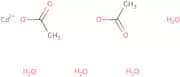
Formula:C12H10FePurity:Min. 95%Color and Shape:PowderMolecular weight:210.05 g/molCobalt(II) acetate tetrahydrate
CAS:Cobalt(II) acetate tetrahydrate is a model system that can be used to study the structures of coordination complexes. The cobalt ion has a coordination geometry with two water molecules, two oxygen atoms from the acetate anion, and one proton from the hydroxide anion. The crystal structure is composed of six-membered rings of alternating metal ions and oxygen atoms. The reaction solution contains excess sodium hydroxide and water vapor. It was determined that cobalt(II) acetate tetrahydrate reacts electrochemically at low frequencies as well as with 5-hmf, an oxidizing agent, in the presence of sodium citrate as an oxidation catalyst.
Formula:C4H6CoO4·4H2OPurity:Min. 95%Color and Shape:Pink To Red SolidMolecular weight:249.08 g/molD,L-Alanosine sodium salt
Please enquire for more information about D,L-Alanosine sodium salt including the price, delivery time and more detailed product information at the technical inquiry form on this page
Formula:C3H6N3NaO4Purity:Min. 95%Molecular weight:171.09 g/molCalcium iodide
CAS:Calcium iodide is a polarizer that can be used for the analysis of metal hydroxides. It reacts with the substrate film and forms a reaction solution that can be examined by microscope or spectrophotometer. Calcium iodide has been used to study the structure of glycol ethers, alkanoic acids, and carbohydrates. This chemical is also used in nutrient solutions and as a control substance in biochemical tests.
Formula:CaI2Purity:Min. 95%Color and Shape:PowderMolecular weight:293.89 g/molIodosulfuron-methyl sodium
CAS:Iodosulfuron-methyl sodium is a herbicide that inhibits the activity of lipid-metabolizing enzymes in plants. It inhibits the action of phosphatases, which are enzymes that catalyze hydrolysis of phosphoric acid esters, and can be used to control weeds. Iodosulfuron-methyl sodium has been shown to have synergistic interactions with other herbicides, such as 2,4-D or dicamba. The effective dose for this product varies depending on the plant species and type of soil.
Formula:C14H13IN5NaO6SPurity:Min. 90 Area-%Color and Shape:White Off-White PowderMolecular weight:529.24 g/mol



![[1,2-Bis(diphenylphosphino)ethane]dichloropalladium(II)](/_next/image/?url=https%3A%2Fstatic.cymitquimica.com%2Fproducts%2F3D%2Fthumb-webp%2FFB54999.webp&w=3840&q=75)