Metal Salts
Found 2872 products of "Metal Salts"
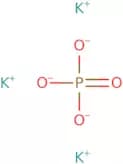
tri-Potassium orthophosphate
CAS:Tri-Potassium orthophosphate is a potassium salt that is used for the treatment of bowel disease. It has been shown to have physiological effects on the body, including increased water vapor in the lungs, which may be due to its ability to bind with sodium and cause water to be released from the body. Tri-potassium orthophosphate also has been shown to inhibit the production of enzymes such as catalase and peroxidase. This drug is classified as a dinucleotide phosphate because it contains two phosphate groups linked by their anhydride bonds. The compound was first synthesized in 1887 by German chemist Emil Fischer and reacted with copper chloride to form tri-potassium orthophosphate. Tri-potassium orthophosphate has also been shown to have a model system in which it binds with DNA and alters its shape, changing its ability to bind with other molecules such as proteins or enzymes.
Formula:K3O4PColor and Shape:White PowderMolecular weight:212.27 g/mol2-Chlorophenylphenyl-aminomethanesulphonic acid sodium salt
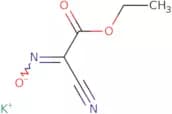
CAS:2-Chlorophenylphenyl-aminomethanesulphonic acid sodium salt is a fine chemical that is a useful building block in research and development. It can be used as a reagent, a CAS No. 132141-36-7, or as a speciality chemical. This compound has been used as an intermediate in the synthesis of complex compounds. It also acts as a versatile building block for various reactions and has been used as a scaffold for the synthesis of new compounds.Formula:C13H11ClNO3S·NaPurity:Min. 95%Molecular weight:319.74 g/molEthyl cyanoglyxylate-2-oxyme potassium salt
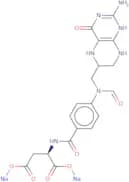
CAS:Ethyl cyanoglyxylate-2-oxyme potassium salt is a high quality reagent for the production of complex compounds that can be used in fine chemicals, pharmaceuticals, and other speciality chemicals. It has been shown to be an intermediate for the synthesis of useful scaffolds and building blocks. The CAS number is 158014-03-0. This compound is a versatile building block that can be used in research chemicals, as well as reaction components for more complex syntheses.Formula:C5H6N2O3KPurity:Min. 95%Color and Shape:PowderMolecular weight:181.21 g/mol10-Formyl-5,6,7,8- tetrahydro folic acid disodium
CAS:10-Formyl-5,6,7,8-tetrahydrofolate disodium (10FHFTD) is a fine chemical that is useful as a building block for research chemicals. 10FHFTD has been described as a versatile building block for the synthesis of complex compounds. It is also a useful intermediate in the synthesis of biologically active natural products and pharmaceuticals. This compound can be used as a reagent or speciality chemical. 10FHFTD has CAS number 914800-65-0 and is commercially available at high quality.Formula:C20H21N7Na2O7Purity:(%) Min. 60%Color and Shape:Brown Slightly Brown PowderMolecular weight:517.4 g/mol6'-Hydroxy buspirone
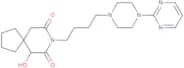
CAS:6'-Hydroxy buspirone is a prodrug of buspirone, which is an antidepressant drug. It has been shown to have a matrix effect and profile similar to that of buspirone in humans. The compound has been found to be effective in the treatment of depression. 6'-Hydroxy buspirone has been shown to inhibit the dopamine D3 receptor with a potency similar to that of buspirone and other dopamine antagonists. This inhibition may be responsible for the antidepressant effects observed in clinical trials. The compound also inhibits serotonin reuptake, which may account for its antidepressant activity. 6'-Hydroxy buspirone is not metabolized by cytochrome P450 enzymes, making it more selective than some other drugs that are metabolized by this enzyme system.
Formula:C21H31N5O3Purity:Min. 95%Color and Shape:PowderMolecular weight:401.5 g/molSilver nitrate
CAS:Silver nitrate is an experimental model. It has inhibitory properties against a number of human pathogens, including bacteria, fungi, and viruses. Silver nitrate has been shown to have antimicrobial activity against human pathogens by disrupting the microbial cell membrane and preventing cellular respiration. Silver nitrate is also used as a photographic agent in the darkroom. In addition, it can be used to produce hydrogen bonding interactions with proteins and nucleic acids. The optimum concentration of silver nitrate is 0.05%.Formula:Ag·NO3Purity:Min. 95%Color and Shape:White Clear LiquidMolecular weight:169.87 g/molL-Serine O-sulfate potassium salt
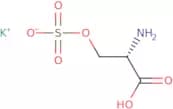
CAS:L-Serine O-sulfate potassium salt is a racemase inhibitor. It has been shown to be effective in postoperative pain and sciatic nerve injury in animals. L-serine O-sulfate potassium salt inhibits the enzyme racemase, which converts L-serine to D-serine, thereby preventing the development of chronic neuropathic pain. The drug also has carboxylate properties that inhibit uptake of glutamate by nerve cells, thereby reducing the release of glutamate in response to nerve injury. This drug is not active against pain due to inflammation or disease.Formula:C3H6NO6SKPurity:Min. 95%Color and Shape:White PowderMolecular weight:223.25 g/molAntimony tin oxide
CAS:Antimony tin oxide is an electroluminescent material that is used in preparation methods for optical devices, such as a diode or LED. It can be used to produce thin films with high-quality films and low molecular weight particles. Antimony tin oxide has been shown to be a suitable material for the production of sensors and photovoltaic cells. The use of antimony tin oxide in solar cells has been shown to result in an increase in efficiency of up to 2%.Formula:Sn9SbO20Purity:Min. 95%Color and Shape:PowderMolecular weight:1,510.14 g/molD-Gluconic acid zinc (II) salt
CAS:D-Gluconic acid zinc salt is an inorganic compound that is used to treat deficiencies of D-gluconate. It is a salt of zinc and D-gluconic acid, which is a natural metabolite found in the human body. This compound can be used to maintain healthy levels of D-gluconate in the tissues and help control symptoms related to deficiencies. The efficiency of this method has been demonstrated by an in vitro test on human femur cells. A profile analysis showed that D-gluconic acid zinc salt was able to minimize the severity of symptoms associated with deficiencies caused by gluconate deficiency, such as tissue sensitivity and bone degradation.Formula:C12H22O14ZnPurity:Min. 95%Color and Shape:White PowderMolecular weight:455.68 g/molCopper(II) chloride dihydrate
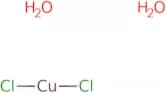
CAS:Copper(II) chloride dihydrate (CuCl2·2H2O) is a copper compound that can be used as an antimicrobial agent. It has been shown to inhibit the growth of bacteria, yeast and fungi by inhibiting cell division at the G1/S phase boundary. Copper(II) chloride dihydrate has also been shown to inhibit cyclin D2 production in HL-60 cells and to cause coumarin derivatives to react with DNA, leading to its structural analysis. It is soluble in water but insoluble in organic solvents. When exposed to air, it reacts with water vapor to form copper chloride (CuCl). Copper(II) chloride dihydrate is acidic and can react with bases such as amines or ammonia; this reaction may result in drug interactions.Formula:CuCl2·2H2OPurity:Min. 95%Color and Shape:PowderMolecular weight:170.48 g/mol1-Pentanesulfonic acid sodium monohydydrate
CAS:1-Pentanesulfonic acid sodium monohydydrate (1PS) is the sodium salt of 1-pentanesulfonic acid. It is used as a fluorescent probe for atropine, which is a drug that blocks nerve impulses to muscles and produces paralysis. The concentration of 1PS can be determined by measuring the fluorescence intensity. This method can be used in conjunction with plates or quantifying with a spectrophotometer. Acetonitrile and dilution are required to produce the solution for measurement, which may then be injected into a chromatographic column for separation. Optical absorbance measurements are used to detect the presence of 1PS in the eluant from the column. Recoveries of 100% were obtained using this method on atropine sulfate in acetonitrile solutions containing 1-pentanesulfonic acid sodium monohydydrate at concentrations ranging from 0.01 to 10 mg/mL.Formula:C5H11O3SNa•H2OPurity:Min. 95%Color and Shape:PowderMolecular weight:192.21 g/molLoxoprofen sodium
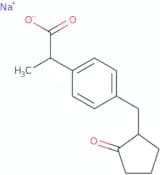
CAS:Inhibitor of prostaglandin production; non-steroidal COX inhibitorFormula:C15H17NaO3Purity:Min. 98 Area-%Color and Shape:PowderMolecular weight:268.28 g/molIndole-3-butyric acid, potassium salt
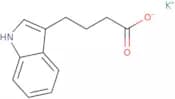
CAS:Plant hormone; auxin; inducer of root development; used in plant rootingFormula:C12H12KNO2Color and Shape:White Yellow PowderMolecular weight:241.33 g/molChromium(III) oxide
CAS:Chromium oxide is a compound that exists in two phases, one of which is an oxide. It is a substance used to produce chromium metal and chromium salts. The oxide has been shown to react with the liquid phase of sodium carbonate to form a polymeric matrix. Chromium oxide particles can be used as an electrode material in flow systems for electrochemical impedance spectroscopy (EIS). Collagen, a major constituent of connective tissue, was found to bind chromium ions. This binding process may be due to the formation of hydrogen bonds between the collagen's carboxyl groups and the chromium ion's hydroxyl groups. The thermodynamic data for this reaction are given by: ΔH= -74 kJ/mol; ΔS = -120 J/mol·K; ΔG = -110 kJ/mol. Chromium oxide also reacts with potassium dichromate according to the following reaction mechanism: CrO + 2KCNO → 2CrNO
Formula:Cr2O3Purity:Min. 95%Molecular weight:151.99 g/molBis(4-sulfobutyl)ether disodium
CAS:Inhibitor of amyloid beta peptide for modulating cerebral amyloid angiopathyFormula:C8H16Na2O7S2Purity:(%) Min. 90%Color and Shape:White PowderMolecular weight:334.32 g/molChromium picolinate
CAS:Chromium picolinate is a compound that contains chromium and picolinic acid. It has been shown to increase the levels of growth factor-β1 in tissue culture studies. Chromium picolinate may have genotoxic effects, but these have not been studied in humans. Chromium picolinate has been used as a nutritional supplement for weight loss and body mass index (BMI) management. The toxicity of this drug is low, with no significant side effects reported at doses below 1,000 mcg per day. Chromium picolinate is absorbed well by the body and excreted quickly via the urine. The analytical method for chromium picolinate is stable complexes with picolinic acid. There are no established physiological levels for chromium picolinate in human serum or urine, so any benefits are assumed to be due to its ability to bind copper ions and prevent copper deficiency.Formula:C18H12CrN3O6Purity:Min. 95%Color and Shape:PowderMolecular weight:418.3 g/molPotassium canrenoate
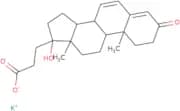
CAS:Controlled ProductPotassium canrenoate is a potassium salt of canrenoic acid, which is an imidazopyridine that has been shown to be beneficial in the treatment of cardiovascular diseases. It binds to the adenyl cyclase receptor, inhibiting production of cyclic AMP, and thereby decreasing the uptake of glucose and fatty acids into muscle cells. In addition, potassium canrenoate increases blood flow by dilating coronary arteries, improves cardiac contractility and reduces myocardial oxygen demand. The hyperglycemic effect seen with potassium canrenoate may be due to its ability to inhibit insulin release from pancreatic beta-cells.Formula:C22H29KO4Purity:Min. 98 Area-%Color and Shape:PowderMolecular weight:396.56 g/molEthylenediaminetetraacetic acid disodium salt
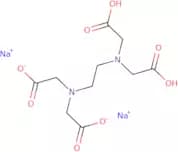
CAS:Ethylenediaminetetraacetic acid disodium salt (EDTA-2Na) is a water-soluble chelating agent that forms a complex with metal ions. EDTA-2Na has been shown to be an effective inhibitor of the polymerase chain reaction (PCR), which is a technique to amplify DNA. EDTA-2Na can be used as a fluorescence probe in biological samples and can also be used in the analysis of reaction solutions. It has been shown to have lubricity properties and can be used as an injection solution for bowel disease. EDTA-2Na is also used in wastewater treatment, where it binds heavy metals and prevents them from being reabsorbed into the environment. The optimum concentration of EDTA-2Na is 1 mM at pH 7.0, with a range from 0.1 mM to 10 mM.
Formula:C10H14N2Na2O8Purity:Min. 95%Color and Shape:PowderMolecular weight:336.21 g/molPotassium chloride
CAS:Potassium chloride is a salt that prevents and treats low blood potassium levels. It is used in the treatment of hypokalemia, which can result from kidney disease, diuretic use, or gastrointestinal loss. Potassium chloride is also used to prevent and treat high blood potassium levels that can result from some medicines, such as heparin or diuretics. Common side effects of potassium chloride include nausea, vomiting, stomach pain, diarrhea, skin rash, and muscle weakness.Formula:KClPurity:(Titration) Min. 99.0%Color and Shape:White Clear LiquidMolecular weight:74.55 g/molHydroxy naphthol blue disodium
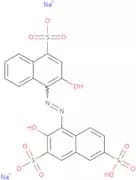
CAS:Hydroxy naphtol blue is a synthetic azo dye, characterised for containing the functional group R N=N R. The hydroxy naphtol blue disodium and trisodium salt are used as indicators to determine the content of alkaline earth and lanthanides spectrophotometrically, showing at maximum a wavelength of ~ 650 nm (λmax = 647.6 nm). The best example of the use of hydroxy naphtol blue sodium salt is to determine the hardness of water by measuring the concentration of calcium and magnesium. At alkaline or basic pH, the hydroxy naphtol blue forms a pink/red complex with the metal ions and, after titration with EDTA, hydroxy naphtol blue is liberated, turning the solution blue which indicates the endpoint.Formula:C20H14N2O11S3·2NaColor and Shape:PowderMolecular weight:600.51 g/mol