Metal Salts
Found 2872 products of "Metal Salts"
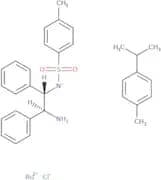
(S,S)-N-(p-Toluenesulfonyl)-1,2-diphenyl ethanediamine(chloro)(p-cymene)ruthenium(II)
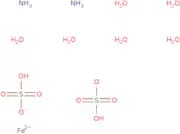
CAS:(S,S)-N-(p-Toluenesulfonyl)-1,2-diphenylethanediamine(chloro)(p-cymene)ruthenium(II) is an organic compound that belongs to the class of solvents. It is a reagent that is used in acidic conditions. The elimination of hydrocarbons from (S,S)-N-(p-toluenesulfonyl)-1,2-diphenylethanediamine(chloro)(p-cymene)ruthenium(II) is carried out by chloroform or hexane and potassium hydroxide. This compound can be purified by recrystallization from aqueous ethanol or preparative thin layer chromatography with chloroform as eluent. Recycling of this compound is possible.Formula:C31H35ClN2O2RuSColor and Shape:PowderMolecular weight:636.21 g/molAmmonium iron(II) sulfate hexahydrate
CAS:Ammonium iron(II) sulfate hexahydrate is a salt that contains the metal ion ammonium and iron (II). It is used in cancer research as an electron-radiating agent. The drug molecules are encapsulated into the cavity of mesoporous silica nanoparticles by ionizing radiation. This process immobilizes the drug molecule and prevents it from diffusing away from the particle surface. Ammonium iron(II) sulfate hexahydrate has been shown to be effective against estrone and 17β-estradiol, which are types of estrogen.
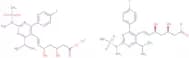
Formula:Fe(NH4)2(SO4)2•6H2OColor and Shape:PowderMolecular weight:392.14 g/molRosuvastatin calcium
CAS:HMG-CoA reductase inhibitorFormula:(C22H27FN3O6S)2CaPurity:Min. 95 Area-%Color and Shape:White PowderMolecular weight:1,001.14 g/molCreatine phosphate, disodium salt tetrahydrate, pH > 8.00
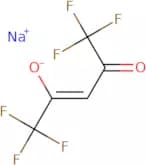
CAS:Creatine phosphate, disodium salt tetrahydrate, is a fine chemical that is used as a versatile building block for the synthesis of other compounds. Creatine phosphate is useful in research because it can be converted to creatine, which can then be converted to phosphocreatine. Creatine phosphate has been shown to have a number of biological activities including the promotion of cell proliferation and differentiation. This product is an extremely high quality reagent for use in laboratory experiments.Formula:C4H16N3Na2O9PPurity:Min. 95.0 Area-%Molecular weight:327.14 g/molSodium Hexafluoroacetylacetonate
CAS:Sodium hexafluoroacetylacetonate is a reactive chemical that can be used as a catalyst in organic synthesis. It is produced by the reaction of hexane and anhydrous hydrogen fluoride. The product has been shown to contain impurities and traces of non-polar solvents, such as chlorinated hydrocarbons and chloroform.Formula:C5HF6NaO2Purity:Min. 95%Color and Shape:PowderMolecular weight:230.04 g/molD-Aspartic acid sodium salt
CAS:D-Aspartic acid sodium salt is a fine chemical that is useful as a scaffold for the preparation of other compounds. It can be used as a building block in the synthesis of complex compounds, and has been shown to be an intermediate in the production of research chemicals. Aspartic acid sodium salt can also serve as a reaction component for the production of other chemical substances, and is often used as a reagent in laboratory work. D-Aspartic acid sodium salt is available at high purity and quality.Formula:C4H6NO4·NaPurity:Min. 95%Color and Shape:PowderMolecular weight:155.08 g/molSodium disulfitoaurate(I) - aqueous solution
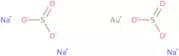
CAS:Sodium disulfitoaurate(I) - aqueous solution is a triamine that is used for the chemical fixation of gold nanoparticles onto fabric. It is also used in the production of solar cells, where it serves as an absorber layer. Sodium disulfitoaurate(I) - aqueous solution has been shown to be able to remove cyanogen from the air and water, which makes it useful in the diagnosis of cyanide poisoning. This agent can be prepared by reacting hydrochloric acid with sodium sulphite or sodium hydrosulphite.Formula:AuNa3O6S2Purity:Min. 95%Color and Shape:Colorless Clear LiquidMolecular weight:426.06 g/molPamidronic acid sodium salt hydrate
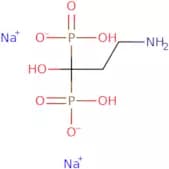
CAS:Farnesyl diphosphate synthase inhibitor
Formula:C3H9NNa2O7P2·xH2OPurity:Min. 95%Color and Shape:PowderMolecular weight:279.03 g/molCadmium chloride hemipentahydrate - ACS
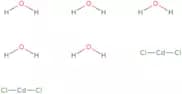
CAS:Cadmium chloride hemipentahydrate is a chemical compound that has been shown to have genotoxic effects on animals and humans. Cadmium chloride hemipentahydrate has been shown to inhibit protein synthesis and enzyme activity in vitro and in vivo. It also has been shown to cause cell death and cytotoxicity in brain cells. This chemical compound is used as a model system for the study of cadmium toxicity, because it can be administered to animals without causing any adverse effects. When cadmium chloride hemipentahydrate is injected into rodents, it causes DNA damage, oxidative stress, inhibition of energy metabolism, and induction of apoptosis in brain cells.
Formula:CdCl2•(H2O)2Purity:(Titration) 79.5 To 81.0%Color and Shape:White PowderMolecular weight:228.35 g/molLauryl sulfate lithium salt
CAS:Lauryl sulfate lithium salt is a crystalline cellulose that has been shown to be effective in the treatment of infectious diseases. It is used as an antimicrobial agent and cell lysis agent. Lauryl sulfate lithium salt has been shown to inhibit the growth of bacteria, such as Staphylococcus aureus, Salmonella typhi, and Escherichia coli. Lauryl sulfate lithium salt also inhibits the growth of fungi such as Aspergillus niger and Candida albicans. Lauryl sulfate lithium salt can be used with other antimicrobial agents for increased effectiveness against viruses such as HIV-1 and influenza A virus, protozoa such as Entamoeba histolytica and Giardia lamblia, and helminths such as Enterobius vermicularis. The mechanism behind this antibiotic's activity is not yet fully understood; however, it may be due to its ability to inhibit the
Formula:C12H25O4SLiPurity:Min. 98%Color and Shape:White PowderMolecular weight:272.33 g/molSodium oleate
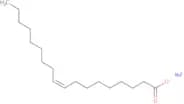
CAS:Sodium oleate is a chemical compound that is part of the soap-making process. It forms when sodium reacts with animal or vegetable oils and fats. Sodium oleate has been shown to be thermally stable, which means that it does not break down at high temperatures. Sodium oleate can be used to measure particle size by using the Langmuir adsorption isotherm technique. The titration calorimetry technique has also been used to study the thermal stability of this compound. Symptoms of overdose include kidney failure and paralysis of the central nervous system. Sodium oleate has been shown to inhibit bacterial growth in culture with a kinetic energy of 75 kJ/mol and an electrochemical impedance spectroscopy (EIS) measurement of 4 MΩ at 10 Hz. This compound also inhibits protein synthesis, leading to cell death by preventing transcription and translation, in experimental models using copper chloride as the catalyst.Formula:C18H33NaO2Purity:Min. 95%Color and Shape:White PowderMolecular weight:304.44 g/molGlycocholic acid sodium salt monohydrate
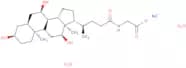
CAS:Glycocholic acid sodium salt monohydrate is a compound that is used in the production of pharmaceuticals, agrochemicals, and other organic chemicals. It is also used as an intermediate to produce carboxylic acids, amino acids, and other building blocks. Glycocholic acid sodium salt monohydrate is soluble in water and has a high boiling point. It can be used for reactions with alcohols and amines to form esters or amides respectively. This compound can be used as a reagent for the synthesis of peptides, proteins, carbohydrates, and nucleosides. Glycocholic acid sodium salt monohydrate has been shown to have anti-inflammatory properties by inhibiting prostaglandin biosynthesis.
Formula:C26H42NO6Na·H2OPurity:Min. 95%Color and Shape:White PowderMolecular weight:505.62 g/molPolyanetholesulfonic acid sodium salt
CAS:Polyanetholesulfonic acid sodium salt or sodium polyanetholesulfonate (SPS) is the polymer of anetholesulfonic acid and is a mixture of regioisomers with respect of the position of the sulfonic acid group. Sodium polyanetholesulfonate was originally developed as an anticoagulant, however it also possesses anticomplement properties and lowers the bactericidal action of blood. Polyanetholesulfonic acid sodium salt is therefore useful as a diagnostic reagent to encourage the growth of pathogens within blood.Formula:(C10H11NaO4S)nPurity:Min. 98%Color and Shape:Off-White Powder2,2'-Methylenebis(4,6-di-tert-butylphenyl)phosphatesodiumsalt
CAS:This product is a polymer that is used in the production of plastics, paper, and paints. It is also used as a thickening agent, emulsifier, or stabilizer in foods. Hydroxypropyl cellulose is produced by condensation of dimethoxybenzoic acid and sodium bis(2-hydroxypropyl)sulfate. This product has a molecular weight of about 10,000 to 1 million Daltons. It can be quantified using gas chromatography/mass spectroscopy. Hydroxypropyl cellulose has been shown to have an inhibiting effect on nucleation and growth of ice crystals during freezing and thawing cycles in polyolefin products. The polymer does not dissolve in water but readily absorbs moisture from the air and swells significantly when wetted with water. In addition to its use as a food additive, hydroxypropyl cellulose can be used as a component in the manufacture of polymers such as polyolefinsFormula:C29H42NaO4PPurity:Min. 95%Color and Shape:White PowderMolecular weight:508.6 g/molEDTA magnesium disodium
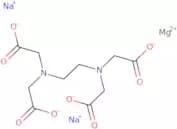
CAS:EDTA is a specific antidote that is used to treat heavy metal poisoning. It binds to metals in the bloodstream and prevents them from being absorbed into the body. The optimum concentration of EDTA for treatment is 1-2 grams per liter. EDTA may be used as an antidote for lead, mercury, or arsenic poisoning. Symptoms of metal poisoning include nausea, vomiting, abdominal pain, diarrhea, headache, and low blood pressure. EDTA may also be used to prevent kidney damage in patients with bowel disease or fatty acid-related kidney failure. EDTA has been shown to bind to DNA bases and form stable complexes with dinucleotide phosphate (DNP). These complexes inhibit apical uptake and cause cell death by apoptosis.Formula:C10H12N2O8MgNa2Purity:Min. 95%Color and Shape:PowderMolecular weight:358.5 g/molZinc dihydrogen phosphate
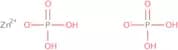
CAS:Zinc dihydrogen phosphate dihydrate is a white crystalline solid that is an inorganic acid. It is soluble in water and has a low solubility in organic solvents. The zinc salt of the compound reacts with magnesium to form a precipitate. Zinc dihydrogen phosphate dihydrate can be prepared by reacting ethylene diamine with sodium hydroxide solution, which forms zinc hydroxide and hydrogen phosphate ions. This reaction can also be done by adding potassium dichromate to copper chloride or metal hydroxides. The analytical method for this compound involves the use of sodium citrate, hydrochloric acid, and sodium carbonate.Formula:H4O8P2ZnColor and Shape:White PowderMolecular weight:259.38 g/molSodium stibogluconate
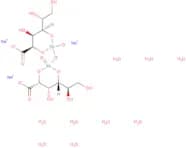
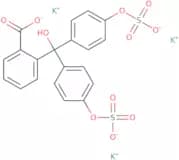
CAS:Sodium stibogluconate is a drug that has been widely used in the treatment of leishmaniasis. It is administered as an intramuscular injection or intravenous infusion, depending on the severity of the infection. The drug targets the parasite by inhibiting its DNA topoisomerase, which disrupts DNA replication and transcription. Clinical data have shown that this drug is effective against infantum and other strains of leishmania.Formula:C12H20O17Sb2•(Na)3•(H2O)9Purity:Min. 95%Color and Shape:PowderMolecular weight:910.9 g/molPhenolphthalein disulphate tripotassium salt trihydrate
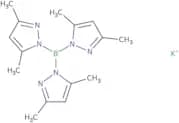
CAS:Phenolphthalein disulphate tripotassium salt trihydrate is a high-quality reagent that is used for the synthesis of complex compounds. Phenolphthalein disulphate tripotassium salt trihydrate has been shown to be a useful intermediate in the synthesis of fine chemicals, research chemicals, and speciality chemicals. It is also a versatile building block and can be used in reactions as a reaction component.Formula:C20H13K3O11S2·3H2OPurity:Min. 95%Color and Shape:PowderMolecular weight:664.81 g/molPotassium tris(3,5-dimethyl-1-pyrazolyl)borohydride
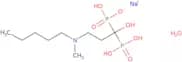
CAS:Potassium tris(3,5-dimethyl-1-pyrazolyl)borohydride is a catalytic reagent that converts various ketones to their corresponding cyclic 3,5-dimethylpyrazoles. It has been used for the synthesis of 1,4-dihydropyridines and for the conversion of aliphatic nitro compounds to their corresponding anilines. The yields are high and it has been shown to be more efficient than other methods in the literature. This reagent also has an intramolecular reaction mechanism and is able to reduce chloride ions into chloride gas.Formula:C15H22BKN6Purity:Min. 95%Color and Shape:PowderMolecular weight:336.28 g/molIbandronate sodium monohydrate
CAS:Farnesyl pyrophosphate synthase inhibitorFormula:C9H24NNaO8P2Purity:Min. 98 Area-%Color and Shape:PowderMolecular weight:359.23 g/mol