Metal Salts
In this section, you can find various metal salts, which are compounds characterized by containing both metal and non-metal atoms. Essentially, metal salts are composed of cations that are one or more metal atoms. These salts play a crucial role in numerous chemical reactions and applications, serving as catalysts, reactants, or intermediates in various industrial and research processes. At CymitQuimica, we offer a wide selection of high-quality metal salts to meet your research and industrial needs, ensuring reliable and effective performance in your applications.
Found 2872 products of "Metal Salts"
Sort by
Purity (%)
0
100
|
0
|
50
|
90
|
95
|
100
4-Aminobenzoic acid sodium salt
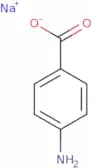
CAS:4-Aminobenzoic acid sodium salt is an aminobenzoic acid that is used as a pharmaceutical intermediate. It is soluble in water and alcohol and has a pH of 4.5. The compound has been shown to inhibit the growth of bacteria by binding to enzymes involved in fatty acid synthesis, which prevents the formation of fatty acids and results in cell death. The compound also inhibits allergic reactions through its inhibition of histamine release from mast cells. 4-Aminobenzoic acid sodium salt has been found to have anti-inflammatory properties, which may be due to its ability to bind to epidermal growth factor receptors on the surface of keratinocytes, leading to increased cell proliferation and less inflammation.Formula:C7H6NO2NaPurity:Min. 95%Color and Shape:PowderMolecular weight:159.12 g/molZinc ricinoleate
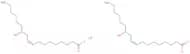
CAS:Zinc ricinoleate is a metal compound that is an absorber of hydrogen. It is primarily used as a deodorant for cosmetics and is often found in deodorant creams, powders, gels, and sticks. Zinc ricinoleate has been shown to be effective against lipases and chloride-containing compounds. The metal ion zinc in this compound reacts with the fatty acid esters in the skin and forms a protective layer that prevents the skin from becoming dry or irritated. Zinc ricinoleate also inhibits bacterial growth by preventing the synthesis of proteins needed for cell division.Formula:C36H66O6ZnPurity:Min. 95%Color and Shape:PowderMolecular weight:660.29 g/mol[1,1'-Bis(diphenylphosphino)ferrocene]-dichloropalladium (II)
CAS:Controlled Product[1,1'-Bis(diphenylphosphino)ferrocene]-dichloropalladium (II) is a catalyst used in cross-coupling reactions. It has been shown to be an efficient catalyst for the synthesis of substituted benzene derivatives. The presence of substituents on the benzene ring influences its reactivity and selectivity with respect to other substrates. In addition, it can be used as a photochemical source of ferrocenium ions, which are useful intermediates in organic synthesis. This compound is also used to simulate the reaction mechanisms of thiophene and triazine compounds.Formula:C34H28Cl2FeP2PdPurity:Min. 95%Color and Shape:Red PowderMolecular weight:731.7 g/molHydrocortisone hemisuccinate sodium
CAS:Controlled ProductHydrocortisone is a hormone involved in the regulation of the immune system and inflammatory response. It is used to treat inflammation, bowel disease, metabolic disorders, and autoimmune diseases. Hydrocortisone has been shown to affect cell nucleus activity and blood sampling in vitro. This drug can also be administered orally or topically to treat skin conditions such as erythropoietic protoporphyria (EPP) or psoriasis. Hydrocortisone hemisuccinate sodium is a drug that contains hydrocortisone and sodium salt. The salt form of hydrocortisone hemisuccinate sodium has been shown to have an anti-inflammatory effect when injected subcutaneously into rats with experimental colitis.Formula:C25H33NaO8Purity:Min. 95%Color and Shape:White PowderMolecular weight:484.51 g/molSodium phosphate dibasic
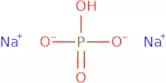
CAS:Sodium phosphate dibasic is a chemical compound that contains sodium and phosphate ions. It is soluble in water and can be found as a white powder or granules. This product is used to prepare reaction solutions for the analysis of citric acid, sodium citrate, and water vapor. Sodium phosphate dibasic has a phase transition temperature of about 100°C. The control analysis on human serum showed that there was no interference from fatty acids or sodium salts.Formula:HPO4Na2Purity:Min. 95%Color and Shape:PowderMolecular weight:141.96 g/molZinc(II) acetylacetonate hydrate
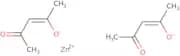
CAS:Zinc(II) acetylacetonate hydrate is a coordination compound of zinc, which has two acetylacetonate anions bound to the zinc ion. The compound has shown to inhibit the growth of epidermal cells in vitro by binding to epidermal growth factor. Zinc(II) acetylacetonate hydrate is soluble in water and can be used as a treatment for autoimmune diseases such as rheumatoid arthritis. The reaction solution is activated by heat or light energy and can be used to remove organic matter from wastewater. In addition, this compound may show promise for use in the manufacture of zirconium oxide because it has been found to have a low melting point and high crystallinity. This material also has been shown to have good catalytic activity and stability under harsh conditions.Formula:Zn(C5H7O2)2•(H2O)xPurity:Min. 95%Color and Shape:White PowderMolecular weight:263.6 g/molCalcium glycinate monohydrate
CAS:Calcium glycinate monohydrate is a chelated form of calcium that is easily absorbed by the body. It is often used in health care products, such as dietary supplements and nutritional solutions. Calcium glycinate monohydrate is used to prevent or treat calcium deficiency, which can lead to conditions such as osteoporosis. This compound also helps regulate blood pressure and muscle contractions, and may be beneficial for people with celiac disease. Calcium glycinate monohydrate has been shown to have antimicrobial properties against bacteria, fungi, and yeast.Formula:C4H8N2O4Ca•H2OColor and Shape:PowderMolecular weight:188.2 g/molTriphenylphosphine-3,3',3''-trisulfonic acid trisodium salt
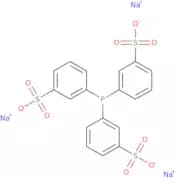
CAS:Triphenylphosphine-3,3',3''-trisulfonic acid trisodium salt is a cationic surfactant that has been used as a catalyst in organic synthesis. This drug has been shown to be effective in the treatment of hydrochloric acid and sodium carbonate bladder stones. It has also been used to treat orthoboric acid nephropathy, which is a type of kidney disease caused by exposure to high levels of boric acid. Triphenylphosphine-3,3',3''-trisulfonic acid trisodium salt is not readily absorbed into the bloodstream and exhibits low bioavailability.Formula:C18H12Na3O9PS3Purity:Min. 90 Area-%Color and Shape:White PowderMolecular weight:568.42 g/molBathocuproine disulfonic acid disodium salt hydrate
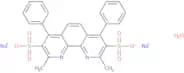
CAS:Bathocuproine disulfonic acid disodium salt hydrate is a copper complex that can be used for the analysis of urine samples. It is a multicellular animal-specific enzyme inhibitor that binds to phosphatase, which is an important component in the metabolism of carbohydrates and proteins. Bathocuproine disulfonic acid disodium salt hydrate inhibits the activity of this enzyme by forming a stable copper complex, thereby preventing the hydrolysis of phosphoric esters. Bathocuproine disulfonic acid disodium salt hydrate has been shown to inhibit growth factor activity in human serum, while inhibiting the reaction vessel corrosion process. This compound also contains functional groups such as sulfonic acid, carboxylate and sulfonamide groups.Formula:C26H18N2Na2O6S2·xH2OPurity:Min. 95%Color and Shape:White PowderMolecular weight:584.57 g/molSodium cocoyl glycinate
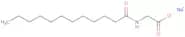
CAS:Sodium cocoyl glycinate is a surfactant that is derived from coco-amidopropyl betaine. It has milder skin-irritating properties than sodium lauryl sulfate, and is used as a cleansing agent in cosmetic products. Sodium cocoyl glycinate can be used as a surface active agent for the treatment of malignant brain tumors and collagen for the treatment of burns. The acyl chain of this compound can be synthesized by trimethylacetic acid with an ethylene diamine catalyst. Usnic acid or fatty acids are often added to produce the desired product.Purity:Min. 95%Color and Shape:PowderN-(Hydroxymethyl)-glycine sodium - 50%, in water
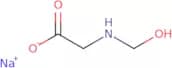
CAS:N-(Hydroxymethyl)-glycine sodium salt is a fixative agent that can be used for the preservation of biological samples. It has been shown to prevent bacterial growth and maintain chemical stability in the presence of benzalkonium chloride, which is an antibacterial agent. The activity index of N-(Hydroxymethyl)-glycine sodium salt is 50%, and it is active against bacteria such as Staphylococcus aureus, Escherichia coli, and Salmonella enterica. N-(Hydroxymethyl)-glycine sodium salt also has antimicrobial properties and has been shown to be effective against Mycobacterium tuberculosis, Mycobacterium avium complex, and Candida albicans. This fixative solution should not be used on tissues from patients with diabetic neuropathy or sclera due to its high osmolarity.Formula:C3H6NNaO3Purity:Min. 95%Color and Shape:Clear LiquidMolecular weight:127.07 g/molFerroceneboronic acid
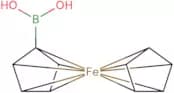
CAS:Ferroceneboronic acid is a reagent, complex compound, useful intermediate, fine chemical and useful scaffold. It is also a versatile building block for the synthesis of speciality chemicals. Ferroceneboronic acid reacts with an organic halide to form a ferrocenyl-containing boronate ester that is useful as a reaction component in organic synthesis. The CAS number for ferroceneboronic acid is 12152-94-2.Formula:C5H6BO2·C5H5·FePurity:Min. 95 Area-%Color and Shape:PowderMolecular weight:229.85 g/molCalcium chloride anhydrous
CAS:Calcium chloride anhydrous is a buffering agent that is used to control the pH of fluids in a controlled manner. It is also used as an osmotic agent in cell culture, where it regulates the uptake of water by increasing the permeability of cells. Calcium chloride anhydrous can be used to induce pluripotent cells, which are stem cells capable of becoming any type of tissue, through transcriptional regulation. This compound has been shown to have a concentration optimum at 1-3 mM and cannot be dissolved in water at high concentrations due to its hydrophilic nature. Calcium chloride anhydrous is not soluble in water and should be dissolved before being added to solutions.Formula:CaCl2Purity:Min. 95%Color and Shape:White Clear LiquidMolecular weight:110.98 g/molPotassium clavulanate - 1:1 mixture with silicon dioxide
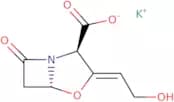
CAS:Potassium clavulanate is a beta-lactamase inhibitor that is used in the treatment of bacterial infections. The active site of potassium clavulanate is the beta-lactam ring, which has an ester bond to the 4-hydroxyl group of the penicillin nucleus. This bond can be hydrolyzed by beta-lactamase, an enzyme produced by bacteria, which will render the antibiotic ineffective. Potassium clavulanate inhibits this enzyme by binding to it and preventing it from breaking down penicillin. The temperature range for potassium clavulanate is between 2°C and 30°C, and its UV spectrophotometric technique ranges from 220 nm to 350 nm.Formula:C8H8NO5·KPurity:Min. 95%Color and Shape:White PowderMolecular weight:237.25 g/mol(±)-a-Tocopherol phosphate disodium salt
CAS:(±)-a-Tocopherol phosphate disodium salt is a synthetic form of vitamin E and is used in skin care products and supplements. Like vitamin E it has antioxidant properties.Formula:C29H49Na2O5PPurity:Min 97%Color and Shape:PowderMolecular weight:554.66 g/molL-Malic acid disodium salt monohydrate
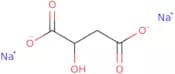
CAS:L-Malic acid disodium salt monohydrate is a versatile building block that can be used in the production of research chemicals, reagents and speciality chemicals. It is also a useful building block for the synthesis of complex compounds with high quality. L-Malic acid disodium salt monohydrate has been used as a reagent in organic syntheses, as well as in the production of pharmaceuticals. In addition, it is an intermediate for the synthesis of polymers and other materials. The CAS number for L-Malic acid disodium salt monohydrate is 207511-06-6.Formula:C4H4O5Na2·H2OPurity:Min. 95%Color and Shape:PowderMolecular weight:196.07 g/molSodium phytate hydrate
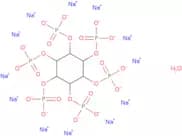
CAS:Chelator of multivalent metal ions; food perservative; antioxidant
Formula:C6H6Na12O24P6·xH2OPurity:Min. 75.0%Color and Shape:White PowderMolecular weight:923.82 g/molBis(1,5-cyclooctadiene)rhodium(I) trifluoromethanesulfonate
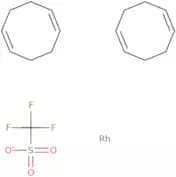
CAS:Bis(1,5-cyclooctadiene)rhodium(I) trifluoromethanesulfonate is a fine chemical that is used as a reagent for organic synthesis. It has been shown to be useful in the preparation of diverse compounds, including pharmaceuticals and agrochemicals. Bis(1,5-cyclooctadiene)rhodium(I) trifluoromethanesulfonate may also be used as a reaction component or building block for the synthesis of more complex compounds. This compound can be used to form a variety of scaffolds with different functional groups and has been found to be an effective intermediate in reactions involving palladium catalysts.
Formula:C17H24F3O3RhSPurity:Min. 95%Color and Shape:Red PowderMolecular weight:468.34 g/molSodium iodide
CAS:Sodium iodide is a substrate for film, which is used to separate proteins by their size. It can be used in the polymerase chain reaction (PCR) to amplify DNA from samples that are not amenable to gel electrophoresis. Sodium iodide can be used as a basic protein or light signal to indicate the presence of oxidative injury in cells. It has been shown to have potent antitumor activity and has been used as an analytical method for radiation and nuclear DNA. Sodium iodide can also be used as a biological sample for carcinoma cell lines.Formula:NaIPurity:Min. 95%Color and Shape:PowderMolecular weight:149.89 g/molDisodium fumarate
CAS:Disodium fumarate is a sodium salt that is used to treat bowel disease and as a nutritional supplement. It can be injected into the body or taken orally. Disodium fumarate functions as an energy metabolism regulator and also prevents copper from being absorbed by the body. This drug has been used in isotonic solutions to regulate cellular pH. Disodium fumarate is available in oral form, injection solution, or tablet form. The anion of disodium fumarate is Fumaric acid, which is found in the genus Fumaricae. The reaction between ammonium and disodium fumarate yields ammonium bisulfate.Formula:C4H2Na2O4Color and Shape:PowderMolecular weight:160.04 g/mol

![[1,1'-Bis(diphenylphosphino)ferrocene]-dichloropalladium (II)](/_next/image/?url=https%3A%2Fstatic.cymitquimica.com%2Fproducts%2F3D%2Fthumb-webp%2FFB13964.webp&w=3840&q=75)