Metal Salts
Found 2872 products of "Metal Salts"
Praseodymium oxide, 96%
CAS:Formula:Pr6O11Purity:≥ 96.0%Color and Shape:Dark brown to grey or black powderMolecular weight:1021.45Magnesium oxide, 99.99%
CAS:Formula:MgOPurity:≥ 99.99%Color and Shape:White or almost white powderMolecular weight:40.30Potassium metaperiodate, 99+%
CAS:Formula:KIO4Purity:(Titration) ≥ 99.0%Color and Shape:White to off-white powderMolecular weight:230.00Ytterbium fluoride, anhydrous, 99.9%
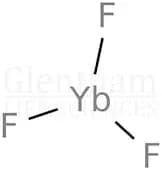
CAS:Formula:YbF3Purity:≥ 99.9%Color and Shape:White powderMolecular weight:230.40Dichloro[1,1''-ferrocenylbis(diphenylphosphine)]palladium(II)dichloromethane adduct
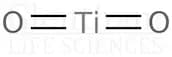
CAS:Formula:C5H4P(C6H5)2FePdCl2·CH2Cl2Color and Shape:Orange to red crystalline powderMolecular weight:816.65Titanium oxide Nanopowder, 10 - 30 nm, rutile, 99.5%
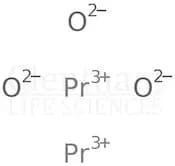
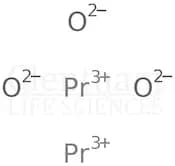
CAS:Formula:TiO2Purity:≥ 99.5%Color and Shape:White powderMolecular weight:79.87Praseodymium(III) oxide, 99.9%
CAS:Formula:Pr2O3Purity:≥ 99.9%Color and Shape:Light Green to Green powderMolecular weight:329.81Sodium periodate, ACS grade
CAS:Formula:INaO4Purity:99.8 - 100.3 %Color and Shape:White crystals or crystalline powderMolecular weight:213.89Aluminium(III) nitride Nanopowder, 99 %
CAS:Formula:AlNPurity:≥ 99.0%Color and Shape:White to grey powderMolecular weight:40.99Iron(II,III) oxide nanopowder (Magnetite); 98% [20 - 30 nm]
CAS:Formula:Fe3O4Purity:≥ 98.0%Color and Shape:Dark brown to black powderMolecular weight:231.53Barium nitrate, 99%
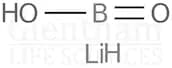
CAS:Formula:Ba(NO3)2Purity:98.5 - 101.5 %Color and Shape:White or off-white powder or crystalsMolecular weight:261.35Lithium metaborate, anhydrous
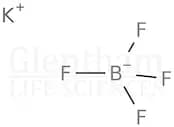
CAS:Formula:LiBO2Purity:≥ 99.0%Color and Shape:White to off-white powderMolecular weight:49.75Potassium tetrafluoroborate, 99%
CAS:Formula:KBF4Purity:≥ 99.0%Color and Shape:White to off-white powderMolecular weight:125.91Bismuth oxide, 99.8%
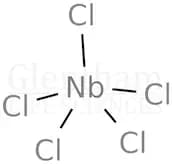
CAS:Formula:Bi2O3Purity:≥ 99.8%Color and Shape:Pale yellow or yellow powderMolecular weight:465.96Niobium(V) chloride, 99+%
CAS:Formula:NbCl5Purity:≥ 99.0%Color and Shape:Light yellow to yellow powder or crystalsMolecular weight:270.17Tungsten(VI) oxide, 99.9%
CAS:Formula:WO3Purity:≥ 99.9%Color and Shape:Pale yellow to yellow-green powderMolecular weight:231.85Potassium iodide, 99%, Ph. Eur., BP, USP grade
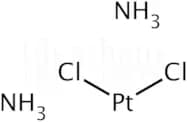
CAS:Formula:KIColor and Shape:White to almost white powder or colourless crystalsMolecular weight:166.01trans-Dichlorodiamine platinum(II); 99.95% (metals basis)
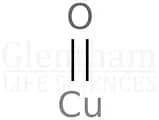
CAS:Formula:Pt(NH3)2Cl2Molecular weight:300.06Copper(II) oxide, 99%
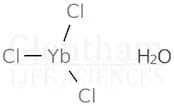
CAS:Formula:CuOPurity:≥ 99.0%Color and Shape:Dark grey to black powderMolecular weight:79.54Ytterbium chloride hydrate, 99.99%
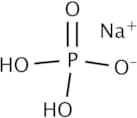
CAS:Formula:YbCl3·xH2OPurity:≥ 99.99%Color and Shape:White crystalline powder or colourless crystalsMolecular weight:279.40Sodium dihydrogen phosphate, 99.999%
CAS:Formula:NaH2PO4Purity:≥ 99.999%Color and Shape:White solidMolecular weight:120.05Europium oxide, 99.9%
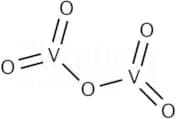
CAS:Formula:Eu2O3Purity:≥ 99.9% (rare earth basis)Color and Shape:White powderMolecular weight:351.92Vanadium(V) oxide, 98+%
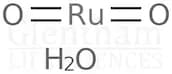
CAS:Formula:V2O5Purity:≥ 99.9%Color and Shape:Orange to very dark orange powderMolecular weight:181.88Ruthenium(IV) oxide, hydrate
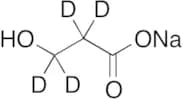
CAS:Formula:RuO2·xH2OColor and Shape:Black powderMolecular weight:133.073-Hydroxypropionic Acid-D4 Sodium Salt
CAS:Controlled ProductApplications 3-Hydroxypropionic Acid-D4 Sodium Salt is a deuterium labelled analogue of 3-Hydroxypropionic Acid Sodium Salt (H952480), which is beta hydroxy acid derived from plants and crops such as corn. 3-Hydroxypropionic Acid is used in the preparation of acrylates and biodegradable polymer polyester.
References Wang, Y. et al.: Biomacromol., 3, 828 (2002); Jiang, X. et al.: Appl. Microbiol. Biotech., 82, 995 (2009);Formula:C3D4HO3·NaColor and Shape:White To Off-WhiteMolecular weight:116.0844Holmium(III) Oxide
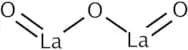
CAS:Applications Ho2O3 (cas# 12055-62-8) is a useful research chemical.
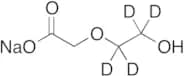
Formula:Ho2O3Color and Shape:NeatMolecular weight:377.86Sodium β-Hydroxyethoxyacetate-d4
CAS:Controlled ProductApplications Isotope labelled Sodium β-Hydroxyethoxyacetate is used in the synthesis of polymer microspheres that are magnetized and are used for enzyme catalysis or bioaffinity separations.
References Horak, D. et al.: Macromol. Biosci., 12, 647 (2012); Pestov, A. et al.: Russ. J. Coord. Chem., 38, 738 (2012);Formula:C4H3D4NaO4Color and Shape:NeatMolecular weight:146.11Ethylenediaminetetraacetic Acid Tetrasodium Salt Dihydrate
CAS:Applications Ethylenediaminetetraacetic Acid Tetrasodium Salt Dihydrate is a chelating reagent, similar to that of Ethylenediamine-N,N,N’,N’-tetraacetic Acid (E917745).
References Heindorff, K., et al.: Mutat. Res., 115, 149 (1983), Grier, M.T., et al.: Ann. Pharmacother., 27, 1504 (1993), Krokidis, A.A., et al.: Anal. Chim. Acta, 535, 57 (2005),Formula:C10H12N2O8·2H2O·4NaColor and Shape:NeatMolecular weight:416.2Adrenochrome Bisulfite Sodium Salt
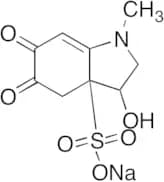
CAS:Controlled ProductApplications Adrenochrome Bisulfite Sodium Salt is a derivative of Adrenochrome (A305250), the substance mainly responsible for the red colours produced during the mild oxidation of adrenaline
References Costa, V., et al.: Chem. Res. Toxicol., 20, 1183 (2007), Sotomayor-Zarate, R., et al.: Biol Reproduc., 78, 673 (2008),Formula:C9H10NO6S·NaColor and Shape:NeatMolecular weight:283.23Sodium Sulfite
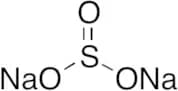
CAS:Applications Sodium sulfite is mainly used for the manufacture of detergents and in the Kraft process of paper pulping. Sodium sulfite is also used as a fining agent, to help remove small air bubbles from molten glass, in the glass industry.
References Brooks, M., et al.: Chem. Eng. Res. Des., 84, 139 (2006); Evans, J., et al.: Paper Trade J., 143, 42 (1959); Skvara, F.: Chemicky Prumysl, 28, 425 (1978)Formula:Na2O3SColor and Shape:White To Off-WhiteMolecular weight:126.044-Phenolsulfonic Acid Sodium Salt Dihydrate
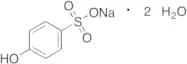
CAS:Controlled ProductStability Hygroscopic
Applications 4-Phenolsulfonic Acid Sodium Salt Dihydrate preparation of N-pyrazolylbenzenesulfonylamide derivatives as activators of PPARs
References Vedananda, T., et al.: PCT Int. Appl., 61 (2005)Formula:C6H5NaO4S·2H2OColor and Shape:Off-WhiteMolecular weight:232.19EDTA Calcium Disodium Salt
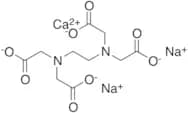
CAS:Stability Very Hygroscopic
Applications EDTA calcium disodium salt (cas# 62-33-9) is a useful research chemical.Formula:C10H12CaN2O8·2NaColor and Shape:NeatMolecular weight:374.27





![Dichloro[1,1''-ferrocenylbis(diphenylphosphine)]palladium(II)dichloromethane adduct](/_next/image/?url=https%3A%2Fstatic.cymitquimica.com%2Fproducts%2F7W%2Fthumb-webp%2FGX3273.webp&w=3840&q=75)


![Iron(II,III) oxide nanopowder (Magnetite); 98% [20 - 30 nm]](/_next/image/?url=https%3A%2Fstatic.cymitquimica.com%2Fproducts%2F7W%2Fthumb-webp%2FGX6555.webp&w=3840&q=75)