Metal Salts
Found 2872 products of "Metal Salts"
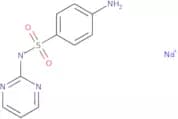
Sulfadiazine sodium
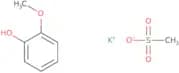
CAS:Sulfadiazine sodium is an antimicrobial agent that belongs to the sulfa drugs. It has a wide range of uses, such as wastewater treatment, disinfecting water supplies, and treating infectious diseases. Sulfadiazine sodium is commonly used in the treatment of urinary tract infections and skin infections. The structure of sulfadiazine sodium is similar to the structure of other sulfa drugs. Sulfa drugs are compounds containing a sulfonamide group linked to a 4-carbon organic acid. They are characterized by their antibiotic properties and their ability to prevent bacterial growth by blocking the synthesis of folic acid. Sulfa drugs also have a synergistic effect with penicillin antibiotics, which can help kill bacteria that have become resistant to penicillin alone.Formula:C10H9N4NaO2SPurity:Min. 95%Color and Shape:White To Yellow SolidMolecular weight:272.26 g/molGualicol sulfonic acid potassium salt
CAS:Gualicol sulfonic acid potassium salt is a potassium salt that has expectorant properties. It can be used for the treatment of respiratory conditions such as bronchitis and asthma. Gualicol sulfonic acid potassium salt is used to treat coughs and other symptoms of respiratory infections, such as bronchitis and asthma. The drug is administered by mouth in tablet form.Formula:C7H7KO5SPurity:Min. 95%Color and Shape:PowderMolecular weight:242.29 g/molZinc sulfate monohydrate
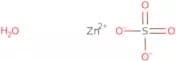
CAS:Zinc sulfate monohydrate is a white crystalline solid that is soluble in water. It is used as a nutrient supplement, such as in the form of zinc sulfate. The compound is also used to prepare zinc citrate, which can be used as a buffer or reaction solution. Zinc sulfate monohydrate reacts with other compounds to produce zinc salts and water vapor. In the presence of calcium pantothenate and phosphorus pentoxide, it forms zinc phosphate and zinc carbonate. This compound has been shown to increase locomotor activity when injected into rats at an optimum concentration. Zinc sulfate monohydrate has been shown to have cardiac effects in rats at higher doses, including delayed repolarization and reduced contractility. Structural analysis of this compound has shown that it contains a complex enzyme-like site that may be involved in the catalytic process. Thermodynamic data for this compound has been obtained by differential scanning calorimetry and X-ray powder diffraction analysis,
Formula:ZnSO4•H2OPurity:Min. 95%Color and Shape:PowderMolecular weight:179.46 g/molSodium diformylamide
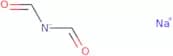
CAS:Sodium diformylamide is a chemical compound that belongs to the class of amides. It has been shown to inhibit the activity of a number of enzymes including alkanoic acid, inorganic acid, and amide. It has also shown promising results in the prevention and treatment of metabolic disorders such as hepatitis. The asymmetric synthesis of this compound is achieved through the use of trifluoroacetic acid and nitrogen atoms. The biological properties of sodium diformylamide have not yet been fully researched but it has been found to have integrin receptor-binding properties.Formula:C2H3NO2•NaPurity:Min. 95%Molecular weight:96.04 g/molTaurochenodeoxycholic acid sodium
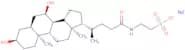
CAS:Taurochenodeoxycholic acid sodium is a bile acid derivative, which is naturally sourced from the bile of mammals. It is synthesized by conjugating chenodeoxycholic acid with taurine, resulting in its sodium salt form. The primary mode of action of taurochenodeoxycholic acid sodium involves its role in the emulsification and absorption of dietary fats and fat-soluble vitamins in the intestines. Additionally, it acts on the liver, where it enhances bile flow and exhibits hepatoprotective properties by modulating bile acid composition and reducing cytotoxicity.Formula:C26H45NO6S•NaPurity:Min. 95%Color and Shape:PowderMolecular weight:522.7 g/molDL-4-Hydroxy-2-ketoglutarate dilithium salt
CAS:DL-4-Hydroxy-2-ketoglutarate dilithium salt (DL4KG) is a lysine analogue that is used as a substrate for the enzyme aldolase. DL4KG has a hydroxyl group, which can react with the amino group of lysine residues on proteins to produce an unstable intermediate. This process eventually leads to the production of glutamate and glyceraldehyde 3-phosphate, which are needed in the synthesis of ATP. DL4KG has been shown to be an inhibitor of bacterial enzymes such as glutamate dehydrogenase, which catalyzes the conversion of L-glutamic acid to L-glutamine. Inhibition by DL4KG has been demonstrated in vitro at concentrations between 2 and 10 mM.Formula:C5H4O6Li2Purity:90%MinColor and Shape:White to off-white solid.Molecular weight:173.96 g/molTitanium (IV) oxide - Rutile nanopowder ca. 25 nm particle size
CAS:Rutile titanium dioxide is a naturally occurring mineral that is composed of titanium (IV) oxide and oxygen. Rutile TiO2 nanopowder has shown to be an effective catalyst for the decomposition of organic matter in wastewater treatment, due to its strong reactive properties. Rutile TiO2 nanopowder can also be used as an additive in polymerase chain reactions (PCR). It has been shown to have a number of physiological effects, such as changes in the expression of genes related to the pathogenesis of certain cancers. The mechanism by which this occurs is not yet fully understood and requires further research. Rutile TiO2 nanopowder is produced by laser ablation and has been used for analytical methods such as electrochemical impedance spectroscopy. The toxicity of rutile TiO2 nanopowder has been studied extensively with regards to its effects on animals, humans, and plants.Formula:TiO2Purity:(%) Min. 98%Color and Shape:White Off-White PowderMolecular weight:79.87 g/molPoly-L-glutamic acid sodium, MW 50,000-100,000
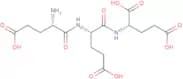
CAS:Poly-L-glutamic acid sodium, MW 50,000-100,000 is a treatment agent that belongs to the group of oligopeptides. It is a low-dose therapeutic agent for the treatment of hair loss and alopecia. The amino acid sequence of this product has been shown to be similar to that of methionine and contains carboxyl groups. Poly-L-glutamic acid sodium, MW 50,000-100,000 is formed by the deprotonation and protonation of amino groups and carboxyl groups in an acidic environment.Formula:(C5H9NO4)x•NaxPurity:Min. 95%Color and Shape:PowderSodium Phenoxide Trihydrate
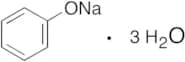
CAS:Controlled ProductApplications Sodium Phenoxide Trihydrate, is used in the synthesis of trialkylphosphonium salts as replacements for easily oxidizable trialkylphosphines. Also used in the aminocarbonylation of aryl chlorides at atmospheric pressure.
Not a dangerous good if item is equal to or less than 1g/ml and there is less than 100g/ml in the package
References Martinelli, J. et al.: Angew. Chem. Int. Ed., 46, 8460 (2007); Netherton, M. et al.: Org. Lett., 3, 4295 (2001);Formula:C6H5NaOH2OColor and Shape:NeatMolecular weight:170.14Sodium Naphthalene-2,6-disulfonate
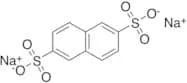
CAS:Controlled ProductApplications Sodium Naphthalene-2,6-disulfonate (cas# 1655-45-4) is a useful research chemical.
Formula:C10H6Na2O6S2Color and Shape:NeatMolecular weight:332.26N-[2-(N’,N’,N’-Trimethylammoniumbromide)ethyl]maleamic Acid Sodium Salt
CAS:Controlled ProductApplications N-[2-(N’,N’,N’-Trimethylammoniumbromide)ethyl]maleamic Acid Sodium Salt is a compound useful in organic synthesis.
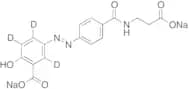
Formula:C9H16N2NaO3·BrColor and Shape:NeatMolecular weight:303.129Balsalazide-d3 Disodium Salt
CAS:Controlled ProductApplications Balsalazide-d3 Disodium Salt is a labeled analogue of Sulfasalazine (S699084). A prodrug of 5-aminosalicylic acid where carrier molecule is 4-aminobenzoyl-β-alanine. Anti-inflammatory (gastrointestinal).
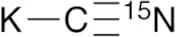
References Prakash, A., et al.: Drugs, 56, 83 (1998); Coyne, C., et al.: Mol. Biol. Cell, 13, 3218 (2002); Willemsen, L., et al.: Clin. Exp. Immunol., 142, 275 (2005)Formula:C17D3H10N3Na2O6Color and Shape:NeatMolecular weight:404.3Potassium Cyanide-15N
CAS:Controlled ProductApplications Labelled analogue of Potassium Cyanide, a reagent widely used in organic synthesis for the preparation of nitriles and carboxylic acids, particularly in the von Richter reaction.
Not a dangerous good if item is equal to or less than 1g/ml and there is less than 100g/ml in the package
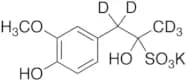
References Kollenz, G. et al.: Org. Prep. Proc. Int., 12, 244 (1980); Subramanian, L. R.: Sci. Synth., 19, 173 (2004);Formula:CK15NColor and Shape:NeatMolecular weight:66.11α,4-Dihydroxy-3-methoxy-α-methyl-benzeneethanesulfonic Acid Potassium Salt-d5
CAS:Controlled ProductApplications A labelled intermediate in the preparation of DOPA-decarboxylase inhibitors.
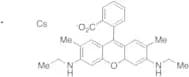
Formula:C10H8D5KO6SColor and Shape:NeatMolecular weight:305.49-(2-Carboxyphenyl)-3,6-bis(ethylamino)-2,7-dimethylxanthylium Cesium Salt
CAS:Controlled ProductApplications 9-(2-Carboxyphenyl)-3,6-bis(ethylamino)-2,7-dimethylxanthylium Cesium Salt is an intermediate in the synthesis of SkQR1 (S555050), a mitochondria-targeted plastoquinone antioxidant that exhibits neuroprotective effect. Potent Mitochondrial Targeting antioxidant (1)
References Isaev NK. et al. 2012. Biochemistry (Mosc). Sep;77(9):996-9 Isaev NK, et al. Rev Neurosci. 2016 Aug 25.Formula:C26H26CsN2O3Color and Shape:NeatMolecular weight:547.4Sodium Phosphate Dibasic
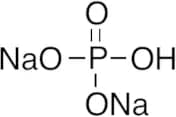
CAS:Applications Sodium Phosphate Dibasic is used as an in conjunction with trisodium phosphate in foods and water treatment. In foods, it is used to adjust pH. In water treatment, It retards calcium scale formation. It is also found in some detergents and cleaning agents. Sodium Phosphate Dibasic is used as a saline laxative to treat constipation or to clean the bowel before a colonoscopy.
References Tsioulpas, A., et al.: Food Chem., 122, 1027 (2010); Schrödter, K., et al.: Ullmann’s Encyclopedia of Industrial Chemistry (2008); Hansen, C., et al.: Am. J. Obstet. Gynecol., 196, 311 (2007)Formula:Na·HO4PColor and Shape:NeatMolecular weight:141.964-[1-(4-Iodophenyl)-5-(2,4-dinitrophenyl)-formaz-3-yl]-1,3-benzene Disulfonate, Disodium Salt
CAS:Controlled ProductApplications 4-[1-(4-Iodophenyl)-5-(2,4-dinitrophenyl)-formaz-3-yl]-1,3-benzene Disulfonate, Disodium Salt (cas# 161617-44-3) is a compound useful in organic synthesis.
Formula:C19H11IN6O10S2·2NaColor and Shape:NeatMolecular weight:720.34Lithium Iodide Hydrate
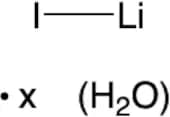
CAS:Controlled ProductApplications Lithium Iodide Hydrate is used in the dehydration of alkali metal iodides in vacuum and in the dehydration of lithium iodide hydrate crystals.
References Sofronov, D. S., et al.: Functional Materials, 12, 559 (2005), Demidov, A. I., et al.: Zhurnal Prikladnoi Khimii, 71, 1249 (1998)Formula:ILi·x(H2O)Color and Shape:NeatMolecular weight:151.9Lead(II) Oxide
CAS:Applications Lead(II) Oxide is used as the starting material in the synthesis of Dibasic Lead Phthalate Hydrate (D417070); a compound that is used in vinyl wire insulation as a flame retardant.
Not a dangerous good if item is equal to or less than 1g/ml and there is less than 100g/ml in the package
References Grossman, R. et al.: J. Vinyl Addt. Tech., 9, 65 (2003); Grossman, R. et al.: Vinyl Addt. Tech., 6, 138 (2000)Formula:PbOColor and Shape:NeatMolecular weight:223.971572-Chloro-5-nitrobenzene Sodium Sulphonate
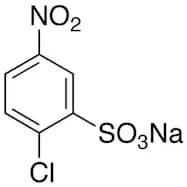
CAS:Controlled ProductApplications 2-Chloro-5-nitrobenzene Sodium Sulphonate (cas# 946-30-5) is a compound useful in organic synthesis.
Formula:C6H3ClNO5S·NaColor and Shape:NeatMolecular weight:259.60Silver Cyanate
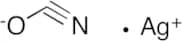
CAS:Controlled ProductApplications Silver cyanate is a chemosterilant in adult houseflies, and is also used as a reagent to synthesize 1-(3-thianyl)uracil and 9-(3-thianyl)adenine derivatives, compounds that have potential anti-human immunodeficiency virus (HIV) and antitumour activity.
References Fye, R., et al.: J. Econ. Entomol., 62, 522 (1969); Hultin, P. & Szarek, W.: Can. J. Chem., 72, 208 (1994)Formula:AgOCNColor and Shape:NeatMolecular weight:149.88Copper(II) Chloride
CAS:Applications Copper(II) chloride is a reagent that is used in the synthesis of Diisobutyl Phosphate (D455480), which is an analyte found in human urine and municipal wastewaters.
Not a dangerous good if item is equal to or less than 1g/ml and there is less than 100g/ml in the package
References Reemtsma, T., et al.: Sci. Total Environ., 409, 1990 (2011); Quintana, J.B., et al.: Anal. Chem., 78, 1644 (2006)Formula:Cl2CuColor and Shape:NeatMolecular weight:134.45D-Aspartic Acid-d3 L-Alanine Copper(II) Complex
CAS:Controlled ProductApplications D-Aspartic Acid-d3 L-Alanine Copper(II) Complex is an intermediate in the synthesis of D-Aspartic-2,3,3-d3 Acid (A790019) which is derived from D-Asparatic Acid (A790020), which is a non-essential amino acid found in food sources. Its conjugate base D-aspartate has potential use as an therapeutic agent in the treatment of schizophrenia-related symptoms.
References Errico, F. et al.: J. Neurosci., 28, 10404 (2008); Denu, J.M. et al.: Biochem., 34, 3396 (1995); Chen, P.E. et al.: Mol. Pharmacol., 67, 1470 (2005);Formula:C7H9D3CuN2O62Color and Shape:NeatMolecular weight:286.74α,4-Dihydroxy-3-methoxy-α-methyl-benzeneethanesulfonic Acid Potassium Salt
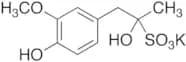
CAS:Controlled ProductApplications An intermediate in the preparation of DOPA-decarboxylase inhibitors
Formula:C10H13KO6SColor and Shape:NeatMolecular weight:300.37Cobalt(II) Chloride Hydrate
CAS:Controlled ProductApplications Cobalt(II) Chloride Hydrate, is used in biological studies as adual control of glut1 glucose transporter gene by hypoxia and by inhibition of oxidative phosphorylation and structural and functional characterization of promoter region of rat glut1 gene
Not a dangerous good if item is equal to or less than 1g/ml and there is less than 100g/ml in the package
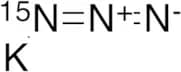
References Behrooz, A., et al.: J. Biol. Chem., 272, 5555 (1997)Formula:Cl2Co•xH2OColor and Shape:NeatMolecular weight:129.841801Potassium Azide-15N
CAS:Controlled ProductApplications Potassium Azide-15N is a labelled intermediate in the synthesis of Tazobactam Sodium Salt-13C2,15N1, which is the labeled analogue of Tazobactam Sodium Salt (T010100), which is a β-Lactamase inhibitor, used with β-lactam antibiotics to enhance their effect.
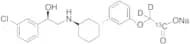
References Gould, I.M., et al.: Drugs Exp. Clin. Res., 17, 187 (1991), Roland, R.K., et al.: J. Infect. Dis., 4, 226 (2000), Bonomo, R.A., et al.: Biochim. Biophys. Acta, 1547, 196 (2001),Formula:KN215NColor and Shape:Off-WhiteMolecular weight:82.112-(3-((1R,3S)-3-(((R)-2-(3-Chlorophenyl)-2-hydroxyethyl)amino)cyclohexyl)phenoxy)acetic Acid-13C, d2 Sodium Salt
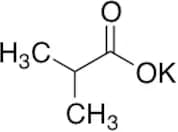
CAS:Controlled ProductFormula:CC21D2H23ClNNaO4Color and Shape:NeatMolecular weight:428.886Potassium Isobutyrate
CAS:Controlled ProductApplications Potassium Isobutyrate (cas# 19455-20-0) is a useful research chemical.
Formula:C4H7O2·KColor and Shape:NeatMolecular weight:126.195Lithium Bromide
CAS:Applications Lithium bromide is used as an inexpensive catalyst for the opening of epoxide rings by amines at room temperature. Lithium bromide is also used in conjunction with water to create a refrigerant-absorbent solution for use in refrigeration systems.
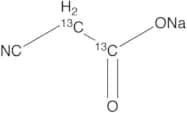
References Arun, M., et al.: Appl. Therm. Eng., 21, 1273 (2001); Chakraborti, A., et al.: Eur. J. Org. Chem., 17, 3597 (2004)Formula:Br·LiColor and Shape:NeatMolecular weight:86.842-Cyano-acetic Acid Sodium Salt-13C2
CAS:Controlled ProductApplications 2-Cyano-acetic Acid Sodium Salt-13C2 (cas# 1346598-51-3) is a compound useful in organic synthesis.
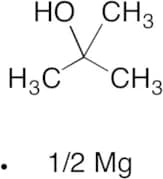
Formula:C13C2H2NNaO2Color and Shape:NeatMolecular weight:109.03Magnesium tert-Butoxide
CAS:Controlled ProductApplications Magnesium tert-Butoxide is a reagent used in deprotonation reactions in organic synthesis. A mild alkaline earth metal alkoxide base that also functions as a Lewis acid and Bronsted base in chemical transformations.
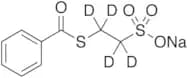
References Ponikiewski, L., et al.: Z. Anorg. Allg. Chem., 634, 1770 (2008); Roman, D. S., et al.: e-EROS Encyclopedia of Reagents for Organic Synthesis, 1 (2013)Formula:(C4H10O)·MgColor and Shape:NeatMolecular weight:172.54Sodium Benzoylthioethanesulfonate-d4
CAS:Controlled ProductApplications Sodium Benzoylthioethanesulfonate-d4 (cas# 1189657-00-8) is a compound useful in organic synthesis.
Formula:C92H4H5O4S2·NaColor and Shape:NeatMolecular weight:272.31Sodium Tert-Butoxide
CAS:Controlled ProductApplications Sodium Tert-Butoxide is a useful research chemical for organic synthesis and other chemical processes.
Not a dangerous good if item is equal to or less than 1g/ml and there is less than 100g/ml in the package
References Henidi, H. A., et al.: RSC Adv., 9, 21578 (2019); Nefertiti, A. S. G., et al.: Antimicrob. Agents Chemother., 62, 1 (2018);Formula:C4H9ONaColor and Shape:NeatMolecular weight:96.1Potassium Deuteroxide (40% w/w in D2O)
CAS:Controlled ProductApplications Labelled Potassium Hydroxide, used in the synthesis of biodiesels.
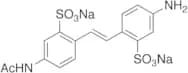
References Boz, N. et al.: Appl. Catal. B-Environ., 138, 236 (2013); Rathore, P. et al.: Energy. Fuels. 27, 2776 (2013);Formula:DKOColor and Shape:Single SolutionMolecular weight:57.114-Acetamido-4’-aminostilbene-2,2’-disulfonic Acid Disodium Salt
CAS:Controlled ProductStability Temperature Sensitive - Recommended Storage at -20°C
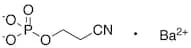
Applications 4-Acetamido-4’-aminostilbene-2,2’-disulfonic Acid Disodium Salt (cas# 78211-74-2) is a compound useful in organic synthesis.Formula:C16H14N2O7S2·2NaColor and Shape:NeatMolecular weight:456.42-Cyanoethyl Phosphate, Barium
CAS:Controlled ProductApplications A phosphorylating agent with a protecting group sensitive to mild alkali, useful as an intermediate in the synthesis of nucleotides.
References Tener, G.M.: J. ACS, 83, 159-168 (1961)Formula:C3H4NO4P·BaColor and Shape:NeatMolecular weight:286.37Lithium Perchlorate
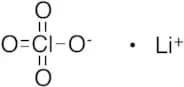
CAS:Controlled ProductApplications Lithium Perchlorate is an inorganic compound that is highly soluble in organic solvents. It is also used as an electrolyte in lithium-ion batteries.
Not a dangerous good if item is equal to or less than 1g/ml and there is less than 100g/ml in the package
References Xu, K., et al.: Chem. Rev., 104, 4303-4417 (2004)Formula:ClO4·LiColor and Shape:NeatMolecular weight:106.4Iron
CAS:Controlled ProductApplications Iron is a transition metal element used in coordination chemistry as well as in metallo-organic molecules in pharmaceutical chemistry.
References Brozek, C. et al.: Chem. Mat., 25, 2998 (2013); Mesbah, A. et al.: Inorg. Chem., 52, 12057 (2013);Formula:FeColor and Shape:NeatMolecular weight:55.84Vanadium(IV) Oxide Acetylacetonate
CAS:Controlled ProductApplications Vanadium(IV) Oxide Acetylacetonate is used as a catalyst in organic chemistry and is also an intermediate in synthetic reactions, such as the synthesis of novel oxovanadium complexes that display antitumor activity.
References Rui, W. et al.: Polyhedron, 117, 803 (2016); Tahmasebi, V. et al.: J. Mol. Struct., 1123, 367 (2016);Formula:C10H14O5VColor and Shape:NeatMolecular weight:265.16N-Methylmethanesulfonamide Sodium Salt
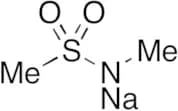
CAS:Controlled ProductApplications N-Methylmethanesulfonamide Sodium Salt is an substituent in the synthesis of Rosuvastatin (R700500), a selective, competitive HMG-CoA reductase inhibitor.
References Tomita, N., et al.: Bioorg. Med. Chem. Lett., 23, 1779 (2013);Formula:C2H6NNaO2SColor and Shape:NeatMolecular weight:131.11Sodium bis(trimethylsilyl)amide (95%)
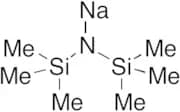
CAS:Controlled ProductApplications can be used in the generation of carbenes, the amination of sulfenamides, and the preparation of lanthanide complexes.
References Hasan T.m et al.: Journal of the Chemical Society. Perkin Transactions 1 , 1923-1923, (1992); S C Bock Journal of the American Chemical Society 116, 7637-7637, (1994)Formula:C6H18NNaSi2Purity:95%Color and Shape:NeatMolecular weight:183.37Potassium Hydrogen Fluoride
CAS:Controlled ProductApplications Potassium hydrogen fluoride (cas# 7789-29-9) is a useful research chemical.
Not a dangerous good if item is equal to or less than 1g/ml and there is less than 100g/ml in the packageFormula:KHF2Color and Shape:NeatMolecular weight:78.1Sodium 4-Methylbenzenesulfinate
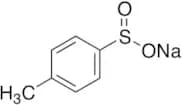
CAS:Controlled ProductApplications Sodium 4-methylbenzenesulfinate (cas# 824-79-3) is a useful research chemical.
Formula:C7H7NaO2SColor and Shape:NeatMolecular weight:178.19Potassium Fluoride Dihydrate
CAS:Controlled ProductApplications Potassium Fluoride Dihydrate is a useful chemical reagent.
Not a dangerous good if item is equal to or less than 1g/ml and there is less than 100g/ml in the packageFormula:KF·2H2OColor and Shape:NeatMolecular weight:94.13Cesium Iodide
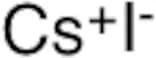
CAS:Controlled ProductApplications Cesium Iodide (cas# 7789-17-5) is a useful research chemical.
Formula:CsIColor and Shape:NeatMolecular weight:259.812-Nitrophenol Potassium Salt
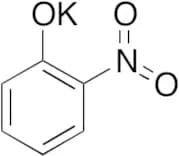
CAS:Controlled ProductApplications 2-Nitrophenol Potassium Salt s an intermediate in the synthesis of 5-Methyl-bis-(2-aminophenoxymethylene)-N,N,N’,N’-tetraacetate Methyl Ester (M294140)
Formula:C6H4KNO3Color and Shape:NeatMolecular weight:177.2Sodium Hydrosulfide Hydrate
CAS:Controlled ProductApplications Sodium Hydrosulfide Hydrate is a stable hydrogen sulfide (H2S) donor and oxidant in the formation of benzothiazoles. It is also used as a reagent in the synthesis of imidazo[1,2-b]thiazole derivatives as novel SIRT1 activators.
Not a dangerous good if item is equal to or less than 1g/ml and there is less than 100g/ml in the package
References Meng, J., et al.: Int. J. Impot. Res., 25, 86 (2013); Park, N., et al.: Eur. J. Org. Chem., 2012, 1984 (2012); Vu, C.B., et al.: J. Med. Chem., 52, 1275 (2009)Formula:HNaS(xH2O)Color and Shape:NeatMolecular weight:56.06Sodium Stearate
CAS:Controlled ProductApplications Sodium stearate (cas# 822-16-2) is a useful research chemical.
Formula:C18H35NaO2Color and Shape:NeatMolecular weight:306.46Potassium Thioacetate
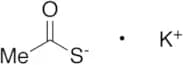
CAS:Controlled ProductApplications Potassium Thioacetate is the potassium salt of Thioacetic Acid, a commonly used reagent in organic synthesis for the introduction of thiol groups in molecules.
Not a dangerous good if item is equal to or less than 1g/ml and there is less than 100g/ml in the package
References Chapman, J.H. et al.: J. Chem. Soc., 579 (1950);Formula:C2H4KOSColor and Shape:NeatMolecular weight:114.21Cytidine 5'-Triphosphate Disodium Salt
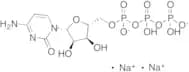
CAS:Applications Cytidine 5'-Triphosphate Disodium Salt is a P2X purinergic receptor agonist. It can be used as reactant/reagent in chemoenzymic synthesis of sialosides containing C7-modified sialic acids and their application in sialidase substrate specificity studies.
References Khedri, Z., et al.: Carbohyd Res, 389, 100 (2014)Formula:C9H14N3Na2O14P3Color and Shape:NeatMolecular weight:527.12




![N-[2-(N’,N’,N’-Trimethylammoniumbromide)ethyl]maleamic Acid Sodium Salt](/_next/image/?url=https%3A%2Fstatic.cymitquimica.com%2Fproducts%2FTR%2Fthumb-webp%2FT795833.webp&w=3840&q=75)
![4-[1-(4-Iodophenyl)-5-(2,4-dinitrophenyl)-formaz-3-yl]-1,3-benzene Disulfonate, Disodium Salt](/_next/image/?url=https%3A%2Fstatic.cymitquimica.com%2Fproducts%2FTR%2Fthumb-webp%2FI718225.webp&w=3840&q=75)