Metal Salts
Found 2872 products of "Metal Salts"
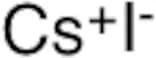
Cesium Iodide
CAS:Controlled ProductApplications Cesium Iodide (cas# 7789-17-5) is a useful research chemical.
Formula:CsIColor and Shape:NeatMolecular weight:259.81N-[2-(N’,N’,N’-Trimethylammoniumbromide)ethyl]maleamic Acid Sodium Salt
CAS:Controlled ProductApplications N-[2-(N’,N’,N’-Trimethylammoniumbromide)ethyl]maleamic Acid Sodium Salt is a compound useful in organic synthesis.
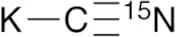
Formula:C9H16N2NaO3·BrColor and Shape:NeatMolecular weight:303.129Potassium Cyanide-15N
CAS:Controlled ProductApplications Labelled analogue of Potassium Cyanide, a reagent widely used in organic synthesis for the preparation of nitriles and carboxylic acids, particularly in the von Richter reaction.
Not a dangerous good if item is equal to or less than 1g/ml and there is less than 100g/ml in the package
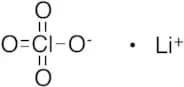
References Kollenz, G. et al.: Org. Prep. Proc. Int., 12, 244 (1980); Subramanian, L. R.: Sci. Synth., 19, 173 (2004);Formula:CK15NColor and Shape:NeatMolecular weight:66.11Lithium Perchlorate
CAS:Controlled ProductApplications Lithium Perchlorate is an inorganic compound that is highly soluble in organic solvents. It is also used as an electrolyte in lithium-ion batteries.
Not a dangerous good if item is equal to or less than 1g/ml and there is less than 100g/ml in the package
References Xu, K., et al.: Chem. Rev., 104, 4303-4417 (2004)Formula:ClO4·LiColor and Shape:NeatMolecular weight:106.4Lithium Bromide
CAS:Applications Lithium bromide is used as an inexpensive catalyst for the opening of epoxide rings by amines at room temperature. Lithium bromide is also used in conjunction with water to create a refrigerant-absorbent solution for use in refrigeration systems.
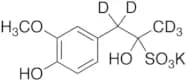
References Arun, M., et al.: Appl. Therm. Eng., 21, 1273 (2001); Chakraborti, A., et al.: Eur. J. Org. Chem., 17, 3597 (2004)Formula:Br·LiColor and Shape:NeatMolecular weight:86.84α,4-Dihydroxy-3-methoxy-α-methyl-benzeneethanesulfonic Acid Potassium Salt-d5
CAS:Controlled ProductApplications A labelled intermediate in the preparation of DOPA-decarboxylase inhibitors.
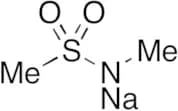
Formula:C10H8D5KO6SColor and Shape:NeatMolecular weight:305.4N-Methylmethanesulfonamide Sodium Salt
CAS:Controlled ProductApplications N-Methylmethanesulfonamide Sodium Salt is an substituent in the synthesis of Rosuvastatin (R700500), a selective, competitive HMG-CoA reductase inhibitor.
References Tomita, N., et al.: Bioorg. Med. Chem. Lett., 23, 1779 (2013);Formula:C2H6NNaO2SColor and Shape:NeatMolecular weight:131.11Sodium Phosphate Dibasic
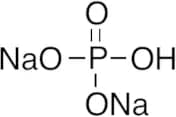
CAS:Applications Sodium Phosphate Dibasic is used as an in conjunction with trisodium phosphate in foods and water treatment. In foods, it is used to adjust pH. In water treatment, It retards calcium scale formation. It is also found in some detergents and cleaning agents. Sodium Phosphate Dibasic is used as a saline laxative to treat constipation or to clean the bowel before a colonoscopy.
References Tsioulpas, A., et al.: Food Chem., 122, 1027 (2010); Schrödter, K., et al.: Ullmann’s Encyclopedia of Industrial Chemistry (2008); Hansen, C., et al.: Am. J. Obstet. Gynecol., 196, 311 (2007)Formula:Na·HO4PColor and Shape:NeatMolecular weight:141.96Sodium dibutyldithiocarbamate, 40% aqueous solution
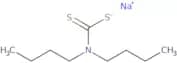
CAS:Sodium dibutyldithiocarbamate is a chemical that belongs to the group of cross-linking agents. It is used in the production of rubber and plastic products, as well as in textile finishing. This chemical is also used in the treatment of allergic reactions, such as those caused by poison ivy. Sodium dibutyldithiocarbamate has been shown to be an effective crosslinker for elastomeric polymers, such as natural rubber and synthetic polymers, including polychloroprene and styrene-butadiene copolymers. The viscosity of sodium dibutyldithiocarbamate solutions are dependent on the concentration, and can range from about 1 centipoise (cP) at 40% to 3 cP at 60%. Its average particle diameter ranges from 10 nm to 20 nm.Formula:C9H18NNaS2Color and Shape:Clear LiquidMolecular weight:227.37 g/mol2-Phenylindole-5-sulfonic acid monosodium salt
CAS:2-Phenylindole-5-sulfonic acid monosodium salt is a fine chemical that can be used as a building block for research chemicals, reagents, and speciality chemicals. It is also used as a reaction component for the synthesis of various complex compounds, such as pharmaceuticals and dyes. 2-Phenylindole-5-sulfonic acid monosodium salt is a versatile building block that can be used in the synthesis of useful scaffolds. The CAS number for this compound is 119205-39-9.Formula:C14H10NO3S·NaPurity:Min. 95%Color and Shape:White PowderMolecular weight:295.29 g/molEGTA tetrasodium salt
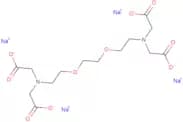
CAS:Chelator of bivalent ions; high affinity to calcium ionsFormula:C14H20N2O10·4NaPurity:Min. 95%Color and Shape:White PowderMolecular weight:468.28 g/molSodium 2-(hydroxymethyl)butanoate
CAS:Sodium 2-(hydroxymethyl)butanoate is a high quality and versatile building block. Sodium 2-(hydroxymethyl)butanoate can be used as a useful intermediate to synthesize a wide range of complex compounds. It has been shown to react with other chemicals in order to form an array of useful scaffolds, which can be used for the synthesis of fine chemicals. Sodium 2-(hydroxymethyl)butanoate is also a reagent that is useful for research purposes.Formula:C5H9NaO3Purity:Min. 95%Color and Shape:PowderMolecular weight:140.11 g/molTrans-diamminedichloropalladium(II)
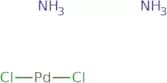
CAS:Trans-Diamminedichloropalladium is a particle with an average size of 0.5 microns. It is a metal carbonyl complex that belongs to the group of analytical methods. Trans-Diamminedichloropalladium can be used for the treatment of wastewater and oxidation catalysts. The electrochemical impedance spectroscopy (EIS) of the particles has been shown to be sensitive to changes in morphology, which may be due to the hydroxyl group on the surface or due to a change in oxidation state. Trans-Diamminedichloropalladium can also act as an oxidizing agent that converts hydrochloric acid into chlorine gas, which has been shown by solid catalyst experiments.
Formula:Pd(NH3)2Cl2Purity:Min. 95%Color and Shape:Yellow Clear LiquidMolecular weight:211.39 g/molCopper(II) diethyldithiocarbamate
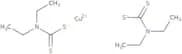
CAS:Copper(II) diethyldithiocarbamate is a reactive chemical that has been extensively studied. The mechanism of its reaction with hydrochloric acid is well understood. Copper(II) diethyldithiocarbamate reacts with hydrochloric acid to form the copper complex and Zn(II) diethyldithiocarbamate. Copper complexes are known for their high resistance to oxidation, which makes them stable in analytical chemistry. This stability also contributes to their clinical relevance as they can be used in prostate cancer cells without causing oxidative damage. Copper(II) diethyldithiocarbamate is used in analytical chemistry because it reacts with ethylene diamine to produce an intense color change, which can be detected by eye or spectrophotometrically.Formula:C10H20CuN2S4Color and Shape:PowderMolecular weight:360.09 g/molCAPSO sodium salt
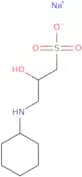
CAS:CAPSO-Na salt, also known as3-Cyclohexylamino-2-hydroxypropanesulfonic acid sodium salt, is a zwitterionic buffer chemical that has an optimal pH range of 8.9-10.3 and a pKa of 9.6. This buffering agent shows low metal ion binding and high solubility and is commonly used in protein transfer applications and during cell lysis for membrane protein extraction.
Formula:C9H18NNaO4SPurity:Min. 95%Color and Shape:White To Off-White SolidMolecular weight:259.3 g/molIron(II) Phthalocyanine (purified by sublimation)
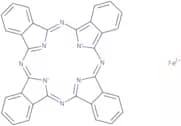
CAS:Iron(II) phthalocyanine is a compound that is used for wastewater treatment. It has been shown to have physiological activities, such as the ability to inhibit the growth of bacteria and fungi in tissue culture. Iron(II) phthalocyanine can be used to remove organics from water, with a kinetic data of 1.2 x 10⁻³ mol/L/min and a synergic effect with other compounds. The molecule contains two methyl ketones on each side, which are connected by disulfide bonds. The molecule also contains nitrogen atoms and has a redox potential of -0.256 volts. Iron(II) phthalocyanine adsorbs to the surface of another compound through an adsorption mechanism, which may include hydrogen bonding or ion exchange.Formula:C32H16FeN8Purity:Min. 95%Color and Shape:Dark Purple SolidMolecular weight:568.37 g/mol2'-Hydroxy-5'-nitrohexadecanamide sodium
CAS:2'-Hydroxy-5'-nitrohexadecanamide sodium is a reagent that can be used for a variety of laboratory reactions. It is a versatile building block, useful intermediate, and useful building block for complex compounds. This compound has also been shown to be useful in the synthesis of pharmaceuticals and other fine chemicals.Formula:C22H36N2O4NaPurity:Min. 95%Molecular weight:415.52 g/molTris(dibenzylideneacetone)dipalladium (0)-chloroform adduct
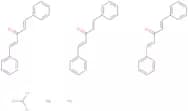
CAS:Controlled ProductTris(dibenzylideneacetone)dipalladium (0)-chloroform adduct is a catalyst that is used in cross-coupling reactions. It is an efficient method for the preparation of β-unsaturated ketones, which are important intermediates in organic synthesis. The catalytic cycle involves hydrolysis and condensation reactions. Tris(dibenzylideneacetone)dipalladium (0)-chloroform adduct can be prepared by reacting chloroform with a palladium compound in the presence of silver trifluoromethanesulfonate and a diphosphine ligand. The product contains a chloroform molecule that can be replaced by other functional groups such as chloride, fatty acid, or imine nitrogen. Tris(dibenzylideneacetone)dipalladium (0)-chloroform adduct has been characterized by x-ray crystal structures to identifyFormula:C51H42O3Pd2·CHCl3Purity:Min. 95%Color and Shape:PowderMolecular weight:1,035.09 g/molTris(2-methoxyphenyl)bismuth dichloride
CAS:Tris(2-methoxyphenyl)bismuth dichloride is a coordination compound with the chemical formula BiCl(OMeCH). It crystallizes in the triclinic crystal system and its molecular structure is trigonal. Tris(2-methoxyphenyl)bismuth dichloride has been characterized by X-ray and infrared spectroscopy, as well as by analysis of the axial, apical, and trigonal coordinates. The compound has been shown to form perchlorate and diperchlorate salts. The presence of bismuth atoms in this molecule produces a bright yellow color.Formula:C21H21BiCl2O3Purity:Min. 95%Color and Shape:Off-White PowderMolecular weight:601.28 g/mol1,2-Benzisoxazole-3-methanesulfonate sodium salt
CAS:1,2-Benzisoxazole-3-methanesulfonate sodium salt (BMS) is a reactive intermediate that is used in the synthesis of drugs. It is a dehydrating agent and can be used as an impurity in the synthesis of pharmaceuticals. BMS has a flow rate of 0.5 to 2.0 g/min and an end point at around 200°C. BMS can be synthesized by reacting benzisoxazole with methanesulfonyl chloride in acetonitrile or chloroform or by reacting cetylpyridinium chloride with hydrochloric acid in acetonitrile. This compound can be purified by chromatographic methods such as flash column chromatography or gas chromatography, which are both reproducible and validated methods for purification.Formula:C8H6NNaO4SPurity:Min. 95%Color and Shape:White PowderMolecular weight:235.19 g/mol

![N-[2-(N’,N’,N’-Trimethylammoniumbromide)ethyl]maleamic Acid Sodium Salt](/_next/image/?url=https%3A%2Fstatic.cymitquimica.com%2Fproducts%2FTR%2Fthumb-webp%2FT795833.webp&w=3840&q=75)