Metal Salts
In this section, you can find various metal salts, which are compounds characterized by containing both metal and non-metal atoms. Essentially, metal salts are composed of cations that are one or more metal atoms. These salts play a crucial role in numerous chemical reactions and applications, serving as catalysts, reactants, or intermediates in various industrial and research processes. At CymitQuimica, we offer a wide selection of high-quality metal salts to meet your research and industrial needs, ensuring reliable and effective performance in your applications.
Found 2870 products of "Metal Salts"
Sort by
Purity (%)
0
100
|
0
|
50
|
90
|
95
|
100
Bis(N-butylcyclopentadienyl)zirconiumdichloride
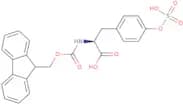
CAS:Please enquire for more information about Bis(N-butylcyclopentadienyl)zirconiumdichloride including the price, delivery time and more detailed product information at the technical inquiry form on this pageFormula:C18H26Cl2ZrPurity:Min. 95%Molecular weight:404.53 g/molFmoc-Tyr(SO3H)-OH barium salt
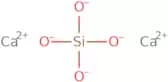
CAS:Please enquire for more information about Fmoc-Tyr(SO3H)-OH barium salt including the price, delivery time and more detailed product information at the technical inquiry form on this pageFormula:C24H21NO8SPurity:Min. 95%Molecular weight:483.49 g/molCalcium silicate
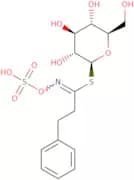
CAS:<p>Calcium silicate is a crystalline compound of calcium and silicon with the chemical formula CaSiO3. It is chemically stable and has a high resistance to particle wear. Calcium silicate is used in the production of dental cements, adhesives, sealants, and other dental restorations. In addition, it is used in the manufacture of paints and coatings as well as in papermaking. Calcium silicate also has biological properties that make it useful for cell culture. It can be used to support the growth of primary cells such as human osteosarcoma cells or epidermal growth factor-stimulated fibroblasts. It also has been shown to have a basic structure that can bind to basic proteins such as laminin</p>Formula:CaSiO3Purity:Min. 95%Color and Shape:White PowderMolecular weight:116.16Phenethyl glucosinolate potassium salt
CAS:Phenethyl glucosinolate potassium salt is a compound found in plants belonging to the Brassicaceae family. It has been shown to be highly toxic to larvae of the cabbage butterfly and other insects that feed on brassica plants. Phenethyl glucosinolate potassium salt has been shown to inhibit the development of these insects, probably by inhibiting protein synthesis in the insect's gut. The major sulfur-containing compound in this product is gluconasturtiin, which has been shown to inhibit growth of pekinensis at high temperatures. This compound also inhibits radiation-induced DNA damage and does not show significant effects on nonsignificant organisms such as yeast and mold.Formula:C15H20NO9S2KPurity:Min. 95%Color and Shape:PowderMolecular weight:461.55 g/molLithium ionophore VI
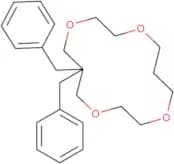
CAS:<p>Lithium ionophore VI is a polyvinyl chloride that contains valinomycin, a metal ion, and an organic solvent. It is used in pharmaceutical formulations as an ionophore. Lithium ionophore VI has been shown to have membrane potential-dependent transfer reactions in human serum and with the use of hydrophobic organic solvents such as chloroform and acetone. This compound can be used for calibration of analytical chemistry instruments by using it as a standard for the pH value of solutions.</p>Formula:C24H32O4Purity:Min. 95%Molecular weight:384.51 g/molBispyribac sodium
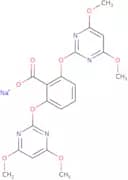
CAS:Controlled Product<p>Bispyribac sodium is a herbicide that belongs to the triazolopyrimidine class. It inhibits plant growth by inhibiting photosynthesis. Bispyribac sodium has been shown to be effective against the following plants: Triticum aestivum, eclipta prostrata, and cationic surfactant when applied at a concentration of 0.5 kg/ha. This herbicide is not active against plants with a neutral pH, such as corn and soybeans. The herbicide does not inhibit the enzyme activities in plants with an acidic pH, such as rice and wheat.</p>Formula:C19H17N4NaO8Purity:Min. 95%Color and Shape:PowderMolecular weight:452.35 g/molEpsilon-Maleimidocaproic acid-(2-nitro-4-sulfo)-phenyl ester·sodium salt
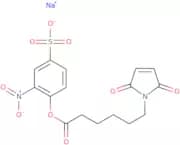
CAS:<p>Epsilon-Maleimidocaproic acid-(2-nitro-4-sulfo)-phenyl ester·sodium salt (EMAP) is a crosslinker that belongs to the group of heterobifunctional reagents. It has been used to conjugate monoclonal antibodies with other molecules, such as toxins. EMAP is activated by the dianion generated by protonation of the nitro groups on the phenyl ring and reacts with free amines or thiols in proteins. EMAP can be used for labeling immunotoxins for diagnostic use, maximizing detection sensitivity, and crosslinking DNA molecules for use in molecular cloning experiments.</p>Formula:C16H15N2NaO9SPurity:Min. 95%Molecular weight:434.35 g/mol[4,4'-Di-t-butyl-2,2'-bipyridine][bis[5-(t-butyl)-2-[4-(t-butyl)-2-pyridinyl-kN]phenyl-kC]iridium(III) hexafluorophosphate
CAS:<p>Please enquire for more information about [4,4'-Di-t-butyl-2,2'-bipyridine][bis[5-(t-butyl)-2-[4-(t-butyl)-2-pyridinyl-kN]phenyl-kC]iridium(III) hexafluorophosphate including the price, delivery time and more detailed product information at the technical inquiry form on this page</p>Formula:C56H72F6IrN4PPurity:Min. 95%Molecular weight:1,138.38 g/molSodium L-glutamate
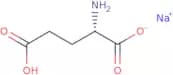
CAS:<p>Glutamate is the most abundant amino acid in the body and plays an important role in metabolism, brain function, and immune function. It is involved in many biochemical reactions and has been found to be associated with liver lesions, thermal expansion, and brain functions. Glutamate also has a role in diseases such as Huntington's disease, amyotrophic lateral sclerosis (ALS), and Parkinson's disease. Furthermore, glutamate is used as a neurotransmitter that regulates the central nervous system. The treatment of diseases can be done through glutamate replacement therapy or by inhibiting glutamate receptors. Glutamate levels in human serum have been shown to increase when blood sampling is taken from individuals with metabolic disorders. Results show high values for glutamate levels in human serum samples collected from patients with metabolic disorders.</p>Formula:C5H9NO4•NaPurity:Min. 95%Color and Shape:PowderMolecular weight:170.12 g/molMethyl paraben sodium
CAS:<p>Methyl paraben sodium is a preservative that belongs to the group of antimicrobial agents. It is used as a preservative in pharmaceuticals and personal care products. Methyl paraben sodium has been shown to have significant cytotoxicity at concentrations above 0.1%. The concentration-time curve for methylparaben sodium shows that it has a rapid effect on bacteria, with an increase in the number of dead cells after 24 hours. Methyl paraben sodium also showed significant cytotoxicity against human lung cells at concentrations below 1%. This agent has been shown to be effective against gram-positive and gram-negative bacteria, but not yeast or moulds. Methylparaben sodium is soluble in water and glycol ethers, but insoluble in oil. The solubility of this agent means that it can be used in various formulations such as nanoparticulate compositions and postharvest treatments for fruit and vegetables. Methylparaben sodium is also</p>Formula:C8H7NaO3Purity:Min. 95%Color and Shape:PowderMolecular weight:174.13 g/molH-Cys(SO3H)-OH sodium salt
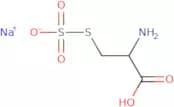
CAS:<p>Please enquire for more information about H-Cys(SO3H)-OH sodium salt including the price, delivery time and more detailed product information at the technical inquiry form on this page</p>Formula:C3H7NO5S2·xNaPurity:Min. 98 Area-%Color and Shape:White PowderMolecular weight:201.22 g/molSodium phosphate
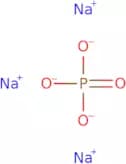
CAS:<p>Sodium phosphate is a solution of sodium ions and phosphate ions in water. It is used as an electrolyte, as an additive to processed food, and in the treatment of infectious diseases. Sodium phosphate is also used to produce polyphosphates that are used in many industrial applications. The dissolution of sodium phosphate starts with the release of hydrogen fluoride (HF). This reaction can be monitored using microdialysis probes inserted into the reaction solution. The dissociation of this compound can be studied using electrochemical impedance spectroscopy. In human serum, sodium phosphate inhibits the growth of bacteria by forming a complex with the sodium ion and preventing their absorption in the bloodstream.</p>Formula:Na·PO4Purity:Min. 95%Color and Shape:White PowderMolecular weight:163.94 g/mol2-Bromoethanesulfonic acid sodium
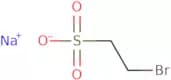
CAS:<p>2-Bromoethanesulfonic acid sodium (2BESA) is a chemical inhibitor that is used to control methanogenic activity. It has been shown to be effective in the treatment of wastewater, although it is not very soluble in water. 2BESA inhibits methanogenesis by binding to the enzyme methane monooxygenase, which blocks electron transfer from methane to oxygen. This prevents the formation of hydrogen and carbon dioxide, which are products of fermentation. 2BESA also has electrochemical properties that make it a good candidate for use as an electrode material in fuel cells. In vitro assays have demonstrated that 2BESA inhibits bacterial growth by inhibiting DNA synthesis and protein synthesis.</p>Formula:C2H4BrNaO3SPurity:Min. 95%Molecular weight:211.01 g/molBismuth subgallate
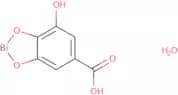
CAS:Bismuth subgallate is a basic compound that is used to treat dermatitis, acne, and other skin conditions. It has been shown to inhibit the growth of human osteosarcoma cells by inhibiting collagen synthesis. Bismuth subgallate also has antibacterial properties against Escherichia coli, Pseudomonas aeruginosa, Staphylococcus aureus, and Streptococcus pyogenes. This drug inhibits bacterial growth by binding to the copper ion in the enzyme superoxide dismutase (SOD), preventing the formation of hydrogen peroxide. The activity of bismuth subgallate is due to its ability to inhibit eosinophil cationic protein and eosinophil peroxidase.Formula:C7H5BiO6Purity:Min. 95%Molecular weight:394.09 g/molSodium dimethyldithiocarbamate hydrate
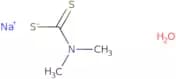
CAS:<p>Sodium dimethyldithiocarbamate hydrate is a salt of dimethyldithiocarbamic acid. It is used as an additive in paints and coatings to prevent corrosion of metal. Sodium dimethyldithiocarbamate hydrate is also used in the production of polyurethane and polyester resins, where it acts as a curing agent. Dimethyldithiocarbamic acid has been shown to be a ligand for the influenza virus, inhibiting viral activity by binding to the hemagglutinin protein. The crystal system of this substance is hexagonal; its salts exist in both acidic and basic forms. The functional theory explains the stabilization of this compound through coordination with nitrogen atoms on one side and phenyl substituents on the other side. Hexamethylenetetramine reacts with sodium chloride to form sodium dimethyldithiocarbamate hydrate, which can then react with methanol or eth</p>Formula:C3H6NNaS2·xH2OPurity:Min. 95%Color and Shape:White PowderMolecular weight:143.2 g/molDehydroacetic acid sodium salt
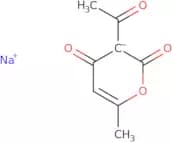
CAS:Dehydroacetic acid sodium salt is a chemical compound with the formula CH3COOCH2NaO2. It is an ionic liquid that can be used as a preservative or stabilizer in foods and other products. Dehydroacetic acid sodium salt has been shown to inhibit the growth of bacteria and fungi in biological studies. The analytical method for dehydroacetic acid sodium salt is based on x-ray diffraction data, which is used to identify its purity and concentration. The reaction solution includes dehydroacetic acid, water vapor, sodium salts, phosphorus pentoxide, and control analysis.Formula:C8H7O4NaPurity:Min. 95%Color and Shape:PowderMolecular weight:190.13 g/mol2-Hydroxy-4-(methylthio)butyric acid calcium salt
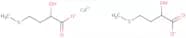
CAS:<p>2-Hydroxy-4-(methylthio)butyric acid calcium salt (2HMBAC) is a fatty acid that is found in malic acid. It is an important industrial chemical used for the preparation of other chemicals such as acetic anhydride, adipic acid, and butyric acid. 2HMBAC has been shown to have various biological functions including the inhibition of protein synthesis and the reduction of chloride ion transport. The dietary administration of 2HMBAC has been shown to relieve diarrhoea in rats.</p>Formula:C10H18CaO6S2Purity:Min. 95%Molecular weight:338.46 g/mol1,1'-Dibenzoylferrocene
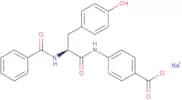
CAS:<p>1,1'-Dibenzoylferrocene is a ferrocene derivative that has been shown to be an excellent ligand for the separation of heavy metal ions. The physicochemical properties of 1,1'-dibenzoylferrocene make it a good candidate for ionization and separation techniques. It can accommodate different substituents on the ferrocene molecule, which allows it to interact with different types of metal ions. 1,1'-Dibenzoylferrocene has been used in metallocene catalysis as a solvent, although its use as a ligand has not yet been explored.</p>Formula:C24H18FeO2Purity:Min. 95%Molecular weight:394.24 g/molBz-Tyr-4-Abz-OH·sodium salt
CAS:Please enquire for more information about Bz-Tyr-4-Abz-OH·sodium salt including the price, delivery time and more detailed product information at the technical inquiry form on this pageFormula:C23H19N2NaO5Purity:Min. 95%Molecular weight:426.4 g/molRuthenium dioxide
CAS:<p>Ruthenium dioxide is a chemical compound that can be used as an oxidation catalyst. It is a solid material with high resistance and can be used in the water treatment process as well as in electrochemical processes, such as wastewater treatment. Ruthenium dioxide has been shown to have an acidic reaction mechanism, which is related to the particle size of the substance. The large particle size leads to a higher surface area for catalytic activity. Ruthenium dioxide also has the ability to react with hydrogen gas and form hydrogen bonds. This property makes it useful for electrochemical processes, such as wastewater treatment. Ruthenium dioxide also reacts with cationic surfactants containing boron nitride, which allows it to be used in catalysis and electrochemical processes.</p>Formula:RuO2Purity:Min. 95%Molecular weight:133.07 g/mol


![[4,4'-Di-t-butyl-2,2'-bipyridine][bis[5-(t-butyl)-2-[4-(t-butyl)-2-pyridinyl-kN]phenyl-kC]iridium(…](/_next/image/?url=https%3A%2Fstatic.cymitquimica.com%2Fproducts%2F3D%2Fthumb-webp%2FFD159336.webp&w=3840&q=75)