Metal Salts
In this section, you can find various metal salts, which are compounds characterized by containing both metal and non-metal atoms. Essentially, metal salts are composed of cations that are one or more metal atoms. These salts play a crucial role in numerous chemical reactions and applications, serving as catalysts, reactants, or intermediates in various industrial and research processes. At CymitQuimica, we offer a wide selection of high-quality metal salts to meet your research and industrial needs, ensuring reliable and effective performance in your applications.
Found 2870 products of "Metal Salts"
Sort by
Purity (%)
0
100
|
0
|
50
|
90
|
95
|
100
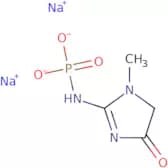
Disodium (1-methyl-4-oxoimidazolidin-2-ylidene)phosphoramidate
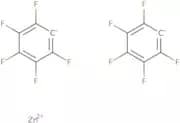
CAS:<p>Please enquire for more information about Disodium (1-methyl-4-oxoimidazolidin-2-ylidene)phosphoramidate including the price, delivery time and more detailed product information at the technical inquiry form on this page</p>Formula:C4H6N3O4PNa2Purity:Min. 80 Area-%Color and Shape:PowderMolecular weight:237.06 g/molBis(pentafluorophenyl)zinc
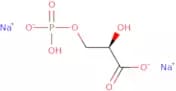
CAS:<p>Bis(pentafluorophenyl)zinc (BPFPZn) is a ring-opening polymerization catalyst that is used to synthesize polymers with pendant covalent adducts. BPFPZn has shown synergistic effects when used in combination with lactide, which is a monomer that can be polymerized to form polylactic acid. The reaction system used for the synthesis of BPFPZn and lactide involves nucleophilic attack on the zinc cation by the carbonyl group of lactide, leading to reductive elimination and coordination chemistry. This reaction system has been shown to produce architectures such as block copolymers and star polymers.</p>Formula:C12F10ZnPurity:Min. 95%Color and Shape:PowderMolecular weight:399.49 g/molD-(-)-3-Phosphoglyceric acid disodium
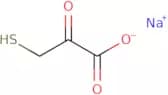
CAS:<p>D-(-)-3-Phosphoglyceric acid disodium is a homologue of D-glyceric acid and is used in the synthesis of phosphatidylcholine. It binds to the active site of phosphatases and prevents them from hydrolyzing phosphate groups, which are critical for the production of adenosine triphosphate (ATP). The chemical stability and the availability make this compound an excellent candidate for biochemical studies. D-(-)-3-Phosphoglyceric acid disodium has been shown to be essential in biological function, as it functions as a substrate for many metabolic pathways such as glycolysis, gluconeogenesis, pentose phosphate pathway, and fatty acid biosynthesis. The molecule is also involved in a number of biochemical reactions that are catalyzed by enzymes. Mutational studies have shown that organisms without this compound will not survive.</p>Formula:C3H5O7PNa2Purity:Min. 93%Color and Shape:White PowderMolecular weight:230.02 g/molSodium mercaptopyruvate
CAS:<p>Sodium mercaptopyruvate is a pyruvate compound that is synthesized by the reaction of sodium sulfide with 3-bromopyruvic acid. It has been shown to be effective in treating emphysema, chronic bronchitis and seborrheic dermatitis. Sodium mercaptopyruvate has also been found to modify the activity of enzymes that are related to inflammation and autoimmune diseases. This drug is an efficient nucleophile, which is important for its ability to interact with proteins via covalent modification. The compound can also be used as a substrate for various dehydrogenases, which can lead to metabolic reactions mediated by these enzymes.</p>Formula:C3H3NaO3SPurity:Min. 95%Color and Shape:SolidMolecular weight:142.11 g/molCholesteryl sulfate potassium salt
CAS:Cholesteryl sulfate potassium salt (CSK) is a solid lipid with a high melting point. It can be used as an active compound to form nanoparticles, which have the ability to penetrate cell membranes and enter cells. CSK has been shown to disrupt the lipid bilayer of cellular membranes, thereby releasing lipids such as cholesterol from the membrane surface. CSK also has polynucleotide binding properties that may lead to gene expression changes in cells. CSK is an anionic lipid, which makes it more likely to interact with negatively charged cell surfaces and membranes. Cholesteryl sulfate potassium salt has been shown to inhibit cholesterol synthesis in liver cells and increase LDL receptor activity in hepatocytes.Formula:C27H45KO4SPurity:Min. 95%Molecular weight:504.81 g/molIsatin-5-sulfonic acid sodium salt dihydrate
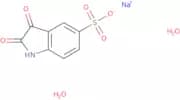
CAS:Isatin-5-sulfonic acid sodium salt dihydrate is a potent inhibitor of caspases. It has been shown to inhibit the activity of caspase-3 in vitro, thereby inhibiting apoptosis. Isatin-5-sulfonic acid sodium salt dihydrate has also been shown to increase survival rates in animal models of neurodegenerative diseases such as Parkinson's disease and Huntington's disease. Isatin-5-sulfonic acid sodium salt dihydrate may have neuroprotective effects by inhibiting the release of proinflammatory cytokines and nitric oxide, which are associated with neuronal death. This drug also inhibits monoamine oxidase A (MAO-A) and zymosterone B (ZVAD).Formula:C8H4NNaO5S·2H2OPurity:Min. 95%Color and Shape:PowderMolecular weight:285.21 g/mol20a-Dihydro pregnenolone 3-sulfate sodium salt
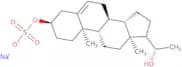
CAS:<p>Please enquire for more information about 20a-Dihydro pregnenolone 3-sulfate sodium salt including the price, delivery time and more detailed product information at the technical inquiry form on this page</p>Formula:C21H33NaO5SPurity:Min. 95%Molecular weight:420.54 g/molFerrocene, 1,1'-diacetyl-
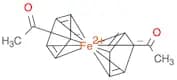
CAS:Formula:C14H14FeO2Purity:97%Color and Shape:SolidMolecular weight:270.1048Calcium Nitrate Tetrahydrate
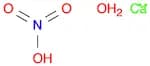
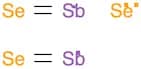
CAS:Formula:CaH8N2O10Purity:99%Color and Shape:SolidMolecular weight:236.1489Antimony selenide (Sb2Se3)
CAS:Formula:Sb2Se3Purity:99.99%Color and Shape:SolidMolecular weight:480.4000Lithium hydroxide (Li(OH)), monohydrate (9CI)
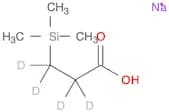
CAS:Formula:LiO2Purity:99%Color and Shape:SolidMolecular weight:40.9557Propionic-2,2,3,3-d4 acid, 3-(trimethylsilyl)-, sodium salt (1:1)
CAS:Formula:C6H9D4NaO2SiPurity:%Color and Shape:SolidMolecular weight:172.2661Ref: IN-DA002OBA
Discontinued productRef: IN-DA0001DJ
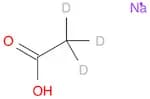
Discontinued productSODIUM ACETATE-D3 99+ ATOM % D
CAS:Formula:C2D3NaO2Purity:99%Color and Shape:SolidMolecular weight:85.0523