Metal Salts
Found 2872 products of "Metal Salts"
Pemetrexed disodium
CAS:Thymidylate synthase inhibitor; antifolate antineoplastic agentFormula:C20H19N5Na2O6Purity:Min. 95%Color and Shape:White PowderMolecular weight:471.37 g/molGlycochenodeoxycholic acid sodium salt
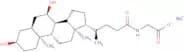
CAS:Glycochenodeoxycholic acid sodium salt is a bile acid derivative, which is an important component of the bile produced in the liver. It originates from the metabolism and conjugation of chenodeoxycholic acid with glycine, a process that occurs in the liver. This compound plays a significant role in the emulsification and solubilization of dietary fats, which facilitates their absorption in the intestines.Formula:C26H42NNaO5Purity:Min. 96 Area-%Color and Shape:White Off-White PowderMolecular weight:471.61 g/molLactobionic acid sodium salt monohydrate
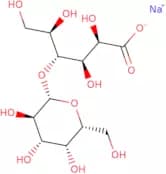
CAS:Lactobionic acid is a white, crystalline powder with a molecular weight of 278.3 g/mol. It is an organic compound that is used as a reactant in organic synthesis, as a reagent for the determination of iron and calcium in biological samples, and as an intermediate in the production of polyesters. Lactobionic acid can be used to synthesize polyester materials with high molecular weights and high purity. The compound has been shown to have anti-inflammatory properties, which may be due to its inhibition of prostaglandin synthesis.Formula:C12H21NaO12·H2OPurity:Min. 95%Color and Shape:PowderMolecular weight:398.3 g/molLead(IV) acetate - Stabilized with acetic acid (5-10%)
CAS:Lead acetate is an alkanoic acid that can be used as a lead salt. It has been shown to react with protocatechuic acid in the presence of hydrogen to form lead(IV) protocatechuate and acetic acid. This reaction mechanism can be applied to the analysis of other organic acids, such as fatty acids. Lead acetate also inhibits protease activity in vitro and has been shown to have therapeutic effects against autoimmune diseases and polycystic ovarian syndrome. Lead acetate has a low toxicity and is stable when mixed with trifluoroacetic acid or nitro compounds, but very reactive with strong oxidizing agents such as hydrochloric acid or hydrogen fluoride. Lead acetate is non-hygroscopic and insoluble in water, making it suitable for use in analytical chemistry.Formula:C8H12O8PbPurity:Min. 95%Color and Shape:White PowderMolecular weight:443.38 g/molBAPTA tetracesium
CAS:Please enquire for more information about BAPTA tetracesium including the price, delivery time and more detailed product information at the technical inquiry form on this pageFormula:C22H24N2O10•Cs4Purity:Min. 95%Color and Shape:PowderMolecular weight:1,008.06 g/molAmoxicillin sodium
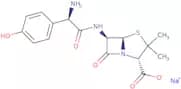
CAS:Amoxicillin sodium is a penicillin antibiotic that inhibits bacterial cell wall synthesis. It is active against Gram-positive bacteria, such as Bacillus anthracis, Enterococcus faecalis, and Staphylococcus aureus. Amoxicillin sodium also inhibits the growth of Gram-negative bacteria, such as Salmonella typhi. It is used to treat a wide variety of infectious diseases caused by bacteria and protozoa, including respiratory tract infections, skin infections, urinary tract infections, gastrointestinal infections, ear infections, gonorrhea and syphilis. Amoxicillin sodium has been shown to have a good chemical stability in the presence of potassium ions and can be mixed with sulbactam or clavulanate potassium for enhanced efficacy in patients with high resistance to amoxicillin. The injection solution should be given intravenously with magnesium salt after glucose injection to increase blood levels of amoxicillin.Formula:C16H18N3NaO5SPurity:Min. 95 Area-%Color and Shape:PowderMolecular weight:387.39 g/molIron(III) acetylacetonate
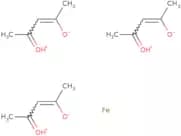
CAS:Iron(III) acetylacetonate is an activated form of iron, which has been shown to be effective in the treatment of wastewater. This compound is highly reactive with organic compounds and human pathogens. Iron(III) acetylacetonate can be used as a catalyst in organic reactions, such as the oxidation of alcohols, and also has antimicrobial properties. Iron(III) acetylacetonate activates by reacting with water, forming FeO and HO molecules. The reaction mechanism for this compound is similar to that of other organometallic compounds. Iron(III) acetylacetonate has a coordination geometry around the central iron atom, which is octahedral. The activation energies for this compound are lower than those for iron oxides or other particle materials.Formula:C15H21FeO6Purity:Min. 95%Color and Shape:Red Clear LiquidMolecular weight:353.17 g/molDexamethasone sodium phosphate
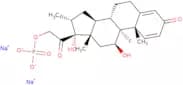
CAS:Dexamethasone sodium phosphate is a water-soluble glucocorticosteroid used in the treatment of inflammation and pain. In a rabbit model, the inclusion of dexamethasone sodium phosphate into liposomes has improved its delivery to the eye compartments (Al-Muhammed, 1996). To improve the acceptability by paediatric patients, dexamethasone sodium phosphate has been tested in formulations with sweeteners and chocolate (Synaridou, 2020). A pollutant of hospital wastewater, dexamethasone sodium phosphate is degraded by Pseudomonas alcaligenes during bioremediation (Yi, 2014).
Formula:C22H28FO8P•Na2Purity:Min. 97 Area-%Color and Shape:PowderMolecular weight:516.41 g/molPotassium salicylate
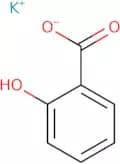
CAS:Potassium salicylate is an organic compound that is used as an antimicrobial agent. It has a hydroxyl group and a double bond between the carbonyl carbon and one of the hydroxyl groups. Potassium salicylate has been shown to have broad-spectrum antibacterial activity against a variety of bacteria, including gram-positive bacteria (e.g., Staphylococcus aureus). This compound also has light-emitting properties, which may be due to its intramolecular hydrogen transfer from the hydroxyl group to the ester hydrochloride. The reaction solution turns orange in color when potassium salicylate is added to it. Potassium salicylate can react with calcium pantothenate in an ester linkage, producing p-hydroxybenzoic acid and acetoacetic acid.Formula:C7H6O3•KPurity:Min. 95%Color and Shape:PowderMolecular weight:177.22 g/mol1,1'-Dichloroferrocene
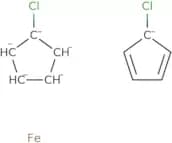
CAS:1,1'-Dichloroferrocene is a molecule that belongs to the group of benzenes and has a gaseous form. It has potential energy and is an optical active compound. 1,1'-Dichloroferrin can be found in synchrotron radiation and it's optical absorption is dipole. The ligand for 1,1'-dichloroferrocene is ferrocene. This molecule transfers energy through radiation and optical excitation. The parameters for bromoferrocene are similar to those of 1,1'-dichloroferrin except that it does not have the same steric properties.Formula:C10H8Cl2FePurity:Min. 95%Color and Shape:Off-White To Dark Yellow SolidMolecular weight:254.92 g/molTandospirone
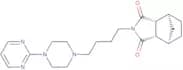
CAS:Tandospirone is a psychotropic drug that acts as a selective serotonin receptor partial agonist. It is derived from a synthetic source, specifically targeting the 5-HT1A receptors in the brain. Tandospirone modulates serotonergic neurotransmission by binding to these receptors, which are associated with mood regulation. This action results in the anxiolytic and antidepressant effects observed with the drug.Formula:C21H29N5O2Purity:Min. 95%Molecular weight:383.49 g/molSodium hexametaphosphate
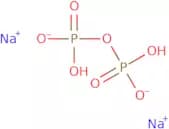
CAS:Sodium hexametaphosphate is a useful biochemical for surface methodology. It is an anhydrous compound that contains sodium and hexametaphosphoric acid. Sodium hexametaphosphate can be used as a substrate for films of polymers, such as polyacrylamide, polyvinylpyrrolidone, and polymethacrylate. It has been shown to have ionotropic gelation properties in the presence of benzalkonium chloride and cell lysis properties in the presence of calcium ions. Sodium hexametaphosphate has also been shown to induce water vapor adsorption onto proteins at low humidities.Formula:(NaPO3)nPurity:Min. 95%Color and Shape:PowderOmeprazole sodium salt hydrate
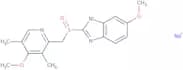
CAS:Proton pump inhibitor; irreversible blocker of P-type H+/K+ ATPaseFormula:C17H18N3O3S•Na•xH2OPurity:Min. 95%Color and Shape:PowderMolecular weight:367.41 g/molPotassium DL- lactate
CAS:Potassium DL-lactate is a salt of the organic compound L-lactic acid and potassium. It has been shown to have antimicrobial effects against a variety of bacteria, including monocytogenes. The mechanism of action appears to be related to the disruption of ATP levels and inhibition of protein synthesis. It also increases the pH in an acidic environment, which may make it an effective treatment for infections caused by Gram-negative bacteria such as E. coli or Pseudomonas aeruginosa. Potassium DL-lactate can be used in combination with sodium citrate and has been shown to reduce bacterial growth on metal surfaces. It is also known to have surface activity against Gram-positive bacteria such as S. aureus.Formula:C3H6O3•KPurity:Min. 95%Color and Shape:Clear LiquidMolecular weight:129.18 g/molTitanium(IV) Chloride - (14% in Dichloromethane, ca. 1.0mol/L)
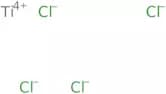
CAS:Titanium chloride is a chemical compound with the formula TiCl4. It is soluble in many organic solvents, and it reacts with water to form an acidic solution of hydrochloric acid. Titanium chloride is used as a catalyst for the synthesis of polymers such as poly(trifluoroethylene) and poly(vinyl chloride). This compound also has been used in clinical studies to treat chronic bronchitis. The reaction mechanism of titanium chloride is not clear, but it has been suggested that it may involve a Friedel-Crafts type reaction or an electrochemical process. The transport properties of titanium chloride are not well studied, but fluorescence spectrometry indicates that the molecule contains cationic moieties and carbonyl groups. Titanium chloride can be synthesized by a two-step process: first, iron oxide (FeO) is reacted with trifluoroacetic acid (TFA), followed by addition of TiCl4. The coordination geometry around titaniumFormula:TiCl4Purity:Min. 95%Color and Shape:Colorless PowderMolecular weight:189.68 g/molSodium tanshinone IIA sulfonate
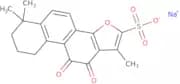
CAS:Sodium tanshinone IIA sulfonate is a potent cardiotonic agent and antioxidant. It is prepared by the reaction of sodium tanshinone with sulfonic acid, followed by purification using preparative high-performance liquid chromatography (HPLC). Sodium tanshinone IIA sulfonate has significant cytotoxicity against various tumor cells in culture. It inhibits mitochondrial membrane potential and polymerase chain reaction (PCR) activity, as well as DNA synthesis. The optimum concentration of sodium tanshinone IIA sulfonate for cardiotonic activity is 0.1 mM. This drug also has a positive effect on glucose metabolism and can prevent myocardial infarction in experimental models.Formula:C19H17NaO6SPurity:Min. 95%Color and Shape:PowderMolecular weight:396.39 g/molPatent Blue V sodium salt
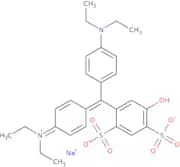
CAS:C.I. Acid Blue 3 is a synthetic, water-soluble dye that has been used in analytical chemistry for the detection of metal hydroxides and other metal ions. The dye can be activated by radiation or by heating to produce a bright blue color that is stable under acidic conditions. C.I. Acid Blue 3 has been shown to cause toxicity in animals, and may have potential carcinogenic effects in humans due to its ability to cross the blood-brain barrier and accumulate in the brain. The molecular weight of this compound is approximately 464 g/mol and it has a molecular formula of C 18 H 20 N 2 NaO 7 S 2 .
Formula:C27H32N2O7S2•xNaColor and Shape:Blue PowderMolecular weight:582.67 g/molSodium acetate anhydrous
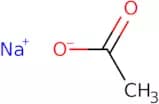
CAS:Sodium acetate anhydrous is a salt of sodium and acetic acid. It is a white crystalline solid that can be obtained by reacting sodium hydroxide with acetic acid. This material is used as the buffer in analytical methods to maintain pH levels during chemical reactions. The addition of this salt to solution will cause the solution to have a higher boiling point, which can be used for phase transition temperature measurements. Injection solutions containing this salt are also used for injection into humans. Sodium acetate anhydrous has been shown to have covalent linkages when it reacts with DNA and ATP, which may be related to its ability to inhibit mitochondrial membrane potential and disrupt energy metabolism.
Formula:C2H4O2•NaPurity:Min. 95%Color and Shape:PowderMolecular weight:82.03 g/molSodium carbonate monohydrate
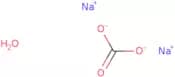
CAS:Controlled ProductSodium carbonate monohydrate is a versatile chemical that can be used as a building block in the synthesis of complex compounds. It is also used as an intermediate in the production of research chemicals or as a reagent. Sodium carbonate monohydrate has high quality and is useful in many reactions. This compound can be used to make various scaffolds, which are structures that provide stability for molecules or atoms during a reaction.Formula:Na2CO3·H2OPurity:Min. 95%Color and Shape:PowderMolecular weight:124 g/molChromotropic acid disodium dihydrate
CAS:Chromotropic acid dihydrate is a chromogenic compound that has an adsorption mechanism and is used as an analytical reagent. Chromotropic acid disodium dihydrate (CDA) is used in the determination of hydrochloric acid, natural gas and other liquids. It also can be used to measure the concentration of tyramine hydrochloride. CDA has been shown to be effective in the measurement of molecular orbitals and kinetic constants. The optical sensor is sensitive to wavelengths ranging from 200-900 nm, with a peak absorption at around 500 nm. This sensor can be used for many types of chemical reactions, such as organic synthesis, hydrogenation, and oxidation.Formula:C10H6O8S2Na2·2H2OPurity:Min. 95%Color and Shape:Off-White PowderMolecular weight:400.29 g/mol