Fatty Acid Methyl Ester (FAME) Standards
Fatty Acid Methyl Ester (FAME) standards are essential for the analysis and identification of fatty acids in biodiesel, food, and environmental samples. FAME standards allow for the accurate calibration of gas chromatographic systems used to quantify fatty acid composition. At CymitQuimica, we offer high-purity FAME standards to ensure precise and reproducible results for your research and industrial applications.
Found 605 products of "Fatty Acid Methyl Ester (FAME) Standards"
Sort by
Purity (%)
0
100
|
0
|
50
|
90
|
95
|
100
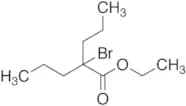
2-Bromo-2-propylpentanoic Acid Ethyl Ester
CAS:Controlled Product<p>Applications 2-Bromo-2-propylpentanoic Acid Ethyl Ester (cas# 99174-91-1) is a compound useful in organic synthesis.<br></p>Formula:C10H19BrO2Color and Shape:NeatMolecular weight:251.16(1S,3R,4R)-3-[(tert-Butoxycarbonyl)amino]-4-[(methylsulfonyl)oxy]cyclohexanecarboxylic Acid Ethyl Ester
CAS:Controlled Product<p>Applications (1S,3R,4R)-3-[(tert-Butoxycarbonyl)amino]-4-[(methylsulfonyl)oxy]cyclohexanecarboxylic Acid Ethyl Ester is a starting material and useful building block of various pharmaceuticals.<br></p>Formula:C15H27NO7SColor and Shape:NeatMolecular weight:365.444-(2,2-Dicarboethoxy-propyl)phenylacetic Acid Ethyl Ester
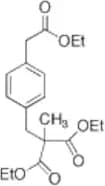
CAS:Controlled Product<p>Stability 0-50C<br>Applications 4-(2,2-Dicarboethoxy-propyl)phenylacetic Acid Ethyl Ester (cas# 223123-63-5) is a compound useful in organic synthesis.<br></p>Formula:C19H26O6Color and Shape:NeatMolecular weight:350.411-[(1E)-2-Nitroethenyl]-2-naphthalenol
CAS:Controlled Product<p>Applications 1-[(1E)-2-Nitroethenyl]-2-naphthalenol is an intermediate in the synthesis of 1-(2-Nitroethyl)-2-naphthol (N495895), an aromatic alcohol that is used in photoacid for extremely long lived and reversible pH jumps.<br>References Hu, K.L., et al.: Tetrahedron., 70, 181 (2014);<br></p>Formula:C12H9NO3Color and Shape:NeatMolecular weight:215.26,7-Dichloro-1,4-dihydro-4-oxo-3-quinolinecarboxylic Acid Ethyl Ester
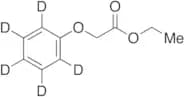
CAS:Controlled Product<p>Applications 6,7-Dichloro-1,4-dihydro-4-oxo-3-quinolinecarboxylic Acid Ethyl Ester is an intermediate in synthesizing 6-Chloro-6-defluoro Ciprofloxacin (C368035). It is an impurity of Ciprofloxacin (C482500), which is a fluorinated quinolone antibacterial.<br>References Hoffken, G., et al.: Antimicrob. Ag. Chemother., 27, 375 (1985), Scully, B.E., et al.: Lancet, 1, 819 (1986)<br></p>Formula:C12H9Cl2NO3Color and Shape:NeatMolecular weight:286.11Phenoxy-d5-acetic Acid Ethyl Ester
CAS:Controlled Product<p>Applications Phenoxy-d5-acetic Acid Ethyl Ester (cas# 1189442-18-9) is a compound useful in organic synthesis.<br></p>Formula:C10H7D5O3Color and Shape:NeatMolecular weight:185.237-Bromo-1,4-dihydro-4-oxo-3-quinolinecarboxylic Acid Ethyl Ester
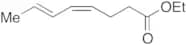
CAS:Controlled Product<p>Applications 7-Bromo-1,4-dihydro-4-oxo-3-quinolinecarboxylic Acid Ethyl Ester is an intermediate in the synthesis of Rosoxacin (R693580), an antibacterial agent used against Escherichia coli, Klebsiella pneumoniae, Pseudomonas aeruginosa, Staphylococcus aureus and Streptococcus pneumoniae.<br>References Koba, M., et. al.: J. Mol. Modeling, 16, 327 (2010)<br></p>Formula:C14H24N2OSiColor and Shape:NeatMolecular weight:264.439(4Z,6E)-4,6-Octadienoic Acid Ethyl Ester
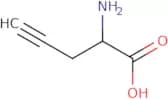
CAS:Controlled Product<p>Applications (4Z,6E)-4,6-Octadienoic Acid Ethyl Ester is an intermediate in the synthesis of Spilanthol (S681850), a fatty acid amide isolated from Acmella oleracea.<br>References Khadir, H., et al.: Pestic. Sci., 25, 329 (1989); Cech, N., et al.: Planta Med., 72, 1372 (2006); Saritha, K., et al.: Biol. Plant, 52, 334 (2008),<br></p>Formula:C10H16O2Color and Shape:NeatMolecular weight:168.23DL-Propargylglycine
CAS:<p>DL-Propargylglycine is a molecule that has been used as a model system for studying the interaction of neurokinin-1 receptor with response elements. It has also been shown to have inhibitory properties on polymerase chain, which is important in the process of energy metabolism. This compound has been shown to increase cytosolic Ca2+ and inhibit nuclear DNA synthesis in certain cells. DL-Propargylglycine can be used to study the effects of growth factor-β1 on myocardial infarcts and bowel disease.</p>Formula:C5H7NO2Purity:Min. 95%Color and Shape:White Off-White PowderMolecular weight:113.11 g/mol3-Oxodecanoic acid ethyl ester
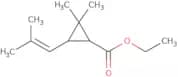
CAS:<p>3-Oxodecanoic acid ethyl ester is a selenium compound that can be catalytic. It has been shown to produce lactones by the cyclization of an anthranilic acid. Selenium compounds are often used as research catalysts in organic synthesis, specifically for the elimination and cyclization reactions. 3-Oxodecanoic acid ethyl ester is also a natural product that can be found in various plants and animals. It has been found to have an active role in many natural products, such as benzyne and heterocycles.</p>Formula:C12H22O3Purity:Min. 95%Color and Shape:PowderMolecular weight:214.3 g/molChrysanthemum monocarboxylic acid ethyl ester
CAS:<p>Chrysanthemum monocarboxylic acid ethyl ester is a chemical compound that belongs to the group of chrysanthemic acid derivatives. It is synthesized by reacting the carboxylic acid with an alcohol in the presence of hydrochloric acid and sodium ethoxide. Chrysanthemum monocarboxylic acid ethyl ester has been shown to have genotoxic effects, as well as fatty acids that can induce lysine residues. This drug also has a pharmaceutical use for tissue culture, which may be due to its ability to inhibit l-tartaric acid, an alkanoic acid.</p>Formula:C12H20O2Purity:Min. 95%Molecular weight:196.29 g/molPropargyl methanesulfonate ester
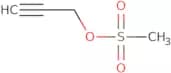
CAS:<p>Propargyl methanesulfonate ester is an organic compound that is used as a cross-coupling reagent in the synthesis of chiral mesylates. It is prepared by treatment of propargyl alcohol with methanesulfonyl chloride and sodium hydroxide in an organic solvent. The product is purified by removal of the solvent, followed by crystallization or distillation. The mesylate group reacts with an amine to give a secondary amine, which can be converted to a carbamate or mediated reaction product. This process can also generate genotoxic impurities, such as dioxane and 1,4-dioxane, which are removed by transfer to an inert solvent.</p>Formula:C4H6O3SPurity:Min. 95%Color and Shape:Clear LiquidMolecular weight:134.15 g/molPalmitoleyl alcohol
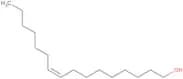
CAS:<p>Palmitoleyl alcohol is a natural compound that is found in the human body and in palm oil. Palmitoleyl alcohol has been shown to have anti-inflammatory properties and may be useful for the treatment of cancer, inflammation, and other diseases. It is a cationic surfactant that is used in detergent compositions and pharmaceutical preparations. Palmitoleyl alcohol also has a reactive group that can be detected with chemical ionization. This reactive group can undergo biodegradation in the body due to its biocompatibility and hydrophilicity.</p>Formula:C16H32OPurity:Min. 95%Color and Shape:Colorless PowderMolecular weight:240.42 g/molFmoc-D-propargylglycine
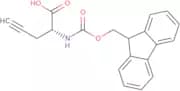
CAS:<p>D-propargylglycine is a chemical compound that belongs to the group of valency modifiers. It is a modulator that can be used in cancer research and as an anti-inflammatory agent. It has been shown to have protein–protein interaction by binding to casein kinase, which may lead to its use in cancer therapy. D-propargylglycine can also interact with other proteins and inflammatory agents, leading to potential applications in the treatment of inflammatory conditions such as arthritis.</p>Formula:C20H17NO4Purity:Min. 95%Color and Shape:PowderMolecular weight:335.35 g/molPalmitoleic acid - 98%
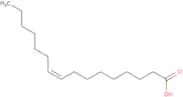
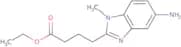
CAS:<p>Palmitoleic acid is a fatty acid with a molecular weight of 256. It is an unsaturated fatty acid that contains 16 carbon atoms and two double bonds. Palmitoleic acid has been shown to be effective in treating bowel disease, such as ulcerative colitis and Crohn's disease, by influencing the production of inflammatory cytokines. This active form inhibits the activity of toll-like receptor 4 (TLR4) and lipopolysaccharide (LPS)-induced signal peptide activation of nuclear factor kappa B (NF-κB), which leads to reduced inflammation. Palmitoleic acid has also been shown to have anti-inflammatory properties in vitro and in vivo, which may be due to its ability to inhibit IL-1β production by macrophages.</p>Formula:C16H30O2Purity:Min. 95%Color and Shape:Clear Colourless To Pale Yellow LiquidMolecular weight:254.41 g/mol1-Methyl-5-amino-1H-benzimidazole-2-butanoic acid ethyl ester
CAS:<p>1-Methyl-5-amino-1H-benzimidazole-2-butanoic acid ethyl ester is a fine chemical that can be used to make a variety of other compounds. It is also used as a reagent in the synthesis of complex compounds, research chemicals, and speciality chemicals. The CAS number for this compound is 3543-73-5. This product has a high quality and is useful as an intermediate or reaction component in the synthesis of useful scaffolds.</p>Formula:C14H19N3O2Purity:Min. 95%Color and Shape:Orange To Brown SolidMolecular weight:261.32 g/mol2-Fluoro-5-hydroxybenzoic acid ethyl ester
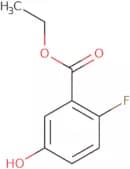
CAS:<p>2-Fluoro-5-hydroxybenzoic acid ethyl ester is a fine chemical that is used as a versatile building block, complex compound, and reagent. It has been used in the synthesis of novel drugs, such as oseltamivir. 2-Fluoro-5-hydroxybenzoic acid ethyl ester has been shown to have useful properties in research, such as being an intermediate for the synthesis of other compounds. This chemical can also be used as a scaffold for the synthesis of other compounds.</p>Formula:C9H9FO3Purity:Min. 95%Molecular weight:184.16 g/mol2'-Hydroxy-5'-nitrohexadecanamide sodium
CAS:<p>2'-Hydroxy-5'-nitrohexadecanamide sodium is a reagent that can be used for a variety of laboratory reactions. It is a versatile building block, useful intermediate, and useful building block for complex compounds. This compound has also been shown to be useful in the synthesis of pharmaceuticals and other fine chemicals.</p>Formula:C22H36N2O4NaPurity:Min. 95%Molecular weight:415.52 g/molSodium Palmitate
CAS:<p>Sodium palmitate is a saturated fatty acid that has been shown to induce phase transition temperature in the range of 37-40°C. The Toll-like receptor 4 (TLR4) is a pattern recognition receptor that has been found to be important in the pathogenesis of infectious diseases. Sodium palmitate enhances TLR4-mediated responses, and as such can be used for the treatment of infectious diseases. Sodium palmitate also has significant cytotoxicity and potent inducers of polymer compositions. It is also an effective agonist for toll-like receptor 4, which may be due to its ability to stimulate RhoA activity, leading to increased production of reactive oxygen species.</p>Formula:C16H31NaO2Purity:Min. 95%Color and Shape:White PowderMolecular weight:278.41 g/mol6-Bromohexanoic acid ethyl ester
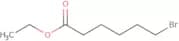
CAS:<p>6-Bromohexanoic acid ethyl ester is a fluorescent compound that has been used to assess the presence of azobenzene in urine samples. This product is also used as a marker for capsicum annuum, which is an edible plant. 6-Bromohexanoic acid ethyl ester has been shown to be effective in the diagnosis of cancer, especially carcinoma cells. Coumarin derivatives have been found to possess fluorescence properties similar to 6-bromohexanoic acid ethyl ester and are also used as markers for cancer cells. The use of polyclonal antibodies and hydrochloric acid for this product can lead to fluorescence properties that are specific for cancer cells.</p>Formula:C8H15BrO2Purity:Min. 95%Color and Shape:Colourless To Pale Yellow LiquidMolecular weight:223.11 g/mol

![(1S,3R,4R)-3-[(tert-Butoxycarbonyl)amino]-4-[(methylsulfonyl)oxy]cyclohexanecarboxylic Acid Ethyl …](/_next/image/?url=https%3A%2Fstatic.cymitquimica.com%2Fproducts%2FTR%2Fthumb-webp%2FB750055.webp&w=3840&q=75)
![1-[(1E)-2-Nitroethenyl]-2-naphthalenol](/_next/image/?url=https%3A%2Fstatic.cymitquimica.com%2Fproducts%2FTR%2Fthumb-webp%2FN495905.webp&w=3840&q=75)