Food Industry Standards
Food industry standards are critical reference materials used to ensure the safety, quality, and consistency of food products. These standards are employed in the analysis and testing of foodstuffs, including contaminants, additives, and nutritional components. At CymitQuimica, we provide high-quality food industry standards to support compliance with food safety regulations and quality control measures.
Subcategories of "Food Industry Standards"
- Beverage Standards(7 products)
- Dairy Standards(39 products)
- Food Contact Materials(1,075 products)
- Wine Standards(47 products)
Found 7936 products of "Food Industry Standards"
Sort by
Purity (%)
0
100
|
0
|
50
|
90
|
95
|
100
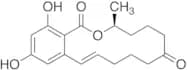
Zearalenone
CAS:<p>Applications Estrogenic mycotoxin produced by Fusarium fungi commonly found in grains. One of a group of compounds known as resorcylic acid lactones.Environmental contaminants; Food contaminants<br> Not a dangerous good if item is equal to or less than 1g/ml and there is less than 100g/ml in the package<br>References Tanaka, T., et al.: J. Agric. Food Chem., 36, 979 (1988), Hamilton, S., et al.: Anticancer Res., 16, 3597 (1996), Hecht, S., et al.: Cancer Lett., 150, 49 (2000), Hussein, H., et al.: Toxicology, 167, 101 (2001), Lim, H., et al.: J. Immunol., 175, 4180 (2005),<br></p>Formula:C18H22O5Color and Shape:White To Light BrownMolecular weight:318.36Alternariol Monomethyl Ether
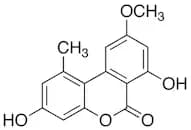
CAS:Controlled Product<p>Stability Hygroscopic<br>Applications An alternaria mycotoxin and genotoxin, found in common edible crops. It inhibits the activity of various DNA-topoisomerases, increasing the rate of DNA strand breaks.<br>References Asam, S., et al.: J. Agric. Food Chem., 57, 5152 (2009); Fehr, M., et al.: Mol. Nut. Food Res., 53, 441 (2009); Tiemann, U., et al.: Toxicol. Lett., 186, 139 (2009);<br></p>Formula:C15H12O5Color and Shape:NeatMolecular weight:272.253(S)-Patulin Methyl Ether
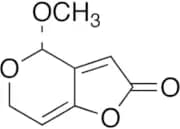
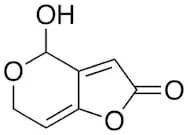
CAS:<p>Applications Protected Patulin.<br> Not a dangerous good if item is equal to or less than 1g/ml and there is less than 100g/ml in the package<br></p>Formula:C8H8O4Color and Shape:NeatMolecular weight:168.15Alternariol Monomethyl Ether-d3
CAS:Controlled Product<p>Stability Hygroscopic<br>Applications Alternariol Monomethyl Ether-d3 is labelled methyl este analog fo Alternariol. An alternaria mycotoxin and genotoxin, found in common edible crops. It inhibits the activity of various DNA-topoisomerases, increasing the rate of DNA strand breaks.<br> Not a dangerous good if item is equal to or less than 1g/ml and there is less than 100g/ml in the package<br>References Asam, S., et al.: J. Agric. Food Chem., 57, 5152 (2009); Fehr, M., et al.: Mol. Nut. Food Res., 53, 441 (2009); Tiemann, U., et al.: Toxicol. Lett., 186, 139 (2009);<br></p>Formula:C15D3H9O5Color and Shape:NeatMolecular weight:275.2713Ref: TR-A575771
Discontinued productT-2 Toxin
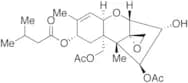
CAS:Controlled Product<p>Applications T-2 Toxin is a tricothecene mycotoxin produced by fungi of the genus Fusarium. T-2 Toxin induces DNA damage and cell death on prolonged administration.Environmental contaminants; Food contaminants<br> Not a dangerous good if item is equal to or less than 1g/ml and there is less than 100g/ml in the package<br>References Kim, C., et al.: Cancer Res., 57, 3115 (1997), Bottrel, R., et al.: Antimicrob. Agents Chemother., 1999, 43, 856 (1999), Murray, P., et al.: J. Immunol., 178, 2623 (2007), Choi, H., et al.: Toxicol. Appl. Pharmacol., 240, 46 (2009), Amuzie, C., et al.: Toxicol. Sci., 113, 412 (2010),<br></p>Formula:C24H34O9Color and Shape:White SolidMolecular weight:466.524-Hydroxy Alternariol
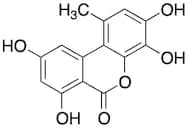
CAS:Controlled ProductFormula:C14H10O6Color and Shape:NeatMolecular weight:274.226Ref: TR-H476940
Discontinued productOchratoxin B
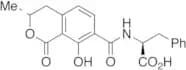
CAS:Controlled Product<p>Applications Ochratoxins are toxic metabolites from Aspergillus orchraceus.<br> Not a dangerous good if item is equal to or less than 1g/ml and there is less than 100g/ml in the package<br>References Belli, N., et al.: Int. J. Food Microb., 96, 19 ( 2004), Pardo, E., et al.: Food Microb., 23, 35 (2006),<br></p>Formula:C20H19NO6Color and Shape:White To Light PinkMolecular weight:369.37Fumonisin B2
CAS:Controlled Product<p>Stability Hygroscopic, Toxic<br>Applications A mycotoxin produced by mold associated with corn. Inhibitor of sphingosine N-acyltransferase. Blocks the formation of ceramide from sphingosine.<br> Not a dangerous good if item is equal to or less than 1g/ml and there is less than 100g/ml in the package<br>References Monbaliu, S., et al.: J. Agric. Food Chem., 58, 10475 (2010), Klosowski, G., et al.: Biores. Technol., 101, 9723 (2010), Soerensen, L., et al.: Anal. Bioanal. Chem., 398, 1535 (2010),<br></p>Formula:C34H59NO14Color and Shape:Off-WhiteMolecular weight:705.83Stachybotrylactam
CAS:Controlled ProductFormula:C23H31NO4Color and Shape:Off-WhiteMolecular weight:385.496Patulin
CAS:<p>Stability Hygroscopic<br>Applications Patulin (PAT), a mycotoxin produced by certain species of Penicillium, Aspergillus, and Byssochlamys, is mainly found in ripe apple and apple products. Patulin-induced genotoxicity and modulation of glutathione in Hep G2 cells. Patulin is an antibiotic. Patulin-induced nephropathy and gastrointestinal tract malfunction have been demonstrated in several animal models. The oral LD50 value of patulin ranges between 29 and 55 mg/kg body weight in rodents and 170 mg/kg body weight in poultry. The World Health Organization considers patulin cytotoxic and established a safety level of patulin in apple juice at 50 μM. At 100-200 μM, patulin can directly increase intracellular oxidative stress in HEK293 and HL-60 cells. In 1944, this compound was tested in a clinical trial for potential antibiotic<br> Not a dangerous good if item is equal to or less than 1g/ml and there is less than 100g/ml in the package<br>References Scott, P., et al.: J. Agric. Food Chem., 20, 450 (1972), Aden, D., et al.: Nature, 282, 615 (1979), Surralles, J., et al.: Mutat. Res., 341, 169 (1995), Alves, I., et al.: Mutagenesis, 15, 229 (2000), Liu, B., et al.: Toxicol. Appl. Pharmacol., 191, 255 (2003), Puel, O., Galtier, P., and Oswald, I.P. Biosynthesis and toxicological effects of patulin. Toxins 2(4) 613-631 (2010). Liu, B., Wu, T., Yu, F., et al. Induction of oxidative stress response by the mycotoxin patulin in mammalian cells. Toxicol Sci 95(2) 340-347 (2007). Chalmers, I., and Clarke, M. Commentary: The 1994 patulin trial: The first properly controlled multicentre trial conducted under the aegis of the British Medical Research Council. Int J Epidemiol 32 253-260 (2004).<br></p>Formula:C7H6O4Color and Shape:Off-White To YellowMolecular weight:154.12Piperonyl Butoxide
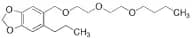
CAS:Controlled Product<p>Applications Insecticide synergist, especially for pyrethroids and rotenone. Useful in cannabis testing kits as a component of pesticide mixes (P698230).<br> Not a dangerous good if item is equal to or less than 1g/ml and there is less than 100g/ml in the package<br>References Gaines, T. B., et al.; Toxicol. Appl. Pharmacol., 14, 515 (1969),<br></p>Formula:C19H30O5Color and Shape:Light Yellow To Light BrownMolecular weight:338.44Neosolaniol
CAS:Controlled Product<p>Applications Neosolaniol is a mycotoxin produced by Fusarium species commonly found in wheat and maize.<br>References Thrane, U., et al.: Int J Food Microbiol, 95, 257 (2004); Sulyok, M., et al.: Rapid Commun. Mass Spectrom., 20, 2649 (2006);<br></p>Formula:C19H26O8Color and Shape:WhiteMolecular weight:382.408-Isoergocornine
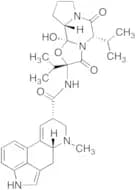
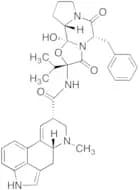
CAS:<p>Applications 8-Isoergocornine is an ergot fungus alkaloid related to Ergocornine (E597350). It is a mycotoxin found in moldy food products.<br>References Sulyok, M., et al.: Anal. Bioanal. Chem., 389, 1505 (2007); Krska, R., et al.: Anal. Bioanal. Chem., 391, 563 (2008); Sulyok, M., et al.: Food Chem., 119, 408 (2009);<br></p>Formula:C31H39N5O5Color and Shape:NeatMolecular weight:561.67Verruculogen
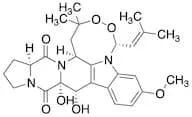
CAS:<p>Applications Verruculogen is a mycotoxin and novel mammalian cell cycle inhibitors produced by Aspergillus fumigatus.<br> Not a dangerous good if item is equal to or less than 1g/ml and there is less than 100g/ml in the package<br>References Cui, C. et al.: Jour. of Ant., 49(6), 527-533, (1996)<br></p>Formula:C27H33N3O7Color and Shape:NeatMolecular weight:511.57Dihydro Artemisinin-d3
CAS:<p>Stability Unstable in Solution<br>Applications The main labelled metabolite of Artemisinin, Arteether, Artemether, Artesunate. An active antimalarial metabolite.<br>References e Vries, P., et al.: Drugs, 52, 818 (1996), Kamolrat, S., et al.: Antimicrob. Agents Chemother., 47, 3795 (2003), Mithwani, S., et al.: Br. J. Clin. Pharmacol., 57, 146 (2004),<br></p>Formula:C152H3H21O5Color and Shape:White to Off-White SolidMolecular weight:287.37Chlorfenvinphos (E/Z mixture)
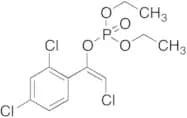
CAS:Controlled Product<p>Stability Moisture Sensitive<br>Applications Chlorfenvinphos is derived from α,2,4-Trichloroacetophenone (T774315), which is a reagent used in the synthesis of isoconazole, a potent anti-fungal agent. Pesticide.<br> Not a dangerous good if item is equal to or less than 1g/ml and there is less than 100g/ml in the package<br>References Dulcevscaia, G. et al.: Polyhed., 52, 106 (2013); Wang, Y. et al.: Bioorg. Med. Chem. Lett., 22, 5363 (2012); Olivieira, B. R., et al.: Environ. Sci. Pollut. R., 22, 11781-11791 (2015)<br></p>Formula:C12H14Cl3O4PColor and Shape:NeatMolecular weight:359.57Alternariol 9-Sulfate Ammonium Salt
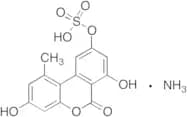
CAS:Controlled ProductFormula:C14H10O8S(NH3)Color and Shape:NeatMolecular weight:355.03619Alternariol 3-Sulfate Ammonium Salt
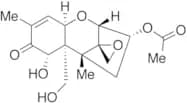
CAS:Controlled ProductFormula:C14H10O8S(NH3)Color and Shape:NeatMolecular weight:355.036193-Acetyldeoxynivalenol
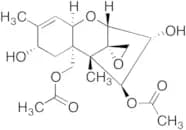
CAS:Controlled Product<p>Stability Appears to decompose in DMSO<br>Applications 3-Acetyldeoxynivalenol is a trichothecene mycotoxin that is produced in a plant-pathogenic fungus, Fusarium graminearum Schwabe.Environmental contaminants; Food contaminants<br> Not a dangerous good if item is equal to or less than 1g/ml and there is less than 100g/ml in the package<br>References Beyer, M., et al.: Int. J. Food. Microbiol., 119, 153 (2007); Schiefer, H.B., et al.: Can. J. Comp. Med., 49, 315 (1985); Mirocha, C.J., et al.: App. Enviro.Microbiol., 55, 1315 (1989);<br></p>Formula:C17H22O7Color and Shape:WhiteMolecular weight:338.35Ochratoxin A (10 μg/mL in Acetonitrile)
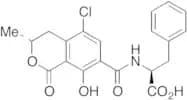
CAS:Formula:C20H18ClNO6Color and Shape:Single SolutionMolecular weight:403.8115-Acetyl Deoxynivalenol (~90%)
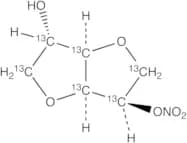
CAS:Controlled Product<p>Applications A mycotoxin produced by the fungi Fusarium culmorum and Fusarium graminearum, inhibits protein synthesis.Environmental contaminants; Food contaminants<br> Not a dangerous good if item is equal to or less than 1g/ml and there is less than 100g/ml in the package<br>References Ashraf, A.; et al.: Int. J. Biol. Biotechnol., 4, 391 (2007), Burlakoti, R., et al.: App. Environ. Microbiol., 74, 6513 (2008), Steinmetz, W., et al.: Eur. J. Med. Chem., 44, 4485 (2009), Zhang, Y., et al.: Phytopathol., 99, 95 (2009),<br></p>Formula:C17H22O7Purity:~90%Color and Shape:WhiteMolecular weight:338.35Isosorbide-13C6 5-Mononitrate, 90%
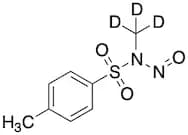
CAS:Formula:C6H9NO6Purity:90%Color and Shape:White to Light Green SolidMolecular weight:197.09Diazald-d3
CAS:<p>Applications N-Methyl-d3-N-nitroso-p-toluenesulfonamide is the labeled version of Diazald; Diazomethane precursor.<br>References Takizawa, et al.: J. Pharm. Soc. Jpn., 70, 490 (1950)<br></p>Formula:C8D3H7N2O3SColor and Shape:Pale Yellow to Light Yellow SolidMolecular weight:217.06004Hexahydrocoumarin
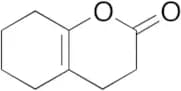
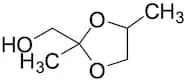
CAS:Controlled Product<p>Applications Hexahydrocoumarin,is the derivative of Coumarin (C755380). It was formerly used as a fragrance ingredient.<br> Not a dangerous good if item is equal to or less than 1g/ml and there is less than 100g/ml in the package<br>References Letizia, C. S., et al.: Food and Chemical Toxicology, 38, S115 (2000);<br></p>Formula:C9H12O2Color and Shape:NeatMolecular weight:152.192,4-Dimethyl-2-methylol-1,3-dioxolane
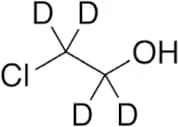
CAS:Controlled ProductFormula:C6H12O3Color and Shape:NeatMolecular weight:132.078642-Chloroethanol-1,1,2,2-d4
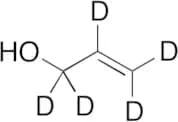
CAS:Controlled Product<p>Applications 2-Chloroethanol is used in the preparation of TTFTT (tetrathiafulvalene-2,3,6,7-tetrathiolate) and important building block in TTF syntheis. In addition, it is used in the synthesis of vinyltriazoles. This is the labeled analog.<br>Dangerous Goods Info This compound is forbidden to ship by air under IATA regulations.<br>References Svenstrup, N. et al.: Synthesis, 8, 809 (1994); Thibault, R. et al.: J. Am. Chem. Soc., 128, 12084 (2006);<br></p>Formula:C22H4ClOHColor and Shape:Colourless OilMolecular weight:84.542-Propen-1,1,2,3,3-d5-1-ol
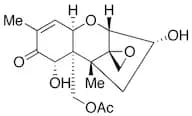
CAS:Formula:C32H5HOColor and Shape:Clear Colourless OilMolecular weight:63.1115-Acetoxyscirpenol
CAS:Controlled ProductFormula:C17H24O6Color and Shape:NeatMolecular weight:324.37