Food Contact Materials
Found 1072 products of "Food Contact Materials"
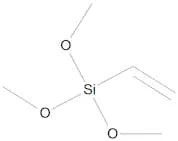
Vinyltrimethoxysilane
CAS:Applications Vinyltrimethoxysilane (cas# 2768-02-7) is a useful research chemical.
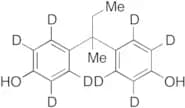
Formula:C5H12O3SiColor and Shape:Light YellowMolecular weight:148.2325Bisphenol B-d8
CAS:Controlled ProductApplications Bisphenol B-d8 is the isotope labelled analog of Bisphenol B. Bisphenol B, is the analouge of Bisphenol A (B519495), which is used to make certain plastic an epoxy resins. BPA and its analogs, are also shown to activate human pregnane X receptor (PXR), a nuclear receptor that functions as a master regulator of xenobiotic metabolism.
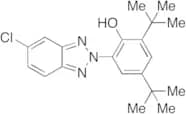
References Yipeng, S., et al.: Env Hea. Pers., 120, 399 (2012); Krishnan, A.V., et al.: Endocrinology, 132, 2279 (1993); Steinmetz, R., et al.: Trends Endocrinol. Metab., 9, 124 (1998), Petersen, H., et al.: Eur. Food Res. Technol., 216, 355 (2003);Formula:C16H10D8O2Color and Shape:Off-WhiteMolecular weight:250.362,4-Di-tert-butyl-6-(5-chloro-2H-benzotriazol-2-yl)phenol
CAS:Applications 2,4-Di-tert-butyl-6-(5-chloro-2H-benzotriazol-2-yl)phenol is a UV absorber.
References Moisan, J.: Eur. Polymer J., 16, 979 (1980); Nakata, H., et al.: Environ. Sci. Technol.,43, 6920 (2009)Formula:C20H24ClN3OColor and Shape:Light YellowMolecular weight:357.88Dimethyl Phthalate
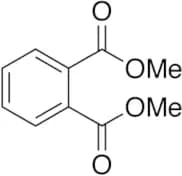
CAS:Controlled ProductApplications Dimethyl Phalate is the methyl ester of phthalic acid. Dimethyl phthalate is an ectoparasiticide and has many other uses, including in solid rocket propellants, plastics, and insect repellents.
References Iselin, B., et al.: Helv. Chim. Acta., 40, 373 (1957),Formula:C10H10O4Color and Shape:ColourlessMolecular weight:194.184-Tolylsulfonamide
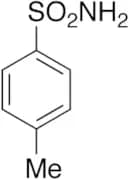
CAS:Controlled ProductApplications 4-Tolylsulfonamide is a carbonic anhydrase inhibitor used the synthesis of antiglaucoma and anticancer drugs.
References Vullo, D. et al.: Bioorg. Med. Chem. Lett., 15, 963 (2005); Vullo, D. et al.: Bioorg. Med. Chem. Lett., 15, 971 (2005);Formula:C7H9NO2SColor and Shape:NeatMolecular weight:171.222-(4,6-Diphenyl-1,3,5-triazine-2-yl)-5-[(hexyl)oxy]phenol
CAS:Controlled ProductApplications 2-(4,6-Diphenyl-1,3,5-triazine-2-yl)-5-[(hexyl)oxy]phenol is used as a light stabilizer/UV absorber for polyethylene phthalate polymers intended for use in contact with food.
References Food and Drug Administration, HHS: Fed. Reg., 63, 43874 (1998); Fechine, G.J.M. et al.: Polym. Degrad. Stab., 75, 153 (2002);Formula:C27H27N3O2Color and Shape:NeatMolecular weight:425.52Decyl Hexyl Phthalate
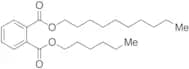
CAS:Applications Decyl Hexyl Phthalate is an phthalate esters used as plasticizers and additives. Used in toxiciology studies as well as risk assessment studies of food contamination that occurs via migration of phthalates into foodstuffs from food-contact materials (FCM).
Not a dangerous good if item is equal to or less than 1g/ml and there is less than 100g/ml in the package
References Awad, N.E., et al.: Bull. Factul. Pharma., 40, 233 (2002); Harris, C.A., et al.: Environ. Health. Perspect., 105, 802 (1997);Formula:C24H38O4Color and Shape:ColourlessMolecular weight:390.56Styrene-d8 (Stabilized with Hydroquinone)
CAS:Controlled ProductStability Light Sensitive
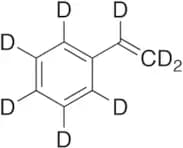
Applications Labelled Styrene (S687790). Used in the manufacturing plastics; synthetic rubber; resins; insulator.
References Meyer. H.J., et al.: Arzneim.-Forsch., 19, 617 (1969), Pahwa, R., et al.: Vet. Hum. Toxicol., 35, 516 (1993),Formula:C82H8Color and Shape:NeatMolecular weight:112.2Phthalic Acid-d4
CAS:Controlled ProductStability Hygroscopic
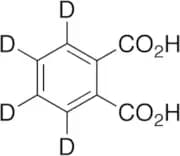
Applications Labelled Phthalic Acid (P384480). Organic reagent used to synthesize phthalates.
References Duchowicz, P.R., et al.: Bioorg. Med. Chem., 16, 7944 (2008), di Luccio, E., et al.: Biochem., 47, 4039 (2008), Lopez, Z., et al.: App. Microbiol. Biotechnol., 78, 739 (2008), Hong, Y., et al.: Toxicol. Lett., 184, 139 (2009),Formula:C82H4H2O4Color and Shape:White To Off-WhiteMolecular weight:170.16Diethylenetriaminepentaacetic Acid
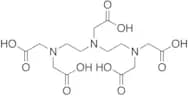
CAS:Controlled ProductApplications Diethylenetriaminepentaacetic Acid is a component of manganese and zinc fertilizers.
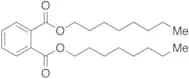
References Narwal, R.P., et al.: J. Geochem. Exploration., 121, 5 (2012); Munson, J.M., et al.: Sci. Translat. Med., 4, 127 (2012)Formula:C14H23N3O10Color and Shape:NeatMolecular weight:393.35Di-n-octyl Phthalate
CAS:Controlled ProductApplications Phthalate ester used as plasticizers and additives. Used in toxicology studies as well as risk assessment studies of food contamination that occurs via migration of phthalates into foodstuffs from food-contact materials (FCM).
References Irvin, E.A. et al.: Chemosphere, 80, 1301 (2010); Petersen, J.H. et al.: Food Add. Contam. Part A Chem. Anal. Cont. Expos. Risk. Assess., 27, 1608 (2010); Kwack, S.J. et al.: Toxicol. Res., 26, 75 (2010);Formula:C24H38O4Color and Shape:ColourlessMolecular weight:390.56Terephthalic Acid
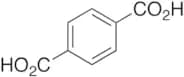
CAS:Applications Terephthalic acid is a benzenepolycarboxylic acid with potential anti-hemorrhagic properties.
References Veronese, E., et al.: Phytomedicine, 12, 123 (2005), Panfoli, I., et al.: Toxins, 2, 417 (2010), Aung, H., et al.: Bioorg. Med. Chem., 19, 2392 (2011),Formula:C8H6O4Color and Shape:ColourlessMolecular weight:166.13Polyethylene (High Density)
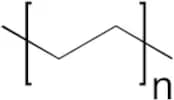
CAS:Applications Polyethylene is used in the development of plastics.
References Yang, Bing, et al.: Suliao, 43(4), 39-42 (2014)Formula:C2H4Color and Shape:NeatMolecular weight:28.053Di-n-decyl Phthalate-3,4,5,6-d4
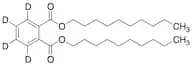
CAS:Controlled ProductApplications Di-n-decyl Phthalate-3,4,5,6-d4 (CAS# 1276197-18-2) is a useful isotopically labeled research compound.
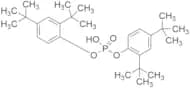
Formula:C282H4H42O4Color and Shape:Light YellowMolecular weight:450.6871Bis(2,4-di-tert-butylphenyl) Hydrogen Phosphate
CAS:Applications Bis(2,4-di-tert-butylphenyl) hydrogen phosphate (CAS# 69284-93-1) is a useful research chemical compound.
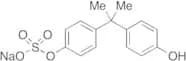
Formula:C28H43O4PColor and Shape:White To Off-WhiteMolecular weight:474.61Bisphenol A Monosulfate Sodium Salt
CAS:Stability Unstable in Solution
Applications Bisphenol A Monosulfate is a derivative of Bisphenol A (B519495), a monomer used for policarbonate and epoxy resins; exhibits estrogenic activity. BPA is also used as a building block in polycarbonate bottles and in the epoxy-resin liners of metal cans.
References Krishnan, A.V., et al.: Endocrinology, 132, 2279 (1993), Steinmetz, R., et al.: Trends Endocrinol. Metab., 9, 124 (1998), Petersen, H., et al.: Eur. Food Res. Technol., 216, 355 (2003); Bureeva, S. et al.: Bioorg. Med. Chem. Lett., 13, 1045 (2005)Formula:C15H15NaO5SColor and Shape:NeatMolecular weight:330.33

![2-(4,6-Diphenyl-1,3,5-triazine-2-yl)-5-[(hexyl)oxy]phenol](/_next/image/?url=https%3A%2Fstatic.cymitquimica.com%2Fproducts%2FTR%2Fthumb-webp%2FD492060.webp&w=3840&q=75)