APIs for research and impurities
Active Pharmaceutical Ingredients (APIs) are the substances in drugs responsible for their therapeutic effects. In this section, you will find a wide variety of APIs intended for research use. These compounds are essential for the development, testing, and validation of new pharmaceutical formulations. CymitQuimica offers high-quality APIs to support research in drug discovery and development.
Subcategories of "APIs for research and impurities"
- Aminoacids and derivatives(12,328 products)
- Anthraquinones and derivatives(405 products)
- Benzimidazole and Imidazole Derivatives(10,438 products)
- Benzodiazepine Derivatives(335 products)
- Carbohydrates and glycoconjugates(5,016 products)
- Esters and Derivatives(42,240 products)
- Fatty Acids and Lypidic Derivatives(32,395 products)
- Flavonoids and Polyphenols(17,087 products)
- Free Radicals and Oxidant/Reducing Agents(213 products)
- Ketones and derivatives(2,402 products)
- Natural and semi-synthetic antibiotics(6,380 products)
- Nitriles and Cyano Derivatives(3,067 products)
- Nitrosamines and Derivatives(55 products)
- Nucleosides and Nucleotides(3,431 products)
- Organic Phosphates and Phosphonates(1,202 products)
- Organic Sulphonates and Sulphates(10,434 products)
- Organometallics(4,422 products)
- Others(6,292 products)
- Peptides and Proteins(3,153 products)
- Polymers and Derivatives(100 products)
- Purines and Pyrimidine Derivatives(8,948 products)
- Quinazoline and Quinoline Derivatives(65,966 products)
- Quinones and Derivatives(24,349 products)
- Salts and Derivatives of Active Pharmaceutical Ingredients (API)(79,696 products)
- Steroids and Derivatives(4,975 products)
- Sulfonamides and Derivatives(2,594 products)
- Terpenoids and Derivatives(3,846 products)
- Thiazolidinediones and Thiopyrans(2,752 products)
- β-Adrenergic Compounds(230 products)
Show 21 more subcategories
Found 57012 products of "APIs for research and impurities"
Sort by
Purity (%)
0
100
|
0
|
50
|
90
|
95
|
100
Ref: 4Z-L-3216
Discontinued productRef: 4Z-A-123005
Discontinued productRef: 4Z-P-7313
Discontinued productAflatoxin B1 8,9-Epoxide
CAS:Controlled ProductFormula:C17H12O7Purity:>80%Color and Shape:NeatMolecular weight:328.27N-[2-[[[5-[(Dimethylamino)methyl]-2-furanyl]methyl]thio]ethyl]-2-nitroacetamide sodium salt
CAS:<p>2-Nitroacetamide sodium salt is an impurity of the drug N-[2-[[[5-[(dimethylamino)methyl]-2-furanyl]methyl]thio]ethyl]-2-nitroacetamide, a synthetic chemotherapeutic agent for the treatment of cancers. This compound has been shown to have metabolism studies and natural properties. It has a CAS number of 112251-56-6 and is found in the pharmacopoeia. 2-Nitroacetamide sodium salt is a custom synthesis that can be used as a reference standard for HPLC analysis. It can also be used as a drug product or metabolite in drug development.</p>Formula:C12H18N3O4SNaPurity:Min. 95%Color and Shape:PowderMolecular weight:323.34 g/molRef: 3D-ID57855
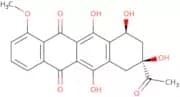
Discontinued productDaunomycinone
CAS:<p>Daunomycinone is a chemical compound that belongs to the group of antitumor agents. It is used in cancer therapy and has been shown to inhibit protein synthesis, leading to cell death. Daunomycinone can be synthesized by reacting adriamycin with trifluoroacetic acid in the presence of an organic base. This reaction produces a daunomycinone molecule that has a hydroxyl group at one end and a carbonyl group at the other. The binding constants between daunomycinone and human serum proteins have been determined experimentally using molecular modeling techniques. Hydrogen bonding interactions are also present in this complex, which may account for its high affinity for proteins found in human serum.</p>Formula:C21H18O8Purity:Min. 95%Color and Shape:Red PowderMolecular weight:398.36 g/mol15-O-Demethyl Tacrolimus
CAS:<p>Tacrolimus is a macrolide that is used as an immunosuppressive drug. It has been shown to bind to the FK-binding protein, which in turn inhibits calcineurin. This prevents the release of IL-2, TNF-α and other cytokines. The immunosuppressive effects of tacrolimus have been evaluated using analytical methods such as coefficients, affinity, and monitoring techniques such as immunoassays and agglutination. These techniques are used to evaluate the plasma concentration of tacrolimus. Tacrolimus also binds to proteins in the blood samples and can be detected by turbidimetric or electrochemiluminescence immunoassay reagents.</p>Formula:C43H67NO12Purity:Min. 95%Molecular weight:789.99 g/molRotigotine Impurity 7
CAS:<p>Rotigotine Impurity 7 is an impurity that has been identified in the synthesis of rotigotine. Rotigotine Impurity 7 is a synthetic compound with a CAS number of 1229620-82-9. It is intended for use as an analytical standard and as a component in the manufacture of rotigotine, which is indicated for the management of Parkinson's disease. This product has not been tested in animals or humans, and it should be handled with care.</p>Formula:C21H28ClNO2SPurity:Min. 95%Molecular weight:393.97 g/molN-(((5R)-3-(3-Fluoro-4- (4-morpholinyl)phenyl)-2-oxo- 5-oxazolidinyl)methyl) acetamide
CAS:<p>N-(((5R)-3-(3-Fluoro-4-(4-morpholinyl)phenyl)-2-oxo-5-oxazolidinyl)methyl)acetamide (LFMAPO) is an antibacterial agent that inhibits bacterial growth by binding to the active site of bacterial DNA gyrase. LFMAPO has a molecular weight of 552.2 Da and a log P value of 2.6. It was synthesized from acetamide, 3-fluoroaniline, and 4-(4-morpholinyl)benzaldehyde in 60% yield using techniques such as millimolar stoichiometry, electrophoresis method, binding constants, and molecular modeling study. The drug also has chiral properties with two stereocenters at carbons C1 and C5 that have been shown to be important for the activity of this compound against Gram positive bacteria.</p>Formula:C16H20FN3O4Purity:Min. 95%Color and Shape:PowderMolecular weight:337.35 g/molRef: 3D-IF58037
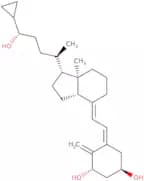
Discontinued productCalcipotriol EP impurity E
<p>Calcipotriol EP Impurity E is a synthetic impurity that is found in the calcipotriol EP API. Calcipotriol EP Impurity E is an impurity standard for HPLC and can be used in drug development, research and development, and pharmacopoeia. It has been shown to have no significant effect on the pharmacological activity of calcipotriol EP.</p>Formula:C27H42O3Purity:Min. 95 Area-%Color and Shape:PowderMolecular weight:414.62 g/mol(3R)-3-Amino-1-[5,6-dihydro-3-(trifluoromethyl)-1,2,4-triazolo[4,3-α]pyrazin-7(8H)-yl]-4-(2,3,6-trifluorophenyl)-1-butanone
CAS:<p>Please enquire for more information about (3R)-3-Amino-1-[5,6-dihydro-3-(trifluoromethyl)-1,2,4-triazolo[4,3-α]pyrazin-7(8H)-yl]-4-(2,3,6-trifluorophenyl)-1-butanone including the price, delivery time and more detailed product information at the technical inquiry form on this page</p>Formula:C16H15F6N5OPurity:Min. 95%Molecular weight:407.31 g/molSurfactin
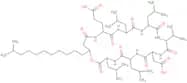
CAS:<p>Surfactin is a cyclic lipopeptide that has been found in urine and has shown potential as an anticancer agent. It has been shown to inhibit kinases, including indirubin and Chinese hamster ovary cell tumor kinase, which are involved in cancer cell proliferation. Surfactin analogs have also been developed as inhibitors of cancer cell growth and inducers of apoptosis. In addition to its anticancer properties, surfactin has been found to have antimicrobial activity against a variety of bacteria, including Clostridium perfringens. Overall, surfactin shows promise as a multifunctional therapeutic agent with potential applications in both cancer treatment and microbial control.</p>Formula:C53H93N7O13Purity:Min. 95%Molecular weight:1,036.3 g/mol3-(2-Bromoethyl)-7-hydroxy-4-methyl-coumarin
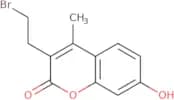
CAS:<p>Please enquire for more information about 3-(2-Bromoethyl)-7-hydroxy-4-methyl-coumarin including the price, delivery time and more detailed product information at the technical inquiry form on this page</p>Formula:C12H11BrO3Purity:Min. 95%Molecular weight:283.12 g/molRef: 3D-KAA18503
Discontinued productEplivanserin
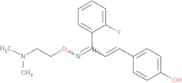
CAS:<p>Eplivanserin is a potent tumor inhibitor that belongs to the class of indirubin kinase inhibitors. It has shown great promise as an anticancer agent due to its ability to induce apoptosis in cancer cells and inhibit their growth cycle. Eplivanserin has been found to be effective against a variety of cancers, including breast, lung, and prostate cancer. This medicinal compound is derived from Chinese herbs and has been extensively studied for its potential in cancer treatment. In addition, eplivanserin has been found in urine samples from humans, indicating that it may have potential as a diagnostic tool for cancer detection. Its protein targets are still being investigated, but it is believed that eplivanserin works by inhibiting key enzymes involved in cell signaling pathways that promote cancer cell growth and survival.</p>Formula:C19H21FN2O2Purity:Min. 95%Molecular weight:328.4 g/molRef: 3D-FFA58113
Discontinued product(7Alpha,17Alpha)- 9,17-Dihydroxy-3-oxo-pregn-4-ene-7,21-dicarboxylic acid di-gamma-lactone
CAS:<p>(7Alpha,17Alpha)- 9,17-Dihydroxy-3-oxo-pregn-4-ene-7,21-dicarboxylic acid di-gamma-lactone is a synthetic analogue of progesterone. It is used as a drug product for research and development purposes. The product has been shown to be metabolized through the 3beta hydroxysteroid dehydrogenase pathway or the side chain cleavage enzyme pathways. This product has not been evaluated in humans and should not be used for any human applications. (7Alpha,17Alpha)- 9,17-Dihydroxy-3-oxo-pregn-4-ene-7,21 -dicarboxylic acid di gamma lactone is an impurity standard for HPLC analysis of progesterone in urine.</p>Formula:C23H28O5Purity:Min. 95%Molecular weight:384.50 g/molRef: 3D-JIA25367
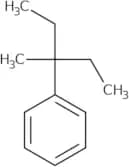
Discontinued product(1-Ethyl-1-methylpropyl)benzene
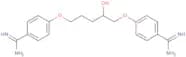
CAS:<p>(1-Ethyl-1-methylpropyl)benzene is an impurity of some drugs. It is a metabolite of the drug, and can be found in urine or blood samples as a result of its excretion from the body. (1-Ethyl-1-methylpropyl)benzene is used as an analytical standard for HPLC analysis. This chemical is not on the USP list of impurities, but it is listed on the pharmacopoeia. The CAS number for (1-Ethyl-1-methylpropyl)benzene is 1985-97-3.</p>Formula:C12H18Purity:Min. 95%Molecular weight:162.27 g/mol1,5-Bis(4-amidinophenoxy)-2-pentanol
CAS:<p>Please enquire for more information about 1,5-Bis(4-amidinophenoxy)-2-pentanol including the price, delivery time and more detailed product information at the technical inquiry form on this page</p>Formula:C19H24N4O3Purity:Min. 95%Molecular weight:356.4 g/molRef: 3D-IFA99132
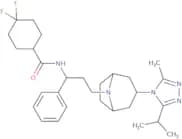
Discontinued productMaraviroc-d6
CAS:<p>Maraviroc-d6 is a medicinal compound that has been developed as an inhibitor of kinases, which are enzymes involved in cell cycle regulation and apoptosis. This molecule has been shown to have potent anticancer activity in human cancer cells, including those from Chinese origin. Maraviroc-d6 works by inhibiting the activity of protein kinases, which are involved in the regulation of cell proliferation and survival. This inhibition leads to the induction of apoptosis, or programmed cell death, in cancer cells. Additionally, this compound has been shown to be effective as an inhibitor of tumor growth in animal models. The use of Maraviroc-d6 may represent a promising strategy for the development of novel anticancer therapies.</p>Formula:C29H41F2N5OPurity:Min. 95%Molecular weight:519.7 g/molRef: 3D-IRB69922
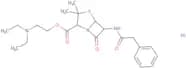
Discontinued productBenzylpenicillin diethylaminoethyl ester hydroiodide
CAS:<p>Benzylpenicillin diethylaminoethyl ester hydroiodide is a potent broad-spectrum antimicrobial agent that inhibits the growth of bacteria by inhibiting protein synthesis. It is used to treat microbial infections and has been shown to be effective against Streptococcus species, including Streptococcus pneumoniae, Streptococcus pyogenes, and Streptococcus viridans. Benzylpenicillin diethylaminoethyl ester hydroiodide binds to the 50S ribosome subunit of bacteria and prevents the formation of an antibiotic-inhibitor complex with the enzyme cell wall synthesis that is required for cell wall biosynthesis. This binding prevents protein synthesis and cell division.</p>Formula:C22H32IN3O4SPurity:Min. 95%Molecular weight:561.5 g/mol



![1-{4-[(4-methyl-1,4-diazepan-1-yl)methyl]phenyl}methanamine](/_next/image/?url=https%3A%2Fstatic.cymitquimica.com%2Fproducts%2F10%2Fthumb-webp%2FF518958.webp&w=3840&q=75)


![N-[2-[[[5-[(Dimethylamino)methyl]-2-furanyl]methyl]thio]ethyl]-2-nitroacetamide sodium salt](/_next/image/?url=https%3A%2Fstatic.cymitquimica.com%2Fproducts%2F3D%2Fthumb-webp%2FID57855.webp&w=3840&q=75)



![(3R)-3-Amino-1-[5,6-dihydro-3-(trifluoromethyl)-1,2,4-triazolo[4,3-α]pyrazin-7(8H)-yl]-4-(2,3,6-tr…](/_next/image/?url=https%3A%2Fstatic.cymitquimica.com%2Fproducts%2F3D%2Fthumb-webp%2FIA183166.webp&w=3840&q=75)