APIs for research and impurities
Subcategories of "APIs for research and impurities"
- Aminoacids and derivatives(12,332 products)
- Anthraquinones and derivatives(404 products)
- Benzimidazole and Imidazole Derivatives(10,439 products)
- Benzodiazepine Derivatives(333 products)
- Carbohydrates and glycoconjugates(5,051 products)
- Esters and Derivatives(42,250 products)
- Fatty Acids and Lypidic Derivatives(32,408 products)
- Flavonoids and Polyphenols(17,081 products)
- Free Radicals and Oxidant/Reducing Agents(212 products)
- Ketones and derivatives(2,399 products)
- Natural and semi-synthetic antibiotics(6,376 products)
- Nitriles and Cyano Derivatives(3,068 products)
- Nitrosamines and Derivatives(55 products)
- Nucleosides and Nucleotides(3,471 products)
- Organic Phosphates and Phosphonates(1,200 products)
- Organic Sulphonates and Sulphates(10,430 products)
- Organometallics(4,421 products)
- Others(6,300 products)
- Peptides and Proteins(3,146 products)
- Polymers and Derivatives(100 products)
- Purines and Pyrimidine Derivatives(8,940 products)
- Quinazoline and Quinoline Derivatives(65,982 products)
- Quinones and Derivatives(24,359 products)
- Salts and Derivatives of Active Pharmaceutical Ingredients (API)(80,669 products)
- Steroids and Derivatives(4,952 products)
- Sulfonamides and Derivatives(2,589 products)
- Terpenoids and Derivatives(3,846 products)
- Thiazolidinediones and Thiopyrans(2,753 products)
- β-Adrenergic Compounds(231 products)
Found 58005 products of "APIs for research and impurities"
Ciprofibrate-o-β-glucuronide
CAS:Ciprofibrate-o-β-glucuronide is the major metabolite of ciprofibrate in humans. It can be detected in urine by a variety of analytical methods, including magnetic resonance spectroscopy, voltammetry, and microscopy. Ciprofibrate-o-β-glucuronide is an enantiomer of ciprofibrate and has been shown to have an enzymatic hydrolysis rate of 0.07% per hour. This hydrolysis process is catalyzed by cytochrome P450 enzymes. Ciprofibrate-o-β-glucuronide is also found in pharmaceutical formulations and excreted from the body with a half life of 4 hours.
Formula:C19H22Cl2O9Purity:Min. 95%Molecular weight:465.3 g/molRef: 3D-CEA62315
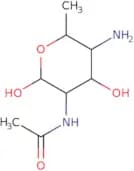
Discontinued product2-(Acetylamino)-4-amino-2,4,6-trideoxy-α-D-galactopyranose
CAS:Please enquire for more information about 2-(Acetylamino)-4-amino-2,4,6-trideoxy-α-D-galactopyranose including the price, delivery time and more detailed product information at the technical inquiry form on this page
Formula:C8H16N2O4Purity:Min. 95%Molecular weight:204.22 g/molRef: 3D-UQC43429
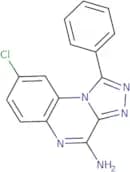
Discontinued productCp-66713 mesylate
CAS:Cp-66713 mesylate is a synthetic drug product with a molecular formula of C17H19NO2 and a molecular weight of 269.34. It has the following CAS number: 91896-58-1. The purity of this compound is >99% (HPLC).
Formula:C15H10ClN5Purity:Min. 95%Molecular weight:295.72 g/molRef: 3D-RDA89658
Discontinued productPseudomonic acid D sodium
CAS:Pseudomonic acid D sodium is a drug product that is used for the development of novel drugs. It is a natural metabolite of pseudomonic acid A, which is found in the fungus Pseudomonas sp. Pseudomonic acid D sodium is used as an analytical standard to aid in the identification of pseudomonic acid A and its metabolites. Pseudomonic acid D sodium can be synthesized by reacting 2-chloro-4-nitrobenzene with sodium bisulfate. The synthesis proceeds through a sequence of three reactions, namely nucleophilic substitution, electrophilic substitution, and hydrolysis. The structure of pseudomonic acid D sodium has been confirmed using nuclear magnetic resonance spectroscopy (NMR) and mass spectrometry (MS).
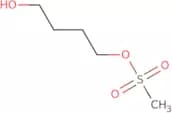
Formula:C26H41NaO9Purity:90%MinMolecular weight:520.59 g/mol4-Methanesulfonyloxybutanol
CAS:4-Methanesulfonyloxybutanol is a chemical substance with the molecular formula CH3SO2CH(CH2OH)CH2OH. It is used as an intermediate in the synthesis of 4-methanesulfonyloxybutanol, which is a potent inhibitor of busulfan-induced leukopenia and myelosuppression. This substance has been shown to be highly effective in preventing busulfan-induced side effects when administered intravenously. 4-Methanesulfonyloxybutanol is chemically synthesized by intramolecular alkylation of butanol, followed by hydrolysis. The reaction product can be detected using an ionization detector in conjunction with gas chromatography. This product is an alkylation agent that reacts with polypropylene to produce polypropylene glycols.
Formula:C5H12O4SPurity:Min. 95%Color and Shape:LiquidMolecular weight:168.21 g/mol5-Desbromo, 5-chloro brimonidine
CAS:5-Desbromo, 5-chloro brimonidine is a drug product that is used as an analytical standard. It has been shown to be metabolized by CYP3A4 and CYP2D6 enzymes.
Formula:C11H10ClN5Purity:Min. 95%Molecular weight:247.68 g/molRef: 3D-RDA14746
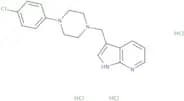
Discontinued productL-745,870 Trihydrochloride
CAS:L-745,870 is a subchronic atypical antipsychotic agent that is a potent D4 receptor agonist. Its efficacy in treating various mental disorders has been demonstrated in clinical studies with animals. L-745,870 has shown antidyskinetic activity in animal models of Parkinson's disease and dyskinesia. The molecular target for this drug is the dopamine D4 receptor. Clinical development of L-745,870 has begun in human studies.
Formula:C18H22Cl4N4Purity:Min. 95%Molecular weight:436.2 g/molRef: 3D-RJB02103
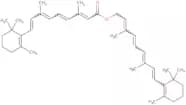
Discontinued productRetinyl retinoate
CAS:Controlled ProductRetinyl retinoate is a synthetic retinoid that is chemically stable and has been shown to be effective in clinical studies. Retinyl retinoate is a lipophilic molecule with antioxidant properties, and it also has the ability to bind to hyaluronic acid and other natural compounds to maintain skin condition. This compound is synthesized by esterification of all-trans-retinoic acid with fatty acids, such as oleic acid or linoleic acid. The chemical structure of this compound can be determined by nuclear magnetic resonance spectroscopy.
Formula:C40H56O2Purity:Min. 95%Molecular weight:568.9 g/molRef: 3D-QAA49886
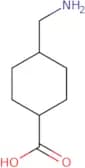
Discontinued producttrans-4-(Aminomethyl)cyclohexanecarboxylic acid
CAS:Trans-4-(aminomethyl)cyclohexanecarboxylic acid (AMCA) is a histamine antagonist that is used to treat bowel disease. It may also be useful for the treatment of other inflammatory diseases and as an anticoagulant. AMCA has been shown to be safe and effective for the prevention of postoperative bleeding in patients who are undergoing major surgery. This drug is a potent inhibitor of platelet aggregation, but does not affect the function of erythrocytes or leukocytes. AMCA inhibits platelet aggregation by blocking the binding of adenosine diphosphate (ADP) to its receptor on platelets, thus inhibiting ADP-mediated activation of phospholipase A2 and arachidonic acid release from membranes. An increase in blood levels of AMCA may lead to cardiac toxicity and bleeding events.
Formula:C8H15NO2Purity:Min. 95%Molecular weight:157.21 g/molRef: 3D-IA71533
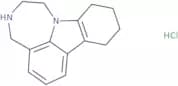
Discontinued productWay 629 hydrochloride
CAS:Way 629 hydrochloride is a chemical compound that belongs to the class of synthetic, pharmacopoeia and drug development. It is used as an impurity standard and a custom synthesis. Way 629 hydrochloride is also used in the study of metabolism. This compound has been shown to be metabolized by cytochrome P450 enzymes, glucuronidases, glutathione reductase, or conjugation with glucuronic acid.
Formula:C15H19ClN2Purity:Min. 95%Molecular weight:262.78 g/molRef: 3D-HCA75644
Discontinued product1-[[4-(3-Methoxypropoxy)-3-methyl-2-pyridinyl]methyl]-2-[[[4-(3-methoxypropoxy)-3-methyl-2-pyridinyl]methyl]sulfonyl]-1H-benzimidazo le
CAS:1-[[4-(3-Methoxypropoxy)-3-methyl-2-pyridinyl]methyl]-2-[(4-(3-methoxypropoxy)-3-methyl-2-pyridinyl)methylsulfonyl]-1H-benzimidazole (MKC1807) is a synthetic drug product. MKC1807 is an analytical standard in the HPLC assay for the determination of Epiandrosterone sulfate and its metabolites. 1-[4-(3-Methoxypropoxy)-3,5,6,7,8 -pentamethylcyclohexyl]methyl 2-[(4-(3 -methoxypropoxy) 3,5,6,7,8 -pentamethylcyclohexyl)methylsulfonyl]-1H benzimidazole has been shown to be a natural metabolite of Epiandrosterone sulfate. This compoundFormula:C29H36N4O6SPurity:Min. 95%Molecular weight:568.69 g/molRef: 3D-IM25352
Discontinued product1,1-Dimethylethyl (3S,5S,6E)-7-[4-(4-fluorophenyl)-6-(1-methylethyl)-2-[methyl(methylsulfonyl)amino]-5-pyrimidinyl]-3,5-dihydroxy-6- heptenoate
CAS:Please enquire for more information about 1,1-Dimethylethyl (3S,5S,6E)-7-[4-(4-fluorophenyl)-6-(1-methylethyl)-2-[methyl(methylsulfonyl)amino]-5-pyrimidinyl]-3,5-dihydroxy-6- heptenoate including the price, delivery time and more detailed product information at the technical inquiry form on this page
Formula:C26H36FN3O6SPurity:Min. 95%Molecular weight:537.65 g/molDexamethasone Impurity A
Impurity A is an impurity of the drug product, dexamethasone. The impurity is a natural metabolite of dexamethasone that is found in the urine of patients taking this medication. Impurity A is chemically identified using HPLC and its purity verified using GC-MS and LC-MS. This impurity can be used as a reference standard for analytical purposes and as an impurity standard for pharmacopoeia testing.
Formula:C22H29FO5Purity:Min. 95 Area-%Color and Shape:White Off-White PowderMolecular weight:392.46 g/molGlipizide EP Impurity F
CAS:Glipizide EP Impurity F is a synthetic impurity that is used as a research and development impurity standard. It has high purity and is pharmacopoeia grade. Glipizide EP Impurity F is also a metabolite of the drug product Glipizide and has been shown to have analytical applications for pharmacokinetic studies. It can be synthesized from natural materials or can be custom synthesized depending on the needs of the customer.
Formula:C11H16N2O4SPurity:Min. 95%Color and Shape:PowderMolecular weight:272.32 g/molFluocortolone Impurity 4
CAS:Fluocortolone Impurity 4 is a drug product that is custom synthesized to meet the high purity requirement of analytical standards. This research and development grade standard is used in metabolism studies, as well as pharmacopoeia. Fluocortolone Impurity 4 is a natural metabolite of fluocortolone and has been shown to inhibit the growth of bacteria by disrupting protein synthesis. It can be found in the urine, feces, and plasma of humans. Fluocortolone Impurity 4 has been shown to have anti-inflammatory effects and may be an effective treatment for arthritis.
Purity:Min. 95%Triacetyl aloe-emodin (impurity A)
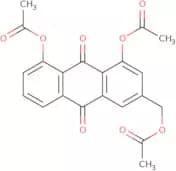
CAS:Triacetyl aloe-emodin (impurity A) is an impurity found in the Triacetyl Aloe-Emodin HPLC standard, which is a drug product. It is not approved for use as a drug and should be used only for research and development purposes. The impurity can be custom synthesized or purchased from a specialty chemical supplier. Impurities are not typically found in the final drug product but can occur during synthesis or purification of the API. This impurity is not present in any pharmacopoeia and has no known biological activity. The CAS number of this impurity is 25395-11-3.
Formula:C21H16O8Purity:Min. 95%Molecular weight:396.35 g/molRef: 3D-IT28380
Discontinued productSacubitril methyl ester
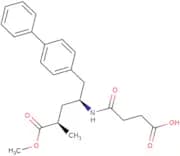
CAS:Sacubitril methyl ester is a drug product that belongs to the group of angiotensin receptor blockers. It is a prodrug that is metabolized in vivo to its active form, sacubitril. Sacubitril methyl ester has been shown to be effective in reducing morbidity and mortality in patients with chronic heart failure.
Formula:C23H27NO5Purity:Min. 95%Color and Shape:PowderMolecular weight:397.47 g/molRef: 3D-IS181150
Discontinued productN-Formyl Saxagliptin
N-Formyl Saxagliptin is an analytical standard for HPLC. It is used as a drug development and API impurity in the pharmaceutical industry. It was synthesized by reacting formaldehyde with the amino acid L-glutamic acid, followed by purification to remove any other contaminants. The CAS number for this chemical is 57847-82-0.
Purity:Min. 95%Ref: 3D-IF162360
Discontinued productDioctyl carbonate
CAS:Dioctyl carbonate is a pharmaceutical preparation used to treat skin conditions. It is a fatty acid ester of carbonic and carbonyl groups in which the two esters are in the same molecule. Dioctyl carbonate is a reaction product obtained by reacting an inorganic acid, such as hydrochloric acid or sulfuric acid, with an alcohol containing two hydroxyl groups and one double bond. This reaction may be facilitated by heating. The film-forming polymer may be polyvinylpyrrolidone, polyvinyl alcohol, or polyacrylic acid. Dioctyl carbonate has been shown to stimulate colony-stimulating factor production and inhibit the proliferation of human epidermal keratinocytes.
Formula:C17H34O3Purity:Min. 95%Color and Shape:Clear LiquidMolecular weight:286.4 g/molAdx 10059 hydrochloride
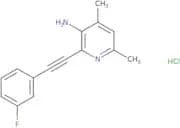
CAS:Adx 10059 hydrochloride is a synthetic drug that is used in research and development. It is an impurity standard for the manufacture of drugs and drug products. Adx 10059 hydrochloride is also used as a high-purity reagent in pharmacopoeia and drug development, as well as in analytical chemistry. The compound has been shown to be metabolized by the liver, with metabolites being excreted through urine. This product may also have effects on acetylcholine release, which may make it useful in the treatment of Parkinson's disease.
Formula:C15H14ClFN2Purity:Min. 95%Molecular weight:276.73 g/molRef: 3D-HFB94998
Discontinued product


![1-[[4-(3-Methoxypropoxy)-3-methyl-2-pyridinyl]methyl]-2-[[[4-(3-methoxypropoxy)-3-methyl-2-pyridin…](/_next/image/?url=https%3A%2Fstatic.cymitquimica.com%2Fproducts%2F3D%2Fthumb-webp%2FIM25352.webp&w=3840&q=75)