APIs for research and impurities
Subcategories of "APIs for research and impurities"
- Aminoacids and derivatives(12,316 products)
- Anthraquinones and derivatives(402 products)
- Benzimidazole and Imidazole Derivatives(10,375 products)
- Benzodiazepine Derivatives(323 products)
- Carbohydrates and glycoconjugates(5,038 products)
- Esters and Derivatives(42,239 products)
- Fatty Acids and Lypidic Derivatives(32,360 products)
- Flavonoids and Polyphenols(17,066 products)
- Free Radicals and Oxidant/Reducing Agents(208 products)
- Ketones and derivatives(2,393 products)
- Natural and semi-synthetic antibiotics(6,307 products)
- Nitriles and Cyano Derivatives(3,068 products)
- Nitrosamines and Derivatives(55 products)
- Nucleosides and Nucleotides(3,409 products)
- Organic Phosphates and Phosphonates(1,192 products)
- Organic Sulphonates and Sulphates(10,415 products)
- Organometallics(4,417 products)
- Others(6,257 products)
- Peptides and Proteins(3,129 products)
- Polymers and Derivatives(99 products)
- Purines and Pyrimidine Derivatives(8,889 products)
- Quinazoline and Quinoline Derivatives(65,574 products)
- Quinones and Derivatives(24,334 products)
- Salts and Derivatives of Active Pharmaceutical Ingredients (API)(81,501 products)
- Steroids and Derivatives(4,905 products)
- Sulfonamides and Derivatives(2,539 products)
- Terpenoids and Derivatives(3,827 products)
- Thiazolidinediones and Thiopyrans(2,752 products)
- β-Adrenergic Compounds(227 products)
Found 58878 products of "APIs for research and impurities"
Lysolecithin
CAS:Lysolecithin is an analog of the phospholipid lecithin that has been shown to have anticancer properties. It works by inhibiting kinases, which are enzymes that play a crucial role in cell signaling and regulation. Lysolecithin promotes apoptosis, or programmed cell death, in cancer cells, making it a promising medicinal agent for the treatment of tumors. Studies have also shown that lysolecithin can inhibit protein kinase activity in human urine and inhibit the growth of cancer cells in Chinese hamsters. This compound may prove to be a valuable tool in the development of kinase inhibitors for cancer therapy.
Formula:C24H50NO7PPurity:Min. 95%Molecular weight:495.6 g/molRef: 3D-PAA86327
Discontinued product2-Methoxy-5-sulfamoylbenzoic acid
CAS:2-Methoxy-5-sulfamoylbenzoic acid (2MSBA) is a reactive compound that reacts with the proton of vancomycin to form a dianion. This reaction is reversible and can be catalyzed by chloride ions. 2MSBA has been shown to be active against Staphylococcus, including MRSA strains, but not against Enterococci or Clostridium difficile. 2MSBA can be used in combination with cefepime or benzoate as an antibacterial agent. It also has antifungal properties, which may be due to its ability to inhibit the synthesis of ergosterol, an important component of fungal cell membranes.
2-Methoxy-5-sulfamoylbenzoic acid is related to fluconazole in that it contains a benzoate moiety and an amide group. These structural features confer antibacterial and antifFormula:C8H9NO5SPurity:Min. 95%Molecular weight:231.23 g/molRef: 3D-IM145487
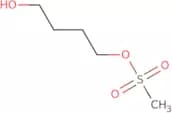
Discontinued product4-Methanesulfonyloxybutanol
CAS:4-Methanesulfonyloxybutanol is a chemical substance with the molecular formula CH3SO2CH(CH2OH)CH2OH. It is used as an intermediate in the synthesis of 4-methanesulfonyloxybutanol, which is a potent inhibitor of busulfan-induced leukopenia and myelosuppression. This substance has been shown to be highly effective in preventing busulfan-induced side effects when administered intravenously. 4-Methanesulfonyloxybutanol is chemically synthesized by intramolecular alkylation of butanol, followed by hydrolysis. The reaction product can be detected using an ionization detector in conjunction with gas chromatography. This product is an alkylation agent that reacts with polypropylene to produce polypropylene glycols.
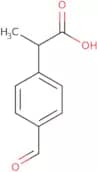
Formula:C5H12O4SPurity:Min. 95%Color and Shape:LiquidMolecular weight:168.21 g/mol2-(4-Formylphenyl)propionic acid - Racemic
CAS:2-(4-Formylphenyl)propionic acid is a racemic mixture of 2-formylphenylacetic acid and 4-formylphenylacetic acid. This compound is used in the treatment of bacterial infections and inflammation. It is an organic solution that can be injected, administered orally, or applied topically. The 2-(4-formylphenyl)propionic acid has been shown to have anti-inflammatory properties, but also has side effects such as skin irritation when it is applied topically. This drug can also cause nausea, vomiting, and diarrhea when administered orally.
Formula:C10H10O3Purity:Min. 95%Color and Shape:White PowderMolecular weight:178.18 g/molRef: 3D-IF27430
Discontinued productAcrolein-d4
CAS:Please enquire for more information about Acrolein-d4 including the price, delivery time and more detailed product information at the technical inquiry form on this page
Formula:C3H4OPurity:Min. 95%Molecular weight:60.09 g/molRef: 3D-IBA98405
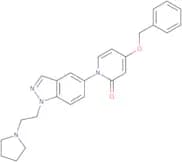
Discontinued productMch-1 antagonist 1
CAS:Mch-1 antagonist 1 is a drug product that is custom synthesized and is available in high purity. This compound is analytical, and it has been shown to be metabolized in vivo. Metabolism studies have been performed using this compound for the purposes of drug development. CAS No. 1039825-68-7 is the unique identification number for this compound, and it appears on the U.S. Drug Enforcement Administration's list of controlled substances as a natural product. It can be found in the pharmacopoeia as both a synthetic and natural product, with its synthetic form being an impurity standard for HPLC analysis. Mch-1 antagonist 1 has also been studied for its potential use in niche areas such as research and development of drugs or as an analytical standard for HPLC analysis.
Formula:C25H26N4O2Purity:Min. 95%Molecular weight:414.5 g/molRef: 3D-PRB82568
Discontinued productN-Desmethyl trimeprazine
CAS:N-Desmethyl trimeprazine is a synthetic compound, which is an impurity of the drug product. It is not active and does not possess any biological activity. It is a metabolite of the parent drug, Trimeprazine. N-Desmethyl trimeprazine has been studied for its pharmacological properties and metabolism in the body, but no conclusive results have been found. The chemical structure and purity of N-Desmethyl trimeprazine are not listed in the USP or BP. This compound can be custom synthesized on request.
Formula:C17H20N2SPurity:Min. 95%Molecular weight:284.40 g/molRef: 3D-XAA73204
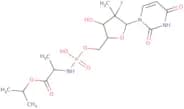
Discontinued producto-Desphenyl sofosbuvir
CAS:o-Desphenyl sofosbuvir is a drug product that has been custom synthesized for research purposes. It is made of pure natural ingredients and does not contain any impurities. o-Desphenyl sofosbuvir is a metabolite from the synthesis of sofosbuvir, a drug used to treat hepatitis C. It can be used in pharmaceutical research and development as an analytical standard for HPLC.
Formula:C16H25FN3O9PPurity:Min. 95%Molecular weight:453.36 g/mol2-[[[3-Methyl-4-(methylthio)-2-pyridinyl]methyl]sulfinyl]-1H-benzimidazole
CAS:2-[[[3-Methyl-4-(methylthio)-2-pyridinyl]methyl]sulfinyl]-1H-benzimidazole is a synthetic, nonsteroidal anti-inflammatory drug. It is soluble in methanol and ethanol, not soluble in water. The impurity standard of 2-[[[3-Methyl-4-(methylthio)-2-pyridinyl]methyl]sulfinyl]-1H-benzimidazole is 3-[2-[(3,4,5-trimethoxyphenyl)amino]-1H-benzimidazolium methyl sulfate].
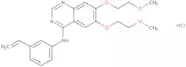
Formula:C15H15N3OS2Purity:Min. 95%Molecular weight:317.43 g/molErlotinib-3-vinyl hydrochloride
CAS:Erlotinib-3-vinyl hydrochloride is a drug product that is used in the treatment of cancer, including non-small cell lung cancer. It is an impurity standard for HPLC and analytical testing. Erlotinib-3-vinyl hydrochloride is also used as an API impurity and metabolite in metabolism studies. Erlotinib-3-vinyl hydrochloride can be synthesized from 4-(4'-vinylphenoxy)butanal, which is a natural compound obtained from plants like apple trees. This synthetic process can be done by the reduction of 4-(4'-vinylphenoxy)butanal with sodium borohydride, followed by reaction with vinyl chloride. The compound is also found as a metabolite in humans after oral administration of erlotinib, which has been shown to inhibit protein synthesis and DNA synthesis.
Formula:C22H26ClN3O4Purity:Min. 95%Molecular weight:431.9 g/molRef: 3D-ZPC29438
Discontinued productRegadenoson Impurity 28
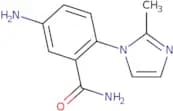
CAS:Regadenoson Impurity 28 is an analytical standard and research and development impurity. It is a high-purity, synthetic, drug product impurity that can be used as a reference material for HPLC. This drug impurity is also available in a custom synthesis service. Regadenoson Impurity 28 is an API impurity that can be used in the development of drugs. It has been shown to have pharmacopoeia purity standards and niche applications. Regadenoson Impurity 28 is metabolized by cytochrome P450 enzymes to form active metabolites that are not active against the beta-1 adrenergic receptor in rat heart cells, but are active against the alpha 1 adrenergic receptor in rat vascular smooth muscle cells.
Formula:C10H14N6O3Purity:Min. 95%Molecular weight:266.26 g/mol(3R,5S,6E)-7-[4-(4-Fluorophenyl)-6-(1-methylethyl)-2-[methyl[(2-hydroxy-2-methylpropyl)sulfonyl]amino]-5-pyrimidinyl]-3,5-dihydroxy- 6-heptenoic acid sodium salt
CAS:(3R,5S,6E)-7-[4-(4-Fluorophenyl)-6-(1-methylethyl)-2-[methyl[(2-hydroxy-2-methylpropyl)sulfonyl]amino]-5-pyrimidinyl]-3,5-dihydroxy- 6-heptenoic acid sodium salt is a synthetic drug product. It is an impurity standard in the synthesis of Metabolism studies. The CAS number is 1714147-50-8 and the chemical name is (3R,5S,6E)-7-[4-(4-fluorophenyl)-6-(1-methylethyl)-2-[methyl[(2-hydroxy-2 methylpropyl)sulfonyl]amino]-5-pyrimidinyl]-3,5dihydroxyheptenoic acid sodium salt. The molecular weight is 781
Formula:C25H33FN3NaO7SPurity:Min. 95%Molecular weight:561.6 g/molRef: 3D-IF156830
Discontinued productEsomeprazole Impurity Q
Esomeprazole Impurity Q is a drug product. It is an impurity standard of esomeprazole, CAS No. 131428-60-1, which is used in the development of drugs and as an analytical reagent. It is synthesized from natural materials and has a purity of 99%. The metabolite can be found in animal and human metabolism studies. Esomeprazole Impurity Q is used for niche purposes such as HPLC standards, analytical reagents, or pharmacopoeia reference substances.
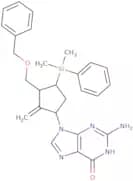
Purity:Min. 95%6-o-Benzyl-4-dehydroxy-4-dimethylphenylsilyl entecavir
CAS:6-o-Benzyl-4-dehydroxy-4-dimethylphenylsilyl entecavir is a synthetic drug product with an API impurity. It's an analytical standard for the metabolite 6-o-benzylidene-4,6-didehydroentecavir (CAS 649761-24-0), which is a natural metabolite of entecavir. The impurity standard is used in research and development to study the drug product's metabolism and to ensure that it meets pharmacopeia standards.Formula:C27H31N5O2SiPurity:Min. 95%Molecular weight:485.7 g/molRef: 3D-ZAB76124
Discontinued productN-Desbispropyl-N-pentyl-2-methyl ropinirole
CAS:N-Desbispropyl-N-pentyl-2-methyl ropinirole is an analytical reference standard. This product is a high purity, drug development, and API impurity. It is a CAS No. 249622-60-4 and has a niche, drug product, and impurity standard. This item is for Research and Development, High purity, Drug development, API impurity, HPLC standard, CAS No. 249622-60-4, niche, drug product, Impurity standard, Metabolite, pharmacopoeia Custom synthesis of natural or synthetic origin.
Formula:C16H24N2OPurity:Min. 95%Molecular weight:260.37 g/molRef: 3D-ZJA62260
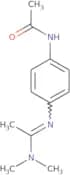
Discontinued productN’-(4-Acetylaminophenyl)-N,N-dimethylacetamidine
CAS:N’-(4-Acetylaminophenyl)-N,N-dimethylacetamidine is a drug product that is used in the development of new drugs. It has high purity, analytical grade and natural origin. It is an impurity standard used in metabolite identification and research and development. The CAS number for this compound is 1358054-66-6.Formula:C12H17N3OPurity:Min. 95%Molecular weight:219.28 g/molRef: 3D-IEC05466
Discontinued product2-[[(4-Chloro-3-methyl-2-pyridinyl)methyl]sulfinyl]-1H-benzimidazole
CAS:2-[[(4-Chloro-3-methyl-2-pyridinyl)methyl]sulfinyl]-1H-benzimidazole (CAS No. 168167-42-8) is a synthetic compound that is used as an analytical reference standard for HPLC. It is also used in the study of drug metabolism, and it has been shown to induce natural oxidation in vitro. 2-[(4-Chloro-3-methylpyridinium)methylsulfinyl]-1Hbenzimidazole is an impurity found in pharmaceutical products that are synthesized from 1-(2,4,6trichlorophenyl)-3-[(4chloromethyl)phenyl]urea.Formula:C14H12ClN3OSPurity:Min. 95 Area-%Color and Shape:Brown PowderMolecular weight:305.78 g/molRef: 3D-IC21226
Discontinued product9-(1,3-Dioxolan-2-ylmethyl)-3,9-dihydro-1,3-dimethyl-1H-purine-2,6-dione
CAS:9-(1,3-Dioxolan-2-ylmethyl)-3,9-dihydro-1,3-dimethyl-1H-purine-2,6-dione is a metabolite of the drug 9-(1,3-Dioxolan-2-ylmethyl)-1,3,9 dihydrobenzo[g]pteridine. It is an impurity in the synthesis of 9-(1,3 Dioxolan 2 ylmethyl)-3,9 dihydrobenzo [g]pteridine. The purity of this compound is > 99%, with a melting point range of 233 to 235 °C and a molecular weight of 244.24 g/mol. It is soluble in methanol and acetonitrile. This compound has been characterized by IR spectroscopy (ATR), 1H NMR (400 MHz) spectroscopy (CDCl 3 ), and mass spectrometry (HRMS
Formula:C11H14N4O4Purity:Min. 95%Molecular weight:266.25 g/molRef: 3D-ZWB28918
Discontinued product(-)-Bornyl ferulate
CAS:Controlled Product(-)-Bornyl ferulate is a natural compound, specifically a type of ferulic acid ester, which is a secondary metabolite found in certain plants. Its source is primarily the essential oils and resins of various coniferous species, where it contributes to the plant's defense mechanisms. The mode of action of (-)-Bornyl ferulate involves its ability to scavenge free radicals, thus exhibiting antioxidant activity. It also modulates inflammatory pathways, suggesting possible anti-inflammatory effects.
Formula:C20H26O4Purity:Min. 95%Molecular weight:330.42 g/molRef: 3D-FCA51107
Discontinued productN-4,5[Acetylamino)methyl]desmopressin
N-4,5[Acetylamino)methyl]desmopressin is a synthetic drug product that is used as an analytical standard for the identification and quantitation of desmopressin in pharmaceutical preparations. It is also used as an impurity standard for HPLC analysis. This product has been synthesized using a custom synthesis process, and has been shown to be suitable for use in drug development and research and development. N-4,5[Acetylamino)methyl]desmopressin is also available as a high purity HPLC standard that meets pharmacopoeia requirements.
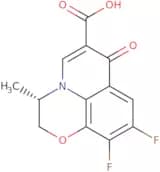
Purity:Min. 95%Levofloxacin carboxylic acid
CAS:Levofloxacin is a synthetic molecule with an asymmetric carbon atom in its heterocycle. It is synthesized by reacting chloroform with 2-fluoro-5-nitrobenzaldehyde, which reacts further with sodium hydroxide and hydrochloric acid to form the levofloxacin carboxylic acid. Impurities can be found in the reaction product due to chlorine atoms that are formed during the synthesis. The amount of impurities present in the final product can be determined using a titration method or through HPLC analysis. Levofloxacin has been shown to be effective against methicillin-resistant Staphylococcus aureus (MRSA) and Clostridium perfringens, although is not active against acid-fast bacteria such as Mycobacterium tuberculosis or Mycobacterium avium complex.
Formula:C13H9F2NO4Purity:Min. 95%Color and Shape:PowderMolecular weight:281.21 g/molRef: 3D-IL24882
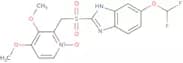
Discontinued productPantoprazole sulfone N-oxide
CAS:Pantoprazole sulfone N-oxide is a prodrug that is converted to the active form pantoprazole in the stomach where it inhibits gastric acid secretion. Pantoprazole sulfone N-oxide has been shown to be genotoxic, and can cause polyvinyl chloride to degrade when stored together. Reconstituted solution of this drug should be used within 24 hours after reconstitution, as the chemical stability of this drug decreases rapidly. Validation studies have been conducted on different analytical methods for determining pantoprazole concentrations in reconstituted solutions, and these methods have been harmonized with those published by the United States Pharmacopeia (USP). The pump inhibitor activity of pantoprazole sulfone N-oxide has been demonstrated in dogs, and it is also useful for treating acid reflux disease in humans. Pantoprazole sulfone N-oxide is unstable at high temperatures (>25°C), so should not be refrigerated or
Formula:C16H15F2N3O6SPurity:Min. 95%Molecular weight:415.37 g/molRef: 3D-ID26757
Discontinued productDoxorubicin Impurity 15
CAS:Doxorubicin impurity 15 is a natural product that is used as an analytical reference standard in pharmacopoeia. It has been synthesized for use in drug development and research and development, and is available as a high-purity HPLC standard. Doxorubicin impurity 15 has a CAS number of 131086-18-5.
Formula:C31H38BrNO11Purity:Min. 95%Molecular weight:680.54 g/molRef: 3D-ID163220
Discontinued productPirtenidine
CAS:Pirtenidine is a potent and selective kinase inhibitor that has been shown to inhibit the activity of cyclin-dependent kinases. It has demonstrated promising results in preclinical studies as an anticancer agent, inducing apoptosis in cancer cells. Pirtenidine is an analog of protein kinase inhibitors, which have been used to treat various types of tumors. It has been found to be effective against human cancer cell lines and has shown significant tumor growth inhibition in animal models. Pirtenidine has also been reported to be a potent urine inhibitor of Chinese hamster ovary cells, making it a promising candidate for the treatment of urinary tract cancers.
Formula:C21H38N2Purity:Min. 95%Molecular weight:318.5 g/molRef: 3D-DEA92327
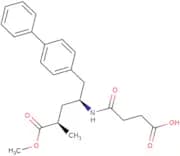
Discontinued productSacubitril methyl ester
CAS:Sacubitril methyl ester is a drug product that belongs to the group of angiotensin receptor blockers. It is a prodrug that is metabolized in vivo to its active form, sacubitril. Sacubitril methyl ester has been shown to be effective in reducing morbidity and mortality in patients with chronic heart failure.
Formula:C23H27NO5Purity:Min. 95%Color and Shape:PowderMolecular weight:397.47 g/molRef: 3D-IS181150
Discontinued product6-Desmethyl-6-methylhydroxy etoricoxib N1-oxide
CAS:6-Desmethyl-6-methylhydroxy etoricoxib N1-oxide is a high purity drug product. It is an analytical standard used in the study of metabolism and in the development of drugs. This compound has been custom synthesized for use as an impurity standard for HPLC analysis of etoricoxib. 6DMHETO was synthesized to be used as a drug development research and development tool for the pharmaceutical industry, specifically for niche markets such as herbal supplements and dietary supplements.
Formula:C18H15ClN2O4SPurity:Min. 95%Molecular weight:390.80 g/molRef: 3D-VXA39408
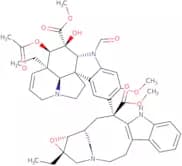
Discontinued productN-Formyl leurosine
CAS:N-Formyl leurosine is an inhibitor of fatty acid synthesis. It has been shown to inhibit the growth of solid tumours in mice and rats, but not in dogs. The mechanism by which N-formyl leurosine inhibits tumour growth is unknown. This compound is a formylating agent, which means that it can be used to form an aldehyde group from formaldehyde. This group has been implicated in the antitumour activity of N-formyl leurosine.
Formula:C46H54N4O10Purity:Min. 95%Molecular weight:822.94 g/molRef: 3D-IF23552
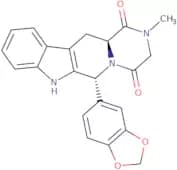
Discontinued productcis-Tadalafil
CAS:Cis-Tadalafil is a potent inhibitor of phosphodiesterase 5, which is used to treat erectile dysfunction (ED) and primary pulmonary hypertension (PPH). It works by increasing blood flow to the penis, allowing men with ED to achieve and maintain an erection. Cis-Tadalafil is also used to treat symptoms of prostatic hyperplasia (enlarged prostate) in men. This drug has been shown to be effective in treating PPH by reducing pulmonary arterial pressure and improving exercise capacity. Cis-Tadalafil belongs to the carboline class of drugs and is a phosphodiesterase 5 inhibitor that selectively inhibits cGMP-specific phosphodiesterase type 5 (PDE5). This drug has been shown to be highly effective in treating both ED and PPH with minimal side effects.
Formula:C22H19N3O4Purity:Min. 95%Color and Shape:White/Off-White SolidMolecular weight:389.4 g/mol





![2-[[[3-Methyl-4-(methylthio)-2-pyridinyl]methyl]sulfinyl]-1H-benzimidazole](/_next/image/?url=https%3A%2Fstatic.cymitquimica.com%2Fproducts%2F3D%2Fthumb-webp%2FIM21229.webp&w=3840&q=75)
![(3R,5S,6E)-7-[4-(4-Fluorophenyl)-6-(1-methylethyl)-2-[methyl[(2-hydroxy-2-methylpropyl)sulfonyl]am…](/_next/image/?url=https%3A%2Fstatic.cymitquimica.com%2Fproducts%2F3D%2Fthumb-webp%2FIF156830.webp&w=3840&q=75)
![2-[[(4-Chloro-3-methyl-2-pyridinyl)methyl]sulfinyl]-1H-benzimidazole](/_next/image/?url=https%3A%2Fstatic.cymitquimica.com%2Fproducts%2F3D%2Fthumb-webp%2FIC21226.webp&w=3840&q=75)
![N-4,5[Acetylamino)methyl]desmopressin](/_next/image/?url=https%3A%2Fstatic.cymitquimica.com%2Fproducts%2F3D%2Fthumb-webp%2FIA173214.webp&w=3840&q=75)