APIs for research and impurities
Subcategories of "APIs for research and impurities"
- Aminoacids and derivatives(12,440 products)
- Anthraquinones and derivatives(407 products)
- Benzimidazole and Imidazole Derivatives(10,464 products)
- Benzodiazepine Derivatives(335 products)
- Carbohydrates and glycoconjugates(5,388 products)
- Esters and Derivatives(42,306 products)
- Fatty Acids and Lypidic Derivatives(32,486 products)
- Flavonoids and Polyphenols(17,100 products)
- Free Radicals and Oxidant/Reducing Agents(214 products)
- Ketones and derivatives(2,692 products)
- Natural and semi-synthetic antibiotics(6,409 products)
- Nitriles and Cyano Derivatives(3,070 products)
- Nitrosamines and Derivatives(55 products)
- Nucleosides and Nucleotides(3,492 products)
- Organic Phosphates and Phosphonates(1,203 products)
- Organic Sulphonates and Sulphates(10,451 products)
- Organometallics(4,425 products)
- Others(6,340 products)
- Peptides and Proteins(3,164 products)
- Polymers and Derivatives(100 products)
- Purines and Pyrimidine Derivatives(8,974 products)
- Quinazoline and Quinoline Derivatives(66,218 products)
- Quinones and Derivatives(24,378 products)
- Salts and Derivatives of Active Pharmaceutical Ingredients (API)(92,894 products)
- Steroids and Derivatives(4,987 products)
- Sulfonamides and Derivatives(2,607 products)
- Terpenoids and Derivatives(3,860 products)
- Thiazolidinediones and Thiopyrans(2,755 products)
- β-Adrenergic Compounds(231 products)
Found 66870 products of "APIs for research and impurities"
Epirubicin impurity G
CAS:Epirubicin impurity G is a synthetic research and development impurity standard that is used in the manufacture of drug products, as well as in the development of new drugs. Epirubicin impurity G is a metabolite of epirubicin and has been shown to be an active inhibitor of DNA synthesis. Epirubicin impurity G may also have potential as an analytical standard for HPLC analysis.Formula:C54H58N2O22Purity:Min. 95%Molecular weight:1,087 g/molDesethyl amiodarone hydrochloride
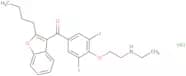
CAS:Amiodarone hydrochloride is an antiarrhythmic drug that belongs to the class of chromatographic agents. It is a prodrug, which is metabolized to amiodarone in vivo. Amiodarone has been shown to be effective in preventing ventricular fibrillation and malignant arrhythmias. Amiodarone prevents the onset of cardiac arrhythmia by prolonging the action potential duration and refractory period, which stabilizes the cell membrane potential during depolarization. The drug also inhibits the release of calcium ions from the sarcoplasmic reticulum, thereby reducing excitability and preventing re-entry into a fibrillating state. Amiodarone is used for the treatment of atrial fibrillation, ventricular tachycardia, and chronic heart failure.Formula:C23H25I2NO3•HClPurity:Min. 95%Color and Shape:PowderMolecular weight:653.72 g/mol2,2-Bis(N-(a,a,a-trifluoro-m-tolyl)antranililoxi)diethylether
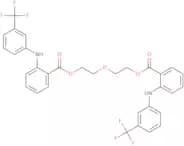
CAS:2,2-Bis(N-(a,a,a-trifluoro-m-tolyl)antranililoxi)diethylether is a natural compound that is an impurity in the drug 2,2-Bis(N-(a,a,a-trifluoro-m-tolyl)antranilic acid). It has been used as an analytical reference material and as a standard for HPLC. The synthesis of this compound has not been reported. It has been shown to be metabolized by hydrolysis to form 2-(4'-aminophenyl)-3H-[1]benzopyran and benzeneacetic acid. 2,2-Bis(N-(a,a,a-trifluoro-m-tolyl)antranililoxi)diethylether is also known as bis(4'-aminophenyl)-3H-[1Formula:C32H26F6N2O5Purity:Min. 95%Color and Shape:Slightly Yellow Yellow Clear LiquidMolecular weight:632.55 g/molN,N'''-(Dithia-2,1-ethanediyl)bis-(N'-cyano-N''-methyl)guanidine
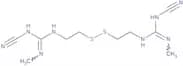
CAS:N,N'''-(Dithia-2,1-ethanediyl)bis-(N'-cyano-N''-methyl)guanidine is a metabolite of guanidine. It is a synthetic compound that is used as an analytical reference standard and impurity in pharmaceutical products. It is also used to create an impurity standard for HPLC analysis. This compound has been found in natural sources such as plants and animal tissues, but it can also be synthesized in the lab. The CAS number for this substance is 74886-59-2.
Formula:C10H18N8S2Purity:Min. 95%Color and Shape:White PowderMolecular weight:314.43 g/molAtorvastatin impurity F
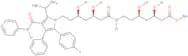
CAS:Atorvastatin impurity F is an impurity that can be found in atorvastatin. It is a white to off-white crystalline solid with a melting point of 142°C. It has a molecular weight of 273.5 and chemical formula of C14H13N3O2. This impurity can be found in atorvastatin as an API impurity, which may have an effect on the efficacy or toxicity of the drug product. Impurities are present in all pharmaceutical products and should be identified, characterized, and quantified for quality control purposes. Impurities are often unavoidable byproducts of the manufacturing process and can lead to potential safety concerns if they are not detected early on during drug development. The presence of impurities may also affect the pharmacological effects or therapeutic efficacy of the drug product.
Formula:C40H47FN3O8NaPurity:Min. 95%Color and Shape:PowderMolecular weight:739.8 g/molN-Desmethyl galanthamine
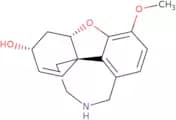
CAS:Controlled ProductN-Desmethyl galanthamine is a plant alkaloid that is found in the Huperzia serrata plant. It has been shown to have cholinergic activity and calcium binding properties. N-Desmethyl galanthamine inhibits acetylcholinesterase, an enzyme responsible for the breakdown of acetylcholine, which is a neurotransmitter. This inhibition leads to increased levels of acetylcholine, which results in increased neuron stimulation and improved memory function. N-Desmethyl galanthamine also binds to β2 nicotinic receptor sites and blocks the binding of nicotine, leading to decreased nicotine dependence.
Formula:C16H19NO3Purity:Min. 95%Molecular weight:273.33 g/mol(1R,3S,5S)-8-Methyl-8-azabicyclo[3.2.1]oct-6-en-3-yl-2'-hydroxy-2',2'-di(thiophen-2''-yl)acetate
CAS:Tanshinone IIA is an enantioselective hydroxamic acid that inhibits matrix metalloproteinase. It is a structural analogue of the hydroxamic acid Tanshinone I and has been shown to inhibit aggrecanase, which is an enzyme that hydrolyzes the glycosaminoglycan aggrecan. It also has anti-cancer effects due to its inhibition of cell proliferation in cancer cells. Tanshinone IIA can be used as a chiral synthon for polymerase chain reactions (PCR) because it contains a stereogenic centre in its structure.Formula:C18H19NO3S2Purity:Min. 95%Color and Shape:PowderMolecular weight:361.48 g/molDehydroxy bisoprolol
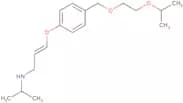
CAS:Dehydroxy bisoprolol is an impurity of the drug Bisoprolol that is used to make the drug product Metoprolol. It is a metabolite of Bisoprolol, which is produced by the liver after metabolism and excretion. Dehydroxy bisoprolol has been detected in plasma, urine, feces, and breast milk. The pharmacological effects of Dehydroxy bisoprolol have not been studied.
Formula:C18H29NO3Purity:Min. 95%Color and Shape:PowderMolecular weight:307.43 g/molDes-His(1)-Semaglutide
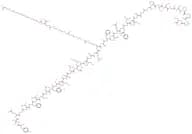
Des-His(1)-semaglutide is a semaglutide-related impurity. This des-amino acid form has the histidine (His) amino acid from position 1 removed from the peptide chain. Semaglutide impurities are structurally related compounds that arise during synthesis, purification, or storage of semaglutide, a long-acting GLP-1 receptor agonist used for managing type 2 diabetes and obesity.Formula:C181H284N42O58Molecular weight:3,976.5 g/molD-Asp(9)-Tirzepatide
Tirzepatide impurity.Formula:C225H348N48O68Color and Shape:PowderMolecular weight:4,813.5 g/molD-Ser(8)-Semaglutide
D-Ser(8)-Semaglutide is a semaglutide impurity. The amino acid at position 8 has been replaced by the D-form of the amino acid D-serine (D-Ser). Semaglutide impurities are structurally related compounds that arise during synthesis, purification, or storage of semaglutide, a long-acting GLP-1 receptor agonist for managing type 2 diabetes and obesity.Formula:C187H291N45O59Molecular weight:4,113.64 g/molAztreonam impurity D
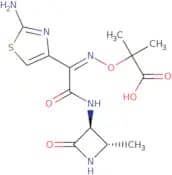
CAS:Aztreonam impurity D is a metabolite of aztreonam. Aztreonam impurity D is an impurity standard for the pharmacopoeia and API industry, as well as for drug development and research. It has been shown that this compound inhibits bacterial growth by binding to DNA-dependent RNA polymerase, thereby preventing transcription and replication. The high frequency of human activity has been shown using a patch-clamp technique on human erythrocytes. This active form is metabolized through a number of metabolic transformations, including hydrolysis by esterases or glucuronidases, oxidation by cytochrome P450 enzymes, reduction by glutathione reductase, or conjugation with glucuronic acid. Aztreonam impurity D also specifically binds to markers expressed at high levels in Mycobacterium tuberculosis strains (e.g., ESX-1 secretion system protein) and inhibits cell growth in culture.Formula:C13H17N5O5SPurity:Min. 95 Area-%Color and Shape:PowderMolecular weight:355.37 g/mol3-O-Methyl L-DOPA monohydrate
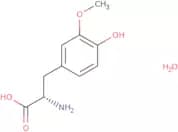
CAS:Controlled Product3-O-Methyl L-DOPA monohydrate is a chromatographic method that is used to diagnose Parkinson's disease. The method separates the catechol-o-methyltransferase (COMT) from plasma samples, which converts dopamine to 3-O-methyl dopamine. The 3-O-methyl dopamine reacts with an electrochemical detector and overlapped peaks can be seen on the chromatogram. This analytical method can be used to detect low levels of dopamine in the blood and diagnose Parkinson's disease.Formula:C10H13NO4·H2OPurity:Min. 95%Color and Shape:White PowderMolecular weight:229.23 g/molTerbinafine dimer impurity dihydrochloride
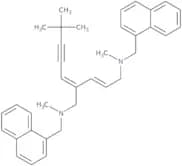
CAS:Terbinafine is an antifungal agent that belongs to the family of medicines. It is used to treat fungal infections of the skin, nails and scalp. Terbinafine can also be used to treat other types of fungal infections, such as tinea corporis (ringworm), tinea cruris (jock itch), tinea pedis (athlete's foot) and tinea capitis (scalp ringworm). Terbinafine dimer impurity dihydrochloride is a by-product of terbinafine hydrochloride that has been shown to have industrial applications as a dispersant or lubricant in industries such as papermaking.
Formula:C36H40N2·2HClPurity:Min. 95%Color and Shape:White Off-White PowderMolecular weight:573.64 g/mol(RS)-Isopropyl 2-methoxyethyl 1,4-dihydro-2,6-dimethyl-4-(4-nitrophenyl)pyridine-3,5-dicarboxylate
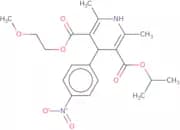
CAS:(RS)-Isopropyl 2-methoxyethyl 1,4-dihydro-2,6-dimethyl-4-(4-nitrophenyl)pyridine-3,5-dicarboxylate is a white to off-white crystalline powder that is soluble in methanol and slightly soluble in water. It can be used as an impurity standard for the API drug product, research and development and metabolism studies. The CAS number for this compound is 2200280-99-3. This compound has a purity of 99% or greater with an analytical purity of 99.9%. This compound has been shown to have a melting point of about 237°C and a density of 1.06 g/cm3. This compound is insoluble in ether and acetone.Formula:C21H26N2O7Purity:Min. 95%Color and Shape:Light (Or Pale) Yellow To Yellow SolidMolecular weight:418.44 g/molN-[(1R)-1-(1-Naphthalenyl)ethyl]carbamic acid 3-[3-(trifluoromethyl)phenyl]propyl] ester
CAS:N-[(1R)-1-(1-Naphthalenyl)ethyl]carbamic acid 3-[3-(trifluoromethyl)phenyl]propyl] ester is a drug product. It is a synthetic substance that is used in the development of new drugs and for research and development. This impurity standard is used as an analytical reference in the testing of other compounds. N-[(1R)-1-(1-Naphthalenyl)ethyl]carbamic acid 3-[3-(trifluoromethyl)phenyl]propyl] ester has been shown to be a metabolite of CAS No. 915979-44-1, which is also known as N-[(2S)-2-[[5-[3-(Trifluoromethoxy)phenoxy]-2-pyridinyl]methyl]-2,5-dioxopyrrolidin-1-yl]-3,
Formula:C23H22F3NO2Purity:Min. 95%Color and Shape:Colorless to yellow liquid.Molecular weight:401.42 g/molS-Methyl-N-cyano-N'-[2-[(5-methyl-1H-imidazol-4-yl)methylthio]ethyl]isothiourea
CAS:Methylisothiourea is a label that can be used to identify cells in vivo. It is a fluorescent molecule that is activated by the presence of cytokines, such as IL-1β and TNF-α. Methylisothiourea has been used to evaluate corneal epithelial cells for their response to injury. The effect of Methylisothiourea on the tissue was assessed by histology and evaluated by the presence of cytokine concordance with the fluorescence intensity. Reconstitution experiments were conducted in vitro using human tissues. It was found that Methylisothiourea was not toxic at concentrations up to 500 μM and that it did not interfere with DNA synthesis or cell division at concentrations up to 10 mM.
Formula:C10H15N5S2Purity:Min. 95%Color and Shape:White PowderMolecular weight:269.39 g/molDecitabine impurity 11
CAS:Decitabine is a drug product that is used as an anti-cancer drug. It is a synthetic, natural, and research and development (R&D) metabolite with the CAS No. 909402-26-2. Decitabine has shown anticancer activity in vitro and in vivo against leukemia cells. This compound is an impurity of the API decitabine that is manufactured by a chemical synthesis process. The analytical impurities are 11 compounds that have been identified from the HPLC standard of this API. The metabolites of these compounds are also included in this standard. High purity decitabine should be obtained for pharmacopoeia studies and niche applications such as HPLC standards, pharmaceuticals, or research purposes.Formula:C9H13N3O5Purity:Min. 95%Molecular weight:243.22 g/molOlsalazine sodium impurity D
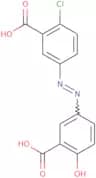
CAS:Olsalazine sodium impurity D is a natural substance that is present as an impurity in the drug Olsalazine sodium. It is used as an analytical standard for Olsalazine sodium and its metabolites, which are involved in drug development. The purity of this substance can be customized by our research and development team. This product has CAS number 93964-55-7 and is available at a reasonable price.
Formula:C14H9ClN2O5Purity:Min. 95%Color and Shape:PowderMolecular weight:320.68 g/mol


![(1R,3S,5S)-8-Methyl-8-azabicyclo[3.2.1]oct-6-en-3-yl-2'-hydroxy-2',2'-di(thiophen-2''-yl)acetate](/_next/image/?url=https%3A%2Fstatic.cymitquimica.com%2Fproducts%2F3D%2Fthumb-webp%2FIM42883.webp&w=3840&q=75)
![N-[(1R)-1-(1-Naphthalenyl)ethyl]carbamic acid 3-[3-(trifluoromethyl)phenyl]propyl] ester](/_next/image/?url=https%3A%2Fstatic.cymitquimica.com%2Fproducts%2F3D%2Fthumb-webp%2FIN58184.webp&w=3840&q=75)
![S-Methyl-N-cyano-N'-[2-[(5-methyl-1H-imidazol-4-yl)methylthio]ethyl]isothiourea](/_next/image/?url=https%3A%2Fstatic.cymitquimica.com%2Fproducts%2F3D%2Fthumb-webp%2FIM58264.webp&w=3840&q=75)