APIs for research and impurities
Subcategories of "APIs for research and impurities"
- Aminoacids and derivatives(12,348 products)
- Anthraquinones and derivatives(405 products)
- Benzimidazole and Imidazole Derivatives(10,463 products)
- Benzodiazepine Derivatives(335 products)
- Carbohydrates and glycoconjugates(5,048 products)
- Esters and Derivatives(42,305 products)
- Fatty Acids and Lypidic Derivatives(32,454 products)
- Flavonoids and Polyphenols(17,098 products)
- Free Radicals and Oxidant/Reducing Agents(214 products)
- Ketones and derivatives(2,402 products)
- Natural and semi-synthetic antibiotics(6,398 products)
- Nitriles and Cyano Derivatives(3,070 products)
- Nitrosamines and Derivatives(55 products)
- Nucleosides and Nucleotides(3,486 products)
- Organic Phosphates and Phosphonates(1,202 products)
- Organic Sulphonates and Sulphates(10,447 products)
- Organometallics(4,424 products)
- Others(6,322 products)
- Peptides and Proteins(3,151 products)
- Polymers and Derivatives(100 products)
- Purines and Pyrimidine Derivatives(8,957 products)
- Quinazoline and Quinoline Derivatives(66,131 products)
- Quinones and Derivatives(24,376 products)
- Salts and Derivatives of Active Pharmaceutical Ingredients (API)(80,360 products)
- Steroids and Derivatives(4,975 products)
- Sulfonamides and Derivatives(2,606 products)
- Terpenoids and Derivatives(3,858 products)
- Thiazolidinediones and Thiopyrans(2,755 products)
- β-Adrenergic Compounds(231 products)
Found 57677 products of "APIs for research and impurities"
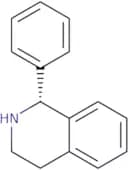
(R)-1-Phenyl-1,2,3,4-tetrahydroisoquinoline
CAS:(R)-1-Phenyl-1,2,3,4-tetrahydroisoquinoline is a chiral molecule with four stereocenters. It is synthesized by the reaction of sulfamic acid and cyclohexene in the presence of p-toluenesulfonic acid. The product formed is then dehydrogenated to produce (R)-1-phenyl-1,2,3,4-tetrahydroisoquinoline. This compound is soluble in organic solvents such as benzene and ethane and can be used as an acceptor for chiral stationary phases.
Formula:C15H15NPurity:Min. 95%Color and Shape:PowderMolecular weight:209.29 g/molN-4,5[Acetylamino)methyl]desmopressin
N-4,5[Acetylamino)methyl]desmopressin is a synthetic drug product that is used as an analytical standard for the identification and quantitation of desmopressin in pharmaceutical preparations. It is also used as an impurity standard for HPLC analysis. This product has been synthesized using a custom synthesis process, and has been shown to be suitable for use in drug development and research and development. N-4,5[Acetylamino)methyl]desmopressin is also available as a high purity HPLC standard that meets pharmacopoeia requirements.
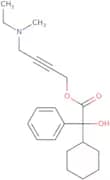
Purity:Min. 95%Oxybutynin impurity C
CAS:Oxybutynin impurity C is a metabolite of the drug product Oxybutynin (CAS No. 1199574-70-3). It is an analytical standard for HPLC, and a natural impurity in the synthesis of Oxybutynin. This is a synthetic compound that has been shown to be metabolized through oxidation by cytochrome P450 enzymes, reduction by glutathione reductase, or conjugation with glucuronic acid. Oxybutynin impurity C has been used as an analytical reference material for drug development and research and development.
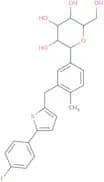
Purity:Min. 95%Epi-canagliflozin
CAS:Epi-canagliflozin is a drug product that is manufactured by HPLC. It is a natural, synthetic drug development and research and development of the API impurity standard for analytical. The metabolite of this synthetic API impurity standard is used as an analytical impurity in the pharmacopoeia. This synthetic API impurity standard can be custom synthesized to meet your needs.
Formula:C24H25FO5SPurity:Min. 95%Molecular weight:444.5 g/molRef: 3D-PNC59087
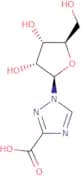
Discontinued product1-b-D-Ribofuranosyl-1,2,4-triazole-3-carboxylic acid
CAS:1-b-D-Ribofuranosyl-1,2,4-triazole-3-carboxylic acid (1bRT) is an amide that inhibits the growth of viruses by inhibiting the viral enzyme thiosemicarbazide. It has been shown to be active against specific viruses such as HIV and retroviruses. 1bRT is used to treat lung diseases caused by viruses, including bronchiolitis, pneumonia, and pulmonary fibrosis. It also has antibacterial properties. Studies have shown that 1bRT reduces the number of bacteria in body fluids and helps to prevent respiratory infections and other bacterial infections in people with weakened immune systems due to AIDS or cancer treatment.
Formula:C8H11N3O5Purity:Min. 95%Molecular weight:229.19 g/molRef: 3D-IR138822
Discontinued productTiotropium EP Impurity I
CAS:Tiotropium EP Impurity I is an impurity found in the API, Tiotropium EP. It is a natural product that is synthesized by chemical synthesis. The synthetic purity of Tiotropium EP Impurity I is high and complies with pharmacopoeia guidelines. This impurity can be used as a standard to test the quality of other products or to research the metabolism of Tiotropium EP.
Formula:C19H22BrNO4S2Purity:Min. 95%Molecular weight:472.40 g/molRef: 3D-LFA52148
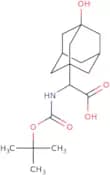
Discontinued productBoc-3-hydroxy-1-adamantyl-glycine
CAS:Boc-3-hydroxy-1-adamantyl-glycine is a catalytic, nucleophilic, chiral amino acid that is used in the synthesis of oximes. Boc-3-hydroxy-1-adamantyl-glycine has been shown to be an effective substitute for hydroxylamine in reductive amination reactions and can be used to synthesize some pharmaceuticals, including saxagliptin. This compound is stable under standard conditions and can be easily synthesized. It is also a powerful nucleophile that reacts with electrophiles such as chloroformates and sulfonyl chlorides.
Formula:C17H27NO5Purity:Min. 95%Molecular weight:325.4 g/molRef: 3D-JDC32139
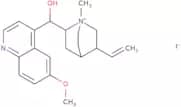
Discontinued productQuinidine methiodide
CAS:Quinidine is a drug that has been used in the treatment of cardiac arrhythmias and as an antiarrhythmic. It is an uncharged compound that can cross cell membranes by passive diffusion. Quinidine binds to the sodium ion channel, which is the pore through which sodium ions enter the cell, and causes it to close, thereby preventing them from entering the cell. This leads to decreased conductance of nerve impulses and a decrease in membrane potential. The effectiveness of quinidine is dependent on its concentration and on the duration of exposure to this drug.
Formula:C21H27IN2O2Purity:Min. 95%Molecular weight:466.4 g/molRef: 3D-SBA98287
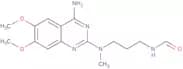
Discontinued productN-(4-Amino-6,7-dimethoxyquinazol-2-yl)-N-methylpropylenediamine formamide hydrochloride
CAS:N-(4-Amino-6,7-dimethoxyquinazol-2-yl)-N-methylpropylenediamine formamide hydrochloride is an impurity in the synthesis of N-(4-amino-6,7-dimethoxyquinazol-2-yl)-N'-methylpropylenediamine formamide hydrochloride. It is a white solid that can be used as an analytical reference standard for HPLC. It has been detected in the urine of people taking this drug and can be used to identify the presence of this drug in urine samples.
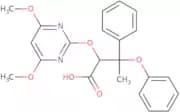
Formula:C14H17N5O2·HClPurity:Min. 95%Molecular weight:323.78 g/mol4,6-Dimethoxy-β-methyl-3-phenoxy ambrisentan
CAS:Controlled Product4,6-Dimethoxy-β-methyl-3-phenoxy ambrisentan is a synthetic drug with a high purity and pharmacopoeia. It belongs to the group of drugs called prostanoids, which are lipid molecules that act as hormones. 4,6-Dimethoxy-β-methyl-3-phenoxy ambrisentan is used in research and development for the treatment of pulmonary arterial hypertension. It is an impurity standard for HPLC analysis. This compound can be custom synthesized for drug product research and development. Metabolism studies have been conducted on this compound. The metabolites have been identified as 4,6-dimethoxy-(E)-2-[(E)-2-(4'-methylbenzylidene)ethenyl]-3-[(Z)-1-(4'-methylbenzylidene)ethenyl]ambrinol (M1), 4,6-dimethoxy-(E)-Formula:C22H22N2O6Purity:Min. 95%Molecular weight:410.4 g/molRef: 3D-JGA30803
Discontinued productLinezolid N-oxide
CAS:Please enquire for more information about Linezolid N-oxide including the price, delivery time and more detailed product information at the technical inquiry form on this page
Formula:C16H20FN3O5Purity:Min. 95%Molecular weight:353.35 g/molRef: 3D-IL184105
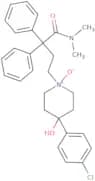
Discontinued productLoperamide N-oxide
CAS:Loperamide N-oxide is an analog of loperamide, which is commonly used as an anti-diarrheal medication. It has been shown to have potential anti-cancer properties by inducing apoptosis in cancer cells. Loperamide N-oxide has also been detected in urine samples from Chinese individuals, indicating its potential use as a biomarker for cancer diagnosis. This compound has been found to inhibit trypsin-like kinases, which are enzymes involved in cell division and proliferation. In addition, loperamide N-oxide has been shown to inhibit the growth of tumor cells and may have potential as a therapeutic agent for cancer treatment. However, it should be noted that rifampicin and other inhibitors can reduce the effectiveness of loperamide N-oxide against cancer cells. Further research is needed to fully understand the potential benefits and limitations of this compound.
Formula:C29H33ClN2O3Purity:Min. 95%Molecular weight:493 g/molRef: 3D-SIA47103
Discontinued productHexetidine impurity A
CAS:Hexetidine impurity A is an impurity in the drug product that is not present in the natural extract. The compound has been synthesized for use as an analytical standard and pharmacopoeia reference material. Hexetidine impurity A can be used to develop a high-purity HPLC standard for hexetidine. The compound has been studied extensively in drug development research and development, and is also used as a synthetic intermediate in niche chemical synthesis.
Formula:C21H43N3Purity:Min. 95%Molecular weight:337.6 g/molRef: 3D-FH182257
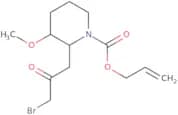
Discontinued productAlloc bromoridane
CAS:Alloc bromoridane is a drug product that contains the active ingredient bromoridane. Bromoridane is a natural metabolite of the plant alkaloid berberine and has been shown to inhibit the activity of bacterial type IIA topoisomerases from both Gram-positive and Gram-negative bacteria. The chemical name for Alloc bromoridane is 2-[2-(4-bromobenzoyl)phenyl]dihydropyrimidine, and it has CAS number 117348-70-6. Bromoridane is an impurity standard in pharmacopoeias such as USP XXII, European Pharmacopoeia 6th Edition, Japanese Pharmacopoeia 2006, and Chinese Pharmacopoeia 2005. Alloc bromoridane is used in research and development for pharmaceuticals or as an analytical reference material.
Formula:C13H20BrNO4Purity:Min. 95%Molecular weight:334.21 g/molRef: 3D-SEA34870
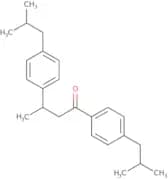
Discontinued productIbuprofen EP impurity H
CAS:Ibuprofen EP impurity H is an impurity of ibuprofen. It is a white crystalline powder with a melting point of 182-184°C and a molecular weight of 253.3. Ibuprofen EP impurity H can be synthesized in high purity by reacting 4-bromobenzenesulfonyl chloride with 2-hydroxybenzoic acid in the presence of triethylamine. This impurity has been used as a standard for drug product analysis, pharmacopoeia standards, drug development, and metabolism studies. Ibuprofen EP impurity H can be identified by HPLC using a retention time of 17.2 minutes and an UV absorption maximum at 254 nm.
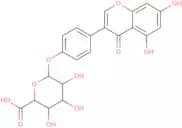
Formula:C24H32OPurity:Min. 95%Molecular weight:336.51 g/molGenistein 4’-β-D-glucuronide
CAS:Genistein 4’-β-D-glucuronide is an isoflavonoid that is a natural product of soy and red clover, with estrogenic properties. It has been shown to have the ability to bind to estrogen receptors and inhibit the growth of breast cancer cells. Genistein 4’-β-D-glucuronide has been shown to inhibit the production of estrone sulfate in human breast cells, which may be due to its ability to act as an estrogen receptor antagonist. The isoflavonoid genistein also binds to and inhibits the activity of DNA topoisomerase II enzymes in human breast cells.
Formula:C21H18O11Purity:Min. 95%Molecular weight:446.4 g/molRef: 3D-VJA08407
Discontinued product8-Benzyloxy-5-[(R)-2-bromo-1-(tertbutyldimethylsilyloxy)ethyl]-1H-quinolinone
CAS:8-Benzyloxy-5-[(R)-2-bromo-1-(tertbutyldimethylsilyloxy)ethyl]-1H-quinolinone is a drug product that is used as an analytical standard in metabolism studies. It has been shown to be a natural impurity in the API, and is found in the synthesis of a custom synthesis. 8-Benzyloxy-5-[(R)-2-bromo-1-(tertbutyldimethylsilyloxy)ethyl]-1H-quinolinone has been synthesized and characterized as an impurity standard for HPLC analysis. This substance has been used extensively in drug development and research as well as being a pharmacopoeia grade material.
Formula:C24H30BrNO3SiPurity:Min. 95%Molecular weight:488.5 g/molRef: 3D-FWA08474
Discontinued productL(+)-2-Amino-5-phosphonovaleric acid
CAS:L-2-Amino-5-phosphonovaleric acid is an inhibitory neurotransmitter that binds to the GABAA receptor. It is used in the treatment of bladder disorders, such as urinary frequency, urgency, and incontinence. L-2-Amino-5-phosphonovaleric acid has been shown to have a depressant effect on the central nervous system and can cause symptoms such as nausea, vomiting, and headache. This drug also has antimicrobial properties due to its ability to inhibit bacterial enzyme activities. L-2-Amino-5-phosphonovaleric acid blocks glutamate receptors in mouse hippocampal cells by binding the alpha1 subunit of the GABAA receptor. This prevents the influx of calcium ions into cells and inhibits phosphorylation of protein kinase C. L(+)-2-Amino-5-phosphonovaleric acid also inhibits pentosan polysulfate sodium,
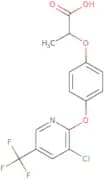
Formula:C5H12NO5PPurity:Min. 95%Molecular weight:197.13 g/molHaloxyfop-d4
CAS:Haloxyfop-d4 is an analog of the herbicide Haloxyfop that has been shown to have anticancer properties. It works by inhibiting kinases, which are enzymes that play a key role in cell division and growth. This inhibition leads to apoptosis, or programmed cell death, in cancer cells. Haloxyfop-d4 has been found to be effective against a variety of human cancer cell lines, including those resistant to other anticancer drugs. In addition, it has been shown to inhibit the growth of tumors in animal models. This drug is metabolized in the liver and excreted in urine. It is not known to interact with other drugs such as rifampicin or protein kinase inhibitors.
Formula:C15H11ClF3NO4Purity:Min. 95%Molecular weight:365.72 g/molRef: 3D-CFA89334
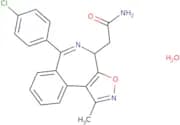
Discontinued productCPI 0610
CAS:CPI 0610 is a medicinal compound that acts as a potent inhibitor of protein phosphorylation. It has been shown to inhibit the cell cycle and promote apoptosis in Chinese hamster ovary cells. CPI 0610 is an effective inhibitor of kinase activity in cancer cells, leading to decreased tumor growth and increased survival rates. In preclinical studies, CPI 0610 has demonstrated efficacy against a wide range of cancers, including breast, prostate, and lung cancer. This inhibitor has also been shown to be effective in human cancer cell lines, making it a promising candidate for future cancer therapies.
Formula:C20H18ClN3O3Purity:Min. 95%Molecular weight:383.8 g/molRef: 3D-VYC72614
Discontinued product

![N-4,5[Acetylamino)methyl]desmopressin](/_next/image/?url=https%3A%2Fstatic.cymitquimica.com%2Fproducts%2F3D%2Fthumb-webp%2FIA173214.webp&w=3840&q=75)
![8-Benzyloxy-5-[(R)-2-bromo-1-(tertbutyldimethylsilyloxy)ethyl]-1H-quinolinone](/_next/image/?url=https%3A%2Fstatic.cymitquimica.com%2Fproducts%2F3D%2Fthumb-webp%2FFWA08474.webp&w=3840&q=75)