APIs for research and impurities
Subcategories of "APIs for research and impurities"
- Aminoacids and derivatives(12,332 products)
- Anthraquinones and derivatives(404 products)
- Benzimidazole and Imidazole Derivatives(10,439 products)
- Benzodiazepine Derivatives(333 products)
- Carbohydrates and glycoconjugates(5,051 products)
- Esters and Derivatives(42,250 products)
- Fatty Acids and Lypidic Derivatives(32,408 products)
- Flavonoids and Polyphenols(17,081 products)
- Free Radicals and Oxidant/Reducing Agents(212 products)
- Ketones and derivatives(2,399 products)
- Natural and semi-synthetic antibiotics(6,376 products)
- Nitriles and Cyano Derivatives(3,068 products)
- Nitrosamines and Derivatives(55 products)
- Nucleosides and Nucleotides(3,471 products)
- Organic Phosphates and Phosphonates(1,200 products)
- Organic Sulphonates and Sulphates(10,430 products)
- Organometallics(4,421 products)
- Others(6,300 products)
- Peptides and Proteins(3,146 products)
- Polymers and Derivatives(100 products)
- Purines and Pyrimidine Derivatives(8,940 products)
- Quinazoline and Quinoline Derivatives(65,982 products)
- Quinones and Derivatives(24,359 products)
- Salts and Derivatives of Active Pharmaceutical Ingredients (API)(80,661 products)
- Steroids and Derivatives(4,952 products)
- Sulfonamides and Derivatives(2,589 products)
- Terpenoids and Derivatives(3,846 products)
- Thiazolidinediones and Thiopyrans(2,753 products)
- β-Adrenergic Compounds(231 products)
Found 58005 products of "APIs for research and impurities"
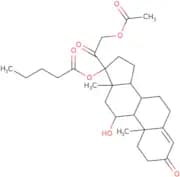
Hydrocortisone 17-valerate 21-acetate
CAS:Controlled ProductPlease enquire for more information about Hydrocortisone 17-valerate 21-acetate including the price, delivery time and more detailed product information at the technical inquiry form on this page
Formula:C28H40O7Purity:Min. 95%Molecular weight:488.6 g/molRef: 3D-GDA45646
Discontinued productN-(4-Amino-6,7-dimethoxyquinazol-2-yl)-N-methylpropylenediamine hydrochloride
CAS:N-(4-Amino-6,7-dimethoxyquinazol-2-yl)-N-methylpropylenediamine hydrochloride is an impurity that can be found in some commercially available drugs. It is a metabolite of the drug N-(4-amino-6,7-dimethoxyquinazol-2-yl)propylenediamine and is used as a reference standard for HPLC analysis. This compound has been shown to have antiplatelet activities.
Formula:C14H22ClN5O2Purity:Min. 95%Molecular weight:327.81 g/molRef: 3D-FA17652
Discontinued productDesmethyl dabrafenib
CAS:Desmethyl dabrafenib is a synthetic drug product that is used in research and development. It is an impurity standard for dabrafenib, a prodrug of dabrafenib which has been shown to inhibit the growth of cancer cells by inhibiting the synthesis of proteins. Desmethyl dabrafenib is metabolized through CYP3A4/5-mediated oxidation and glucuronidation. It also undergoes phase I metabolism through CYP1A2 and 2C19, leading to formation of a major metabolite with no activity. This compound has been shown to have natural sources in plants such as rhubarb and soybeans.
Formula:C22H18F3N5O2S2Purity:Min. 95%Molecular weight:505.50 g/molRef: 3D-VXB76547
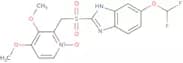
Discontinued productPantoprazole sulfone N-oxide
CAS:Pantoprazole sulfone N-oxide is a prodrug that is converted to the active form pantoprazole in the stomach where it inhibits gastric acid secretion. Pantoprazole sulfone N-oxide has been shown to be genotoxic, and can cause polyvinyl chloride to degrade when stored together. Reconstituted solution of this drug should be used within 24 hours after reconstitution, as the chemical stability of this drug decreases rapidly. Validation studies have been conducted on different analytical methods for determining pantoprazole concentrations in reconstituted solutions, and these methods have been harmonized with those published by the United States Pharmacopeia (USP). The pump inhibitor activity of pantoprazole sulfone N-oxide has been demonstrated in dogs, and it is also useful for treating acid reflux disease in humans. Pantoprazole sulfone N-oxide is unstable at high temperatures (>25°C), so should not be refrigerated or
Formula:C16H15F2N3O6SPurity:Min. 95%Molecular weight:415.37 g/molRef: 3D-ID26757
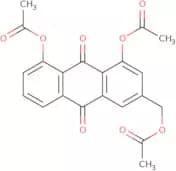
Discontinued productTriacetyl aloe-emodin (impurity A)
CAS:Triacetyl aloe-emodin (impurity A) is an impurity found in the Triacetyl Aloe-Emodin HPLC standard, which is a drug product. It is not approved for use as a drug and should be used only for research and development purposes. The impurity can be custom synthesized or purchased from a specialty chemical supplier. Impurities are not typically found in the final drug product but can occur during synthesis or purification of the API. This impurity is not present in any pharmacopoeia and has no known biological activity. The CAS number of this impurity is 25395-11-3.
Formula:C21H16O8Purity:Min. 95%Molecular weight:396.35 g/molRef: 3D-IT28380
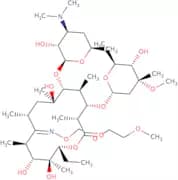
Discontinued product(9Z)-Roxithromycin
CAS:Roxithromycin is a macrolide antibiotic that inhibits protein synthesis in bacteria. It binds to the 50S ribosomal subunit, thereby inhibiting bacterial growth. Roxithromycin has been used to diagnose intestinal and esophageal diseases, inflammatory diseases, and cancer. There are some cardiac effects associated with Roxithromycin that may be related to its ability to inhibit serotonin reuptake. This drug also has anti-inflammatory properties and has been shown to be effective against influenza virus infections as well as other infectious diseases such as tuberculosis and HIV/AIDS.
Formula:C41H76N2O15Purity:Min. 95%Molecular weight:837.05 g/molRef: 3D-IR106421
Discontinued productN-Formyl Saxagliptin
N-Formyl Saxagliptin is an analytical standard for HPLC. It is used as a drug development and API impurity in the pharmaceutical industry. It was synthesized by reacting formaldehyde with the amino acid L-glutamic acid, followed by purification to remove any other contaminants. The CAS number for this chemical is 57847-82-0.
Purity:Min. 95%Ref: 3D-IF162360
Discontinued productAjoene
CAS:Ajoene is a natural compound that has been shown to have antimicrobial properties, as well as an ability to inhibit the growth of tumor cells. Ajoene is also a potent inhibitor of dextran sulfate proteoglycan synthesis in vitro and has been shown to produce a hypoglycemic effect in vivo. Ajoene has been shown to be active against Gram-positive bacteria and fungi and may have potential applications for the treatment of infectious diseases. Further research is needed to determine whether ajoene may be used as an antioxidant or neuroprotective agent.
Formula:C9H14OS3Purity:Min. 95%Molecular weight:234.4 g/molRef: 3D-SDA28499
Discontinued productPirtenidine
CAS:Pirtenidine is a potent and selective kinase inhibitor that has been shown to inhibit the activity of cyclin-dependent kinases. It has demonstrated promising results in preclinical studies as an anticancer agent, inducing apoptosis in cancer cells. Pirtenidine is an analog of protein kinase inhibitors, which have been used to treat various types of tumors. It has been found to be effective against human cancer cell lines and has shown significant tumor growth inhibition in animal models. Pirtenidine has also been reported to be a potent urine inhibitor of Chinese hamster ovary cells, making it a promising candidate for the treatment of urinary tract cancers.
Formula:C21H38N2Purity:Min. 95%Molecular weight:318.5 g/molRef: 3D-DEA92327
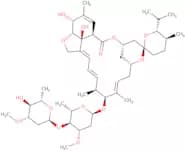
Discontinued product22,23-Dihydroavermectin B1b (Ivermectin B1b)
CAS:Ivermectin is a drug that belongs to the anthelmintic class of drugs. It is active against roundworms, pinworms, and hookworms. Ivermectin has been shown to have an effect on autoimmune diseases such as multiple sclerosis, systemic lupus erythematosus, and rheumatoid arthritis by inhibiting the inflammatory response. The drug has been shown to inhibit matrix metalloproteinases in vitro and in vivo. The matrix effect is seen when the drug binds to proteins in the blood plasma or tissue matrix, where it inhibits their activity. This inhibition prevents the degradation of collagen, which can lead to tissue damage or renal failure. Ivermectin also binds to striatal dopamine receptors and inhibits dry weight gain in animals infected with Ostertagia ostertagi. Ivermectin is given orally in a single dose of 200 micrograms/kg body weight for treatment of intestinal worms (roundworm,
Formula:C47H72O14Purity:Min. 95%Molecular weight:861.07 g/molRef: 3D-FD177819
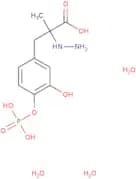
Discontinued productCarbidopa 4-phosphate trihydrate
CAS:Please enquire for more information about Carbidopa 4-phosphate trihydrate including the price, delivery time and more detailed product information at the technical inquiry form on this page
Formula:C10H21N2O10PPurity:Min. 95%Molecular weight:360.25 g/molRef: 3D-HBD68607
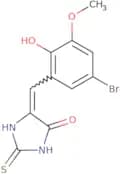
Discontinued product(E/Z)-It-603
CAS:Please enquire for more information about (E/Z)-It-603 including the price, delivery time and more detailed product information at the technical inquiry form on this page
Formula:C11H9BrN2O3SPurity:Min. 95%Molecular weight:329.17 g/molTc 1698 dihydrochloride
CAS:Tc 1698 dihydrochloride is a tumor-promoting agent that inhibits the growth of tumor tissues. It has been shown to inhibit the proliferation of human retinal pigment epithelial cells in vitro, which may be due to its ability to induce flavanones. Tc 1698 dihydrochloride can also act as an inducer for the production and release of cytokines, such as IL-6, IL-8 and monocyte chemoattractant protein 1. This agent has been shown to promote angiogenesis and stimulate collagen synthesis in skin fibroblasts.
Formula:C13H20Cl2N2Purity:Min. 95%Molecular weight:275.21 g/molRef: 3D-MGB58706
Discontinued product1-[[3-Methyl-4-(2,2,2-trifluoroethoxy)-2-pyridinyl]methyl]-2-[[[3-methyl-4-(2,2,2-trifluoroethoxy)-2-pyridinyl]methyl]sulfinyl]-1H-b enzimidazole
CAS:1-[[3-Methyl-4-(2,2,2-trifluoroethoxy)-2-pyridinyl]methyl]-2-[[[3-methyl-4-(2,2,2-trifluoroethoxy)-2-pyridinyl]methyl]sulfinyl]-1H-b enzimidazole is an impurity of a drug product. It is a metabolite that has been shown to be present in human plasma and urine. This compound is synthetically produced and is not found in nature. It has been shown to have niche applications in both analytical chemistry and pharmacopoeia.
Formula:C25H22F6N4O3SPurity:Min. 95%Molecular weight:572.52 g/molRef: 3D-IM25689
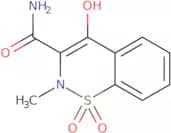
Discontinued product4-Hydroxy-2-methyl-2H-1,2-benzothiazine-3-carboxamide 1,1-dioxide
CAS:This is a white crystalline compound that has been shown to be effective against glutamic acid-sensitive L-amino acid decarboxylase. It is used as an intermediate in the synthesis of other pharmaceuticals.
Formula:C10H10N2O4SPurity:Min. 95%Molecular weight:254.26 g/molRef: 3D-IH21390
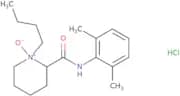
Discontinued productBupivacaine N-oxide hydrochloride
CAS:Bupivacaine N-oxide is a synthetic local anesthetic drug. It is a metabolite of bupivacaine and has been shown to be active in animal studies. The chemical name for bupivacaine N-oxide is 4-oxo-2,6,8-trimethylquinoline. Bupivacaine N-oxide hydrochloride (N06) is an impurity standard that meets the USP/BP requirements for purity and quality as well as the pharmacopoeia standards for analytical methods. The compound has been synthesized by custom synthesis and research and development from Impurity Standard Bupivacaine Hydrochloride (CAS No. 1796927-05-3). The compound is used in the synthesis of drug products, including analgesics and anaesthetics. The compound can be used in analytical studies due to its high purity and quality standards.
Formula:C18H29ClN2O2Purity:Min. 95%Molecular weight:340.9 g/molRef: 3D-WWC92705
Discontinued productN-[2-[(8R)-1,6,7,8-Tetrahydro-6-oxo-2H-indeno[5,4-b]furan-8-yl]ethyl]propanamide
CAS:N-[2-[(8R)-1,6,7,8-Tetrahydro-6-oxo-2H-indeno[5,4-b]furan-8-yl]ethyl]propanamide is a synthetic compound that has not been identified in nature. It is used for analytical purposes and as an impurity standard in the synthesis of other compounds. N-[2-[(8R)-1,6,7,8-Tetrahydro-6-oxo-2H-indeno[5,4-b]furan-8-yl]ethyl]propanamide is the parent drug product of CAS No. 896736–22–4. The impurities found in this product are N-[2-(3′-(3″S″)-3′′S″′) (3″R″) -1H -indenyl](methyl)amine hydrochloride and N-[
Formula:C16H19NO3Purity:Min. 95%Molecular weight:273.33 g/molRef: 3D-WKB73622
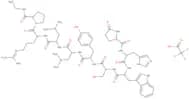
Discontinued productLeuprolide acetate ep impurity F
CAS:Leuprolide acetate ep impurity F is a drug product that is an impurity standard for the leuprolide acetate API. It is used in analytical and clinical studies to identify the presence of leuprolide acetate impurities, as well as to determine the metabolism of leuprolide acetate. Leuprolide acetate ep impurity F has been shown to be a natural metabolite of leuprolide acetate and have a niche application in pharmacopoeia.
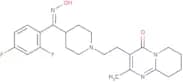
Formula:C61H85F3N16O14Purity:Min. 95%Molecular weight:1,323.4 g/molRisperidone E-oxime impurity
CAS:Risperidone E-oxime impurity is a drug product that has been studied for its metabolism in humans, animals and plants. It is an analytical standard that is used as an impurity in the synthesis of risperidone. Risperidone E-oxime impurity is also a synthetic compound with CAS No. 691007-09-7. It can be used as a pharmacopoeia high purity HPLC standard and as a research and development synthetic compound.
Formula:C23H28F2N4O2Purity:Min. 95%Color and Shape:PowderMolecular weight:430.49 g/molRef: 3D-IR27738
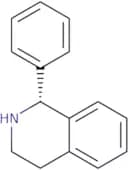
Discontinued product(R)-1-Phenyl-1,2,3,4-tetrahydroisoquinoline
CAS:(R)-1-Phenyl-1,2,3,4-tetrahydroisoquinoline is a chiral molecule with four stereocenters. It is synthesized by the reaction of sulfamic acid and cyclohexene in the presence of p-toluenesulfonic acid. The product formed is then dehydrogenated to produce (R)-1-phenyl-1,2,3,4-tetrahydroisoquinoline. This compound is soluble in organic solvents such as benzene and ethane and can be used as an acceptor for chiral stationary phases.
Formula:C15H15NPurity:Min. 95%Color and Shape:PowderMolecular weight:209.29 g/mol




![1-[[3-Methyl-4-(2,2,2-trifluoroethoxy)-2-pyridinyl]methyl]-2-[[[3-methyl-4-(2,2,2-trifluoroethoxy)…](/_next/image/?url=https%3A%2Fstatic.cymitquimica.com%2Fproducts%2F3D%2Fthumb-webp%2FIM25689.webp&w=3840&q=75)
![N-[2-[(8R)-1,6,7,8-Tetrahydro-6-oxo-2H-indeno[5,4-b]furan-8-yl]ethyl]propanamide](/_next/image/?url=https%3A%2Fstatic.cymitquimica.com%2Fproducts%2F3D%2Fthumb-webp%2FWKB73622.webp&w=3840&q=75)