APIs for research and impurities
Subcategories of "APIs for research and impurities"
- Aminoacids and derivatives(12,318 products)
- Anthraquinones and derivatives(402 products)
- Benzimidazole and Imidazole Derivatives(10,387 products)
- Benzodiazepine Derivatives(324 products)
- Carbohydrates and glycoconjugates(5,046 products)
- Esters and Derivatives(42,242 products)
- Fatty Acids and Lypidic Derivatives(32,369 products)
- Flavonoids and Polyphenols(17,071 products)
- Free Radicals and Oxidant/Reducing Agents(210 products)
- Ketones and derivatives(2,395 products)
- Natural and semi-synthetic antibiotics(6,314 products)
- Nitriles and Cyano Derivatives(3,068 products)
- Nitrosamines and Derivatives(55 products)
- Nucleosides and Nucleotides(3,434 products)
- Organic Phosphates and Phosphonates(1,193 products)
- Organic Sulphonates and Sulphates(10,418 products)
- Organometallics(4,417 products)
- Others(6,270 products)
- Peptides and Proteins(3,132 products)
- Polymers and Derivatives(99 products)
- Purines and Pyrimidine Derivatives(8,895 products)
- Quinazoline and Quinoline Derivatives(65,645 products)
- Quinones and Derivatives(24,337 products)
- Salts and Derivatives of Active Pharmaceutical Ingredients (API)(81,395 products)
- Steroids and Derivatives(4,915 products)
- Sulfonamides and Derivatives(2,560 products)
- Terpenoids and Derivatives(3,832 products)
- Thiazolidinediones and Thiopyrans(2,752 products)
- β-Adrenergic Compounds(227 products)
Found 58741 products of "APIs for research and impurities"
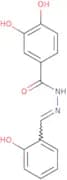
KM91104
CAS:KM91104 is a potent inhibitor of protein kinases that has been shown to induce apoptosis in cancer cells. It is derived from a traditional Chinese medicinal plant and has demonstrated anticancer activity against various human cancer cell lines. KM91104 specifically targets the cell cycle and inhibits tumor growth by blocking the activity of certain proteins involved in cell division. This compound has also been found in urine samples, indicating that it may have potential as a diagnostic marker for cancer. Overall, KM91104 shows promising potential as an effective and selective inhibitor for the treatment of cancer.
Formula:C14H12N2O4Purity:Min. 95%Molecular weight:272.26 g/molRef: 3D-EMA48160
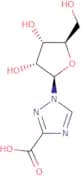
Discontinued product1-b-D-Ribofuranosyl-1,2,4-triazole-3-carboxylic acid
CAS:1-b-D-Ribofuranosyl-1,2,4-triazole-3-carboxylic acid (1bRT) is an amide that inhibits the growth of viruses by inhibiting the viral enzyme thiosemicarbazide. It has been shown to be active against specific viruses such as HIV and retroviruses. 1bRT is used to treat lung diseases caused by viruses, including bronchiolitis, pneumonia, and pulmonary fibrosis. It also has antibacterial properties. Studies have shown that 1bRT reduces the number of bacteria in body fluids and helps to prevent respiratory infections and other bacterial infections in people with weakened immune systems due to AIDS or cancer treatment.
Formula:C8H11N3O5Purity:Min. 95%Molecular weight:229.19 g/molRef: 3D-IR138822
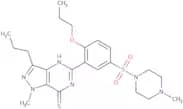
Discontinued productPropoxyphenyl thiosildenafil
CAS:Propoxyphenyl thiosildenafil is a linker that has been synthesized from the amino acid sildenafil. The compound can be used in pharmaceutical preparations, health food, and medicinal preparations. It is also used as an additive to prepare the desired drug. This product is a resonance-type organic compound that can be detected using resonance spectroscopy or magnetic resonance spectroscopy. The compound has a molecular weight of 348.08 g/mol and a boiling point of 440°C at 760 mmHg pressure.
Formula:C23H32N6O3S2Purity:Min. 95%Molecular weight:504.7 g/molRef: 3D-EUA07387
Discontinued product1-[1-(4-Methoxyphenyl)-2-(methylamino)ethyl]-cyclohexanol hydrochloride
CAS:1-[1-(4-Methoxyphenyl)-2-(methylamino)ethyl]-cyclohexanol hydrochloride is a drug product that is not yet approved for use in humans. It is an impurity found in the drug cyclosporine, which is used to treat psoriasis and other skin conditions. 1-[1-(4-Methoxyphenyl)-2-(methylamino)ethyl]-cyclohexanol hydrochloride has been shown to be inactive in the metabolism studies of rats and dogs. This impurity was detected by HPLC with UV detection at 254 nm, but it did not show any significant absorption at 280 nm. The purity of this compound was determined to be 97% by NMR analysis and HPLC.
Formula:C16H25NO2·HClPurity:Min. 95%Molecular weight:299.84 g/molRef: 3D-IM63866
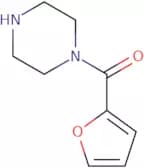
Discontinued product1-(2-Furoyl)piperazine
CAS:1-(2-Furoyl)piperazine is a potent inhibitor of tyrosinase, an enzyme involved in the production of melanin. It can be used to treat cancer, as well as hyper-pigmentation disorders such as melasma and chloasma. 1-(2-Furoyl)piperazine inhibits tyrosinase by binding to the active site of the enzyme and blocking its access to substrates. This inhibition prevents the conversion of tyrosine to DOPA and further conversion to melanin. 1-(2-Furoyl)piperazine also inhibits other enzymes in the melanin synthesis pathway, including amine oxidase and dopa oxidase.
Formula:C9H12N2O2Purity:Min. 95%Color and Shape:PowderMolecular weight:180.2 g/molRef: 3D-IF36870
Discontinued productCefazedone Impurity 12
CAS:Cefazedone Impurity 12 is a drug product that has been custom synthesized for research and development purposes. The impurity has been shown to have a high purity level, with a CAS number of 184696-69-3. Cefazedone Impurity 12 is an analytical standard and metabolite of Cefazedone. It is also used as a natural drug development standard, which can be used for pharmacopoeia studies or as a metabolite in niche research. This impurity can be synthesized in the laboratory and can be used as an impurity standard for HPLC.
Formula:C8H8N2O3SPurity:Min. 95%Molecular weight:212.23 g/molRef: 3D-FC180714
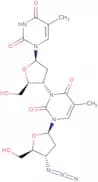
Discontinued product3'-[3-(3-Azido-2,3-dideoxy-b-D-erythro-pentofuranosyl)-3,6-dihydro-5-methyl-2,6-dioxo-1(2H)-pyrimidinyl]-3'-deoxy-thymidine
CAS:3'-[3-(3-Azido-2,3-dideoxy-b-D-erythro-pentofuranosyl)-3,6-dihydro-5-methyl-2,6-dioxo-1(2H)-pyrimidinyl]-3'-deoxythymidine is an analytical standard used in the R&D and drug development of 3'-azido derivatives of thymidine. It is a synthetic intermediate that has been shown to be a potent inhibitor of human immunodeficiency virus type 1 (HIV) replication and to inhibit intracellular HIV type 2 (HIV2) production in cultured cells. 3'-[3-(3-Azido-2,3,-dideoxy--b erythro--pentofuranosyl)-3,6--dihydro--5--methyl--2,6--dioxo--1(2H)--pyrimidinyl]-
Formula:C20H25N7O8Purity:95%NmrMolecular weight:491.45 g/molPalbociclib Impurity F
CAS:Palbociclib Impurity F is a high purity synthetic intermediate for the production of Palbociclib. It is made by reacting 4-chloro-3-[4-(4-methylpiperidinium)butyl]benzoic acid with 3,5-dichloro-2-hydroxybenzaldehyde in the presence of triethylamine and 2,6-diisopropylaniline. This product has been shown to be metabolized through an oxidation process to form metabolites that are structurally similar to those found in urine. The chemical structure of this impurity can be found in CAS No. 851067-56-6.
Formula:C22H26BrN7OPurity:Min. 95%Molecular weight:484.4 g/molcis-Tadalafil
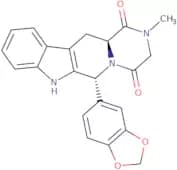
CAS:Cis-Tadalafil is a potent inhibitor of phosphodiesterase 5, which is used to treat erectile dysfunction (ED) and primary pulmonary hypertension (PPH). It works by increasing blood flow to the penis, allowing men with ED to achieve and maintain an erection. Cis-Tadalafil is also used to treat symptoms of prostatic hyperplasia (enlarged prostate) in men. This drug has been shown to be effective in treating PPH by reducing pulmonary arterial pressure and improving exercise capacity. Cis-Tadalafil belongs to the carboline class of drugs and is a phosphodiesterase 5 inhibitor that selectively inhibits cGMP-specific phosphodiesterase type 5 (PDE5). This drug has been shown to be highly effective in treating both ED and PPH with minimal side effects.
Formula:C22H19N3O4Purity:Min. 95%Color and Shape:White/Off-White SolidMolecular weight:389.4 g/molCiprofloxacin ep impurity C
CAS:Ciprofloxacin ep impurity C is a synthetic compound. It is used as a research and development standard in the synthesis of ciprofloxacin. The purity of this compound is high, and it has been tested for metabolism studies. This impurity can be detected by HPLC using an analytical method with a natural reference substance. This impurity has not been evaluated for pharmacopoeia or CAS number.
Formula:C15H16FN3O3Purity:Min. 95%Molecular weight:305.30 g/molRef: 3D-DEA22212
Discontinued product(4-Chlorophenyl)diphenylmethanol
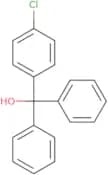
CAS:Please enquire for more information about (4-Chlorophenyl)diphenylmethanol including the price, delivery time and more detailed product information at the technical inquiry form on this page
Formula:C19H15ClOPurity:Min. 95%Molecular weight:294.8 g/molRef: 3D-GAA92289
Discontinued productSacubitril Impurity 2
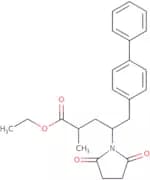
CAS:Sacubitril Impurity 2 is a drug product that is an analytical impurity in Sacubitril. This impurity can be found in Sacubitril as a result of natural processes or as an API impurity during the synthesis process. Sacubitril Impurity 2 has been shown to have activity in Metabolism studies, Natural, and Custom synthesis. It has been shown to be a Synthetic impurity standard and HPLC standard. Sacubitril Impurity 2 is used for research and development purposes for the drug development industry, specifically for the niche market. It is also used as an analytical standard for pharmacopoeia methods.
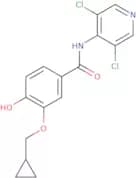
Formula:C24H27NO4Purity:Min. 95%Molecular weight:393.48 g/molRoflumilast Impurity A
CAS:Roflumilast impurity A is a metabolite of roflumilast. It is a drug product that is used as an analytical standard for the determination of roflumilast in HPLC analysis. Roflumilast impurity A is not natural and is synthetic. It has been shown to be a substrate for CYP1A2, CYP2C8, CYP2C9, and CYP3A4 enzymes. Studies have shown that it may be involved in the metabolism of roflumilast through hydroxylation and deamination.
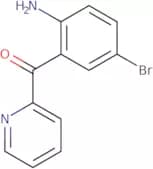
Formula:C16H14Cl2N2O3Purity:Min. 95%Molecular weight:353.2 g/mol2-(2-Amino-5-bromobenzoyl)pyridine
CAS:2-(2-Amino-5-bromobenzoyl)pyridine (2ABBP) is a chemical compound with the molecular formula C10H7BrN3. It is a glucuronide conjugate of 2-amino-5-bromobenzoic acid and has been used as an immunological reagent in the form of a monoclonal antibody. 2ABBP binds to dryopteris, which is a plant species that contains polyphenols called pteridines. 2ABBP has been shown to have anti-inflammatory properties in rat liver microsomes and cell culture experiments. The mechanism of action may involve inhibition of cyclooxygenase enzymes, which are involved in prostaglandin synthesis. 2ABBP also binds to human serum albumin and chaperones, proteins that bind other proteins or small molecules. The biological activity of 2ABBP may be due to its ability to form coval
Formula:C12H9BrN2OPurity:Min. 95%Molecular weight:277.12 g/molN-Benzyl albuterol
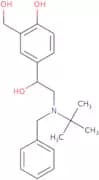
CAS:N-Benzyl albuterol is a drug product that is custom synthesized to be of high purity with an analytical standard. It is used in research and development, pharmaceutical development, and as a pharmacopoeia or analytical standard. N-Benzyl albuterol has been found to be a metabolite of the drug product Albuterol Sulfate. It is also used in metabolism studies and natural product research. The CAS number for this compound is 24085-03-8.
Formula:C20H27NO3Purity:Min. 95%Molecular weight:329.4 g/molDicyclopropylamine hydrochloride
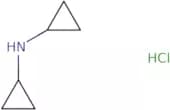
CAS:Dicyclopropylamine hydrochloride is a tyrosine kinase inhibitor that blocks the activity of jak2. It is an innovative molecule with the potential to be used in cancer treatment. Dicyclopropylamine hydrochloride has been shown to inhibit activation of tyrosine kinases, which are involved in cell signaling and proliferation. Dicyclopropylamine hydrochloride also has anti-inflammatory properties, which may be due to its ability to inhibit prostaglandin synthesis. This drug is not expected to have any toxicity or side effects because it can be easily metabolized by the liver.br>br> Dicyclopropylamine hydrochloride is a white solid with a melting point of 175°C. It has no detectable odor, and it is soluble in water and ethanol. The impurities found in this compound include myristic acid and amines, which can cause inflammatory diseases.br>br> D
Formula:C6H11N•HClPurity:Min. 95%Color and Shape:PowderMolecular weight:133.62 g/molRef: 3D-FD141573
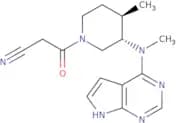
Discontinued product(3S,4R)-Tofacitinib
CAS:(3S,4R)-Tofacitinib is a rhombic and paramagnetic compound with a Curie point of approximately 10.6°C. It is soluble in nonpolar solvents such as benzene and toluene. (3S,4R)-Tofacitinib has been shown to have magnetic properties that are dependent on the temperature and the frequency of the applied magnetic field. The paramagnetic resonance spectra were observed at 18°C and 32°C, while the paramagnetic resonance spectrum was observed at -2°C. The octahedral interactions are likely due to the presence of six different types of iron ions in the crystal structure.
Formula:C16H20N6OPurity:Min. 95%Molecular weight:312.37 g/molN-Desacetyl thiocolchicoside
CAS:N-Desacetyl thiocolchicoside is a white crystalline powder that is soluble in water, methanol and acetone. It has a molecular weight of 320.2 and an empirical formula of C6H14O5. N-Desacetyl thiocolchicoside is used as an analytical standard for HPLC analysis, as a Research and Development (R&D) material for drug development, and as an impurity standard for the manufacture of pharmaceutical products. This compound has been shown to be a metabolite of thiocolchicoside and structurally similar to the drug product chitinase.
Formula:C25H31NO9SPurity:Min. 95%Molecular weight:521.58 g/molRef: 3D-CHA99181
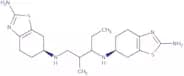
Discontinued productPramipexole EP Impurity C
CAS:Pramipexole EP Impurity C is a synthetic impurity that is used as an impurity standard in the manufacture of Pramipexole EP. It is also used as a research and development tool for drug product, custom synthesis, CAS No. 1973461-14-1, and analytical studies. This compound has been shown to be a metabolite of Pramipexole EP and may have pharmacological properties. Pramipexole EP Impurity C has been found to inhibit the growth of certain bacteria, such as methicillin-resistant Staphylococcus aureus (MRSA) isolates.
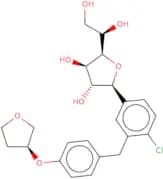
Formula:C20H32N6S2Purity:Min. 95%Empagliflozin S-furanose
CAS:Empagliflozin S-furanose is a Custom synthesis drug product. It is an analytical standard with CAS No. 1620758-32-8, and it is used in research and development of new drugs. Empagliflozin S-furanose has been found to be a metabolite of empagliflozin, a drug that is used to treat type 2 diabetes mellitus. It is also used as an impurity standard for HPLC analysis of empagliflozin because it does not have any biological activity.
Formula:C23H27ClO7Purity:Min. 95%Color and Shape:PowderMolecular weight:450.91 g/molRef: 3D-IE181148
Discontinued product

![1-[1-(4-Methoxyphenyl)-2-(methylamino)ethyl]-cyclohexanol hydrochloride](/_next/image/?url=https%3A%2Fstatic.cymitquimica.com%2Fproducts%2F3D%2Fthumb-webp%2FIM63866.webp&w=3840&q=75)