APIs for research and impurities
Subcategories of "APIs for research and impurities"
- Aminoacids and derivatives(12,333 products)
- Anthraquinones and derivatives(404 products)
- Benzimidazole and Imidazole Derivatives(10,446 products)
- Benzodiazepine Derivatives(334 products)
- Carbohydrates and glycoconjugates(5,047 products)
- Esters and Derivatives(42,250 products)
- Fatty Acids and Lypidic Derivatives(32,413 products)
- Flavonoids and Polyphenols(17,083 products)
- Free Radicals and Oxidant/Reducing Agents(213 products)
- Ketones and derivatives(2,401 products)
- Natural and semi-synthetic antibiotics(6,382 products)
- Nitriles and Cyano Derivatives(3,068 products)
- Nitrosamines and Derivatives(55 products)
- Nucleosides and Nucleotides(3,480 products)
- Organic Phosphates and Phosphonates(1,201 products)
- Organic Sulphonates and Sulphates(10,433 products)
- Organometallics(4,421 products)
- Others(6,305 products)
- Peptides and Proteins(3,148 products)
- Polymers and Derivatives(100 products)
- Purines and Pyrimidine Derivatives(8,948 products)
- Quinazoline and Quinoline Derivatives(66,025 products)
- Quinones and Derivatives(24,362 products)
- Salts and Derivatives of Active Pharmaceutical Ingredients (API)(80,543 products)
- Steroids and Derivatives(4,954 products)
- Sulfonamides and Derivatives(2,595 products)
- Terpenoids and Derivatives(3,848 products)
- Thiazolidinediones and Thiopyrans(2,753 products)
- β-Adrenergic Compounds(231 products)
Found 57820 products of "APIs for research and impurities"
3-(2-Fluorophenyl) ezetimibe
CAS:3-(2-Fluorophenyl) ezetimibe is an impurity of the drug product Ezetimibe. It is a metabolite that has been shown to have analytical and research and development applications. 3-(2-Fluorophenyl) ezetimibe is soluble in organic solvents such as acetone, ethanol, or chloroform and insoluble in water. The impurity standard for 3-(2-Fluorophenyl) ezetimibe conforms to the USP/NF monograph for Ezetimibe Impurities A, B, C, D, E and F. The CAS number for this impurity is 1798008-25-9.
Formula:C24H21F2NO3Purity:Min. 95%Molecular weight:409.40 g/molRef: 3D-YWC00825
Discontinued productN-[2-[(8R)-1,6,7,8-Tetrahydro-6-oxo-2H-indeno[5,4-b]furan-8-yl]ethyl]propanamide
CAS:N-[2-[(8R)-1,6,7,8-Tetrahydro-6-oxo-2H-indeno[5,4-b]furan-8-yl]ethyl]propanamide is a synthetic compound that has not been identified in nature. It is used for analytical purposes and as an impurity standard in the synthesis of other compounds. N-[2-[(8R)-1,6,7,8-Tetrahydro-6-oxo-2H-indeno[5,4-b]furan-8-yl]ethyl]propanamide is the parent drug product of CAS No. 896736–22–4. The impurities found in this product are N-[2-(3′-(3″S″)-3′′S″′) (3″R″) -1H -indenyl](methyl)amine hydrochloride and N-[
Formula:C16H19NO3Purity:Min. 95%Molecular weight:273.33 g/molRef: 3D-WKB73622
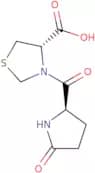
Discontinued product(S)-3-((R)-5-Oxopyrrolidine-2-carbonyl)thiazolidine-4-carboxylic acid
CAS:(S)-3-((R)-5-Oxopyrrolidine-2-carbonyl)thiazolidine-4-carboxylic acid is a drug product of the drug development industry. It is a metabolite of 3-(1,2,4-triazol-1-ylmethyl)thiazolidine-4-carboxylic acid and has been used as an analytical standard for HPLC methods. The compound has been shown to be naturally occurring in humans. (S)-3-(1,2,4-Triazol-1ylmethyl)thiazolidine 4 carboxylic acid is also used as the impurity standard for the API 3-(1,2,4 triazol 1ylmethyl)thiazolidine 4 carboxylic acid.
Formula:C9H12N2O4SPurity:Min. 95%Molecular weight:244.27 g/molRef: 3D-IO145579
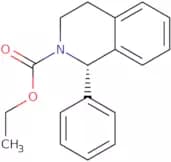
Discontinued productEthyl (S)-1-phenyl-1,2,3,4-tetrahydro-2-isoquinolinecarboxylate
CAS:Ethyl (S)-1-phenyl-1,2,3,4-tetrahydro-2-isoquinolinecarboxylate is an analytical standard used to identify impurities in drug products. It is a metabolite of the drug product and has been shown to be safe for human consumption. The compound is a synthetic chemical that is not found naturally in the environment. CAS No. 180468-42-2
Formula:C18H19NO2Purity:Min. 95%Molecular weight:281.35 g/molRef: 3D-IE71486
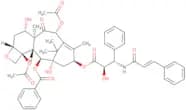
Discontinued productPaclitaxel impurity O
CAS:Paclitaxel impurity O is a synthetic drug that is used in the treatment of cancer. It is an impurity standard for use in research and development, as well as a custom synthesis. Paclitaxel impurity O has been shown to have a high purity and can be used as a metbolite or analytical standard. It has been shown to possess anti-inflammatory properties, which may be due to its ability to inhibit prostaglandin synthesis.
Formula:C49H53NO14Purity:Min. 95%Molecular weight:879.94 g/molAlpha-Desmethyl anastrozole
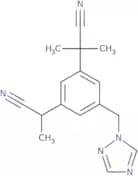
CAS:Alpha-Desmethyl anastrozole is a synthetic chemical that has been used as an impurity standard for the drug product, Anastrozole (Arimidex). This compound is metabolized in humans and is a metabolite of Arimidex. Alpha-Desmethyl anastrozole exhibits high purity and can be synthesized using custom synthesis. The CAS number for this compound is 1215780-15-6.
Formula:C16H17N5Purity:Min. 95%Molecular weight:279.34 g/molRef: 3D-ID21236
Discontinued product4,7-Dihydro megestrol acetate
CAS:4,7-Dihydro megestrol acetate is a drug product that has been custom synthesized for research and development purposes. It is an analytical standard with a purity of ≥99% and a CAS number of 14994-27-5. Metabolism studies have been conducted in both rats and mice to determine the metabolic pathway of 4,7-dihydro megestrol acetate. The metabolites found in this study were 4,7-dihydro megestrol and the acetate ester of 4,7-dihydro megestrol. Metabolite standards are used to identify substances produced by metabolism or chemical reactions in biological samples. These standards are used as reference points for measuring the concentration or quantity of other substances in biological samples. Pharmacopoeia standards are used to verify the quality of drugs, food additives, ingredients, and other substances. They also serve as reference points for identifying impurities in substances that may be harmful
Formula:C24H34O4Purity:Min. 95%Molecular weight:386.50 g/molRef: 3D-PAA99427
Discontinued productExicorilant
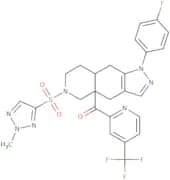
CAS:Exicorilant is an analog of capsaicin, which has been shown to have anticancer properties. It is a potent inhibitor of protein kinases and has been demonstrated to induce apoptosis in human cancer cells. Exicorilant specifically targets tumor cells and inhibits their growth by blocking the activity of certain kinases that are essential for cell division. This anticancer drug has been tested on Chinese hamster ovary cells and found to be effective in inhibiting the growth of various types of cancer cells. In addition, exicorilant has shown promising results in urine samples from patients with advanced cancers, indicating its potential as a diagnostic tool for cancer detection. Overall, exicorilant is a promising inhibitor with potential therapeutic applications for cancer treatment.
Formula:C26H23F4N7O3SPurity:Min. 95%Molecular weight:589.6 g/molRef: 3D-GWC24477
Discontinued product2-[2-[4-(5,5-Dioxidodibenzo[b,f][1,4]thiazepin-11-yl)-1-piperazinyl]ethoxy]ethanol
CAS:Quetiapine is a drug that belongs to the class of sulfoxides. It is usually administered orally, but can also be given intravenously or intramuscularly. Quetiapine has been studied for its clinical use in the treatment of schizophrenia and bipolar disorder. The plasma concentrations of quetiapine are determined by high-performance liquid chromatography (HPLC) with tandem mass spectrometry (LC-MS/MS) detection. Validation studies have shown that the HPLC-MS/MS method is accurate and precise, with good linearity over a range of concentrations. Analysis was performed on plasma samples from healthy volunteers who were administered either 2 mg or 10 mg doses of quetiapine by intravenous injection. Concentrations were calculated and compared to those found in patients with schizophrenia and bipolar disorder who had been given oral doses of 300 mg per day for four weeks, yielding a therapeutic plasma concentration range from 100 to 300 ng/mL.
Formula:C21H25N3O4SPurity:Min. 95%Molecular weight:415.51 g/molNorethindrone acetate impurity
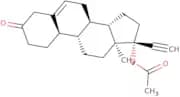
CAS:Norethindrone acetate impurity is a drug product that is used in the development and research of drugs. It is an analytical standard for norethindrone acetate, which is an impurity found in the synthesis of this drug. Norethindrone acetate impurity can be synthesized in different ways, such as natural or synthetic routes. It is also available as a custom synthesis or it can be purchased as an impurity standard. This compound's CAS number is 1175129-26-6 and it has a purity level of 99%.
Formula:C22H28O3Purity:Min. 95%Color and Shape:PowderMolecular weight:340.46 g/mol4-Desfluoro-4-[4-(2-oxo-2,3-dihydro-1H-benzimidazol-1-yl)-3,6-dihydropyridin-1(2H)-yl] droperidol
CAS:4-Desfluoro-4-[4-(2-oxo-2,3-dihydro-1H-benzimidazol-1-yl)-3,6-dihydropyridin-1(2H)-yl] droperidol is a research chemical that belongs to the class of drugs. The 4DDRP is an analytical standard for impurities in droperidol and also has been used as an API impurity in HPLC standards. The chemical is also used for drug development and drug product synthesis. 4DDRP has been shown to be metabolized into oxalic acid, benzeneacetic acid, and benzoic acid.
Formula:C34H34N6O3Purity:Min. 95%Molecular weight:574.70 g/molRef: 3D-WDC60417
Discontinued productAdefovir dipivoxil dimer
CAS:Adefovir dipivoxil dimer is a synthetic and natural product that is used as an analytical standard for HPLC, as well as in the development of new drug products. It is also used to identify impurities in API. Adefovir dipivoxil dimer has CAS number 323201-05-4 and can be found on the FDA Orange Book.
Formula:C41H64N10O16P2Purity:Min. 95%Molecular weight:1,014.95 g/molRef: 3D-YMA20105
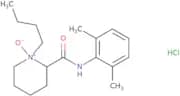
Discontinued productBupivacaine N-oxide hydrochloride
CAS:Bupivacaine N-oxide is a synthetic local anesthetic drug. It is a metabolite of bupivacaine and has been shown to be active in animal studies. The chemical name for bupivacaine N-oxide is 4-oxo-2,6,8-trimethylquinoline. Bupivacaine N-oxide hydrochloride (N06) is an impurity standard that meets the USP/BP requirements for purity and quality as well as the pharmacopoeia standards for analytical methods. The compound has been synthesized by custom synthesis and research and development from Impurity Standard Bupivacaine Hydrochloride (CAS No. 1796927-05-3). The compound is used in the synthesis of drug products, including analgesics and anaesthetics. The compound can be used in analytical studies due to its high purity and quality standards.
Formula:C18H29ClN2O2Purity:Min. 95%Molecular weight:340.9 g/molRef: 3D-WWC92705
Discontinued product1,4-Bis[(tetrahydro-2-furanyl)carbonyl]-piperazine
CAS:1,4-Bis[(tetrahydro-2-furanyl)carbonyl]-piperazine is a synthetic drug product. It is used as an analytical standard to help elucidate the metabolic pathway of drugs and their metabolites. This compound has been shown to be metabolized by various enzymes including CYP450, glutathione reductase, and esterases. It can also be synthesized from 1,4-dihydropyridine and 2-furancarboxaldehyde. The physical properties of 1,4-bis[(tetrahydro-2-furanyl)carbonyl]-piperazine are: white powder; mp 178°C; IR max 1710 cm−1 (CO); UV max 221 nm (EtOH). The impurities in this product are: 1-(2H)-Quinolinone (CAS No. 2467-94-1) which may have a maximum concentration
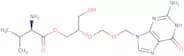
Formula:C14H22N2O4Purity:Min. 95%Molecular weight:282.34 g/mol(S,S)-IsoValganciclovir hydrochloride
CAS:(S,S)-IsoValganciclovir hydrochloride is a drug product with a purity of 99.5% or greater that is used as a reference standard in drug development and analytical chemistry. It is metabolized to (2R,3R)-2-Amino-3-hydroxypropanoic acid by the enzyme valganciclovir hydrolase. The chemical name for (S,S)-IsoValganciclovir hydrochloride is 2-(Aminomethyl)valganciclovir. The CAS registry number for this compound is 1401562-13-7.
Formula:C14H23ClN6O5Purity:Min. 95%Molecular weight:390.82 g/molRef: 3D-IV180935
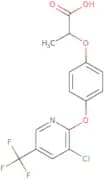
Discontinued productHaloxyfop-d4
CAS:Haloxyfop-d4 is an analog of the herbicide Haloxyfop that has been shown to have anticancer properties. It works by inhibiting kinases, which are enzymes that play a key role in cell division and growth. This inhibition leads to apoptosis, or programmed cell death, in cancer cells. Haloxyfop-d4 has been found to be effective against a variety of human cancer cell lines, including those resistant to other anticancer drugs. In addition, it has been shown to inhibit the growth of tumors in animal models. This drug is metabolized in the liver and excreted in urine. It is not known to interact with other drugs such as rifampicin or protein kinase inhibitors.
Formula:C15H11ClF3NO4Purity:Min. 95%Molecular weight:365.72 g/molRef: 3D-CFA89334
Discontinued productValganciclovir related compound G
CAS:Valganciclovir related compound G is a drug product. It has been synthesized in our lab. Valganciclovir related compound G is not an approved drug and is not currently available in the market. Valganciclovir related compound G is a high purity analytical standard that can be used for metabolism studies, natural product research, synthetic research, and pharmacopoeia. Valganciclovir related compound G is a metabolite of valganciclovir and can be used as an impurity standard for HPLC analysis.
Formula:C15H24N6O6Purity:Min. 95%Molecular weight:384.39 g/molRS 67506 hydrochloride
CAS:RS 67506 hydrochloride is a biochemical that is used in experimental and descriptor studies. The ketone group has been found to be an important part of the molecular structure. RS 67506 hydrochloride has been shown to have a number of biological properties, including inhibition of the synthesis of neurotransmitters such as dopamine, serotonin and norepinephrine; it also has anti-nervous system activity. This chemical was also found to inhibit the synthesis of prostaglandin E2 in human neutrophils. It is hypothesized that RS 67506 hydrochloride may inhibit phospholipase A2, which would prevent the release of arachidonic acid from phospholipids into the cell membrane and block the production of eicosanoids.
Formula:C18H29Cl2N3O4SPurity:Min. 95%Molecular weight:454.4 g/molRef: 3D-TGA98661
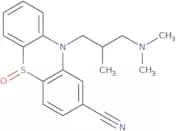
Discontinued productCyamemazine sulfoxide
CAS:Cyamemazine sulfoxide is a histamine H1 receptor antagonist. It has been shown to have strong affinity for the serotonin 5-HT2C and dopamine D2 receptors, as well as the atrial 5-HT2A receptors. Cyamemazine sulfoxide has a low oral bioavailability of about 10% and is metabolized in the liver to cyamemazine and its active form, cyamemazine sulfoxide. Cyamemazine sulfoxide binds to serotonin 5-HT2C receptors with a high affinity, which leads to inhibition of serotonin release from nerve endings in the brain. This drug also inhibits dopamine release from nerve endings in the brain and has been shown to have cardiac effects on heart rate and contractility.
Formula:C19H21N3OSPurity:Min. 95%Molecular weight:339.46 g/molDesmethyl dabrafenib
CAS:Desmethyl dabrafenib is a synthetic drug product that is used in research and development. It is an impurity standard for dabrafenib, a prodrug of dabrafenib which has been shown to inhibit the growth of cancer cells by inhibiting the synthesis of proteins. Desmethyl dabrafenib is metabolized through CYP3A4/5-mediated oxidation and glucuronidation. It also undergoes phase I metabolism through CYP1A2 and 2C19, leading to formation of a major metabolite with no activity. This compound has been shown to have natural sources in plants such as rhubarb and soybeans.
Formula:C22H18F3N5O2S2Purity:Min. 95%Molecular weight:505.50 g/molRef: 3D-VXB76547
Discontinued product

![N-[2-[(8R)-1,6,7,8-Tetrahydro-6-oxo-2H-indeno[5,4-b]furan-8-yl]ethyl]propanamide](/_next/image/?url=https%3A%2Fstatic.cymitquimica.com%2Fproducts%2F3D%2Fthumb-webp%2FWKB73622.webp&w=3840&q=75)
![2-[2-[4-(5,5-Dioxidodibenzo[b,f][1,4]thiazepin-11-yl)-1-piperazinyl]ethoxy]ethanol](/_next/image/?url=https%3A%2Fstatic.cymitquimica.com%2Fproducts%2F3D%2Fthumb-webp%2FID27366.webp&w=3840&q=75)
![4-Desfluoro-4-[4-(2-oxo-2,3-dihydro-1H-benzimidazol-1-yl)-3,6-dihydropyridin-1(2H)-yl] droperidol](/_next/image/?url=https%3A%2Fstatic.cymitquimica.com%2Fproducts%2F3D%2Fthumb-webp%2FWDC60417.webp&w=3840&q=75)
![1,4-Bis[(tetrahydro-2-furanyl)carbonyl]-piperazine](/_next/image/?url=https%3A%2Fstatic.cymitquimica.com%2Fproducts%2F3D%2Fthumb-webp%2FIB63853.webp&w=3840&q=75)