APIs for research and impurities
Subcategories of "APIs for research and impurities"
- Aminoacids and derivatives(12,327 products)
- Anthraquinones and derivatives(402 products)
- Benzimidazole and Imidazole Derivatives(10,413 products)
- Benzodiazepine Derivatives(330 products)
- Carbohydrates and glycoconjugates(5,051 products)
- Esters and Derivatives(42,243 products)
- Fatty Acids and Lypidic Derivatives(32,383 products)
- Flavonoids and Polyphenols(17,077 products)
- Free Radicals and Oxidant/Reducing Agents(212 products)
- Ketones and derivatives(2,399 products)
- Natural and semi-synthetic antibiotics(6,344 products)
- Nitriles and Cyano Derivatives(3,068 products)
- Nitrosamines and Derivatives(55 products)
- Nucleosides and Nucleotides(3,459 products)
- Organic Phosphates and Phosphonates(1,198 products)
- Organic Sulphonates and Sulphates(10,423 products)
- Organometallics(4,419 products)
- Others(6,279 products)
- Peptides and Proteins(3,140 products)
- Polymers and Derivatives(99 products)
- Purines and Pyrimidine Derivatives(8,912 products)
- Quinazoline and Quinoline Derivatives(65,802 products)
- Quinones and Derivatives(24,347 products)
- Salts and Derivatives of Active Pharmaceutical Ingredients (API)(81,003 products)
- Steroids and Derivatives(4,934 products)
- Sulfonamides and Derivatives(2,577 products)
- Terpenoids and Derivatives(3,841 products)
- Thiazolidinediones and Thiopyrans(2,753 products)
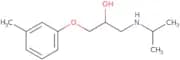
- β-Adrenergic Compounds(229 products)
Found 58355 products of "APIs for research and impurities"
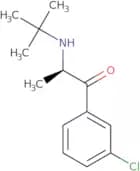
Bupropion (R)-Isomer
CAS:Controlled ProductBupropion is a racemic mixture of two enantiomers. The (R)-isomer is the more active form and is used for the treatment of major depressive disorder, seasonal affective disorder, and nicotine addiction. Bupropion has been shown to inhibit monoamine oxidase type A in humans and other mammals. This inhibition may be responsible for its antidepressant effects. The drug also has an effect on the liver, which can lead to serious side effects such as seizures or death if not monitored carefully. Bupropion has a high affinity for α1-acid glycoprotein, which plays a role in drug interactions with other drugs that are metabolized by this protein.
Formula:C13H18ClNOPurity:Min. 95%Molecular weight:239.74 g/mol11-[3-(Dimethylamino)propyl]-6,11-dihydrodibenz[b,e]oxepin-11-ol
CAS:Dispersants are substances that are used to break up and disperse particles in a liquid. The dispersant 11-[3-(dimethylamino)propyl]-6,11-dihydrodibenz[b,e]oxepin-11-ol is an active substance that is used in the production of granules, tablets or other solidified forms of medicaments. It is a substance that has a physiologically active effect on humans and animals. This product can be applied as droplets or particles.
Formula:C19H23NO2Purity:Min. 95%Color and Shape:PowderMolecular weight:297.39 g/molRef: 3D-ID45253
Discontinued product1-Hydroxy carvedilol
CAS:1-Hydroxycarvedilol is a drug product that is used as a standard in HPLC. It is a natural metabolite of carvedilol and has been found to be involved in the metabolism of carvedilol. The purity of 1-hydroxycarvedilol is >98%. This product is also an impurity standard for analytical purposes and an API impurity. It can also be used in metabolism studies and has CAS No. 146574-41-6.
Formula:C24H26N2O5Purity:Min. 95%Molecular weight:422.50 g/molRef: 3D-WFA57441
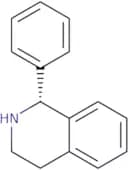
Discontinued product(R)-1-Phenyl-1,2,3,4-tetrahydroisoquinoline
CAS:(R)-1-Phenyl-1,2,3,4-tetrahydroisoquinoline is a chiral molecule with four stereocenters. It is synthesized by the reaction of sulfamic acid and cyclohexene in the presence of p-toluenesulfonic acid. The product formed is then dehydrogenated to produce (R)-1-phenyl-1,2,3,4-tetrahydroisoquinoline. This compound is soluble in organic solvents such as benzene and ethane and can be used as an acceptor for chiral stationary phases.
Formula:C15H15NPurity:Min. 95%Color and Shape:PowderMolecular weight:209.29 g/mol5-[(Desloratadine)methyl] rupatadine
CAS:Desloratadine is a drug that belongs to the group of antihistamines and is indicated for the treatment of allergic rhinitis. It has been shown to be as effective as loratadine, cetirizine, and fexofenadine in clinical trials. Desloratadine is metabolized by cytochrome P450 enzymes including CYP2D6 to its active form, desloratadine N-oxide. The metabolites are excreted in the urine.
Formula:C45H43Cl2N5Purity:Min. 95%Molecular weight:724.80 g/molRef: 3D-ZYB51572
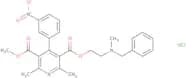
Discontinued productDehydro nicardipine hydrochloride
CAS:Please enquire for more information about Dehydro nicardipine hydrochloride including the price, delivery time and more detailed product information at the technical inquiry form on this page
Formula:C26H28ClN3O6Purity:Min. 95%Molecular weight:514 g/molRef: 3D-RYB81727
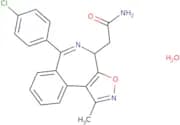
Discontinued productCPI 0610
CAS:CPI 0610 is a medicinal compound that acts as a potent inhibitor of protein phosphorylation. It has been shown to inhibit the cell cycle and promote apoptosis in Chinese hamster ovary cells. CPI 0610 is an effective inhibitor of kinase activity in cancer cells, leading to decreased tumor growth and increased survival rates. In preclinical studies, CPI 0610 has demonstrated efficacy against a wide range of cancers, including breast, prostate, and lung cancer. This inhibitor has also been shown to be effective in human cancer cell lines, making it a promising candidate for future cancer therapies.
Formula:C20H18ClN3O3Purity:Min. 95%Molecular weight:383.8 g/molRef: 3D-VYC72614
Discontinued productrac-1,2,3,4-Tetrahydro-5-methoxy-N-propyl-2-naphthalenamine
CAS:Rac-1,2,3,4-Tetrahydro-5-methoxy-N-propyl-2-naphthalenamine is an organic compound with the molecular formula C10H14N. Racemic rac-1,2,3,4-tetrahydro-5-methoxy-N propyl 2 naphthalenamine has been used in the synthesis of rotigotine. The enantiomers can be separated by means of an electrophoretic method. Racemic rac 1,2 3 4 tetrahydro 5 methoxy n propyl 2 naphthalenamine has a melting point range of 138 to 141 °C and a boiling point range of 285 to 288 °C at atmospheric pressure. This compound is soluble in organic solvents such as chloroform and ethanol and insoluble in water. It has a density of 1.07 g/cm3 at 20 °C and it isFormula:C14H21NOPurity:Min. 95%Molecular weight:219.32 g/molRef: 3D-DAA89907
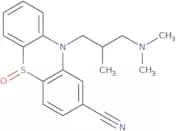
Discontinued productCyamemazine sulfoxide
CAS:Cyamemazine sulfoxide is a histamine H1 receptor antagonist. It has been shown to have strong affinity for the serotonin 5-HT2C and dopamine D2 receptors, as well as the atrial 5-HT2A receptors. Cyamemazine sulfoxide has a low oral bioavailability of about 10% and is metabolized in the liver to cyamemazine and its active form, cyamemazine sulfoxide. Cyamemazine sulfoxide binds to serotonin 5-HT2C receptors with a high affinity, which leads to inhibition of serotonin release from nerve endings in the brain. This drug also inhibits dopamine release from nerve endings in the brain and has been shown to have cardiac effects on heart rate and contractility.
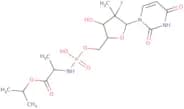
Formula:C19H21N3OSPurity:Min. 95%Molecular weight:339.46 g/molo-Desphenyl sofosbuvir
CAS:o-Desphenyl sofosbuvir is a drug product that has been custom synthesized for research purposes. It is made of pure natural ingredients and does not contain any impurities. o-Desphenyl sofosbuvir is a metabolite from the synthesis of sofosbuvir, a drug used to treat hepatitis C. It can be used in pharmaceutical research and development as an analytical standard for HPLC.
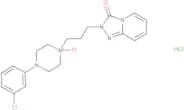
Formula:C16H25FN3O9PPurity:Min. 95%Molecular weight:453.36 g/molTrazodone Impurity A
CAS:Trazodone Impurity A is a drug product that is an impurity standard for Trazodone. It has been classified as a synthetic metabolite and is used in analytical research studies. Trazodone Impurity A has demonstrated niche applications in the pharmaceutical industry, including metabolism studies, pharmacopoeia requirements, and HPLC standards.
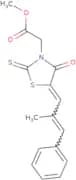
Formula:C19H22ClN5OPurity:Min. 95%Molecular weight:371.86 g/mol(E,Z)-Epalrestat methyl ester
CAS:(E,Z)-Epalrestat methyl ester is a drug product that is custom-synthesized for research and development purposes. It is a natural metabolite of (E,Z)-epalrestat acid. The chemical name for this compound is 3-[(2-chlorophenyl)methyl]-N-(1H-indol-3-ylmethylene)malonamide. The molecular weight of this compound is 284.87 g/mol and it has an empirical formula of C24H27ClN2O2. It has been found to inhibit the activity of phosphodiesterase (PDE), which plays a role in the breakdown of cyclic nucleotides such as cAMP and cGMP. This product has high purity and analytical data that can be used for metabolism studies or clinical trials.
Formula:C16H15NO3S2Purity:Min. 95%Molecular weight:333.43 g/molRef: 3D-HCB77570
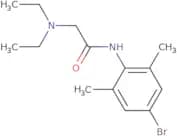
Discontinued product4'-Bromo-2-(diethylamino)-2',6'-acetoxylidide
CAS:Please enquire for more information about 4'-Bromo-2-(diethylamino)-2',6'-acetoxylidide including the price, delivery time and more detailed product information at the technical inquiry form on this page
Formula:C14H21BrN2OPurity:Min. 95%Molecular weight:313.23 g/molWay 629 hydrochloride
CAS:Way 629 hydrochloride is a chemical compound that belongs to the class of synthetic, pharmacopoeia and drug development. It is used as an impurity standard and a custom synthesis. Way 629 hydrochloride is also used in the study of metabolism. This compound has been shown to be metabolized by cytochrome P450 enzymes, glucuronidases, glutathione reductase, or conjugation with glucuronic acid.
Formula:C15H19ClN2Purity:Min. 95%Molecular weight:262.78 g/molRef: 3D-HCA75644
Discontinued productDL-threo-Ritalinic acid
CAS:Controlled ProductDL-threo-Ritalinic Acid is a dopamine receptor agonist that has been shown to be effective in treating hyperactivity, or attention deficit disorder (ADHD). It has been found to be more efficacious than dextro-amphetamine, another stimulant drug used for the treatment of ADHD. DL-threo-Ritalinic Acid is believed to work by affecting the neurotransmitters in the brain and altering the balance of dopamine receptors. In a two-way crossover study, preschool children were given either 0.5mg/kg of DL-threo-Ritalinic Acid or placebo for three days. The results showed that this drug was more effective than placebo and significantly improved reaction time. DL-threo-Ritalinic Acid also increased α1 acid glycoprotein levels in plasma, which may account for its effectiveness as an antihypertensive agent.
Formula:C13H17NO2Purity:Min. 95%Molecular weight:219.28 g/mol5-O-Desethyl amlodipine
CAS:5-O-Desethyl amlodipine is a metabolite of amlodipine. It has been used as an analytical reference standard for the determination of amlodipine and its metabolites in human plasma and urine. 5-O-Desethyl amlodipine has been reported to be excreted in human breast milk at a concentration that is about 20% of that found in maternal plasma. The drug product is manufactured by HPLC and is classified as a high purity pharmaceutical drug, which means it is free from extraneous substances such as other drugs, proteins, or bacteria.
Formula:C18H21ClN2O5Purity:Min. 95%Molecular weight:380.82 g/molRef: 3D-ID153422
Discontinued productOlsalazine sodium EP impurity F
Olsalazine sodium EP impurity F
CAS No.:
Natural: Yes
API Impurity: Yes
Custom Synthesis: Yes
Impurity Standard: Yes
Synthetic: Yes
Drug Development: Yes
Research and Development: Yes
Niche Product: Yes
HPLC Standard: Yes
High Purity Product: Yes
Pharmacopoeia Product: NoFormula:C21H14N2O9Purity:Min. 95%Molecular weight:438.34 g/mol1,5-Bis(4-pyridyl)pentane
CAS:1,5-Bis(4-pyridyl)pentane is a coordination polymer that can be used in the preparation of polymers. It is bifunctional and has coordination properties. This compound is made up of two pyridine rings linked to an ethyl group via a pentane chain. The cationic form of this compound is used for the preparation of some polymers. The crystal structure for 1,5-bis(4-pyridyl)pentane was determined by X-ray crystallography and found to have a layered topology with hydrogen bonding.
Formula:C15H18N2Purity:Min. 95%Molecular weight:226.32 g/molRef: 3D-ABA38233
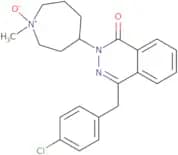
Discontinued productAzelastine N-oxide, mixture of diastereomers
CAS:Azelastine N-oxide is a racemic form of azelastine, an antihistamine. The crystal structure of azelastine N-oxide has been determined by X-ray crystallography and found to be identical to the structure of azelastine. Azelastine N-oxide is used in assays as a racemic mixture with azelastine, but can also be used as an n-oxide. Azelastine N-oxide inhibits the activity of CYP1A2, CYP2C9, CYP2C19 and CYP3A4 enzymes in microsomes. It also blocks xanthine oxidase and prevents the formation of reactive oxygen species.Formula:C22H24ClN3O2Purity:Min. 95%Molecular weight:397.9 g/molRef: 3D-QAB27988
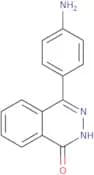
Discontinued product4-(4-Aminophenyl)phthalazin-1(2H)-one
CAS:4-(4-Aminophenyl)phthalazin-1(2H)-one is an antibacterial drug that belongs to the class of amide and minimise. It has a constant, synthetic, and chalcone profile. 4-(4-Aminophenyl)phthalazin-1(2H)-one has been shown to have antiplatelet activity in animals. This drug also inhibits the production of proinflammatory cytokines such as IL-6, IL-8, and TNFα by human monocytes. This drug also has antidiabetic properties and a safety profile similar to other nonsteroidal anti-inflammatory drugs.
Formula:C14H11N3OPurity:Min. 95%Molecular weight:237.26 g/molRef: 3D-GFA74153
Discontinued product

![11-[3-(Dimethylamino)propyl]-6,11-dihydrodibenz[b,e]oxepin-11-ol](/_next/image/?url=https%3A%2Fstatic.cymitquimica.com%2Fproducts%2F3D%2Fthumb-webp%2FID45253.webp&w=3840&q=75)
![5-[(Desloratadine)methyl] rupatadine](/_next/image/?url=https%3A%2Fstatic.cymitquimica.com%2Fproducts%2F3D%2Fthumb-webp%2FZYB51572.webp&w=3840&q=75)