APIs for research and impurities
Active Pharmaceutical Ingredients (APIs) are the substances in drugs responsible for their therapeutic effects. In this section, you will find a wide variety of APIs intended for research use. These compounds are essential for the development, testing, and validation of new pharmaceutical formulations. CymitQuimica offers high-quality APIs to support research in drug discovery and development.
Subcategories of "APIs for research and impurities"
- Aminoacids and derivatives(12,327 products)
- Anthraquinones and derivatives(405 products)
- Benzimidazole and Imidazole Derivatives(10,435 products)
- Benzodiazepine Derivatives(335 products)
- Carbohydrates and glycoconjugates(5,014 products)
- Esters and Derivatives(42,245 products)
- Fatty Acids and Lypidic Derivatives(32,393 products)
- Flavonoids and Polyphenols(17,085 products)
- Free Radicals and Oxidant/Reducing Agents(213 products)
- Ketones and derivatives(2,401 products)
- Natural and semi-synthetic antibiotics(6,376 products)
- Nitriles and Cyano Derivatives(3,067 products)
- Nitrosamines and Derivatives(55 products)
- Nucleosides and Nucleotides(3,431 products)
- Organic Phosphates and Phosphonates(1,202 products)
- Organic Sulphonates and Sulphates(10,433 products)
- Organometallics(4,422 products)
- Others(6,292 products)
- Peptides and Proteins(3,151 products)
- Polymers and Derivatives(100 products)
- Purines and Pyrimidine Derivatives(8,948 products)
- Quinazoline and Quinoline Derivatives(65,941 products)
- Quinones and Derivatives(24,347 products)
- Salts and Derivatives of Active Pharmaceutical Ingredients (API)(79,650 products)
- Steroids and Derivatives(4,974 products)
- Sulfonamides and Derivatives(2,593 products)
- Terpenoids and Derivatives(3,845 products)
- Thiazolidinediones and Thiopyrans(2,752 products)
- β-Adrenergic Compounds(230 products)
Show 21 more subcategories
Found 56960 products of "APIs for research and impurities"
Sort by
Purity (%)
0
100
|
0
|
50
|
90
|
95
|
100
Fonofos
CAS:<p>Fonofos is a potent inhibitor that has been shown to induce apoptosis in Chinese hamster ovary cells. It is also known to inhibit chitin kinase, a protein that plays an important role in the biosynthesis of chitin, which is essential for the formation of cell walls in fungi and insects. Fonofos has medicinal properties and has been studied as a potential anticancer agent due to its ability to inhibit tumor growth. In vitro studies have shown that Fonofos can inhibit the growth of human cancer cells by inhibiting heparin-binding proteins. Additionally, it has been found to have inhibitory effects on several other enzymes involved in cancer development and progression. Although not approved for use in humans, Fonofos may hold promise as a therapeutic agent for the treatment of certain cancers.</p>Formula:C10H15OPS2Purity:Min. 95%Molecular weight:246.3 g/molRef: 3D-AAA94422
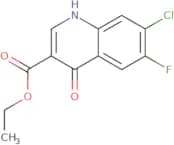
Discontinued product7-Chloro-6-fluoro-1,4-dihydro-4-oxo-3-quinolinecarboxylic acid ethyl ester
CAS:<p>7-Chloro-6-fluoro-1,4-dihydro-4-oxo-3-quinolinecarboxylic acid ethyl ester is a synthetic compound that has not been evaluated in humans. Studies have shown that the drug can be hydrolyzed to 7-chloro-6-fluoroquinoline 1,1′-(ethylenedioxy)bis(ethane), which is an impurity of norfloxacin. The ethyl esters of 7-chloroquinoline are also known to condense with formaldehyde and hydrolyze to 7-chloroquinolinic acid. This product may contain solvents such as acetone, chloroform, and alcohols that are used during the synthesis process. Decarboxylation of the drug occurs when it is heated at high temperatures in the presence of a catalyst, such as pyridine or sodium methoxide. It decarboxyl</p>Formula:C12H9ClFNO3Purity:Min. 95%Molecular weight:269.65 g/molRef: 3D-ADA07315
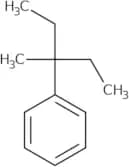
Discontinued product(1-Ethyl-1-methylpropyl)benzene
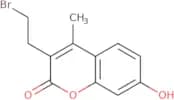
CAS:<p>(1-Ethyl-1-methylpropyl)benzene is an impurity of some drugs. It is a metabolite of the drug, and can be found in urine or blood samples as a result of its excretion from the body. (1-Ethyl-1-methylpropyl)benzene is used as an analytical standard for HPLC analysis. This chemical is not on the USP list of impurities, but it is listed on the pharmacopoeia. The CAS number for (1-Ethyl-1-methylpropyl)benzene is 1985-97-3.</p>Formula:C12H18Purity:Min. 95%Molecular weight:162.27 g/mol3-(2-Bromoethyl)-7-hydroxy-4-methyl-coumarin
CAS:<p>Please enquire for more information about 3-(2-Bromoethyl)-7-hydroxy-4-methyl-coumarin including the price, delivery time and more detailed product information at the technical inquiry form on this page</p>Formula:C12H11BrO3Purity:Min. 95%Molecular weight:283.12 g/molRef: 3D-KAA18503
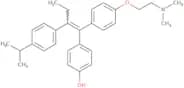
Discontinued productMiproxifene
CAS:Controlled Product<p>Miproxifene is a potent anticancer drug that has been shown to induce apoptosis and inhibit cell cycle progression in human cancer cells. This drug has been extensively studied in Chinese hamster ovary (CHO) cells and has demonstrated significant activity against various types of cancer, including leukemia. Miproxifene acts as a protein inhibitor and has been found to be effective against several tumor cell lines. It is a promising medicinal compound for the treatment of cancer, with potential applications in both chemotherapy and radiation therapy. Miproxifene is excreted primarily through urine and is well-tolerated by patients. Its use as an anticancer agent holds great promise for the future of cancer treatment.</p>Formula:C29H35NO2Purity:Min. 95%Molecular weight:429.6 g/molRef: 3D-EFA61287
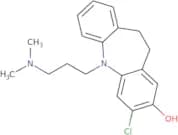
Discontinued product3-Chloro-2-hydroxyimipramine
CAS:<p>3-Chloro-2-hydroxyimipramine is a potent anticancer agent that has shown promising results in preclinical studies. This compound is a kinase inhibitor that targets cancer cells and induces apoptosis, leading to tumor regression. It has been found in urine samples of Chinese medicinal herb users and shows an analog structure to imipramine, an antidepressant drug. 3-Chloro-2-hydroxyimipramine inhibits kinases involved in cell proliferation and survival, making it a potential treatment option for various types of cancer in humans. Its anti-cancer properties make it an attractive candidate for further research and development as a potential therapeutic agent.</p>Formula:C19H23ClN2OPurity:Min. 95%Molecular weight:330.8 g/molRef: 3D-LCA52375
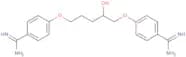
Discontinued product1,5-Bis(4-amidinophenoxy)-2-pentanol
CAS:<p>Please enquire for more information about 1,5-Bis(4-amidinophenoxy)-2-pentanol including the price, delivery time and more detailed product information at the technical inquiry form on this page</p>Formula:C19H24N4O3Purity:Min. 95%Molecular weight:356.4 g/molRef: 3D-IFA99132
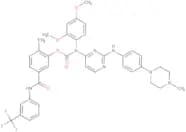
Discontinued productWH-4-025
CAS:<p>WH-4-025 is a potent kinase inhibitor that has shown promising results in the treatment of various cancers. It is derived from Chinese medicinal herbs and has been extensively studied for its anticancer properties. WH-4-025 works by inhibiting the activity of specific kinases that are involved in tumor growth and cell cycle regulation. It has been shown to induce apoptosis in cancer cells, leading to their death, and also inhibit the growth of leukemia cells. This protein inhibitor has been found to be effective against a wide range of human cancers and is currently being investigated as a potential therapy for cancer patients. WH-4-025 is excreted through urine, making it an attractive candidate for further development as an anticancer drug.</p>Formula:C39H38F3N7O5Purity:Min. 95%Molecular weight:741.8 g/molRef: 3D-BAD46335
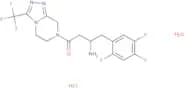
Discontinued productSitagliptin monohydrochloride monohydrate
CAS:<p>Sitagliptin monohydrochloride monohydrate is an inhibitor of dipeptidyl peptidase-4 (DPP-4), which is responsible for the degradation of incretin hormones. It is used in the treatment of type 2 diabetes mellitus, as it increases insulin secretion and reduces blood glucose levels. Recent studies have shown that Sitagliptin has anticancer properties, as it induces apoptosis in cancer cells. It also inhibits protein kinases, which are involved in tumor growth and metastasis. Capsaicin, a compound found in chili peppers, has been shown to enhance the anticancer activity of Sitagliptin in Chinese hamster ovary cells. The drug is excreted primarily through urine and has a low potential for drug interactions with other kinase inhibitors. Overall, Sitagliptin monohydrochloride monohydrate shows great promise as both a diabetes medication and an anticancer agent.</p>Formula:C16H18ClF6N5O2Purity:Min. 95%Color and Shape:PowderMolecular weight:461.79 g/molAmiodarone impurity E
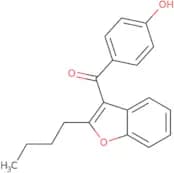
CAS:<p>Amiodarone impurity E is a nucleophilic compound that is synthesized by the acylation of a diazonium salt with an amine. It has been shown to be active against staphylococci, but not against subtilis. The reaction may be catalyzed by acid or chloride. Amiodarone impurity E is also demethylated and dehydrated to form the final product, amiodarone.</p>Formula:C19H18O3Purity:Min. 95%Color and Shape:PowderMolecular weight:294.34 g/mol