APIs for research and impurities
Subcategories of "APIs for research and impurities"
- Aminoacids and derivatives(12,444 products)
- Anthraquinones and derivatives(407 products)
- Benzimidazole and Imidazole Derivatives(10,465 products)
- Benzodiazepine Derivatives(335 products)
- Carbohydrates and glycoconjugates(5,390 products)
- Esters and Derivatives(42,308 products)
- Fatty Acids and Lypidic Derivatives(32,489 products)
- Flavonoids and Polyphenols(17,102 products)
- Free Radicals and Oxidant/Reducing Agents(215 products)
- Ketones and derivatives(2,692 products)
- Natural and semi-synthetic antibiotics(6,414 products)
- Nitriles and Cyano Derivatives(3,070 products)
- Nitrosamines and Derivatives(55 products)
- Nucleosides and Nucleotides(3,494 products)
- Organic Phosphates and Phosphonates(1,205 products)
- Organic Sulphonates and Sulphates(10,452 products)
- Organometallics(4,425 products)
- Others(6,340 products)
- Peptides and Proteins(3,162 products)
- Polymers and Derivatives(100 products)
- Purines and Pyrimidine Derivatives(8,976 products)
- Quinazoline and Quinoline Derivatives(66,237 products)
- Quinones and Derivatives(24,381 products)
- Salts and Derivatives of Active Pharmaceutical Ingredients (API)(92,986 products)
- Steroids and Derivatives(4,987 products)
- Sulfonamides and Derivatives(2,607 products)
- Terpenoids and Derivatives(3,871 products)
- Thiazolidinediones and Thiopyrans(2,755 products)
- β-Adrenergic Compounds(232 products)
Found 66910 products of "APIs for research and impurities"
Chlorhexidine digluconate impurity K dihydrochloride
CAS:Chlorhexidine digluconate impurity K dihydrochloride is a drug product that is an analytical standard. It is a natural metabolite of chlorhexidine digluconate, which is a synthetic compound. Chlorhexidine digluconate impurity K dihydrochloride has been shown to have anti-inflammatory properties and to inhibit the production of prostaglandins in animal studies. The pharmacopoeia designation for this drug product is USP/NF.Formula:C22H29Cl2N9OPurity:Min. 95%Color and Shape:PowderMolecular weight:506.43 g/molLisdexamfetamine dimesylate impurity C
Lisdexamfetamine dimesylate impurity C is a drug product that is an analytical standard. It is a synthetic impurity found in the drug Lisdexamfetamine Dimesylate, which is used for the treatment of ADHD and narcolepsy. Lisdexamfetamine Dimesylate Impurity C has been shown to be metabolized through oxidation by cytochrome P450 enzymes and conjugation with glucuronic acid. The impurity has been shown to have no effect on the pharmacological activity of the parent compound.
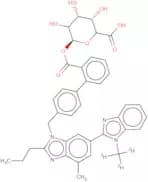
Purity:Min. 95%Telmisartan-D3-acyl-b-D-glucuronide
Controlled ProductIsotopically labelled metabolite of telmisartanFormula:C39H35D3N4O8Purity:Min. 95%Molecular weight:693.76 g/mol3-O-Desmethyl amlodipine
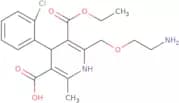
CAS:3-O-Desmethyl amlodipine is a metabolite of the drug amlodipine. It has been shown to be formed in vivo and may contribute to the pharmacological activity of amlodipine, although its contribution is not well understood. 3-O-Desmethyl amlodipine has been used as an analytical standard for chemical purity testing of pharmaceuticals, and as an impurity standard for HPLC analysis.Formula:C19H23ClN2O5Purity:Min. 95%Color and Shape:PowderMolecular weight:394.85 g/mol(RS)-Di-isopropyl 1,4-dihydro-2,6-dimethyl-4-(3-nitrophenyl)pyridine-3,5-dicarboxylate
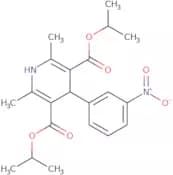
CAS:Di-isopropyl 1,4-dihydro-2,6-dimethyl-4-(3-nitrophenyl)pyridine-3,5-dicarboxylate is a metabolite of gatifloxacin. It is a natural product and its CAS number is 21881-78-7. Diisopropyl 1,4-dihydro 2,6-dimethyl 4-(3 nitrophenyl) pyridine 3,5 di carboxylate is an impurity standard for gatifloxacin. It has been synthesized and can be custom made to meet the pharmacopeia or API impurity requirements for drug development. The purity of this compound ranges from 98% to 100%. This compound is used in HPLC standards for research and development purposes such as metabolism studies.Formula:C21H26N2O6Purity:Min. 95%Color and Shape:White PowderMolecular weight:402.44 g/molN-(1-Oxopentyl)-N-[[2'-(2H-tetrazol-5-yl)[1,1'-biphenyl]-4-yl]methyl]-D-valine
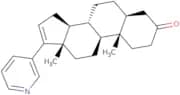
CAS:N-(1-Oxopentyl)-N-[[2'-(2H-tetrazol-5-yl)[1,1'-biphenyl]-4-yl]methyl]-D-valine is a potent and selective inhibitor of the enzyme lipase. It prevents the hydrolysis of triglycerides by competitively binding to the active site of lipase. This inhibition leads to an increase in serum levels of triglycerides, which are associated with cardiometabolic risk factors. Novartis developed this drug as an alternative to sacubitril/valsartan, which is used for the treatment of heart failure. The pharmacokinetics and pharmacodynamics of this drug are similar to those of sacubitril/valsartan. N-(1-Oxopentyl)-N-[[2'-(2H-tetrazol-5-yl)[1,1'-biphenyl]-4-yl]methyl]-D-Formula:C24H29N5O3Purity:Min. 95%Color and Shape:White To Off-White SolidMolecular weight:435.52 g/mol(5α)-17-(3-Pyridinyl)androst-16-en-3-one
CAS:Controlled Product(5α)-17-(3-Pyridinyl)androst-16-en-3-one is a natural metabolite of testosterone that is produced in the liver. It has been identified as an impurity in API, which can be found in drugs used for the treatment of high blood pressure and prostate cancer. (5α)-17-(3-Pyridinyl)androst-16-en-3-one is not active as a drug itself, but it can be used as a standard to study the metabolism of testosterone and other steroids.Formula:C24H31NOPurity:Min. 98 Area-%Color and Shape:White PowderMolecular weight:349.51 g/molDihexyl 3,3'-(pyrazine-2,5-diyl)dipropanoate
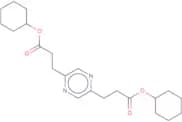
CAS:Dihexyl 3,3'-(pyrazine-2,5-diyl)dipropanoate is a drug product that is used as an impurity standard for the determination of metabolites in drug development and metabolism studies. It has been shown to be a metabolite in the human body and is also found in rat urine. The purity of this substance is high and can be custom synthesized to meet specific needs. Dihexyl 3,3'-(pyrazine-2,5-diyl)dipropanoate can be used as an analytical standard for HPLC analysis. This compound can also be used in pharmacopoeia as a reference substance for the determination of purity and impurities.Formula:C22H36N2O4Purity:Min. 95%Color and Shape:Off-white to yellow liquid.Molecular weight:392.53 g/mol3,5-Di-O-(4-chlorobenzoyl)-2-deoxy-a-D-ribofuranosyl isocyanate
3,5-Di-O-(4-chlorobenzoyl)-2-deoxy-a-D-ribofuranosyl isocyanate (CAS No. 53477) is a drug product that belongs to the class of drugs called nucleosides. 3,5-Di-O-(4-chlorobenzoyl)-2-deoxy-a-D-ribofuranosyl isocyanate has been shown to be metabolized through a number of metabolic transformations, including hydrolysis by esterases or glucuronidases, oxidation by cytochrome P450 enzymes, reduction by glutathione reductase, or conjugation with glucuronic acid. This product has been shown to have antiplasmodial activity and may be useful in the treatment of malaria.Formula:C20H15Cl2NO6Purity:Min. 95%Molecular weight:436.24 g/molVitamin A EP Impurity C
CAS:Soluble in Chloroform & in Methanol Confirmed
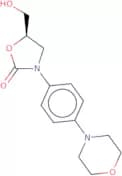
Insoluble in WatePurity:90% minColor and Shape:Off White or Beige SolidMolecular weight:312.453-(4-(4-Morpholinyl)phenyl)-5-(hydroxymethyl)oxazolidin-2-one
CAS:3-(4-(4-Morpholinyl)phenyl)-5-(hydroxymethyl)oxazolidin-2-one is an impurity in the drug development process. It is used as a standard for HPLC testing and a synthetic intermediate. It has been shown to have niche use in the pharmaceutical industry. 3-(4-(4-Morpholinyl)phenyl)-5-(hydroxymethyl)oxazolidin-2-one has been found to be metabolized through oxidation and reduction reactions, leading to the formation of metabolites such as 2,6-dihydroxypyridine (DHP). Further metabolism studies are required for this substance.
Formula:C14H18N2O4Purity:Min. 95%Color and Shape:White to off-white solid.Molecular weight:278.3 g/mol(1,2-Dimethylpropyl)benzene
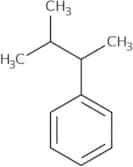
CAS:1,2-Dimethylpropylbenzene is an alkenylbenzene that is used as a precursor to other chemicals. It can be synthesized by the dehydrogenation of 1,2-dimethylethylbenzene with a nickel catalyst or by the formylation of benzene with formaldehyde and potassium hydroxide. The cyclohexenyl group in 1,2-dimethylpropylbenzene can be converted to an alkene group by alkylation with acetylene. The linear regression analysis showed that the toolkit of 1,2-dimethylpropylbenzene isomerization reactions are useful for the synthesis of many different compounds and provide a better understanding of their reactivity.Formula:C11H16Purity:Min. 95%Color and Shape:Clear LiquidMolecular weight:148.24 g/molOlsalazine sodium impurity G
Olsalazine sodium impurity G is an API impurity. It is an important impurity in the production of Olsalazine Sodium, which is a drug for the treatment of inflammatory bowel disease and ulcerative colitis. This compound has been shown to have a high purity level and a pharmacopoeia grade. The CAS number for this compound is 1209-03-9. This compound can be synthesized using organic chemistry methods, or it can be extracted from natural resources such as plants or animal tissues.Formula:C21H14N2O9Purity:Min. 95 Area-%Molecular weight:438.34 g/molEpirubicin impurity G
CAS:Epirubicin impurity G is a synthetic research and development impurity standard that is used in the manufacture of drug products, as well as in the development of new drugs. Epirubicin impurity G is a metabolite of epirubicin and has been shown to be an active inhibitor of DNA synthesis. Epirubicin impurity G may also have potential as an analytical standard for HPLC analysis.Formula:C54H58N2O22Purity:Min. 95%Molecular weight:1,087 g/mol2,2-Bis(N-(a,a,a-trifluoro-m-tolyl)antranililoxi)diethylether
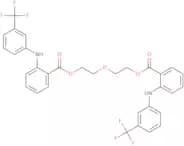
CAS:2,2-Bis(N-(a,a,a-trifluoro-m-tolyl)antranililoxi)diethylether is a natural compound that is an impurity in the drug 2,2-Bis(N-(a,a,a-trifluoro-m-tolyl)antranilic acid). It has been used as an analytical reference material and as a standard for HPLC. The synthesis of this compound has not been reported. It has been shown to be metabolized by hydrolysis to form 2-(4'-aminophenyl)-3H-[1]benzopyran and benzeneacetic acid. 2,2-Bis(N-(a,a,a-trifluoro-m-tolyl)antranililoxi)diethylether is also known as bis(4'-aminophenyl)-3H-[1Formula:C32H26F6N2O5Purity:Min. 95%Color and Shape:Slightly Yellow Yellow Clear LiquidMolecular weight:632.55 g/molAmikacin EP Impurity A
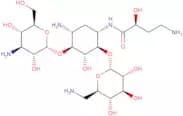
CAS:Amikacin EP Impurity A is a metabolite of amikacin. It is a white crystalline substance with a molecular weight of 269.5. Amikacin EP Impurity A is found in the urine and bile of individuals who have been administered amikacin. It has been shown to be pharmacologically active, inhibiting bacterial growth by binding to DNA-dependent RNA polymerase, thereby preventing transcription and replication.Formula:C22H43N5O13Purity:Min. 95%Molecular weight:585.6 g/molSimvastatin hydroxy acid ethyl ester
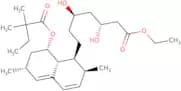
CAS:Simvastatin hydroxy acid ethyl ester is a solvated form of simvastatin, an investigational drug for the treatment of dyslipidemia. The ammonium salt was prepared by alcoholysis with ethanol. The elution process was carried out using an acetonitrile-water mixture and chromatography on silica gel. Preparation methods were investigated to determine the best preparative procedure that would yield pure material. This compound has been investigated as a possible therapeutic agent for the treatment of midbody diseases such as familial amyloidotic polyneuropathy and Alzheimer's disease.Formula:C27H44O6Purity:Min. 95%Color and Shape:Colourless To Pale Yellow LiquidMolecular weight:464.63 g/molAtorvastatin lactam sodium salt impurity
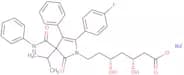
CAS:Atorvastatin is a drug used for the treatment of hypercholesterolemia and cardiovascular diseases. Atorvastatin lactam, which is an impurity formed during the synthesis of atorvastatin, has been shown to inhibit cholesterol biosynthesis in a rat model. The in vivo metabolism of atorvastatin lactam was studied by HPLC-MS/MS and was found to be identical to that of the parent molecule. This impurity may be useful as a research and development or custom synthesis product, or as an impurity standard for HPLC analysis.
Formula:C33H34FN2NaO6Purity:Min. 95%Color and Shape:White PowderMolecular weight:596.62 g/molLenvatinib impurity 10
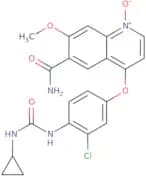
CAS:Lenvatinib impurity 10 is a synthetic impurity that is used as an analytical standard in HPLC. It is also a metabolite of lenvatinib and has been found to have anti-inflammatory properties. Lenvatinib impurity 10 is available in high purity and can be custom synthesized to meet the needs of your research or development.
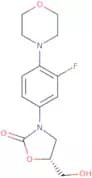
Formula:C35H26Cl2N6O7Purity:Min. 95%Color and Shape:PowderMolecular weight:713.53 g/mol(R)-3-(3-Fluoro-4-(4-morpholinyl)phenyl)-5-(hydroxymethyl)oxazolidin-2-one
CAS:(R)-3-(3-Fluoro-4-(4-morpholinyl)phenyl)-5-(hydroxymethyl)oxazolidin-2-one (FPH) is a synthetic drug product that is used as an impurity standard in the synthesis of pharmaceuticals. It is also used in metabolism studies and research and development. FPH has been shown to be a metabolite of the drug product, 3-(3-fluoro-4-(4-morpholinyl)phenyl)-5-(hydroxymethyl)oxazolidin-2-one, which is classified as an API impurity for pharmacopoeia purposes. FPH has a molecular formula of C11H14FO2N2O and a molecular weight of 222.26 g/mol. The CAS number for FPH is 168828-82-8.Formula:C14H17FN2O4Purity:Min. 98 Area-%Color and Shape:PowderMolecular weight:296.29 g/mol



![N-(1-Oxopentyl)-N-[[2'-(2H-tetrazol-5-yl)[1,1'-biphenyl]-4-yl]methyl]-D-valine](/_next/image/?url=https%3A%2Fstatic.cymitquimica.com%2Fproducts%2F3D%2Fthumb-webp%2FIO22697.webp&w=3840&q=75)