


APIs for research and impurities
Subcategories of "APIs for research and impurities"
- Aminoacids and derivatives(12,348 products)
- Anthraquinones and derivatives(405 products)
- Benzimidazole and Imidazole Derivatives(10,463 products)
- Benzodiazepine Derivatives(335 products)
- Carbohydrates and glycoconjugates(5,048 products)
- Esters and Derivatives(42,305 products)
- Fatty Acids and Lypidic Derivatives(32,454 products)
- Flavonoids and Polyphenols(17,098 products)
- Free Radicals and Oxidant/Reducing Agents(214 products)
- Ketones and derivatives(2,402 products)
- Natural and semi-synthetic antibiotics(6,398 products)
- Nitriles and Cyano Derivatives(3,070 products)
- Nitrosamines and Derivatives(55 products)
- Nucleosides and Nucleotides(3,486 products)
- Organic Phosphates and Phosphonates(1,202 products)
- Organic Sulphonates and Sulphates(10,447 products)
- Organometallics(4,424 products)
- Others(6,322 products)
- Peptides and Proteins(3,151 products)
- Polymers and Derivatives(100 products)
- Purines and Pyrimidine Derivatives(8,957 products)
- Quinazoline and Quinoline Derivatives(66,131 products)
- Quinones and Derivatives(24,376 products)
- Salts and Derivatives of Active Pharmaceutical Ingredients (API)(80,360 products)
- Steroids and Derivatives(4,975 products)
- Sulfonamides and Derivatives(2,606 products)
- Terpenoids and Derivatives(3,858 products)
- Thiazolidinediones and Thiopyrans(2,755 products)
- β-Adrenergic Compounds(231 products)
Found 57677 products of "APIs for research and impurities"
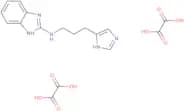
Ros 234 dioxalate
CAS:Ros 234 is a dioxalate salt of rosiglitazone, and is an anti-cancer agent that inhibits the growth of cancer cells. Ros 234 has been shown to inhibit inflammatory conditions such as asthma, rheumatoid arthritis, and colitis. It also modulates immune and autoimmune responses.
Formula:C17H19N5O8Purity:Min. 95%Molecular weight:421.4 g/molRef: 3D-GWC94193
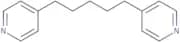
Discontinued product1,5-Bis(4-pyridyl)pentane
CAS:1,5-Bis(4-pyridyl)pentane is a coordination polymer that can be used in the preparation of polymers. It is bifunctional and has coordination properties. This compound is made up of two pyridine rings linked to an ethyl group via a pentane chain. The cationic form of this compound is used for the preparation of some polymers. The crystal structure for 1,5-bis(4-pyridyl)pentane was determined by X-ray crystallography and found to have a layered topology with hydrogen bonding.
Formula:C15H18N2Purity:Min. 95%Molecular weight:226.32 g/molRef: 3D-ABA38233
Discontinued product4,7-Dihydro megestrol acetate
CAS:4,7-Dihydro megestrol acetate is a drug product that has been custom synthesized for research and development purposes. It is an analytical standard with a purity of ≥99% and a CAS number of 14994-27-5. Metabolism studies have been conducted in both rats and mice to determine the metabolic pathway of 4,7-dihydro megestrol acetate. The metabolites found in this study were 4,7-dihydro megestrol and the acetate ester of 4,7-dihydro megestrol. Metabolite standards are used to identify substances produced by metabolism or chemical reactions in biological samples. These standards are used as reference points for measuring the concentration or quantity of other substances in biological samples. Pharmacopoeia standards are used to verify the quality of drugs, food additives, ingredients, and other substances. They also serve as reference points for identifying impurities in substances that may be harmful
Formula:C24H34O4Purity:Min. 95%Molecular weight:386.50 g/molRef: 3D-PAA99427
Discontinued productDexamethasone-17-ketone
CAS:Controlled ProductPlease enquire for more information about Dexamethasone-17-ketone including the price, delivery time and more detailed product information at the technical inquiry form on this page
Formula:C20H25FO3Purity:Min. 95%Molecular weight:332.42 g/molRef: 3D-ID183298
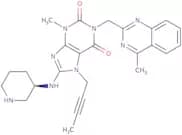
Discontinued productLinagliptin impurity E
CAS:Controlled ProductLinagliptin impurity E is a metabolite of the drug Linagliptin. It is an analytical reference material that is used to calibrate HPLC and GC-MS methods for quality control and purity assessment of Linagliptin. This impurity standard is also used for metabolism studies.
Formula:C25H28N8O2Purity:Min. 95%Molecular weight:472.54 g/molRef: 3D-IB106310
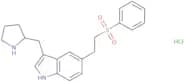
Discontinued productN-Desmethyl eletriptan hydrochloride
CAS:Please enquire for more information about N-Desmethyl eletriptan hydrochloride including the price, delivery time and more detailed product information at the technical inquiry form on this page
Formula:C21H25ClN2O2SPurity:Min. 95%Molecular weight:405 g/molRef: 3D-RFC05478
Discontinued productOrnidazole-hydroxy
CAS:Ornidazole-hydroxy is a drug product that is manufactured using HPLC. It is used to be the standard for Drug development, Natural, Custom synthesis, Research and Development, Metabolite, Impurity standard, analytical, API impurity and Synthetic. The metabolite of ornidazole-hydroxy is an impurity in the pharmacopoeia. Ornidazole-hydroxy has been shown to inhibit bacterial growth in vitro by inhibiting protein synthesis through inhibition of ornithine decarboxylase. Ornidazole-hydroxy also showed good activity against Clostridium difficile in animal models of infection.
Formula:C7H10ClN3O4Purity:Min. 95%Molecular weight:235.62 g/molRef: 3D-MCA58079
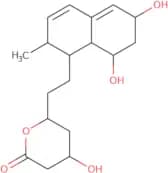
Discontinued productPravastatin diol lactone
CAS:Pravastatin diol lactone is a lipase inhibitor that prevents the hydrolysis of triglycerides in the intestines. It also inhibits the synthesis of cholesterol by inhibiting hydroxymethylglutaryl-coenzyme A (HMG-CoA) reductase. Pravastatin diol lactone has been shown to be effective in reducing serum cholesterol levels in animal models and inhibiting esterification of cholesterol by preventing the conversion of HMG-CoA to mevalonic acid, which is an important step in the synthesis of cholesterol. Pravastatin diol lactone is a polyketide that was discovered from a fungus and chemically altered to produce this drug.
Formula:C18H26O5Purity:Min. 95%Molecular weight:322.4 g/molRef: 3D-JGA34593
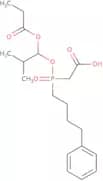
Discontinued product2-((2-Methyl-1-(propionyloxy)propoxy)(4-phenylbutyl)phosphoryl)acetic acid
CAS:2-((2-Methyl-1-(propionyloxy)propoxy)(4-phenylbutyl)phosphoryl)acetic acid (KZPBA) is a zoonotic antibiotic that has been shown to be active against agalactiae. It is a prodrug, which is metabolized to the active form, KZPBA, in humans and other mammals. The mechanism of action of KZPBA is not yet known; however, it has been hypothesized that its activity may be due to inhibition of DNA gyrase and topoisomerase IV. This drug has also been shown to have an effect on mastitis in dairy cows.Formula:C19H29O6PPurity:Min. 95%Molecular weight:384.4 g/molRef: 3D-IM27637
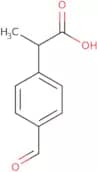
Discontinued product2-(4-Formylphenyl)propionic acid - Racemic
CAS:2-(4-Formylphenyl)propionic acid is a racemic mixture of 2-formylphenylacetic acid and 4-formylphenylacetic acid. This compound is used in the treatment of bacterial infections and inflammation. It is an organic solution that can be injected, administered orally, or applied topically. The 2-(4-formylphenyl)propionic acid has been shown to have anti-inflammatory properties, but also has side effects such as skin irritation when it is applied topically. This drug can also cause nausea, vomiting, and diarrhea when administered orally.
Formula:C10H10O3Purity:Min. 95%Color and Shape:White PowderMolecular weight:178.18 g/molRef: 3D-IF27430
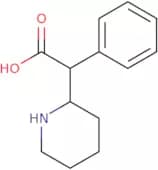
Discontinued productDL-threo-Ritalinic acid
CAS:Controlled ProductDL-threo-Ritalinic Acid is a dopamine receptor agonist that has been shown to be effective in treating hyperactivity, or attention deficit disorder (ADHD). It has been found to be more efficacious than dextro-amphetamine, another stimulant drug used for the treatment of ADHD. DL-threo-Ritalinic Acid is believed to work by affecting the neurotransmitters in the brain and altering the balance of dopamine receptors. In a two-way crossover study, preschool children were given either 0.5mg/kg of DL-threo-Ritalinic Acid or placebo for three days. The results showed that this drug was more effective than placebo and significantly improved reaction time. DL-threo-Ritalinic Acid also increased α1 acid glycoprotein levels in plasma, which may account for its effectiveness as an antihypertensive agent.
Formula:C13H17NO2Purity:Min. 95%Molecular weight:219.28 g/molMch-1 antagonist 1
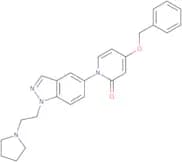
CAS:Mch-1 antagonist 1 is a drug product that is custom synthesized and is available in high purity. This compound is analytical, and it has been shown to be metabolized in vivo. Metabolism studies have been performed using this compound for the purposes of drug development. CAS No. 1039825-68-7 is the unique identification number for this compound, and it appears on the U.S. Drug Enforcement Administration's list of controlled substances as a natural product. It can be found in the pharmacopoeia as both a synthetic and natural product, with its synthetic form being an impurity standard for HPLC analysis. Mch-1 antagonist 1 has also been studied for its potential use in niche areas such as research and development of drugs or as an analytical standard for HPLC analysis.
Formula:C25H26N4O2Purity:Min. 95%Molecular weight:414.5 g/molRef: 3D-PRB82568
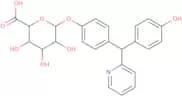
Discontinued productDesacetyl bisacodyl β-D-glucuronide
CAS:Desacetyl bisacodyl β-D-glucuronide is a drug product that is used as an impurity standard in analytical chemistry. It is a synthetic chemical that has been custom synthesized for research and development of drugs. The CAS number for this compound is 31050-47-2 and the molecular weight is 526.25 g/mol. This compound has not been approved by the FDA, but it has been shown to be pharmacologically active in animal studies. Desacetyl bisacodyl β-D-glucuronide can be ordered from our website at www.customsynthesislab.com
Formula:C24H23NO8Purity:Min. 95%Molecular weight:453.4 g/molRef: 3D-GBA05047
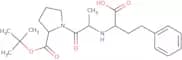
Discontinued productEnalaprilat tert-butyl ester
CAS:Enalaprilat tert-butyl ester is a synthetic compound and impurity standard used in the synthesis of drug product. Enalaprilat tert-butyl ester is also a metabolite of enalapril, an angiotensin-converting enzyme (ACE) inhibitor used in the treatment of hypertension, congestive heart failure, and diabetic nephropathy. Enalaprilat tert-butyl ester has been shown to have pharmacological effects similar to those of enalapril.
Formula:C22H32N2O5Purity:Min. 95%Molecular weight:404.5 g/molRef: 3D-ZBB79629
Discontinued productN-(4-Amino-6,7-dimethoxyquinazol-2-yl)-N-methylpropylenediamine hydrochloride
CAS:N-(4-Amino-6,7-dimethoxyquinazol-2-yl)-N-methylpropylenediamine hydrochloride is an impurity that can be found in some commercially available drugs. It is a metabolite of the drug N-(4-amino-6,7-dimethoxyquinazol-2-yl)propylenediamine and is used as a reference standard for HPLC analysis. This compound has been shown to have antiplatelet activities.
Formula:C14H22ClN5O2Purity:Min. 95%Molecular weight:327.81 g/molRef: 3D-FA17652
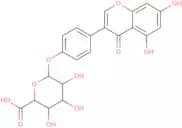
Discontinued productGenistein 4’-β-D-glucuronide
CAS:Genistein 4’-β-D-glucuronide is an isoflavonoid that is a natural product of soy and red clover, with estrogenic properties. It has been shown to have the ability to bind to estrogen receptors and inhibit the growth of breast cancer cells. Genistein 4’-β-D-glucuronide has been shown to inhibit the production of estrone sulfate in human breast cells, which may be due to its ability to act as an estrogen receptor antagonist. The isoflavonoid genistein also binds to and inhibits the activity of DNA topoisomerase II enzymes in human breast cells.
Formula:C21H18O11Purity:Min. 95%Molecular weight:446.4 g/molRef: 3D-VJA08407
Discontinued productN-(2-Hydroxyethyl)-P,P-bisaziridinyl thiophosphamide
CAS:N-(2-Hydroxyethyl)-P,P-bisaziridinyl thiophosphamide (HEPBTP) is a metabolite of the drug product. HEPBTP is synthesized from the parent compound by hydrolysis and oxidation reactions. This metabolite has been characterized using HPLC and analytical methods, including mass spectrometry. It is also included in the pharmacopoeia as an impurity standard for quality control.
Formula:C6H15N3O4PSPurity:Min. 95%Molecular weight:256.24 g/molRef: 3D-IH180621
Discontinued productTenofovir disoproxil
CAS:Tenofovir disoproxil is the disoproxil fumarate salt of tenofovir. It is a nucleoside reverse transcriptase inhibitor that has been shown to be effective in the treatment of chronic hepatitis B virus (HBV) in combination with emtricitabine and as a single agent in the treatment of HIV-1 infection. Tenofovir disoproxil is available as tablets, capsules, or oral solution. The drug has been shown to cause an increase in serum creatinine levels, which may be due to inhibition of renal tubular secretion of creatinine by tenofovir. This drug should not be used with alafenamide and tenofovir because it can lead to kidney failure and death.
Formula:C17H28N5O7P·(C4H4O4)Purity:Min. 95%Molecular weight:445.41 g/molRef: 3D-XGC28415
Discontinued product8-Benzyloxy-5-[(R)-2-bromo-1-(tertbutyldimethylsilyloxy)ethyl]-1H-quinolinone
CAS:8-Benzyloxy-5-[(R)-2-bromo-1-(tertbutyldimethylsilyloxy)ethyl]-1H-quinolinone is a drug product that is used as an analytical standard in metabolism studies. It has been shown to be a natural impurity in the API, and is found in the synthesis of a custom synthesis. 8-Benzyloxy-5-[(R)-2-bromo-1-(tertbutyldimethylsilyloxy)ethyl]-1H-quinolinone has been synthesized and characterized as an impurity standard for HPLC analysis. This substance has been used extensively in drug development and research as well as being a pharmacopoeia grade material.
Formula:C24H30BrNO3SiPurity:Min. 95%Molecular weight:488.5 g/molRef: 3D-FWA08474
Discontinued product1-[2-[2-Hydroxy-3-[[2-hydroxy-3-[2-(3-phenylpropanoyl)phenoxy]propyl]-propylamino]propoxy]phenyl]-3-phenylpropan-1-one
CAS:Arbidol is a drug molecule that interacts with protease enzymes. It has been shown to inhibit human erythrocyte chymotrypsin, trypsin, and elastase. Arbidol is also able to inhibit the growth of bacteria such as Staphylococcus aureus, Escherichia coli, and Pseudomonas aeruginosa. The molecular modelling of arbidol suggests that it binds to the active site of the enzyme by blocking hydrophobic pockets on the surface of the enzyme. The conformational change in the protease enzyme activates arbidol's binding site for an extended period of time. This prolonged interaction prevents substrate from binding to the catalytic site of the enzyme and inhibits its activity.
Formula:C39H45NO6Purity:Min. 95%Molecular weight:623.78 g/molRef: 3D-IP63820
Discontinued product



![8-Benzyloxy-5-[(R)-2-bromo-1-(tertbutyldimethylsilyloxy)ethyl]-1H-quinolinone](/_next/image/?url=https%3A%2Fstatic.cymitquimica.com%2Fproducts%2F3D%2Fthumb-webp%2FFWA08474.webp&w=3840&q=75)
![1-[2-[2-Hydroxy-3-[[2-hydroxy-3-[2-(3-phenylpropanoyl)phenoxy]propyl]-propylamino]propoxy]phenyl]-…](/_next/image/?url=https%3A%2Fstatic.cymitquimica.com%2Fproducts%2F3D%2Fthumb-webp%2FIP63820.webp&w=3840&q=75)