APIs for research and impurities
Subcategories of "APIs for research and impurities"
- Aminoacids and derivatives(12,321 products)
- Anthraquinones and derivatives(402 products)
- Benzimidazole and Imidazole Derivatives(10,395 products)
- Benzodiazepine Derivatives(326 products)
- Carbohydrates and glycoconjugates(5,048 products)
- Esters and Derivatives(42,242 products)
- Fatty Acids and Lypidic Derivatives(32,377 products)
- Flavonoids and Polyphenols(17,073 products)
- Free Radicals and Oxidant/Reducing Agents(212 products)
- Ketones and derivatives(2,399 products)
- Natural and semi-synthetic antibiotics(6,333 products)
- Nitriles and Cyano Derivatives(3,068 products)
- Nitrosamines and Derivatives(55 products)
- Nucleosides and Nucleotides(3,449 products)
- Organic Phosphates and Phosphonates(1,195 products)
- Organic Sulphonates and Sulphates(10,420 products)
- Organometallics(4,418 products)
- Others(6,271 products)
- Peptides and Proteins(3,138 products)
- Polymers and Derivatives(99 products)
- Purines and Pyrimidine Derivatives(8,905 products)
- Quinazoline and Quinoline Derivatives(65,710 products)
- Quinones and Derivatives(24,342 products)
- Salts and Derivatives of Active Pharmaceutical Ingredients (API)(81,198 products)
- Steroids and Derivatives(4,925 products)
- Sulfonamides and Derivatives(2,568 products)
- Terpenoids and Derivatives(3,837 products)
- Thiazolidinediones and Thiopyrans(2,753 products)
- β-Adrenergic Compounds(228 products)
Found 58583 products of "APIs for research and impurities"
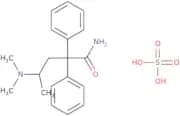
Aminopentamide sulfate
CAS:Aminopentamide sulfate is a pharmaceutical dosage form that is a polymeric matrix containing glycol ether, fatty acid ester, and glycol ester. It is used as a local anesthetic to numb the skin and other tissues. Aminopentamide sulfate can be administered topically or by injection into the body. It has been shown to have therapeutic effects on animals with pain-related conditions such as arthritis and neuropathy. The intramolecular hydrogen bonds in aminopentamide sulfate are thought to be formed between the carbonyl group of atropine sulfate and the hydroxyl groups of benzimidazole derivatives. These functional groups form hydrogen bonds with fatty alcohols in the matrix, which may help stabilize it.
Formula:C19H26N2O5SPurity:Min. 95%Molecular weight:394.5 g/molRef: 3D-VAA70177
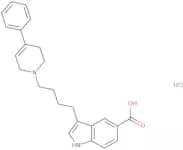
Discontinued productCarmoxirole hydrochloride
CAS:Carmoxirole hydrochloride is a hypoglycemic agent that is used in the treatment of type II diabetes. It is an analog of pergolide mesylate, which is a dopamine receptor agonist and has been shown to cause carcinogenesis in laboratory animals. Carmoxirole hydrochloride is synthesized from the reaction of 3-hydroxy-2-quinuclidinyl benzilate with chloroacetaldehyde, followed by hydrolysis of the ester linkages with hydrochloric acid. It has a particle size of less than 10 μm and exhibits high lipophilicity as it passes through cell membranes and into the intracellular fluid. The drug acts on all types of receptors, including alpha 1-, alpha 2-, beta 1-, beta 2-, and dopaminergic receptors.
Formula:C24H27ClN2O2Purity:Min. 95%Molecular weight:410.9 g/molRef: 3D-QEA09285
Discontinued productPirtenidine
CAS:Pirtenidine is a potent and selective kinase inhibitor that has been shown to inhibit the activity of cyclin-dependent kinases. It has demonstrated promising results in preclinical studies as an anticancer agent, inducing apoptosis in cancer cells. Pirtenidine is an analog of protein kinase inhibitors, which have been used to treat various types of tumors. It has been found to be effective against human cancer cell lines and has shown significant tumor growth inhibition in animal models. Pirtenidine has also been reported to be a potent urine inhibitor of Chinese hamster ovary cells, making it a promising candidate for the treatment of urinary tract cancers.
Formula:C21H38N2Purity:Min. 95%Molecular weight:318.5 g/molRef: 3D-DEA92327
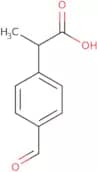
Discontinued product2-(4-Formylphenyl)propionic acid - Racemic
CAS:2-(4-Formylphenyl)propionic acid is a racemic mixture of 2-formylphenylacetic acid and 4-formylphenylacetic acid. This compound is used in the treatment of bacterial infections and inflammation. It is an organic solution that can be injected, administered orally, or applied topically. The 2-(4-formylphenyl)propionic acid has been shown to have anti-inflammatory properties, but also has side effects such as skin irritation when it is applied topically. This drug can also cause nausea, vomiting, and diarrhea when administered orally.
Formula:C10H10O3Purity:Min. 95%Color and Shape:White PowderMolecular weight:178.18 g/molRef: 3D-IF27430
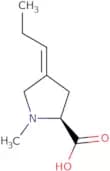
Discontinued product(trans)-4-Propyl-1-methyl-L-proline
CAS:(trans)-4-Propyl-1-methyl-L-proline is a synthetic compound that has been used in the past as an impurity standard in the synthesis of several drugs, including metaxalone and aminopyrine. It is also found to have pharmacological effects on its own and was used as a drug product for the treatment of rheumatoid arthritis. (trans)-4-Propyl-1-methyl-L-proline is not listed in any pharmacopoeia or international list of approved drugs.
Formula:C9H17NO2Purity:Min. 95%Color and Shape:White/Off-White SolidMolecular weight:171.24 g/molRef: 3D-FP27224
Discontinued productAjoene
CAS:Ajoene is a natural compound that has been shown to have antimicrobial properties, as well as an ability to inhibit the growth of tumor cells. Ajoene is also a potent inhibitor of dextran sulfate proteoglycan synthesis in vitro and has been shown to produce a hypoglycemic effect in vivo. Ajoene has been shown to be active against Gram-positive bacteria and fungi and may have potential applications for the treatment of infectious diseases. Further research is needed to determine whether ajoene may be used as an antioxidant or neuroprotective agent.
Formula:C9H14OS3Purity:Min. 95%Molecular weight:234.4 g/molRef: 3D-SDA28499
Discontinued productRosuvastatin anhydro lactone
CAS:Rosuvastatin anhydro lactone is a pure chemical compound that is used as an analytical reference standard for high-performance liquid chromatography (HPLC) for the determination of purity and identification of impurities in pharmaceuticals. It is also utilized as a drug development, API impurity, and HPLC standard. Rosuvastatin anhydro lactone is a metabolite of rosuvastatin and is chemically designated as C22H29NO3. The CAS number for rosuvastatin anhydro lactone is 1246665-85-9.
Formula:C22H24FN3O4SPurity:Min. 95%Molecular weight:445.50 g/molRef: 3D-WZB66585
Discontinued productOlsalazine sodium EP impurity F
Olsalazine sodium EP impurity F
CAS No.:
Natural: Yes
API Impurity: Yes
Custom Synthesis: Yes
Impurity Standard: Yes
Synthetic: Yes
Drug Development: Yes
Research and Development: Yes
Niche Product: Yes
HPLC Standard: Yes
High Purity Product: Yes
Pharmacopoeia Product: NoFormula:C21H14N2O9Purity:Min. 95%Molecular weight:438.34 g/molTrazodone Impurity A
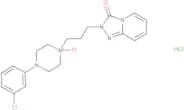
CAS:Trazodone Impurity A is a drug product that is an impurity standard for Trazodone. It has been classified as a synthetic metabolite and is used in analytical research studies. Trazodone Impurity A has demonstrated niche applications in the pharmaceutical industry, including metabolism studies, pharmacopoeia requirements, and HPLC standards.
Formula:C19H22ClN5OPurity:Min. 95%Molecular weight:371.86 g/mol(R)-1-Phenyl-1,2,3,4-tetrahydroisoquinoline
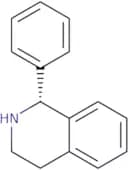
CAS:(R)-1-Phenyl-1,2,3,4-tetrahydroisoquinoline is a chiral molecule with four stereocenters. It is synthesized by the reaction of sulfamic acid and cyclohexene in the presence of p-toluenesulfonic acid. The product formed is then dehydrogenated to produce (R)-1-phenyl-1,2,3,4-tetrahydroisoquinoline. This compound is soluble in organic solvents such as benzene and ethane and can be used as an acceptor for chiral stationary phases.
Formula:C15H15NPurity:Min. 95%Color and Shape:PowderMolecular weight:209.29 g/molMethyl mycophenolate impurity E
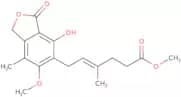
CAS:Methyl mycophenolate impurity E is a reactive, propargylamine-containing, monosodium salt with immunosuppressive properties. It is used in the treatment of cancer by inhibiting the production of white blood cells, which are needed to fight infection. Methyl mycophenolate impurity E has shown antitumor activity and can be used for the treatment of some types of cancer. It is metabolized in vivo to methyl mycophenolate and inhibits protein synthesis by alkylating DNA.
Formula:C18H22O6Purity:Min. 95%Color and Shape:White PowderMolecular weight:334.36 g/molRef: 3D-IM25526
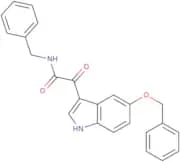
Discontinued productN,5-Dibenzyl-5-hydroxy-indole-3-glyoxylamide
CAS:N,5-Dibenzyl-5-hydroxy-indole-3-glyoxylamide is a drug product that can be used as an analytical reference standard and an impurity standard. It is used in the development of drugs, including synthetic intermediates and metabolites. N,5-Dibenzyl-5-hydroxy-indole-3-glyoxylamide is a natural metabolite. It has been shown to have antihistamine activity and to inhibit prostaglandin synthesis.
Formula:C24H20N2O3Purity:Min. 95%Molecular weight:384.43 g/molRef: 3D-CEA75441
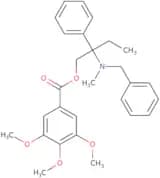
Discontinued productN-Benzyl N-demethyl trimebutine
CAS:N-Benzyl N-demethyl trimebutine is an analytical standard that is used in the development of new drugs. It is a synthetic compound and has not been found in any natural sources. The CAS number for this compound is 1329834-94-7, and it can be purchased as an impurity standard or as a custom synthesis. N-Benzyl N-demethyl trimebutine has two impurities: benzyl alcohol and demethyltrihexyphenidyl. This compound can be used as a pharmacopoeia or HPLC standard.
Formula:C28H33NO5Purity:Min. 95%Molecular weight:463.6 g/molRef: 3D-EDC83494
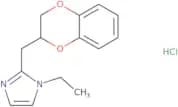
Discontinued productImiloxan hydrochloride
CAS:Imiloxan hydrochloride is a diagnostic agent that is used to diagnose Parkinson's disease and other neurological disorders. Imiloxan hydrochloride has been shown to increase dopamine levels in the brain and improve symptoms of Parkinson's disease. Imiloxan hydrochloride inhibits the glucuronidation of dopamine, which leads to an increase in neurotransmitter levels. This drug also has a pain-relieving effect by increasing norepinephrine levels and blocking the reuptake of serotonin. Imiloxan hydrochloride is a prodrug that is metabolized into methyl-d-aspartate and norepinephrine through conjugation with fatty acids and esters.
Formula:C14H17ClN2O2Purity:Min. 95%Molecular weight:280.75 g/molRef: 3D-GDA16722
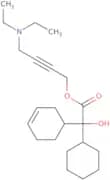
Discontinued productOxybutynin EP impurity A
CAS:Oxybutynin EP impurity A is a metabolite of oxybutynin, an antispasmodic drug. It has been shown to have immunomodulatory effects in a rat model of adjuvant arthritis. Oxybutynin EP impurity A is the major metabolite of oxybutynin and has been shown to be pharmacologically active in humans.
Purity:Min. 95%Ref: 3D-FO171019
Discontinued productAlloc bromoridane
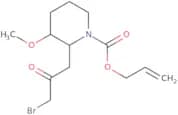
CAS:Alloc bromoridane is a drug product that contains the active ingredient bromoridane. Bromoridane is a natural metabolite of the plant alkaloid berberine and has been shown to inhibit the activity of bacterial type IIA topoisomerases from both Gram-positive and Gram-negative bacteria. The chemical name for Alloc bromoridane is 2-[2-(4-bromobenzoyl)phenyl]dihydropyrimidine, and it has CAS number 117348-70-6. Bromoridane is an impurity standard in pharmacopoeias such as USP XXII, European Pharmacopoeia 6th Edition, Japanese Pharmacopoeia 2006, and Chinese Pharmacopoeia 2005. Alloc bromoridane is used in research and development for pharmaceuticals or as an analytical reference material.
Formula:C13H20BrNO4Purity:Min. 95%Molecular weight:334.21 g/molRef: 3D-SEA34870
Discontinued productPropoxyphenyl homohydroxysildenafil
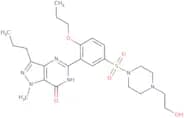
CAS:Propoxyphenyl homohydroxysildenafil is a preparative mass spectrometric analysis of the metabolite of sildenafil, which is a phosphodiesterase type 5 inhibitor. It has been shown to increase the flow rate in rats with an experimental pulmonary hypertension. The product ions of propoxyphenyl homohydroxysildenafil are m/z 409.3, 417.2, and 419.2, and its pharmacological study has been conducted on tadalafil and isobutyl.Formula:C24H34N6O5SPurity:Min. 95%Molecular weight:518.6 g/molPravastatin 6-oxo Impurity
CAS:Pravastatin 6-oxo Impurity is an impurity of Pravastatin, a drug used in the treatment of high cholesterol. The impurity has been identified through analytical methods and is characterized by HPLC analysis. This substance has been shown to be present in at least 0.1% of the drug product and may be present as a result of incomplete synthesis or a side-reaction during synthesis.
Formula:C23H34O7Purity:Min. 95%Molecular weight:422.51 g/molN-Ethyl fluprostenol carboxamide
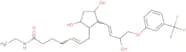
CAS:N-Ethyl fluprostenol carboxamide is a synthetic compound with a chemical formula of C17H21NO4. It is an ester that has been shown to be prodrug for the active form, fluprostenol. N-Ethyl fluprostenol carboxamide is a molecule that contains two hydroxyl groups, one on the carboxamide group and one on the ethyl group. The chemical structure also contains a halogen atom and an ester group.
Formula:C25H34F3NO5Purity:Min. 95%Molecular weight:485.5 g/molPseudomonic acid D sodium
CAS:Pseudomonic acid D sodium is a drug product that is used for the development of novel drugs. It is a natural metabolite of pseudomonic acid A, which is found in the fungus Pseudomonas sp. Pseudomonic acid D sodium is used as an analytical standard to aid in the identification of pseudomonic acid A and its metabolites. Pseudomonic acid D sodium can be synthesized by reacting 2-chloro-4-nitrobenzene with sodium bisulfate. The synthesis proceeds through a sequence of three reactions, namely nucleophilic substitution, electrophilic substitution, and hydrolysis. The structure of pseudomonic acid D sodium has been confirmed using nuclear magnetic resonance spectroscopy (NMR) and mass spectrometry (MS).
Formula:C26H41NaO9Purity:90%MinMolecular weight:520.59 g/mol