APIs for research and impurities
Subcategories of "APIs for research and impurities"
- Aminoacids and derivatives(12,331 products)
- Anthraquinones and derivatives(405 products)
- Benzimidazole and Imidazole Derivatives(10,444 products)
- Benzodiazepine Derivatives(335 products)
- Carbohydrates and glycoconjugates(5,025 products)
- Esters and Derivatives(42,242 products)
- Fatty Acids and Lypidic Derivatives(32,403 products)
- Flavonoids and Polyphenols(17,087 products)
- Free Radicals and Oxidant/Reducing Agents(213 products)
- Ketones and derivatives(2,404 products)
- Natural and semi-synthetic antibiotics(6,388 products)
- Nitriles and Cyano Derivatives(3,067 products)
- Nitrosamines and Derivatives(55 products)
- Nucleosides and Nucleotides(3,433 products)
- Organic Phosphates and Phosphonates(1,202 products)
- Organic Sulphonates and Sulphates(10,435 products)
- Organometallics(4,422 products)
- Others(6,294 products)
- Peptides and Proteins(3,145 products)
- Polymers and Derivatives(100 products)
- Purines and Pyrimidine Derivatives(8,950 products)
- Quinazoline and Quinoline Derivatives(66,012 products)
- Quinones and Derivatives(24,351 products)
- Salts and Derivatives of Active Pharmaceutical Ingredients (API)(79,812 products)
- Steroids and Derivatives(4,977 products)
- Sulfonamides and Derivatives(2,596 products)
- Terpenoids and Derivatives(3,846 products)
- Thiazolidinediones and Thiopyrans(2,752 products)
- β-Adrenergic Compounds(230 products)
Found 57082 products of "APIs for research and impurities"
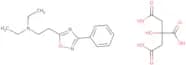
Oxolamine citrate salt
CAS:Oxolamine citrate salt is a pharmaceutical drug used for the treatment of scleroderma. It acts as an iron chelator and inhibits the production of the cytotoxic agent, podophyllotoxin, by inhibiting its conversion to epipodophyllotoxin. Oxolamine citrate salt has been shown to have a beneficial effect on Alzheimer's disease and may have therapeutic potential in other neurological diseases such as Parkinson's disease. The compound has been shown to inhibit acetonitrile-induced hyperactivity in mice. Oxolamine citrate salt has also been found to be effective against Pseudomonas aeruginosa and Staphylococcus aureus isolates that are resistant to oxacillin, ginkgetin, or pseudoephedrine. This drug can be analyzed using liquid chromatography with an acetonitrile gradient and a hypersil C18 column.Formula:C14H19N3O·C6H8O7Purity:Min. 95%Molecular weight:437.44 g/mol(R)-Apremilast
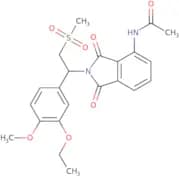
CAS:(R)-Apremilast-d5 is a metabolite of apremilast, which is a small molecule drug that inhibits phosphodiesterase (PDE) enzymes. It has been shown to suppress inflammation in vitro and in vivo. Metabolism studies have shown that the main metabolites of apremilast are the acid form and the glucuronide form. Apremilast-d5 is a synthetic impurity generated by oxidation of an intermediate during synthesis. It can also be found as a natural metabolite in plants such as licorice or black pepper. This product is used for HPLC standards for apremilast and its metabolites.
Formula:C22H24N2O7SPurity:Min. 95%Molecular weight:460.5 g/mol2-[(E)-[(4-Fluorophenyl)imino]methyl]phenol
CAS:2-[(E)-[(4-Fluorophenyl)imino]methyl]phenol is a synthetic substance that is used as an analytical reagent, research and development, drug development, and impurity standard. It is an impurity of certain drugs, such as furosemide, which are metabolized to 2-[(E)-[(4-fluorophenyl)imino]methyl]phenol. 2-[(E)-[(4-Fluorophenyl)imino]methyl]phenol is also a metabolite of the drug product erythromycin. This chemical has been identified in the National Institute for Standards and Technology (NIST) mass spectral library. The CAS number for this substance is 252573-77-6.Formula:C13H10FNOPurity:Min. 95%Molecular weight:215.22 g/molrac-Isodiospyrin
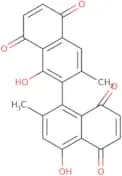
CAS:Isodiospyrin is a synthetic compound that is used in the synthesis of other compounds. It has been shown to inhibit cell growth in a number of different types of cells, including human leukemia cells and colon cancer cells. Isodiospyrin has also been shown to have potent inhibitory activity against the fatty acid synthase enzyme and the redox potentials it generates. This compound was found to be synthesized from two natural compounds, namely the plant families, quinone and dihydrobenzoquinone. The synthesis process involves an aldol cyclization reaction between these two compounds.Formula:C22H14O6Purity:Min. 95%Molecular weight:374.3 g/molTetrabromobisphenol A dimethyl ether
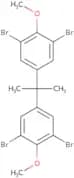
CAS:Tetrabromobisphenol A dimethyl ether is a high yield, biotransformed product that is synthesized from brominated phenols. It has been shown to be radiation-resistant and can be used as an extender for polymers in the hydroponic industry. Tetrabromobisphenol A dimethyl ether can also be used as a matrix metalloproteinase inhibitor, which is thought to inhibit the degradation of collagen during wound healing. This product has also been shown to have enzymatic activity in human serum.Formula:C17H16Br4O2Purity:Min. 95%Molecular weight:571.9 g/molSceptrin dihydrochloride
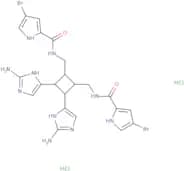
CAS:Sceptrin dihydrochloride is a natural product that is the first asymmetric synthesis of the sceptrin molecule. It has been shown to have anti-inflammatory properties and can be used for the treatment of inflammatory bowel disease. Sceptrin dihydrochloride inhibits the activity of leukotriene A4 hydrolase, which is an enzyme that controls the production of leukotrienes. This inhibition leads to decreased levels of leukotrienes and reduced inflammation in the gastrointestinal tract. Sceptrin dihydrochloride has also been shown to have an effect on skeleton cells, where it can inhibit bone resorption by activating osteoclasts and inhibiting osteoblasts. Sceptrin dihydrochloride belongs to a group of compounds called fatty acid esters and has a chemical structure consisting of nitrogen atoms with two chiral centers. The synthesis was carried out using an asymmetric synthesis method that involved reaction with a chiral catalyst andFormula:C22H26Br2Cl2N10O2Purity:Min. 95%Molecular weight:693.2 g/mol1-Glycoloyl-L-prolinamide
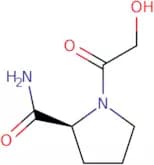
CAS:1-Glycoloyl-L-prolinamide is a drug product that is an analytical standard for the impurity 1-glycoloyl-L-proline (CAS No. 96166-39-1) in the API 1,4,5,6-tetrahydrobenzothiazole (CAS No. 86687-93-0). It has been synthesized to be used as an impurity standard and is provided at a purity of 98.0% or greater by weight. This chemical compound can be used in research and development for the production of drugs as well as in pharmaceutical manufacturing.
Formula:C7H12N2O3Purity:Min. 95%Molecular weight:172.18 g/molPindolol EP Impurity F
CAS:Pindolol EP Impurity F is a metabolite of the drug pindolol. It is an impurity found in the product or in the analytical sample. Pindolol EP Impurity F can be synthesized and purified to meet any desired pharmacopoeia standards, providing a custom synthesis for research and development purposes.Formula:C11H12ClNO2Purity:Min. 95%Molecular weight:225.67 g/molaR453588
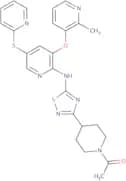
CAS:aR453588 is a human analog of Voriconazole, which has been found to have anticancer properties. This compound is a kinase inhibitor that works by inducing apoptosis in cancer cells. It has been shown to be effective against various types of tumors, including those resistant to other inhibitors. aR453588 also inhibits the growth of cancer cells by blocking protein synthesis and cell division. This compound is derived from cellulose and can be detected in urine samples after administration. Overall, aR453588 shows great promise as a potential treatment for cancer.
Formula:C25H25N7O2S2Purity:Min. 95%Molecular weight:519.6 g/molLoxapine N-oxide
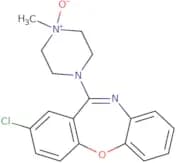
CAS:Loxapine N-oxide is a metabolite of loxapine. It has been shown that the n-oxide form of loxapine has regulatory effects on the metabotropic glutamate receptor and can be used to treat symptoms of schizophrenia. Loxapine N-oxide has been shown to have antipsychotic effects in vitro. The structural formula for loxapine N-oxide is as follows:Formula:C18H18ClN3O2Purity:Min. 95%Molecular weight:343.8 g/mol9-[[(2,2,2-Trifluoroethyl)amino]carbonyl]-9H-fluorene-9-butanoic acid
CAS:9-[[(2,2,2-Trifluoroethyl)amino]carbonyl]-9H-fluorene-9-butanoic acid is a research and development impurity standard. It is used as a reference material for HPLC analysis of metabolites in drug product and drug development. This compound has been synthesized using synthetic methods. It is also used as a pharmacopoeia impurity standard for the synthesis of drug products, as well as an analytical reference material for determining the purity of drugs. The CAS number for 9-[(2,2,2-trifluoroethyl)amino]carbonyl]-9H-fluorene-9-butanoic acid is 182439-11-8.
Formula:C20H18F3NO3Purity:Min. 95%Molecular weight:377.40 g/molL-733,060 Hydrochloride
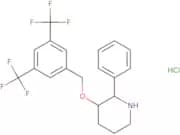
CAS:L-733,060 Hydrochloride is a drug product that was custom synthesized for the purpose of research and development. It is a white to off-white crystalline powder with a melting point of 178.5°C. The purity of L-733,060 Hydrochloride is greater than or equal to 98% by analytical HPLC. L-733,060 Hydrochloride has been studied in metabolism studies and has been shown to be metabolized by cytochrome P450 enzymes, oxidative metabolites, hydrolysis by esterases, glutathione reductase, or conjugation with glucuronic acid. It also specifically binds to markers expressed at high levels in Mycobacterium tuberculosis strains (e.g., ESX-1 secretion system protein) and inhibits cell growth in culture.
Formula:C20H20ClF6NOPurity:Min. 95%Molecular weight:439.8 g/molTeopranitol
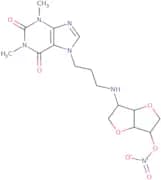
CAS:Controlled ProductTeopranitol is a potent inhibitor of kinases, which are enzymes that play a critical role in cellular signaling pathways. It belongs to the class of protein kinase inhibitors and has been shown to have inhibitory activity against a wide range of kinases. Teopranitol has been tested on various cell lines, including human cancer cells and Chinese medicine-derived cell lines. It has been found to be effective in inhibiting the growth of mutant cancer cells by blocking the activity of specific kinases. This inhibitor shows promise as a potential treatment for cancer and tumors due to its ability to target specific pathways involved in cancer progression.
Formula:C16H22N6O7Purity:Min. 95%Molecular weight:410.38 g/molFp-biotin-d4
CAS:Please enquire for more information about Fp-biotin-d4 including the price, delivery time and more detailed product information at the technical inquiry form on this pageFormula:C27H50FN4O5PSPurity:Min. 95%Molecular weight:596.8 g/molDescarboxymethyl treprostinil
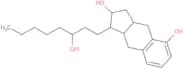
CAS:Descarboxymethyl treprostinil is a synthetic compound that has been researched for use as a drug product. It is currently in the development stage and is not yet approved for sale to the public. Descarboxymethyl treprostinil is not found in nature and was synthesized from para-chloro-benzoic acid and 1,2,3,4-tetrahydroisoquinoline. This compound is an impurity standard with a purity greater than 98%. Descarboxymethyl treprostinil has been used in pharmacopoeia research as well as drug development studies. It has also been studied for metabolism and analytical properties.Formula:C21H32O3Purity:Min. 95%Molecular weight:332.5 g/molSunitinib impurity G
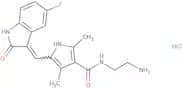
CAS:Sunitinib impurity G is a research and development impurity that is found in the process of synthesizing sunitinib. Sunitinib impurity G is an analytical standard that is soluble in methanol and is suitable for HPLC analysis. It has been shown to have high purity, excellent stability, and a low level of toxicity.
Formula:C18H20ClFN4O2Purity:Min. 95%Molecular weight:378.8 g/molRocuronium EP Impurity G
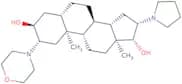
CAS:Rocuronium EP Impurity G is a drug product that contains an impurity of Rocuronium EP. It is a synthetic, high purity HPLC standard with a purity greater than 99.5% and a CAS number of 119302-20-4. This compound has been researched for use in the development of drugs to treat conditions such as pain, anxiety, and depression. Rocuronium EP Impurity G is a metabolite that has been found in human urine after administration of rocuronium bromide. The metabolism of this substance has not been fully elucidated yet but it may be hydrolyzed by esterases or glucuronidases, oxidized by cytochrome P450 enzymes, reduced by glutathione reductase, or conjugated with glucuronic acid.
Formula:C27H46N2O3Purity:Min. 95%Molecular weight:446.67 g/mol[(1S)-(1Alpha,2Beta,3Beta)]-3-(2-Amino-6-iodo-7H-purin-7-yl)-1,2-cyclobutanedimethanol dibenzoate ester
CAS:[(1S)-(1Alpha,2Beta,3Beta)]-3-(2-Amino-6-iodo-7H-purin-7-yl)-1,2-cyclobutanedimethanol dibenzoate ester is a synthetic drug product that is used in the development and manufacture of pharmaceutical products. It is an impurity standard for HPLC. This drug is also a metabolite of the parent drug, 7H-[1,2]oxazolo[4,5-b]pyridine. The chemical formula is C19H22N6O3 and molecular weight is 356.37 g/mol. CAS No. 1246812-29-2Formula:C25H22IN5O4Purity:Min. 95%Molecular weight:583.40 g/molCp-66713 mesylate
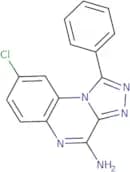
CAS:Cp-66713 mesylate is a synthetic drug product with a molecular formula of C17H19NO2 and a molecular weight of 269.34. It has the following CAS number: 91896-58-1. The purity of this compound is >99% (HPLC).
Formula:C15H10ClN5Purity:Min. 95%Molecular weight:295.72 g/molDexamethasone Impurity A
Impurity A is an impurity of the drug product, dexamethasone. The impurity is a natural metabolite of dexamethasone that is found in the urine of patients taking this medication. Impurity A is chemically identified using HPLC and its purity verified using GC-MS and LC-MS. This impurity can be used as a reference standard for analytical purposes and as an impurity standard for pharmacopoeia testing.
Formula:C22H29FO5Purity:Min. 95 Area-%Color and Shape:White Off-White PowderMolecular weight:392.46 g/mol

![2-[(E)-[(4-Fluorophenyl)imino]methyl]phenol](/_next/image/?url=https%3A%2Fstatic.cymitquimica.com%2Fproducts%2F3D%2Fthumb-webp%2FCKA57377.webp&w=3840&q=75)
![9-[[(2,2,2-Trifluoroethyl)amino]carbonyl]-9H-fluorene-9-butanoic acid](/_next/image/?url=https%3A%2Fstatic.cymitquimica.com%2Fproducts%2F3D%2Fthumb-webp%2FHHA43911.webp&w=3840&q=75)

![[(1S)-(1Alpha,2Beta,3Beta)]-3-(2-Amino-6-iodo-7H-purin-7-yl)-1,2-cyclobutanedimethanol dibenzoate …](/_next/image/?url=https%3A%2Fstatic.cymitquimica.com%2Fproducts%2F3D%2Fthumb-webp%2FWZB81229.webp&w=3840&q=75)