APIs for research and impurities
Active Pharmaceutical Ingredients (APIs) are the substances in drugs responsible for their therapeutic effects. In this section, you will find a wide variety of APIs intended for research use. These compounds are essential for the development, testing, and validation of new pharmaceutical formulations. CymitQuimica offers high-quality APIs to support research in drug discovery and development.
Subcategories of "APIs for research and impurities"
- Aminoacids and derivatives(12,330 products)
- Anthraquinones and derivatives(405 products)
- Benzimidazole and Imidazole Derivatives(10,442 products)
- Benzodiazepine Derivatives(335 products)
- Carbohydrates and glycoconjugates(5,017 products)
- Esters and Derivatives(42,241 products)
- Fatty Acids and Lypidic Derivatives(32,402 products)
- Flavonoids and Polyphenols(17,087 products)
- Free Radicals and Oxidant/Reducing Agents(213 products)
- Ketones and derivatives(2,404 products)
- Natural and semi-synthetic antibiotics(6,388 products)
- Nitriles and Cyano Derivatives(3,067 products)
- Nitrosamines and Derivatives(55 products)
- Nucleosides and Nucleotides(3,433 products)
- Organic Phosphates and Phosphonates(1,202 products)
- Organic Sulphonates and Sulphates(10,435 products)
- Organometallics(4,422 products)
- Others(6,294 products)
- Peptides and Proteins(3,160 products)
- Polymers and Derivatives(100 products)
- Purines and Pyrimidine Derivatives(8,949 products)
- Quinazoline and Quinoline Derivatives(66,006 products)
- Quinones and Derivatives(24,351 products)
- Salts and Derivatives of Active Pharmaceutical Ingredients (API)(79,792 products)
- Steroids and Derivatives(4,976 products)
- Sulfonamides and Derivatives(2,596 products)
- Terpenoids and Derivatives(3,846 products)
- Thiazolidinediones and Thiopyrans(2,752 products)
- β-Adrenergic Compounds(230 products)
Show 21 more subcategories
Found 57073 products of "APIs for research and impurities"
Sort by
Purity (%)
0
100
|
0
|
50
|
90
|
95
|
100
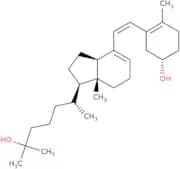
25-Hydroxy previtamin D3
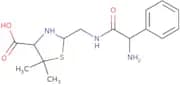
CAS:25-Hydroxy previtamin D3 is a metabolite of vitamin D3. It is a natural compound that is synthesized in the skin by exposure to sunlight. 25-Hydroxylase activity converts vitamin D3 to 25-hydroxyvitamin D3, which then undergoes hydroxylation at position 1 by cytochrome P450 enzymes in the liver and kidney. 25-Hydroxy previtamin D3 can be used as an impurity standard for HPLC analysis of vitamin D compounds.Purity:85%MinAmpicillin desoxyazetidin-2-one
CAS:Please enquire for more information about Ampicillin desoxyazetidin-2-one including the price, delivery time and more detailed product information at the technical inquiry form on this pageFormula:C15H21N3O3SPurity:Min. 95%Molecular weight:323.4 g/molRel-(3R,5R)-fluvastatin sodium
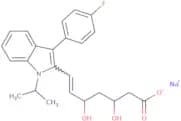
CAS:Rel-(3R,5R)-fluvastatin sodium is an impurity standard of fluvastatin that is used in the development of new drugs. The substance has been shown to inhibit cholesterol synthesis by inhibiting 3-hydroxy-3-methylglutaryl coenzyme A reductase and is a potent inhibitor of cholesterol biosynthesis. Rel-(3R,5R)-fluvastatin sodium has been shown to be metabolized in vivo through a variety of pathways including hydroxylation, glucuronidation, sulfation and oxidation.Formula:C24H25FNNaO4Purity:Min. 95%Molecular weight:433.4 g/mol4-Methyl-N-(5-methyl-2-pyridinyl)benzamide
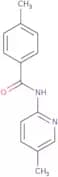
CAS:4-Methyl-N-(5-methyl-2-pyridinyl)benzamide is a birefringent, crystalline compound that is soluble in organic solvents. This compound exhibits liquid crystal composition and can be synthesized by the reaction of 2,4-dimethylbenzoyl chloride with 5-methylpyrimidine. It has been used in the production of photolytic materials such as fluorine. 4-Methylbenzamide has been shown to have a skeleton that is composed of two fused pyridine rings and an amide group. The impurities found in this product are mainly methyl benzoate and methyl pyridine.Formula:C14H14N2OPurity:Min. 95%Molecular weight:226.27 g/mol2-(Acetylamino)-4-amino-2,4,6-trideoxy-α-D-galactopyranose
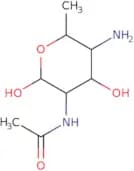
CAS:<p>Please enquire for more information about 2-(Acetylamino)-4-amino-2,4,6-trideoxy-α-D-galactopyranose including the price, delivery time and more detailed product information at the technical inquiry form on this page</p>Formula:C8H16N2O4Purity:Min. 95%Molecular weight:204.22 g/molSolifenacin impurity C
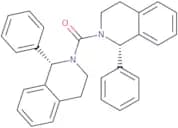
CAS:Solifenacin impurity C is an impurity that is found in the drug product Solifenacin. It has been shown to be a natural metabolite and has been detected in human urine. Solifenacin impurity C is used as an analytical standard for HPLC analyses of solifenacin, and can also be used as a reference material for pharmacopoeia. The purity of this compound is 99%.Formula:C31H28N2OPurity:Min. 95 Area-%Color and Shape:White PowderMolecular weight:444.57 g/molN-[(S)-(4-Nitrophenoxy)phenoxyphosphinyl]-L-alanine 2-ethylbutyl ester
CAS:Remdesivir impurityFormula:C21H27N2O7PPurity:Min. 95%Color and Shape:White Off-White PowderMolecular weight:450.42 g/mol[1-Hydroxy-3-(methylisopentylamino)propylidene] bisphosphonic acid monosodium (ibandronic acid impurity)
CAS:<p>[1-Hydroxy-3-(methylisopentylamino)propylidene] bisphosphonic acid monosodium (ibandronic acid impurity) is a metabolite of ibandronate, which is used in the treatment of osteoporosis. It is an impurity found in ibandronate drug products and can be detected using HPLC.</p>Formula:C9H22NNaO7P2Purity:Min. 95%Molecular weight:341.21 g/molIsoginsenoside rh3
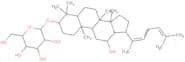
CAS:Isoginsenoside Rh3 is a metabolite of the natural product ginseng. It has been reported to have anti-inflammatory properties in vitro and in vivo, but it has not been studied extensively. Isoginsenoside Rh3 is not found in the human body, but it is an impurity of Ginseng extract that is routinely measured by HPLC. The concentration of this metabolite can be used as a quality control measure for Ginseng extracts.Formula:C36H60O7Purity:Min. 95%Molecular weight:604.9 g/mol17-Deoxyprednisolone
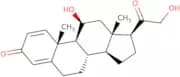
CAS:Controlled Product17-Deoxyprednisolone is a synthetic glucocorticoid that binds to the mineralocorticoid receptor, which is found in cells of the adrenal gland and other tissues. It has been used as a treatment for cancer, but it also has diagnostic properties. 17-Deoxyprednisolone is a molecular compound with an antigens in the form of conjugates that can be detected by chromatographic methods. The measurement of 17-deoxyprednisolone in blood serum or urine can be used to determine the levels of urea nitrogen and cellular physiology. 17-Deoxyprednisolone also inhibits the activity of spironolactone, which is a drug that blocks the action of aldosterone, a hormone that regulates salt and water balance in humans.Formula:C21H28O4Purity:Min. 95%Molecular weight:344.44 g/mol1,4-Di-2-furoylpiperazine
CAS:1,4-Di-2-furoylpiperazine is a synthetic compound that has been shown to have anti-inflammatory and analgesic properties. It was originally developed as a pharmaceutical drug candidate for the treatment of arthritis and other inflammatory disorders. 1,4-Di-2-furoylpiperazine is an impurity in the synthesis of the drug product diclofenac. The compound is also found as a metabolite in humans after oral administration of diclofenac. 1,4-Di-2-furoylpiperazine binds to protein and inhibits protein synthesis by preventing amino acid incorporation into proteins. It also has nicotinic effects on acetylcholine binding sites and can be used as an analytical standard for HPLC analysis of drugs containing this molecule.Formula:C14H14N2O4Purity:Min. 95%Molecular weight:274.27 g/mol6-Acetoxymethyl-4-methoxy-5-methyl-3-pyridylmethanol o-toluate
CAS:<p>6-Acetoxymethyl-4-methoxy-5-methyl-3-pyridylmethanol o-toluate is a synthetic compound that is used as an analytical reference standard for the metabolism studies. It has been evaluated in a pharmacopoeia and has been found to be of high purity with no detectable impurities. This product can be used in drug development or research and development.</p>Formula:C19H21NO5Purity:Min. 95%Molecular weight:343.40 g/molα,α'-Bis[(2-methoxyphenoxy)methyl]-1,4-piperazinediethanol
CAS:<p>α,α'-Bis[(2-methoxyphenoxy)methyl]-1,4-piperazinediethanol is an impurity in the drug ranolazine. It is a dimer of the active compound α,α'-bis[2-(methoxy)phenoxy]methyl-1,4-piperazine. This impurity has been shown to have antiarrhythmic properties.</p>Formula:C24H34N2O6Purity:Min. 95%Molecular weight:446.5 g/molClindamycin phosphate EP impurity G
<p>Clindamycin phosphate EP impurity G is a metabolite of clindamycin that can be found in the urine of patients taking clindamycin. It is a white to off-white crystalline solid with a melting point of about 205°C. Clindamycin phosphate EP impurity G has been used as an analytical reference standard for clindamycin, and it is also used as a synthetic intermediate in the drug development process. The CAS number for this compound is 719-72-4.</p>Formula:C18H33N2O8PSPurity:Min. 95%Molecular weight:468.5 g/molPBDE 197
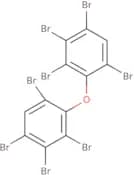
CAS:Controlled ProductPBDE 197 is a medicinal compound that has shown potential as an anticancer agent. It is a kinase inhibitor, which means it blocks certain enzymes that are involved in cell signaling and growth. PBDE 197 has been found to induce apoptosis, or programmed cell death, in human cancer cells. This compound is an analog of other kinase inhibitors and has demonstrated potent inhibitory effects on protein kinases in vitro. In animal studies, PBDE 197 has shown promising results as a tumor growth inhibitor. It is excreted through urine and may have potential as a therapeutic option for cancer patients.Formula:C12H2Br8OPurity:Min. 95%Molecular weight:801.4 g/molAzithromycin N-ethyl
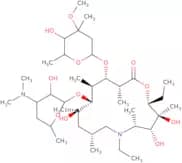
CAS:Azithromycin N-ethyl is a drug development and analytical impurity standard. It is used as an analytical reference material for high-performance liquid chromatography (HPLC) and nuclear magnetic resonance spectroscopy (NMR). Azithromycin N-ethyl has been shown to be a metabolite of azithromycin, which is a niche antibiotic with broad activity against Gram-positive bacteria. This product can also be synthesized from erythromycins using methylation. CAS Number: 92594-45-1Formula:C39H74N2O12Purity:Min. 95%Molecular weight:763.01 g/molMl 10302 hydrochloride
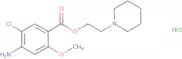
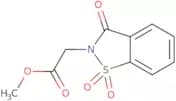
CAS:Ml 10302 hydrochloride is a drug that has anxiolytic-like effects in animals. Ml 10302 hydrochloride binds to the GABAA receptor and enhances its sensitivity to the neurotransmitter GABA. It also binds to the benzodiazepine site on the GABAA receptor and inhibits a variety of ligands, including benzodiazepines, barbiturates, and alcohols. Ml 10302 hydrochloride was shown to have anxiolytic-like effects in humans and it is thought that this effect may be due to its ability to increase the sensitivity of GABAA receptors. Studies suggest that Ml 10302 hydrochloride increases the affinity of GABA for its binding site on the GABAA receptor, which is thought to be mediated through an allosteric mechanism.Formula:C15H22Cl2N2O3Purity:Min. 95%Molecular weight:349.2 g/mol3-Oxo-1,2-benzoisothiazoline-2-acetic acid methyl ester 1,1-dioxide
CAS:<p>Meloxicam is a nonsteroidal anti-inflammatory drug that is used in the treatment of osteoarthritis and rheumatoid arthritis. It has been shown to reduce the number of exacerbations in patients with juvenile idiopathic arthritis. Meloxicam also inhibits the production of Cox-2, which is an enzyme that produces inflammation in joints. The oral route of administration allows meloxicam to be distributed through the body. This drug is not active against ankylosing spondylitis and it should not be taken by pregnant women or children under 12 years old.</p>Formula:C10H9NO5SPurity:Min. 95%Molecular weight:255.25 g/molPF-06843195
CAS:PF-06843195 is a potent analog of a medicinal compound that has shown anticancer activity against various types of cancer cells. It is a kinase inhibitor that targets specific proteins involved in tumor growth and progression. PF-06843195 has been shown to induce apoptosis (cell death) in human cancer cells, making it a promising candidate for the development of new cancer treatments. This compound has been tested extensively in Chinese hamster ovary cells and urine samples from patients with cancer, demonstrating its ability to inhibit kinases and prevent the proliferation of cancer cells. Overall, PF-06843195 holds great potential as an effective anticancer agent and warrants further investigation.Formula:C20H25F3N8O4Purity:Min. 95%Molecular weight:498.5 g/molHirsutidin chloride
CAS:Hirsutidin chloride is a plant flavonol glycoside that has been found to be an effective ingredient for the treatment of skin conditions such as dryness and aging. Hirsutidin chloride is also known to have an anti-inflammatory effect. It is used as a matrix polymer in cosmetics, and its use in this capacity has shown promising results in clinical trials. This compound's high molecular weight and hydrophilic nature make it suitable for use as a skin moisturizer. Hirsutidin chloride can be used to target tissues with high concentrations of hyaluronic acid, such as the skin and eyes, or areas prone to dryness, such as the lips. Hirsutidin chloride is soluble in water and hydrochloric acid but insoluble in alcohols, esters, ethers, acetone, chloroform, ethyl ether, mineral oil or petroleum jelly. Hirsutidin chloride has strong fluorescence properties underFormula:C18H17O7Purity:Min. 95%Molecular weight:345.3 g/mol

![N-[(S)-(4-Nitrophenoxy)phenoxyphosphinyl]-L-alanine 2-ethylbutyl ester](/_next/image/?url=https%3A%2Fstatic.cymitquimica.com%2Fproducts%2F3D%2Fthumb-webp%2FFN176472.webp&w=3840&q=75)
![[1-Hydroxy-3-(methylisopentylamino)propylidene] bisphosphonic acid monosodium (ibandronic acid imp…](/_next/image/?url=https%3A%2Fstatic.cymitquimica.com%2Fproducts%2F3D%2Fthumb-webp%2FXWC98436.webp&w=3840&q=75)
![α,α'-Bis[(2-methoxyphenoxy)methyl]-1,4-piperazinediethanol](/_next/image/?url=https%3A%2Fstatic.cymitquimica.com%2Fproducts%2F3D%2Fthumb-webp%2FINA74957.webp&w=3840&q=75)