APIs for research and impurities
Subcategories of "APIs for research and impurities"
- Aminoacids and derivatives(12,319 products)
- Anthraquinones and derivatives(402 products)
- Benzimidazole and Imidazole Derivatives(10,389 products)
- Benzodiazepine Derivatives(326 products)
- Carbohydrates and glycoconjugates(5,046 products)
- Esters and Derivatives(42,242 products)
- Fatty Acids and Lypidic Derivatives(32,371 products)
- Flavonoids and Polyphenols(17,073 products)
- Free Radicals and Oxidant/Reducing Agents(211 products)
- Ketones and derivatives(2,398 products)
- Natural and semi-synthetic antibiotics(6,321 products)
- Nitriles and Cyano Derivatives(3,068 products)
- Nitrosamines and Derivatives(55 products)
- Nucleosides and Nucleotides(3,441 products)
- Organic Phosphates and Phosphonates(1,193 products)
- Organic Sulphonates and Sulphates(10,418 products)
- Organometallics(4,417 products)
- Others(6,270 products)
- Peptides and Proteins(3,132 products)
- Polymers and Derivatives(99 products)
- Purines and Pyrimidine Derivatives(8,895 products)
- Quinazoline and Quinoline Derivatives(65,667 products)
- Quinones and Derivatives(24,338 products)
- Salts and Derivatives of Active Pharmaceutical Ingredients (API)(81,323 products)
- Steroids and Derivatives(4,922 products)
- Sulfonamides and Derivatives(2,562 products)
- Terpenoids and Derivatives(3,833 products)
- Thiazolidinediones and Thiopyrans(2,752 products)
- β-Adrenergic Compounds(227 products)
Found 58693 products of "APIs for research and impurities"
De(diethylaminoethyl-5-iodo) Amiodarone
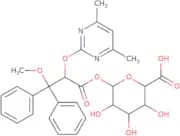
CAS:Amiodarone is a drug that belongs to the group of annular compounds. It has been used in the treatment of cardiac arrhythmias, such as atrial fibrillation (AF) and ventricular tachycardia (VT). Amiodarone has been shown to have a high affinity for specific genes, including those involved in the regulation of the heart. This drug is also used in animals, such as dogs and rats. Amiodarone has been shown to have toxic effects on cardiac tissue and other organs, which may be due to its ability to inhibit the metabolism of thyroid hormones by deiodination. Amiodarone also inhibits synthesis of protein by binding to DNA, inhibiting transcription and translation.Formula:C19H17IO3Purity:Min. 95%Color and Shape:PowderMolecular weight:420.24 g/molAmbrisentan acyl β-D-glucuronide
CAS:Ambrisentan is a drug product that is used in the treatment of pulmonary hypertension. Ambrisentan is metabolized to ambrisentan acyl β-D-glucuronide, a natural metabolite that has been synthesized as an analytical standard. It also shows antihypertensive activity and is currently under development for use in the treatment of heart failure.
Formula:C28H30N2O10Purity:Min. 95%Molecular weight:554.5 g/mol2,3,3',4'-Tetrachlorobiphenyl
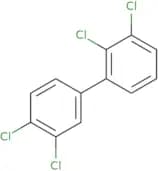
CAS:Controlled Product2,3,3',4'-Tetrachlorobiphenyl is an inhibitor that has been shown to induce apoptosis in human and Chinese hamster cancer cells. It inhibits the activity of kinases, which are enzymes that play a critical role in regulating cell growth and division. The inhibition of these enzymes leads to the activation of apoptotic pathways, resulting in cell death. Additionally, 2,3,3',4'-Tetrachlorobiphenyl has been found to inhibit the uptake of d-xylose by cells and decrease protein synthesis. This compound has potential medicinal applications for the treatment of tumors and cancers. It can be detected in urine samples and is considered a marker for exposure to environmental pollutants.Formula:C12H6Cl4Purity:Min. 95%Molecular weight:292 g/mol4'-[(4'Methyl-2'-propyl[2,6'-bi-1H-benzimidazol]-1'-yl)methyl][1,1'-biphenyl]-2-carboxylic acid
CAS:Gatifloxacin is a fluoroquinolone antibiotic that inhibits the DNA gyrase and topoisomerase IV, which are enzymes that maintain the integrity of bacterial DNA. It binds to bacterial 16S ribosomal RNA and inhibits protein synthesis, leading to cell death by inhibiting the production of proteins vital for cell division. Gatifloxacin has been shown to be effective against methicillin-resistant Staphylococcus aureus (MRSA) and Clostridium perfringens, although is not active against acid-fast bacteria such as Mycobacterium tuberculosis or Mycobacterium avium complex. Gatifloxacin has shown anti-inflammatory properties, which may be due to its inhibition of prostaglandin synthesis. 4'-[(4'Methyl-2'-propyl[2,6'-bi-1H-benzimidazol]-1'-yl)methyl][Formula:C32H28N4O2Purity:Min. 95%Molecular weight:500.59 g/molGomphrenin I
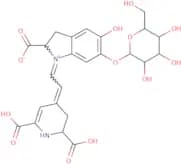
CAS:Gomphrenin I is an analog of a human protein that has been found to have potent anticancer properties. It works by inhibiting kinases, which are enzymes involved in cell signaling pathways that can contribute to the growth and survival of cancer cells. Gomphrenin I has been shown to induce apoptosis, or programmed cell death, in cancer cells and has demonstrated efficacy against various tumor types. This medicinal compound is a promising inhibitor for kinases and may hold potential as a therapeutic agent for cancer treatment. Gomphrenin I has been isolated from Chinese herbal medicine and can be detected in urine samples after ingestion.
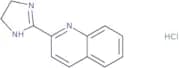
Formula:C24H26N2O13Purity:Min. 95%Molecular weight:550.5 g/molBu 224 hydrochloride
CAS:Bu 224 hydrochloride is an exogenous ligand that binds to the imidazoline I1 receptor. It is a potent and selective agonist for this receptor, which has been shown to be located in cardiac tissue. Bu 224 hydrochloride has been shown to increase the release of noradrenaline from cardiac cells, resulting in cardiostimulant effects. The binding of Bu 224 hydrochloride to the I1 receptor also increases blood pressure, heart rate, and myocardial contractility. The effect on blood pressure is dose-dependent: low doses result in a mild increase in blood pressure, whereas higher doses can lead to severe hypertension.Formula:C12H12ClN3Purity:Min. 95%Molecular weight:233.69 g/mol2-(((Hydroxy-4-methyloctyl)oxy)carbonyl)cyclohexanecarboxylic-d8 acid
CAS:2-(((Hydroxy-4-methyloctyl)oxy)carbonyl)cyclohexanecarboxylic acid is a metabolite of the plasticiser diethyl phthalate. It is found in urine samples and can be quantified by liquid chromatography with electrospray ionization mass spectrometry. 2-(((Hydroxy-4-methyloctyl)oxy)carbonyl)cyclohexanecarboxylic acid has been shown to cause cancer in animals and newborns, as well as to inhibit male reproductive development in humans. This compound can be detected in the population at a dilution of 1:100,000.Formula:C17H22D8O5Purity:Min. 95%Molecular weight:322.47 g/molDiclazuril 6-carboxylic acid [(4-chlorophenyl)cyanomethyl]-2,6-dichlorophenyl-4-amide
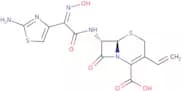
CAS:Diclazuril is a drug product that is custom synthesized in our laboratory. It is a high purity, analytical standard with a CAS No. 1796928-69-2. Diclazuril is metabolized through a number of metabolic transformations, including hydrolysis by esterases or glucuronidases, oxidation by cytochrome P450 enzymes, reduction by glutathione reductase, or conjugation with glucuronic acid. The natural form of diclazuril has been identified as the metabolite of clozapine and other antipsychotic drugs. This drug has been evaluated for its pharmacopoeia and HPLC standards. These standards are used to determine the quality and purity of drugs that are used in research and development.Formula:C32H16Cl6N6O3Purity:Min. 95%Molecular weight:745.2 g/mol7 S-Cefdinir
CAS:7 S-Cefdinir is an oral cephalosporin antibiotic that binds to penicillin-binding proteins in the bacterial cell wall by competitive inhibition. This binding prevents the formation of an antibiotic-inhibitor complex with transpeptidase and transpeptidase, which are enzymes involved in peptidoglycan synthesis. 7 S-Cefdinir also inhibits pentapeptide cross-linking, which is necessary for the formation of peptidoglycan chains. 7 S-Cefdinir has bactericidal activity against a wide range of bacteria and acts as an antibacterial agent. It is active against erythromycin-resistant strains of Streptococcus pneumoniae and Mycoplasma pneumoniae, but not against methicillin-resistant Staphylococcus aureus (MRSA).Formula:C14H13N5O5S2Purity:Min. 95%Molecular weight:395.42 g/mol1,3-Dihydro-6-methylfuro[3,4-c]pyridin-7-ol
CAS:1,3-Dihydro-6-methylfuro[3,4-c]pyridin-7-ol is a compound that contains impurities such as fatty acids and uridine. It has been found to be an inhibitor of α-mangostin adduct formation with fatty acids. Additionally, it has been shown to inhibit the activity of GSK-3β, an enzyme involved in various cellular processes. This compound also exhibits inhibitory effects on monascus and safranal, two enzymes involved in the production of certain compounds. Furthermore, it has been found to inhibit calpain, an enzyme responsible for protein degradation. The compound can be used in various research applications involving electrode modification and polylysine immobilization. It may also have potential interactions with other drugs such as cefdinir.Formula:C8H9NO2Purity:Min. 95%Molecular weight:151.16 g/molN-[(6-Chloropyridin-3-yl)methyl]-N-methylacetamide
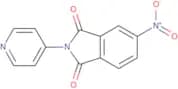
CAS:N-[(6-Chloropyridin-3-yl)methyl]-N-methylacetamide (CAS No. 864628-19-3) is a drug product that has a natural and synthetic origin. Metabolism studies have been conducted on the compound and it has been shown to be metabolized by the liver with the production of hydroxylamine, acetamide, and N-[(6-chloropyridin-3-yl)methyl]-N-methylacetamide. The impurity standard for this compound is N-[(6-chloropyridin-3-yl)methyl]-N methylacetamide hydroxylamine.Formula:C9H11ClN2OPurity:Min. 95%Molecular weight:198.65 g/mol5-Nitro-2-(pyridin-4-yl)-2,3-dihydro-1H-isoindole-1,3-dione
CAS:Please enquire for more information about 5-Nitro-2-(pyridin-4-yl)-2,3-dihydro-1H-isoindole-1,3-dione including the price, delivery time and more detailed product information at the technical inquiry form on this pageFormula:C13H7N3O4Purity:Min. 95%Molecular weight:269.21 g/mol4-[2-(5-Ethyl-2-pyridinyl)ethoxy]benzenepropanoic acid ethyl ester
CAS:4-[2-(5-Ethyl-2-pyridinyl)ethoxy]benzenepropanoic acid ethyl ester is an analytical standard for metabolite identification and quantitation in human urine. It is a natural product, API impurity, or synthetic. This compound is used as a drug development tool to study metabolism studies and may be used as a custom synthesis or impurity standard. 4-[2-(5-Ethyl-2-pyridinyl)ethoxy]benzenepropanoic acid ethyl ester may be used in HPLC analysis to produce high purity and pharmacopoeia standards.Formula:C20H25NO3Purity:Min. 95%Molecular weight:327.42 g/mol(1R,3S)-1-(1,3-Benzodioxol-5-yl)-2-(2-chloroacetyl)-2,3,4,9-tetrahydro-1H-pyrido[3,4-b]indole-3-carboxylic acid methyl ester
CAS:(1R,3S)-1-(1,3-Benzodioxol-5-yl)-2-(2-chloroacetyl)-2,3,4,9-tetrahydro-1H-pyrido[3,4-b]indole-3-carboxylic acid methyl ester is a drug product that has not yet been approved for use in humans. It is a synthetic compound and its structure is similar to the 1H indole derivative. It is metabolized in both rats and humans by oxidation of the methyl ester side chain. Metabolites have been identified in urine and feces following administration of radiolabeled (1R,3S)-1-(1,3-benzodioxol-5-yl)-2-(2 chloroacetyl)-2,3,4,9 tetrahydro 1H pyrido[3,4 b]indole 3 carboxylic
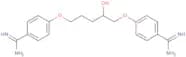
Formula:C22H19ClN2O5Purity:Min. 95%Molecular weight:426.8 g/mol1,5-Bis(4-amidinophenoxy)-2-pentanol
CAS:Please enquire for more information about 1,5-Bis(4-amidinophenoxy)-2-pentanol including the price, delivery time and more detailed product information at the technical inquiry form on this page
Formula:C19H24N4O3Purity:Min. 95%Molecular weight:356.4 g/mol2,2-Bis-[3-(1-methylpiperidin-4-yl)-1H-indol-5-yl]ethanesulfonic acid methylamide
CAS:2,2-Bis-[3-(1-methylpiperidin-4-yl)-1H-indol-5-yl]ethanesulfonic acid methylamide is an analytical standard for HPLC. It is a synthetic substance and has been shown to be a metabolite of the drug product, 2,2-bis-(3-(1-methylpiperidin-4-yl)indol-5-yl)ethanesulfonic acid methylamide.Formula:C31H41N5O2SPurity:Min. 95%Molecular weight:547.80 g/molR-(−)-7-Desmethyl-8-nitro blebbistatin
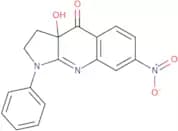
CAS:R-(-)-7-Desmethyl-8-nitro blebbistatin is a drug product that has been custom synthesized for research and development purposes. The purity of this product is high, and the analytical data can be provided upon request. This compound is metabolized in vivo by a number of metabolic transformations, including hydrolysis by esterases or glucuronidases, oxidation by cytochrome P450 enzymes, reduction by glutathione reductase, or conjugation with glucuronic acid. R-(-)-7-Desmethyl-8-nitro blebbistatin also specifically binds to markers expressed at high levels in Mycobacterium tuberculosis strains (e.g., ESX-1 secretion system protein) and inhibits cell growth in culture.Formula:C17H13N3O4Purity:Min. 95%Molecular weight:323.3 g/molDorzolamide impurity C hydrochloride
Impurity C is a by-product of dorzolamide hydrochloride. It is used as an analytical reference material, in drug development and as an impurity standard for HPLC. It is also used to generate a pharmacopoeia monograph. The CAS number for Impurity C is 70585-27-5.Purity:Min. 95%6-Desmethyl-6-methylhydroxy etoricoxib-beta-glucuronide
CAS:6-Desmethyl-6-methylhydroxy etoricoxib-beta-glucuronide is a metabolite of etoricoxib, a nonsteroidal anti-inflammatory drug. It is a yellowish crystalline powder with a molecular weight of 568.7 and chemical formula C19H24N2O4. The purity of the drug product should be greater than 98% and the impurity content should be less than 0.1%. 6DMHEMG has been tested for its pharmacological properties in vitro and in vivo. 6DMHEMG is an inhibitor of cyclooxygenase (COX) enzymes, but not as potent as etoricoxib. This metabolite is not listed in the current edition of the U.S. Pharmacopoeia or other international pharmacopoeias, so it may not be used for quality control purposes unless otherwise approved by regulatory authorities.br>br>Formula:C24H23ClN2O9SPurity:Min. 95%Molecular weight:551.00 g/molBisnonyl dimethyl ammonium chloride
CAS:Bisnonyl dimethyl ammonium chloride (BDAC) is an inorganic, modifying agent that is used as a catalyst for organic reactions. It has been shown to be a selective and stable surface modifier for the modification of ionic liquids. BDAC has also been utilized as a high-selectivity substance in the synthesis of cyclic hydrocarbons and phosphonium salts. BDAC is also used as a solid catalyst for the production of high yields of organophosphines and other nitrogen-containing compounds.
Formula:C20H44ClNPurity:Min. 95%Molecular weight:334 g/mol


![4'-[(4'Methyl-2'-propyl[2,6'-bi-1H-benzimidazol]-1'-yl)methyl][1,1'-biphenyl]-2-carboxylic acid](/_next/image/?url=https%3A%2Fstatic.cymitquimica.com%2Fproducts%2F3D%2Fthumb-webp%2FIM21329.webp&w=3840&q=75)
![Diclazuril 6-carboxylic acid [(4-chlorophenyl)cyanomethyl]-2,6-dichlorophenyl-4-amide](/_next/image/?url=https%3A%2Fstatic.cymitquimica.com%2Fproducts%2F3D%2Fthumb-webp%2FWWC92869.webp&w=3840&q=75)
![1,3-Dihydro-6-methylfuro[3,4-c]pyridin-7-ol](/_next/image/?url=https%3A%2Fstatic.cymitquimica.com%2Fproducts%2F3D%2Fthumb-webp%2FID27319.webp&w=3840&q=75)
![N-[(6-Chloropyridin-3-yl)methyl]-N-methylacetamide](/_next/image/?url=https%3A%2Fstatic.cymitquimica.com%2Fproducts%2F3D%2Fthumb-webp%2FIC171311.webp&w=3840&q=75)
![4-[2-(5-Ethyl-2-pyridinyl)ethoxy]benzenepropanoic acid ethyl ester](/_next/image/?url=https%3A%2Fstatic.cymitquimica.com%2Fproducts%2F3D%2Fthumb-webp%2FIE23113.webp&w=3840&q=75)
![(1R,3S)-1-(1,3-Benzodioxol-5-yl)-2-(2-chloroacetyl)-2,3,4,9-tetrahydro-1H-pyrido[3,4-b]indole-3-ca…](/_next/image/?url=https%3A%2Fstatic.cymitquimica.com%2Fproducts%2F3D%2Fthumb-webp%2FEAB65244.webp&w=3840&q=75)
![2,2-Bis-[3-(1-methylpiperidin-4-yl)-1H-indol-5-yl]ethanesulfonic acid methylamide](/_next/image/?url=https%3A%2Fstatic.cymitquimica.com%2Fproducts%2F3D%2Fthumb-webp%2FWDC60416.webp&w=3840&q=75)