


APIs for research and impurities
Subcategories of "APIs for research and impurities"
- Aminoacids and derivatives(12,332 products)
- Anthraquinones and derivatives(404 products)
- Benzimidazole and Imidazole Derivatives(10,440 products)
- Benzodiazepine Derivatives(333 products)
- Carbohydrates and glycoconjugates(5,048 products)
- Esters and Derivatives(42,250 products)
- Fatty Acids and Lypidic Derivatives(32,410 products)
- Flavonoids and Polyphenols(17,082 products)
- Free Radicals and Oxidant/Reducing Agents(213 products)
- Ketones and derivatives(2,400 products)
- Natural and semi-synthetic antibiotics(6,379 products)
- Nitriles and Cyano Derivatives(3,068 products)
- Nitrosamines and Derivatives(55 products)
- Nucleosides and Nucleotides(3,475 products)
- Organic Phosphates and Phosphonates(1,200 products)
- Organic Sulphonates and Sulphates(10,431 products)
- Organometallics(4,421 products)
- Others(6,302 products)
- Peptides and Proteins(3,146 products)
- Polymers and Derivatives(100 products)
- Purines and Pyrimidine Derivatives(8,946 products)
- Quinazoline and Quinoline Derivatives(66,005 products)
- Quinones and Derivatives(24,359 products)
- Salts and Derivatives of Active Pharmaceutical Ingredients (API)(80,604 products)
- Steroids and Derivatives(4,953 products)
- Sulfonamides and Derivatives(2,592 products)
- Terpenoids and Derivatives(3,847 products)
- Thiazolidinediones and Thiopyrans(2,753 products)
- β-Adrenergic Compounds(231 products)
Found 57909 products of "APIs for research and impurities"
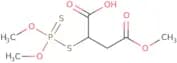
o-Methyl malathion α-monoacid
CAS:Please enquire for more information about o-Methyl malathion α-monoacid including the price, delivery time and more detailed product information at the technical inquiry form on this page
Formula:C7H13O6PS2Purity:Min. 95%Molecular weight:288.3 g/molXanthene-d2
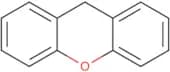
CAS:Xanthene-d2 is an analog of xanthene that has been labeled with deuterium. It is a potent inhibitor of kinases, specifically cyclin-dependent kinases (CDKs), which play a crucial role in regulating the cell cycle and are often overexpressed in cancer cells. Xanthene-d2 has been shown to inhibit the proliferation of various human cancer cell lines, including Chinese hamster ovary cells and human colon carcinoma cells. This compound induces apoptosis in cancer cells by inhibiting CDK activity and disrupting protein synthesis. Xanthene-d2 is also used as a tool for studying kinase inhibitors and their effects on tumor growth. Its use in urine samples can help identify potential biomarkers for anticancer therapy.Formula:C13H10OPurity:Min. 95%Molecular weight:184.23 g/molNicergoline EP Impurity B
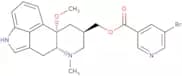
CAS:Nicergoline EP Impurity B is a metabolite of nicergoline, a drug product. It has been synthesized for use as an impurity standard for analytical and pharmacopoeia purposes. Nicergoline EP Impurity B is not found in nature and has been shown to be metabolically stable in vitro. It can be used as a reference substance for the determination of nicergoline concentrations in human plasma samples.Purity:Min. 95%SMS2-IN-1
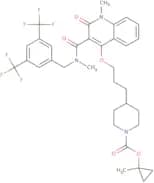
CAS:SMS2-IN-1 is a nuclear ginseng propionate monoester inhibitor that has shown promising antiviral properties. It has been found to inhibit the activity of galacturonic acid, which is crucial for viral replication. Additionally, SMS2-IN-1 has been studied in molecular docking experiments and has shown potential as an inhibitor of tenofovir disoproxil fumarate, a widely used antiviral drug. This compound also exhibits cytotoxic effects on certain cells and has been explored for its potential in recombination studies. It is important to note that SMS2-IN-1 may contain impurities, including the compound ivermectin.
Formula:C34H37F6N3O5Purity:Min. 95%Molecular weight:681.7 g/molSsr 180711 hydrochloride
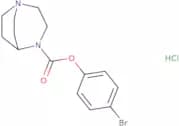
CAS:Ssr 180711 hydrochloride is a synthetic compound with a molecular weight of 557.5. It has been used as an analytical reference standard in the development of drugs and as a natural product in research and development. Ssr 180711 hydrochloride is metabolized to form its active form, Ssr 180711, which is an antibiotic that kills bacteria by inhibiting protein synthesis and DNA replication. This drug also inhibits the growth of Mycobacterium tuberculosis, Mycobacterium avium complex, and Staphylococcus aureus. The purity of this product is 99.0% pure (HPLC).Formula:C14H18BrClN2O2Purity:Min. 95%Molecular weight:361.66 g/mol(R)-Diphenyl (((1-(6-amino-9H-purin-9-yl)propan-2-yl)oxy)methyl)phosphonate
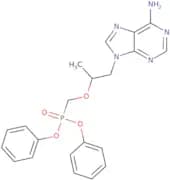
CAS:(R)-Diphenyl (((1-(6-amino-9H-purin-9-yl)propan-2-yl)oxy)methyl)phosphonate is a high purity, analytical, API impurity, HPLC standard, drug development, niche and drug product. It is an impurity standard for the pharmacopoeia. It is also synthesized from natural or synthetic sources.Formula:C21H22N5O4PPurity:Min. 95%Molecular weight:439.4 g/molGlimepiride EP Impurity H
CAS:Please enquire for more information about Glimepiride EP Impurity H including the price, delivery time and more detailed product information at the technical inquiry form on this pageFormula:C24H28N4O5SPurity:Min. 95%Color and Shape:PowderMolecular weight:484.57 g/molHyoscyamine related compound A
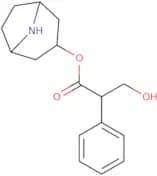
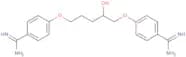
CAS:Hyoscyamine related compound A is a pure, synthetic chemical compound that is used as an impurity standard and can be custom synthesized to meet the requirements of a customer's research and development. Hyoscyamine related compound A is also known as a metabolite in the body, which means it is created from another substance. It is created from the breakdown of Hyoscyamine, which is found in plants such as jimson weed, mandrake, and henbane. Hyoscyamine related compound A has a CAS number of 537-29-1. It can be used to create drug product or pharmacopoeia standards. It has been classified as a custom synthesis by the FDA because it has not been approved for use in humans or animals.Formula:C16H21NO3Purity:Min. 95%Molecular weight:275.35 g/mol1,5-Bis(4-amidinophenoxy)-2-pentanol
CAS:Please enquire for more information about 1,5-Bis(4-amidinophenoxy)-2-pentanol including the price, delivery time and more detailed product information at the technical inquiry form on this page
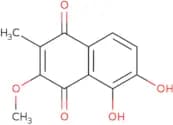
Formula:C19H24N4O3Purity:Min. 95%Molecular weight:356.4 g/molMalvone A
CAS:Malvone A is a potent inhibitor of human protein kinases, which are essential for cell cycle regulation and apoptosis in tumor cells. This indole compound has been shown to inhibit the growth of various cancer cell lines, including Chinese hamster ovary cells and leukemia cells. Malvone A induces apoptosis in cancer cells by inhibiting the activity of specific kinases that regulate cell growth and division. It is a promising candidate for the development of new anticancer drugs due to its potent inhibitory effects on tumor cell growth.Formula:C12H10O5Purity:Min. 95%Molecular weight:234.2 g/molN,N'-Bis[2-(3,4-dimethoxyphenyl)ethyl]-N,N'-dimethyl-1,3-propanediamine dihydrochloride
CAS:N,N'-Bis[2-(3,4-dimethoxyphenyl)ethyl]-N,N'-dimethyl-1,3-propanediamine dihydrochloride is a synthetic compound that is metabolized to the natural product naphthol AS. It is an impurity in the drug product and can also be used as an analytical reference standard.Formula:C25H38N2O4·2HClPurity:Min. 95%Molecular weight:503.5 g/mol(1R,3S)-1-(1,3-Benzodioxol-5-yl)-2-(2-chloroacetyl)-2,3,4,9-tetrahydro-1H-pyrido[3,4-b]indole-3-carboxylic acid methyl ester
CAS:(1R,3S)-1-(1,3-Benzodioxol-5-yl)-2-(2-chloroacetyl)-2,3,4,9-tetrahydro-1H-pyrido[3,4-b]indole-3-carboxylic acid methyl ester is a drug product that has not yet been approved for use in humans. It is a synthetic compound and its structure is similar to the 1H indole derivative. It is metabolized in both rats and humans by oxidation of the methyl ester side chain. Metabolites have been identified in urine and feces following administration of radiolabeled (1R,3S)-1-(1,3-benzodioxol-5-yl)-2-(2 chloroacetyl)-2,3,4,9 tetrahydro 1H pyrido[3,4 b]indole 3 carboxylic
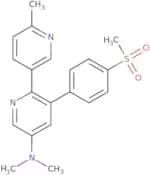
Formula:C22H19ClN2O5Purity:Min. 95%Molecular weight:426.8 g/molEtoricoxib impurity 5
CAS:Etoricoxib impurity 5 is an impurity of etoricoxib. Etoricoxib is a nonsteroidal anti-inflammatory drug (NSAID) that belongs to the class of selective COX-2 inhibitors. It inhibits the production of prostaglandins and has been shown to reduce inflammation, swelling, and pain in animal studies. Etoricoxib impurity 5 is an impurity standard for HPLC analysis. This compound has not been evaluated by the FDA or other regulatory agencies.
Formula:C20H21N3O2SPurity:Min. 95%Molecular weight:367.5 g/mol7-Methoxy-N-[2-(7-methoxy-1-naphthalenyl)ethyl]-1-naphthaleneethanamine
CAS:7-Methoxy-N-[2-(7-methoxy-1-naphthalenyl)ethyl]-1-naphthaleneethanamine is a drug product that is a synthetic compound. It has the following analytical data:Formula:C26H27NO2Purity:Min. 95%Molecular weight:385.5 g/mol6-Methyl-2-(4-methylphenyl)imidazol[1,2-a]-pyridine-3-acetic acid
CAS:6-Methyl-2-(4-methylphenyl)imidazol[1,2-a]-pyridine-3-acetic acid is an imidazopyridine that is soluble in organic solvents. It is a white crystalline solid at room temperature. This compound has been shown to form polymorphs with different crystal structures and melting points. 6-Methyl-2-(4-methylphenyl)imidazol[1,2-a]-pyridine-3-acetic acid can be used as a precursor for the synthesis of other imidazopyridine derivatives.
Formula:C17H16N2O2Purity:Min. 95%Molecular weight:280.32 g/molAzithromycin impurity J
CAS:Azithromycin impurity J, also known as Azithromycin P-Toluenesulfonate, is an impurity of the drug azithromycin. It is an antibiotic that has been shown to be effective in the treatment of protozoal infections, cancer and parasites. Azithromycin impurity J has been shown to bind to DNA gyrase and topoisomerase IV enzymes, which are necessary for bacterial replication. Azithromycin impurity J is a protozoan inhibitor that acts by blocking the synthesis of RNA and DNA. This impurity binds to DNA gyrase and topoisomerase IV enzymes, which are necessary for bacterial replication. Azithromycin impurity J is a protozoan inhibitor that acts by blocking the synthesis of RNA and DNA.Formula:C30H58N2O9Purity:Min. 95%Color and Shape:Off-White PowderMolecular weight:590.79 g/molLabetalol EP impurity D
CAS:Labetalol EP impurity D is a metabolite of labetalol that is used as an impurity standard for HPLC. This impurity has been identified in the drug product and also in the drug development process. Labetalol EP impurity D is one of many metabolites that can be formed by cytochrome P450 enzymes. Labetalol EP impurity D is a natural metabolite of labetalol, which can be found in the urine of humans and other mammals. It is also present in various plants and fungi, including mushrooms, lichens, yeast, and barley. Synthetic labetalol EP impurity D can also be produced by various chemical reactions.
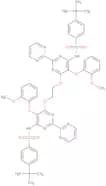
Formula:C9H12N2O3Purity:Min. 95%Molecular weight:196.2 g/molBosentan impurity C
CAS:Bosentan impurity C is a stable crystalline compound that is soluble in organic solvents. It has been identified as an impurity of the drug bosentan, and has been found to be present in the drug at concentrations of up to 0.2%. Bosentan impurity C can be prepared by crystallization from an alkaline solution and can also be obtained as a salt form. The salt form is a dimer that consists of two bosentan molecules linked together by one oxygen atom. Bosentan impurity C is stable under normal conditions and does not undergo any changes when exposed to light or heat. This compound has shown no significant adverse effects on humans who have taken it, with no adverse effects on the kidney, liver, or lungs reported.Formula:C52H52N10O10S2Purity:Min. 95%Molecular weight:1,041.16 g/mol4-tert-Butyl-2,6-dimethyl-3-hydroxyphenylacetamide
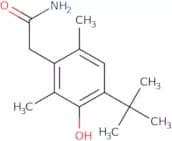
CAS:4-tert-Butyl-2,6-dimethyl-3-hydroxyphenylacetamide is a drug product that is used as an analytical standard. It can be found in the natural environment and may be synthesized for use in research and development of drugs. This substance has been used to study the metabolism of drugs and to produce high purity standards for HPLC analysis. 4-tert-Butyl-2,6-dimethyl-3-hydroxyphenylacetamide has been shown to have niche applications in pharmacopoeia.Formula:C14H21NO2Purity:Min. 95%Molecular weight:235.32 g/molN-[4-[2-[[(2R)-2-Hydroxy-2-phenylethyl]amino]ethyl]phenyl]-acetamide
CAS:N-[4-[2-[[(2R)-2-Hydroxy-2-phenylethyl]amino]ethyl]phenyl]-acetamide is a synthetic drug product that belongs to the class of drugs called acetamides. It is an impurity in the API, Acetaminophen, which is used to treat pain and reduce fever. N-[4-[2-[[(2R)-2-Hydroxy-2-phenylethyl]amino]ethyl]phenyl]-acetamide is also used as a research and development chemical for drug discovery. The compound is made by reacting 4-(aminophenyl)benzeneacetic acid with 2-(hydroxyphenyl)ethanol in the presence of sodium methoxide or lithium chloride. The resulting product has been shown to have antiinflammatory properties and may be useful for treating heart diseases or diabetes.Formula:C18H22N2O2Purity:Min. 95%Molecular weight:298.4 g/mol

![N,N'-Bis[2-(3,4-dimethoxyphenyl)ethyl]-N,N'-dimethyl-1,3-propanediamine dihydrochloride](/_next/image/?url=https%3A%2Fstatic.cymitquimica.com%2Fproducts%2F3D%2Fthumb-webp%2FIB145560.webp&w=3840&q=75)
![(1R,3S)-1-(1,3-Benzodioxol-5-yl)-2-(2-chloroacetyl)-2,3,4,9-tetrahydro-1H-pyrido[3,4-b]indole-3-ca…](/_next/image/?url=https%3A%2Fstatic.cymitquimica.com%2Fproducts%2F3D%2Fthumb-webp%2FEAB65244.webp&w=3840&q=75)
![7-Methoxy-N-[2-(7-methoxy-1-naphthalenyl)ethyl]-1-naphthaleneethanamine](/_next/image/?url=https%3A%2Fstatic.cymitquimica.com%2Fproducts%2F3D%2Fthumb-webp%2FKFC01857.webp&w=3840&q=75)
![6-Methyl-2-(4-methylphenyl)imidazol[1,2-a]-pyridine-3-acetic acid](/_next/image/?url=https%3A%2Fstatic.cymitquimica.com%2Fproducts%2F3D%2Fthumb-webp%2FIM46256.webp&w=3840&q=75)


![N-[4-[2-[[(2R)-2-Hydroxy-2-phenylethyl]amino]ethyl]phenyl]-acetamide](/_next/image/?url=https%3A%2Fstatic.cymitquimica.com%2Fproducts%2F3D%2Fthumb-webp%2FQEC24463.webp&w=3840&q=75)