APIs for research and impurities
Subcategories of "APIs for research and impurities"
- Aminoacids and derivatives(12,335 products)
- Anthraquinones and derivatives(405 products)
- Benzimidazole and Imidazole Derivatives(10,456 products)
- Benzodiazepine Derivatives(334 products)
- Carbohydrates and glycoconjugates(5,047 products)
- Esters and Derivatives(42,252 products)
- Fatty Acids and Lypidic Derivatives(32,417 products)
- Flavonoids and Polyphenols(17,086 products)
- Free Radicals and Oxidant/Reducing Agents(213 products)
- Ketones and derivatives(2,402 products)
- Natural and semi-synthetic antibiotics(6,395 products)
- Nitriles and Cyano Derivatives(3,068 products)
- Nitrosamines and Derivatives(55 products)
- Nucleosides and Nucleotides(3,486 products)
- Organic Phosphates and Phosphonates(1,201 products)
- Organic Sulphonates and Sulphates(10,436 products)
- Organometallics(4,421 products)
- Others(6,310 products)
- Peptides and Proteins(3,149 products)
- Polymers and Derivatives(100 products)
- Purines and Pyrimidine Derivatives(8,949 products)
- Quinazoline and Quinoline Derivatives(66,070 products)
- Quinones and Derivatives(24,366 products)
- Salts and Derivatives of Active Pharmaceutical Ingredients (API)(80,423 products)
- Steroids and Derivatives(4,962 products)
- Sulfonamides and Derivatives(2,603 products)
- Terpenoids and Derivatives(3,851 products)
- Thiazolidinediones and Thiopyrans(2,754 products)
- β-Adrenergic Compounds(231 products)
Found 57707 products of "APIs for research and impurities"
Remdesivir impurity 9
CAS:CAS No.: 159970-52-6
Remdesivir impurity 9 is a synthetic, natural and drug development impurity standard. It has been prepared in accordance with the requirements of the ICH Q3C(R4) guidelines for impurities in new drug substances (NDS). Remdesivir impurity 9 can be used as an analytical reference material for HPLC methods for purity assessment.
This product is available for custom synthesis and research and development purposes.Formula:C27H35N6O8PPurity:Min. 95%Molecular weight:602.58 g/mol2-[4-(Dimethylamino)-1-(2-methylphenyl)butyl]-phenol
CAS:Please enquire for more information about 2-[4-(Dimethylamino)-1-(2-methylphenyl)butyl]-phenol including the price, delivery time and more detailed product information at the technical inquiry form on this page
Formula:C19H25NOPurity:Min. 95%Molecular weight:283.4 g/molRef: 3D-UDA43254
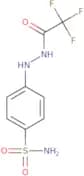
Discontinued productCelecoxib hydraziney
CAS:Celecoxib hydrazine is an inhibitor of protein kinases that has been shown to have anticancer properties. It is an analog of celecoxib, a non-steroidal anti-inflammatory drug (NSAID) that is commonly used to treat pain and inflammation. Celecoxib hydrazine has been shown to induce apoptosis in human cancer cells and inhibit the growth of tumors in mice. This compound has potential as a medicinal agent for the treatment of cancer, and urine samples from Chinese patients with cancer have been found to contain high levels of this compound. Celecoxib hydrazine acts on specific kinases in the body, which are involved in various cellular processes such as cell cycle regulation and signal transduction. Its ability to selectively inhibit these kinases makes it a promising candidate for targeted therapy against cancer.
Formula:C8H8F3N3O3SPurity:Min. 95%Molecular weight:283.23 g/molRef: 3D-QLB28081
Discontinued productRegadenoson Impurity 28
CAS:Regadenoson Impurity 28 is an analytical standard and research and development impurity. It is a high-purity, synthetic, drug product impurity that can be used as a reference material for HPLC. This drug impurity is also available in a custom synthesis service. Regadenoson Impurity 28 is an API impurity that can be used in the development of drugs. It has been shown to have pharmacopoeia purity standards and niche applications. Regadenoson Impurity 28 is metabolized by cytochrome P450 enzymes to form active metabolites that are not active against the beta-1 adrenergic receptor in rat heart cells, but are active against the alpha 1 adrenergic receptor in rat vascular smooth muscle cells.
Formula:C10H14N6O3Purity:Min. 95%Molecular weight:266.26 g/molDihydrexidine hydrochloride
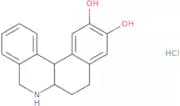
CAS:Dihydrexidine hydrochloride is a phosphate ion transport inhibitor that binds to the acetylcholine transporter, and inhibits the uptake of acetylcholine in the brain. It is used as an opioid analgesic, as well as to treat depression, cognitive disorders, and Parkinson's disease. Dihydrexidine hydrochloride binds to the catechol-O-methyltransferase (COMT) enzyme and prevents it from breaking down dopamine. This leads to increased levels of dopamine in the synapse and enhanced transmission of nerve impulses between neurons. Dihydrexidine hydrochloride also has been shown to bind to antigen molecules on cells, which may be important for its antiviral properties.
Formula:C17H18ClNO2Purity:Min. 95%Molecular weight:303.8 g/molRef: 3D-IGA70402
Discontinued product(-)-Bornyl ferulate
CAS:Controlled Product(-)-Bornyl ferulate is a natural compound, specifically a type of ferulic acid ester, which is a secondary metabolite found in certain plants. Its source is primarily the essential oils and resins of various coniferous species, where it contributes to the plant's defense mechanisms. The mode of action of (-)-Bornyl ferulate involves its ability to scavenge free radicals, thus exhibiting antioxidant activity. It also modulates inflammatory pathways, suggesting possible anti-inflammatory effects.
Formula:C20H26O4Purity:Min. 95%Molecular weight:330.42 g/molRef: 3D-FCA51107
Discontinued productCiprofibrate methyl ester
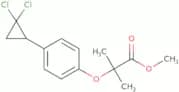
CAS:Ciprofibrate methyl ester is an analytical standard that can be used for the detection of impurities in drug products. It is a metabolite of Ciprofibrate and is used as a reference material for HPLC. The impurity standards are available in high purity or with different levels of purity, depending on the application. In addition, it can be custom synthesized to meet specific needs. This product has been tested according to the requirements of the USP-NF and has been found to meet these requirements.
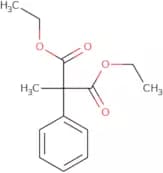
Formula:C14H16Cl2O3Purity:Min. 95%Molecular weight:303.2 g/molDiethyl methylphenylmalonate
CAS:Diethyl methylphenylmalonate is a halogenated organic compound that can be prepared by the reaction of magnesium with diethyl malonate and methylbromide. Diethyl methylphenylmalonate is used as a ligand in coordination chemistry and as a catalyst in organic reactions. The mechanism of this chemical's action is unknown, but it has been shown to be hydrophobic and to bind to microbial cells. It also has been demonstrated to have an oxidation catalyst activity. Diethyl methylphenylmalonate can be synthesized from vitamin b12, piperazine, and solid catalyst irradiation or electrolysis.
Formula:C14H18O4Purity:Min. 95%Molecular weight:250.29 g/molRef: 3D-JBA00961
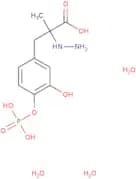
Discontinued productCarbidopa 4-phosphate trihydrate
CAS:Please enquire for more information about Carbidopa 4-phosphate trihydrate including the price, delivery time and more detailed product information at the technical inquiry form on this page
Formula:C10H21N2O10PPurity:Min. 95%Molecular weight:360.25 g/molRef: 3D-HBD68607
Discontinued productTolterodine S-enantiomer
CAS:Tolterodine S-enantiomer is a drug product that belongs to the class of prodrugs. It is metabolized in vivo to the active form, tolterodine. Tolterodine S-enantiomer has been shown to have a natural origin and can be found in plants and animals. Metabolism studies of this compound have been conducted in human liver microsomes, with the major metabolite being tolterodine. Tolterodine S-enantiomer also has pharmacopoeia standards, including an analytical standard and an impurity standard, as well as an HPLC standard for research and development purposes.
Formula:C22H31NO·C4H6O6Purity:Min. 95%Molecular weight:475.57 g/molRef: 3D-YJB55103
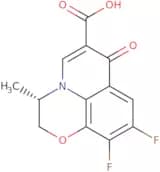
Discontinued productLevofloxacin carboxylic acid
CAS:Levofloxacin is a synthetic molecule with an asymmetric carbon atom in its heterocycle. It is synthesized by reacting chloroform with 2-fluoro-5-nitrobenzaldehyde, which reacts further with sodium hydroxide and hydrochloric acid to form the levofloxacin carboxylic acid. Impurities can be found in the reaction product due to chlorine atoms that are formed during the synthesis. The amount of impurities present in the final product can be determined using a titration method or through HPLC analysis. Levofloxacin has been shown to be effective against methicillin-resistant Staphylococcus aureus (MRSA) and Clostridium perfringens, although is not active against acid-fast bacteria such as Mycobacterium tuberculosis or Mycobacterium avium complex.
Formula:C13H9F2NO4Purity:Min. 95%Color and Shape:PowderMolecular weight:281.21 g/molRef: 3D-IL24882
Discontinued product1-[1-(4-Methoxyphenyl)-2-(methylamino)ethyl]-cyclohexanol hydrochloride
CAS:1-[1-(4-Methoxyphenyl)-2-(methylamino)ethyl]-cyclohexanol hydrochloride is a drug product that is not yet approved for use in humans. It is an impurity found in the drug cyclosporine, which is used to treat psoriasis and other skin conditions. 1-[1-(4-Methoxyphenyl)-2-(methylamino)ethyl]-cyclohexanol hydrochloride has been shown to be inactive in the metabolism studies of rats and dogs. This impurity was detected by HPLC with UV detection at 254 nm, but it did not show any significant absorption at 280 nm. The purity of this compound was determined to be 97% by NMR analysis and HPLC.
Formula:C16H25NO2·HClPurity:Min. 95%Molecular weight:299.84 g/molRef: 3D-IM63866
Discontinued productChloromethyl olanzapinium chloride
CAS:Chloromethyl olanzapinium chloride is an analytical reference material that can be used as a standard for HPLC-UV analysis. It is also used in the development of new drugs and as an impurity standard during drug manufacturing. Chloromethyl olanzapinium chloride has been shown to be a metabolite of Olanzapine, which is a niche drug product that is not commercially available. Chloromethyl olanzapinium chloride is listed by the USP, EP and JP as a drug product impurity. It can be synthesized from natural or synthetic sources.
Formula:C18H22Cl2N4SPurity:Min. 95%Color and Shape:PowderMolecular weight:397.37 g/molHexetidine impurity A
CAS:Hexetidine impurity A is an impurity in the drug product that is not present in the natural extract. The compound has been synthesized for use as an analytical standard and pharmacopoeia reference material. Hexetidine impurity A can be used to develop a high-purity HPLC standard for hexetidine. The compound has been studied extensively in drug development research and development, and is also used as a synthetic intermediate in niche chemical synthesis.
Formula:C21H43N3Purity:Min. 95%Molecular weight:337.6 g/molRef: 3D-FH182257
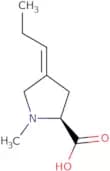
Discontinued product(trans)-4-Propyl-1-methyl-L-proline
CAS:(trans)-4-Propyl-1-methyl-L-proline is a synthetic compound that has been used in the past as an impurity standard in the synthesis of several drugs, including metaxalone and aminopyrine. It is also found to have pharmacological effects on its own and was used as a drug product for the treatment of rheumatoid arthritis. (trans)-4-Propyl-1-methyl-L-proline is not listed in any pharmacopoeia or international list of approved drugs.
Formula:C9H17NO2Purity:Min. 95%Color and Shape:White/Off-White SolidMolecular weight:171.24 g/molRef: 3D-FP27224
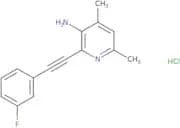
Discontinued productAdx 10059 hydrochloride
CAS:Adx 10059 hydrochloride is a synthetic drug that is used in research and development. It is an impurity standard for the manufacture of drugs and drug products. Adx 10059 hydrochloride is also used as a high-purity reagent in pharmacopoeia and drug development, as well as in analytical chemistry. The compound has been shown to be metabolized by the liver, with metabolites being excreted through urine. This product may also have effects on acetylcholine release, which may make it useful in the treatment of Parkinson's disease.
Formula:C15H14ClFN2Purity:Min. 95%Molecular weight:276.73 g/molRef: 3D-HFB94998
Discontinued productRemdesivir impurity 3 HCl
CAS:Remdesivir impurity 3 HCl is a drug product that is a metabolite of Remdesivir. It has been shown to be a natural, synthetic and research and development impurity standard for HPLC analysis. CAS No.: 2096981-79-0
Formula:C9H19NO2·HClPurity:Min. 95%Molecular weight:209.71 g/mol1-(4-((2,4-Dimethylphenyl)thio)phenyl)piperazine hydrobromide
1-(4-((2,4-dimethylphenyl)thio)phenyl)piperazine hydrobromide is a synthetic drug that has been used in the research and development of drugs. It is a metabolite of 1-(4-((2,4-dimethylphenyl)thio)-phenyl)piperazine (1DMPP). The impurity standard for 1-(4-((2,4-dimethylphenyl)thio)-phenyl)piperazine hydrobromide is 0.5% (w/w). It has been shown to be effective in metabolism studies.Purity:Min. 95%2-Phenylbutyramide
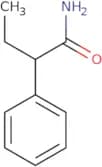
CAS:2-Phenylbutyramide is a drug that acts as a potent, nonselective agonist at adenosine A3 receptors. It has been shown to have therapeutic potential for the treatment of bowel disease and cardiac diseases. 2-Phenylbutyramide binds to the adenosine A3 receptor and triggers an increase in intracellular calcium levels, which leads to smooth muscle relaxation in the gut. This drug also has been found to be effective against autoimmune diseases and organometallic toxicity. It is not active against bacterial infections such as hepatitis or inflammatory bowel disease.
Formula:C10H13NOPurity:Min. 95%Molecular weight:163.22 g/mol4-Desmethyl 5-methyl vortioxetine hydrochloride
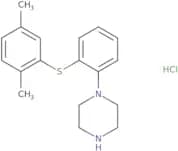
CAS:Please enquire for more information about 4-Desmethyl 5-methyl vortioxetine hydrochloride including the price, delivery time and more detailed product information at the technical inquiry form on this page
Formula:C18H23ClN2SPurity:Min. 95%Molecular weight:334.9 g/molRef: 3D-MKD72214
Discontinued product

![2-[4-(Dimethylamino)-1-(2-methylphenyl)butyl]-phenol](/_next/image/?url=https%3A%2Fstatic.cymitquimica.com%2Fproducts%2F3D%2Fthumb-webp%2FUDA43254.webp&w=3840&q=75)
![1-[1-(4-Methoxyphenyl)-2-(methylamino)ethyl]-cyclohexanol hydrochloride](/_next/image/?url=https%3A%2Fstatic.cymitquimica.com%2Fproducts%2F3D%2Fthumb-webp%2FIM63866.webp&w=3840&q=75)