Pharmaceutical and Veterinary Compounds and Metabolites
This category includes pharmaceutical compounds used for human and veterinary medicine, as well as their metabolites. These compounds are essential for studying drug efficacy, metabolism, and safety. At CymitQuimica, we offer a variety of pharmaceutical and veterinary compounds for research applications, ensuring compliance with regulatory standards and supporting the development of new treatments.
Found 2602 products of "Pharmaceutical and Veterinary Compounds and Metabolites"
Sort by
Purity (%)
0
100
|
0
|
50
|
90
|
95
|
100
2-Myristyldistearin
CAS:<p>2-Myristyldistearin (SMS), a triacylglycerol comprising myristic acid and stearic acid [1], showcases its intricate structural composition.</p>Formula:C53H102O6Color and Shape:SolidMolecular weight:835.37Iomazenil
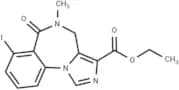
CAS:<p>Iomazenil is an antagonist and partial inverse agonist of benzodiazepine and potential therapy for alcohol abuse.</p>Formula:C15H14IN3O3Purity:98%Color and Shape:SolidMolecular weight:411.191,2-Dioleoyl-3-Stearoyl-rac-glycerol
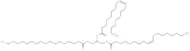
CAS:<p>1,2-Dioleoyl-3-stearoyl-rac-glycerol, a triacylglycerol, features oleic acid at the sn-1 and sn-2 positions and stearic acid at the sn-3 position. This compound is present in sunflower, corn, and soybean oils, as well as in ostrich oil.</p>Formula:C57H106O6Color and Shape:SolidMolecular weight:887.4512-POHSA
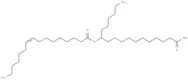
CAS:<p>Branched fatty acid esters of hydroxy fatty acids (FAHFAs) have emerged as significant regulators of metabolic processes, influenced by dietary changes such as fasting and high-fat diets, and are linked to improved insulin sensitivity in mice. These compounds typically feature a fatty acid chain, either C-16 or C-18 in length (for example, palmitoleic, palmitic, oleic, or stearic acid), esterified to a hydroxy fatty acid of similar length. A specific FAHFA, 12-POHSA, involves the esterification of palmitoleic acid to the 12th carbon of stearic acid. Notably, 12-POHSA levels are markedly higher in the serum of AG4OX mice, which exhibit enhanced glucose tolerance due to overexpression of the Glut4 glucose transporter in adipose tissue. Given the capacity of FAHFAs to enhance glucose tolerance, stimulate insulin secretion, and exert anti-inflammatory actions, 12-POHSA holds potential as a bioactive lipid implicated in managing metabolic syndrome and inflammation.</p>Formula:C34H64O4Color and Shape:SolidMolecular weight:536.93-Butynoic acid
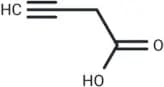
CAS:<p>3-Butynoic acid is an acyl coenzyme A dehydrogenase inhibitor that is a substrate for D-lactate dehydrogenase and can be used to study lactate metabolism.</p>Formula:C4H4O2Purity:98%Color and Shape:SolidMolecular weight:84.07Hypusine
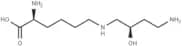
CAS:<p>Hypusine is an N-terminal amino alcohol derivative of Lys occurring in bovine brain &</p>Formula:C10H23N3O3Color and Shape:SolidMolecular weight:233.312-Stearoyl-sn-glycero-3-PC
CAS:<p>2-Stearoyl-sn-glycero-3-phosphatidylcholine (2-Stearoyl-sn-glycero-3-PC) is a lysophospholipid characterized by the presence of stearic acid at the sn-2 position. This compound has been identified in the myocardium of rabbits.</p>Formula:C26H54NO7PColor and Shape:SolidMolecular weight:523.68Selenocystine
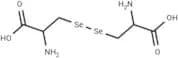
CAS:<p>Selenocystine, a broad-spectrum anticancer agent, effectively induces DNA damage, notably DNA double-strand breaks (DSBs), in HepG2 cells, showcasing</p>Formula:C6H12N2O4Se2Purity:98%Color and Shape:SolidMolecular weight:334.09N-Lignoceroyl Taurine
CAS:<p>N-Acyl taurines, such as N-lignoceroyl taurine, alongside various arachidonoyl amino acid conjugates like N-arachidonoyl dopamine and N-arachidonoyl-L-serine, have been identified in bovine brain and through mass spectrometry lipidomic studies in the brain and spinal cord of both wild-type and FAAH knockout mice. Notably, N-lignoceroyl taurine levels were found to be 23-26 times higher in FAAH knockout mice than in wild types, suggesting its degradation by FAAH, despite in vitro evidence showing FAAH hydrolyzes N-lignoceroyl taurine significantly slower than oleoyl ethanolamide. Additionally, N-acyl taurines with polyunsaturated acyl chains are known to activate TRPV1 and TRPV4 channels within the transient receptor potential (TRP) family of calcium channels.</p>Formula:C26H53NO4SColor and Shape:SolidMolecular weight:475.8Curcumin-β-D-glucuronide
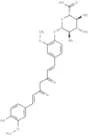
CAS:<p>Curcumin-β-D-glucuronide, a principal metabolite detected in hepatic tissue and portal blood following oral consumption of Curcumin, is utilized in colon cancer</p>Formula:C27H28O12Purity:98%Color and Shape:SolidMolecular weight:544.5N-Oleoyl Taurine
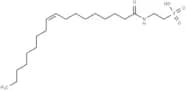
CAS:<p>N-Oleoyl taurine, an amino-acyl endocannabinoid isolated from rat brain, along with several arachidonoyl amino acids such as N-arachidonoyl dopamine and N-arachidonoyl serine, have been derived from bovine brain. Mass spectral lipidomics analysis of rat brain revealed a series of fatty acyl amides of taurine, marking the discovery of a new class of compounds. These compounds, found in the kidney, are known to activate members of the transient receptor potential (TRP) family of calcium channels, with N-Oleoyl taurine specifically potentially activating TRPV1 and TRPV4 channels.</p>Formula:C20H39NO4SColor and Shape:SolidMolecular weight:389.6N8-Acetylspermidine dihydrochloride
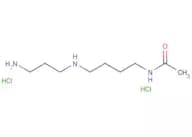
CAS:<p>N8-Acetylspermidine dihydrochloride is a polyamine that regulates ischemic cardiac apoptosis and resultant cardiac dysfunction.</p>Formula:C9H23Cl2N3OPurity:98% - 99.98%Color and Shape:SolidMolecular weight:260.2C24:1 1-Deoxyceramide (m18:1/24:1(15Z))
CAS:<p>C24:1 1-Deoxyceramide (m18:1/24:1(15Z)) is a lipid molecule that can be used in life science related research. The CAS number of C24:1 1-Deoxyceramide (m18:1/24:1(15Z)) is 1246298-58-7.</p>Formula:C42H81NO2Color and Shape:SolidMolecular weight:632.1Metformin hydroxy analog 2
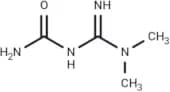
CAS:<p>Metformin hydroxy analog 2, an oxidation product of the biguanide metformin (1), represents a chemically transformed variant of the original compound, showcasing a modified molecular structure through the process of oxidation.</p>Formula:C4H10N4OColor and Shape:SolidMolecular weight:130.15Argininosuccinic acid disodium
CAS:<p>Argininosuccinic acid disodium, involved in the urea cycle's fourth step, is cleaved by argininosuccinate lyase (ASL) into arginine and fumarate.</p>Formula:C10H16N4Na2O6Purity:98%Color and Shape:SolidMolecular weight:334.2413-OAHSA
CAS:<p>13-OAHSA, a branched fatty acid ester of hydroxy fatty acids (FAHFAs), results from the esterification of oleic acid to 13-hydroxy stearic acid. It represents a significant component of the FAHFA family, most abundantly expressed in the serum of glucose-tolerant AG4OX mice that exhibit adipose tissue-specific overexpression of the Glut4 glucose transporter. Similar to other FAHFAs which are known to enhance glucose tolerance, stimulate insulin secretion, and exert anti-inflammatory effects, 13-OAHSA may play a pivotal role in managing metabolic syndrome and inflammation.</p>Formula:C36H68O4Color and Shape:SolidMolecular weight:564.915-deoxy-Δ12,14-Prostaglandin D2
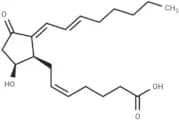
CAS:<p>15-deoxy-Δ12,14-Prostaglandin D2 (15-deoxy-Δ12,14-PGD2) is a PGD2 metabolite functioning as an agonist for the PGD2 receptor 2 (DP2), with a binding affinity (Ki) of 50 nM for the mouse DP2 receptor expressed in HEK293 cell membranes. It activates eosinophils with an EC50 of 8 nM and enhances the recruitment of steroid receptor coactivator-1 (SRC-1) to peroxisome proliferator-activated receptor γ (PPARγ), initiating PPARγ-mediated transcription at 5 µM concentration. Furthermore, it exhibits cytotoxicity towards L1210 murine leukemia cells with an IC50 of 0.3 µg/ml and displays weaker inhibition of ADP-induced platelet aggregation than PGD2, with an IC50 of 320 ng/ml.</p>Formula:C20H30O4Color and Shape:SolidMolecular weight:334.4561,2-Dipropionyl-sn-glycero-3-PC
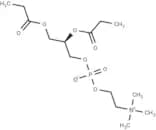
CAS:<p>1,2-Dipropionyl-sn-glycero-3-phosphocholine (PC) is a phospholipid characterized by the presence of propionic acid at its sn-1 and sn-2 positions. This compound has applications in the investigation of interactions between water and the phosphocholine headgroup in aqueous solutions.</p>Formula:C14H28NO8PColor and Shape:SolidMolecular weight:369.417-Phenyl trinor prostaglandin A2
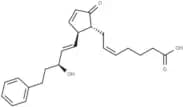
CAS:<p>17-Phenyl trinor prostaglandin A2 is a synthetic analog of prostaglandin [1].</p>Formula:C23H28O4Color and Shape:SolidMolecular weight:368.4739-POHSA
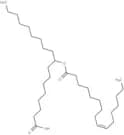
CAS:<p>Branched fatty acid esters of hydroxy fatty acids (FAHFAs) are recent discoveries in endogenous lipids that are influenced by dietary changes such as fasting and high-fat diets, showing a link with enhanced insulin sensitivity in mice. These compounds typically feature a C-16 or C-18 fatty acid (e.g., palmitoleic, palmitic, oleic, or stearic acid) bound to a hydroxy group on another C-16 or C-18 fatty chain. A specific FAHFA, 9-POHSA, consists of palmitoleic acid connected at the hydroxy stearic acid's 9th position. This molecule, in particular, exhibits notably increased levels in the serum of glucose-tolerant AG4OX mice, which express the Glut4 glucose transporter predominantly in their adipose tissue. Given the broader family of FAHFAs' roles in enhancing glucose tolerance, promoting insulin secretion, and exerting anti-inflammatory effects, 9-POHSA emerges as a potential bioactive lipid involved in managing metabolic syndrome and inflammation.</p>Formula:C34H64O4Color and Shape:SolidMolecular weight:536.882