Pharmaceutical and Veterinary Compounds and Metabolites
This category includes pharmaceutical compounds used for human and veterinary medicine, as well as their metabolites. These compounds are essential for studying drug efficacy, metabolism, and safety. At CymitQuimica, we offer a variety of pharmaceutical and veterinary compounds for research applications, ensuring compliance with regulatory standards and supporting the development of new treatments.
Found 2602 products of "Pharmaceutical and Veterinary Compounds and Metabolites"
Sort by
Purity (%)
0
100
|
0
|
50
|
90
|
95
|
100
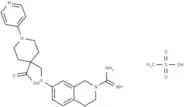
JTV-803 mesylate
CAS:<p>JTV-803 inhibits factor Xa (K(i) 0.019 µM, IC(50) 0.081 µM), 100x more selective vs thrombin, extends clotting times dose-dependently.</p>Formula:C23H31N5O6SPurity:98%Color and Shape:SolidMolecular weight:505.59OMDM-5
CAS:<p>OMDM-5 is a potent vanilloid receptor type 1 (TRPV1, EC50 = 75 nM) agonist, showing weak ligand activity at cannabinoid type 1 receptor (CB1, Ki=4.9 μM).</p>Formula:C26H44N2O3Purity:99.73%Color and Shape:SolidMolecular weight:432.64CAY10632
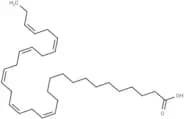
CAS:<p>Very long chain polyunsaturated fatty acids (VLCPUFA), notably present in the retina, sperm, and brain, have yet to be fully understood in terms of their biosynthesis and functional roles within these tissues. Recent research, particularly with the elongation of very long-chain FA-4 protein, indicates a distinct function for VLCPUFAs in retinal development and the progression of macular degeneration. CAY10632, a specific C32:6 VLCPUFA, while largely unexplored in its biological activities, is believed to play a role in maintaining normal function of photoreceptor cells in the retina.</p>Formula:C32H52O2Color and Shape:SolidMolecular weight:468.766(R)-Palmitoyl-(2-methyl)ethanolamide
CAS:<p>(R)-Palmitoyl-(2-methyl)ethanolamide (Me-PEA) acts as a competitive inhibitor against [3H]-AEA metabolism, exhibiting a K i value of 6.6 μM [1].</p>Formula:C19H39NO2Color and Shape:SolidMolecular weight:313.5261-Palmitoyl-2-Oleoyl-3-Stearoyl-rac-glycerol
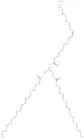
CAS:<p>1-Palmitoyl-2-oleoyl-3-stearoyl-rac-glycerol, a primary triacylglycerol in cocoa butter, features palmitic acid (at the sn-1 position), oleic acid (at the sn-2 position), and stearic acid (at the sn-3 position).</p>Formula:C55H104O6Color and Shape:SolidMolecular weight:861.41Palmitic acid calcium
CAS:<p>Calcium palmitate, a long-chain saturated fatty acid prevalent in animals and plants, induces the expression of glucose-regulated protein 78 (GRP78) and CCAAT/enhancer binding protein homologous protein (CHOP) in mouse granulosa cells. It is employed to establish a cell steatosis model [1] [2].</p>Formula:C16H32O2CaColor and Shape:SolidMolecular weight:275.46Hypogeic acid
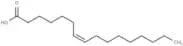
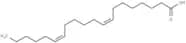
CAS:<p>Hypogeic acid is isolable from cultures of autotrophic bacteria linked to sulfate accumulation in biofilters [1].</p>Formula:C16H30O2Color and Shape:SolidMolecular weight:254.418(Z),14(Z)-Eicosadienoic Acid
CAS:<p>8(Z),14(Z)-Eicosadienoic Acid, an ω-8 C20:2 fatty acid, constitutes 0.19% of total fatty acids in human milk. In vivo, it is converted by desaturases into eicosatrienoic acids, known for their potent vasodilator properties. However, the physiological effects of 8(Z),14(Z)-Eicosadienoic Acid remain unexplored.</p>Formula:C20H36O2Color and Shape:SolidMolecular weight:308.506Prostaglandin B3
CAS:<p>Prostaglandin B3 (PGB3) is a secondary alcohol belonging to the prostaglandin B class, characterized by its relatively low affinity for human PPARγ, exhibiting a K_i value greater than 1 mM, in contrast to PGB1 and PGB2, which have K_i values of 26.28 ± 8.7 μM and 77 ± 37.7 μM, respectively [1].</p>Formula:C20H28O4Color and Shape:SolidMolecular weight:332.439-OxoODE
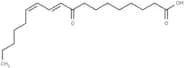
CAS:<p>9-OxoODE, formed through the oxidation of the allylic hydroxyl group in both 9(S)-HODE and 9(R)-HODE, is present in rabbit reticulocyte plasma and mitochondrial membranes as both 9- and 13-oxoODEs, constituting approximately 2% of the total linoleate residues. The majority of these oxidized linoleate residues are esterified to membrane lipids.</p>Formula:C18H30O3Color and Shape:SolidMolecular weight:294.411(Z),14(Z)-Eicosadienoic acid
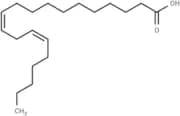
CAS:<p>11(Z),14(Z)-Eicosadienoic acid is an unsaturated fatty acid and metabolite that inhibits the binding of [3H]LTB4 to neutrophil modules (Ki=3 μm).</p>Formula:C20H36O2Purity:99.94%Color and Shape:SolidMolecular weight:308.56β-hydroxy Testosterone
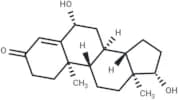
CAS:<p>6β-hydroxy Testosterone (4-Androsten-6β,17β-diol-3-one) is a 17β-hydroxy steroid, an androgen and endogenous metabolite.</p>Formula:C19H28O3Color and Shape:SoildMolecular weight:304.42C16 1-Deoxyceramide (m18:1/16:0)
CAS:<p>C16 1-Deoxyceramide (m18:1/16:0) is a lipid molecule that can be used in life science related research. The CAS number of C16 1-Deoxyceramide (m18:1/16:0) is 1246298-56-5.</p>Formula:C34H67NO2Color and Shape:SolidMolecular weight:521.9Lignoceroyl Ethanolamide
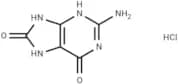
CAS:<p>Lignoceroyl ethanolamide, a fatty N-acyl ethanolamine within the endocannabinoid family, is derived from lignoceric acid, which is found in relatively high concentrations in rat cerebrospinal fluid. However, the specific function and significance of this metabolite remain unclear.</p>Formula:C26H53NO2Color and Shape:SolidMolecular weight:411.7158-Hydroxyguanine hydrochloride
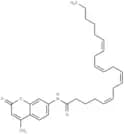
CAS:<p>8-Hydroxyguanine, generated through the oxidative degradation of DNA by the hydroxyl radical, serves as an indicator of oxidative stress in biological systems.</p>Formula:C5H5N5O2HClColor and Shape:SolidMolecular weight:203.6AMC Arachidonoyl Amide
CAS:<p>Arachidonoyl amide (AMC-AA) is a fatty acid amide among several that serve to quantify fatty acid amide hydrolase (FAAH) activity. FAAH, with its relative lack of selectivity, processes various amide head groups beyond ethanolamine, the head group of its primary endogenous substrate, anandamide (AEA). The interaction of AMC-AA with FAAH leads to the liberation of fluorescent aminomethyl coumarin, which has an absorption peak at 360 nm and emission at 465 nm. This fluorescence release facilitates the rapid and efficient assessment of FAAH activity through the utilization of either a standard cuvette or a microplate fluorometer.</p>Formula:C30H39NO3Color and Shape:SolidMolecular weight:461.6C22 Phytoceramide (t18:0/22:0)
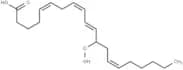
CAS:<p>C22 Phytoceramide (t18:0/22:0) is a lipid molecule that can be used in life science related research. The CAS number of C22 Phytoceramide (t18:0/22:0) is 164576-03-8.</p>Formula:C40H81NO4Color and Shape:SolidMolecular weight:640.1(+/-)12-HpETE
CAS:<p>(+/-)12-HpETE, a vasodilator, is a 12-hydroxyicosatetraenoic acid produced by lipoxygenase [1].</p>Formula:C20H32O4Color and Shape:SolidMolecular weight:336.47cis-9,10-Epoxystearic acid
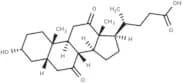
CAS:<p>cis-9,10-Epoxystearic acid (cis-9,10-Epoxyoctadecanoic acid) is an endogenous component in human urine and blood and can be produced from oleic acid by enzymic</p>Formula:C18H34O3Purity:99.93%Color and Shape:SolidMolecular weight:298.467,12-Diketolithocholic Acid
CAS:<p>7,12-Diketolithocholic acid, a bile acid, exhibits elevated plasma levels in patients experiencing cholestasis.</p>Formula:C24H36O5Color and Shape:SolidMolecular weight:404.54