Amino Acids (AA)
Amino acids (AAs) are the fundamental building blocks of proteins, playing a crucial role in various biological processes. These organic compounds are essential for protein synthesis, metabolic pathways, and cell signaling. In this category, you will find a comprehensive range of amino acids, including essential, non-essential, and modified forms, which are vital for research in biochemistry, molecular biology, and nutritional sciences. At CymitQuimica, we provide high-quality amino acids to support your research and development needs, ensuring accuracy and reliability in your experimental outcomes.
Subcategories of "Amino Acids (AA)"
- Amino Acid Derivatives(3,970 products)
- Amino Acid and Amino Acid Related Compounds(3,476 products)
- Amino Acids with Oxygen or Sulphur(168 products)
- Boc- Amino Acids(351 products)
- Fmoc Amino Acids(1,710 products)
Found 38286 products of "Amino Acids (AA)"
Sort by
Purity (%)
0
100
|
0
|
50
|
90
|
95
|
100
N-Methyl-3,3-diphenylpropylamine Acetate Salt
CAS:Formula:C16H19N·C2H4O2Molecular weight:225.34 60.05Icatibant Impurity 41 Trifluoroacetate (L-3-thienylalanine)
Formula:C59H89N19O13S·C2HF3O2Molecular weight:1304.54 114.024-(4-Diethylaminostyryl)-1-Methylpyridinium Iodide
CAS:Formula:C18H23N2·IMolecular weight:267.40 126.913-Hydroxy-4-((2-methoxy-5-methyl-4-sulfonatophenyl)diazenyl)naphthalene-2,7-disulfonate Sodium
CAS:Formula:C18H13N2O11S3·3NaMolecular weight:529.49 3*22.99glycine
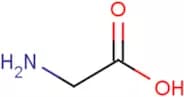
CAS:Glycine (2-Aminoacetic acid) is a non-essential amino acid and a fast inhibitory neurotransmitter, found in gelatin and silk fibroin and used as a nutrient.Formula:C2H5NO2Purity:99.39%Color and Shape:White Solid Crystalline PowderMolecular weight:75.07O-Succinylhomoserine
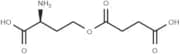
CAS:<p>O-Succinylhomoserine (O-Succinyl-L-homoserine) is an intermediate in the synthesis of cystathionine by E coli..</p>Formula:C8H13NO6Purity:≥98%Color and Shape:SolidMolecular weight:219.19L-glutamine
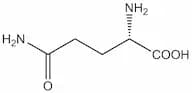
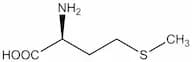
CAS:Amino acidFormula:C5H10N2O3Purity:≥ 98.0 % (HPLC)Color and Shape:PowderMolecular weight:146.14L-methionine
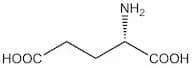
CAS:MethionineFormula:C5H11NO2SPurity:≥ 95.0 % (HPLC)Color and Shape:PowderMolecular weight:149.21L-glutamic acid
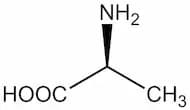
CAS:Glutamic acidFormula:C5H9NO4Purity:≥ 98.0 % (HPLC)Color and Shape:PowderMolecular weight:147.13L-alanine
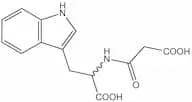
CAS:Amino acidFormula:C3H7NO2Purity:≥ 98.0 % (HPLC)Color and Shape:PowderMolecular weight:89.09N-malonyl dl-tryptophan
Nitrogen heterocyclic compoundFormula:C14H14N2O5Purity:≥ 98.0 % (HPLC)Color and Shape:PowderMolecular weight:290.28L-(+)-ergothioneine
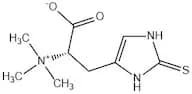
CAS:Nitrogen heterocyclic compoundFormula:C9H15N3O2SPurity:≥ 90.0 % (HPLC)Color and Shape:PowderMolecular weight:229.35-hydroxy l-tryptophan
CAS:Nitrogen heterocyclic compoundFormula:C11H12N2O3Purity:≥ 98.0 % (HPLC)Color and Shape:PowderMolecular weight:220.23L-aspartic acid
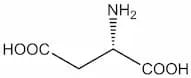
CAS:Amino acidFormula:C4H7NO4Purity:≥ 98.0 % (HPLC)Color and Shape:PowderMolecular weight:133.14-hydroxy l-isoleucine
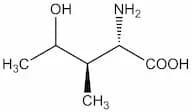
CAS:Amino acidFormula:C6H13NO3Purity:≥ 98.0 % (HPLC)Color and Shape:PowderMolecular weight:147.17L-asparagine
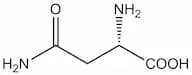
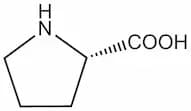
CAS:Amino acidFormula:C4H8N2O3Purity:≥ 98.0 % (HPLC)Color and Shape:PowderMolecular weight:132.12L-proline
CAS:Amino acidFormula:C5H9NO2Purity:≥ 98.0 % (HPLC)Color and Shape:PowderMolecular weight:115.13Γ-aminobutyric acid
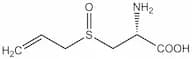
CAS:Amino acidFormula:C4H9NO2Purity:≥ 98.0 % (HPLC)Color and Shape:PowderMolecular weight:103.12L-(±)-alliin
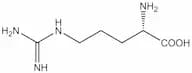
CAS:Organo-sulphur compoundFormula:C6H11NO3SPurity:≥ 95.0 % (HPLC)Color and Shape:PowderMolecular weight:177.22L-arginine
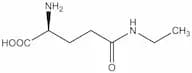
CAS:Amino acidFormula:C6H14N4O2Purity:≥ 98.0 % (HPLC)Color and Shape:PowderMolecular weight:174.2L-theanine
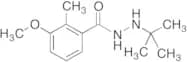
CAS:Acyclic amideFormula:C7H14N2O3Purity:≥ 98.0 % (HPLC)Color and Shape:PowderMolecular weight:174.2N'-tert-Butyl-3-methoxy-2-methylbenzohydrazide
CAS:Controlled Product<p>Applications N'-tert-Butyl-3-methoxy-2-methylbenzohydrazide is an intermediate used in the synthesis of methoxyfenozide; an active ingredient for the commercial production of certain insecticidal and pesticidal formulations.<br>References Shao, J., et al.: Xiandai Nongyao, 2, 12, (2003), Mao, W. T., et al.: Chin. Chem. Lett., 23, 1233 (2012)<br></p>Formula:C13H20N2O2Color and Shape:NeatMolecular weight:236.31N-Acetyl-S-(1-cyano-2-hydroxyethyl)-L-cysteine-d3 Dicyclohexylamine Salt (Mixture of Diastereomers)
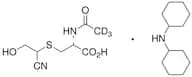
CAS:Controlled Product<p>Stability Hygroscopic<br>Applications A labelled metabolite of Acrylonitrile (ACN).<br>References Guengerich, F., et al.: Cancer Res., 41, 4925 (1981), Leonard, A., et al.: Mutation Res., 436, 263 (1999), Stadler, R., et al.: J. Agric. Food Chem., 52, 5550 (2004), Dybing, E., et al.: Food Chem. Toxicol., 43, 365 (2005), Rice, J., et al.: Mutation Res., 580, 3 (2005),<br></p>Formula:C20H32D3N3O4SColor and Shape:White To Off-WhiteMolecular weight:416.593-Hydroxy-4-methylaniline
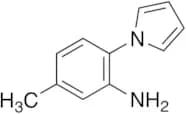
CAS:Controlled Product<p>Applications 3-Hydroxy-4-methylaniline<br></p>Formula:C7H9NOColor and Shape:NeatMolecular weight:123.155-Methyl-2-(1H-pyrrol-1-yl)aniline
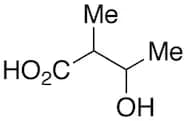
CAS:Controlled Product<p>Applications 5-methyl-2-(1H-pyrrol-1-yl)aniline (cas# 59194-21-7) is a useful research chemical.<br></p>Formula:C11H12N2Color and Shape:Orange Colour To Dark OrangeMolecular weight:172.2263-Hydroxy-2-methylbutanoic Acid
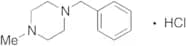
CAS:Controlled Product<p>Applications 3-Hydroxy-2-methylbutanoic Acid (cas# 473-86-9) is a compound useful in organic synthesis.<br></p>Formula:C5H10O3Color and Shape:Colourless To YellowMolecular weight:118.131-Methyl-4-(phenylmethyl)piperazine Hydrochloride
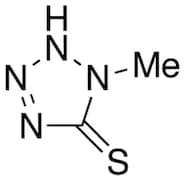
CAS:Controlled Product<p>Applications 1-Methyl-4-(phenylmethyl)piperazine hydrochloride is a useful synthetic intermediate.<br></p>Formula:C12H18N2·ClHColor and Shape:NeatMolecular weight:226.75N-Methyl-5-tetrazolethiol
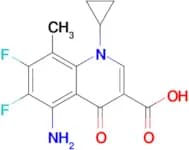
CAS:Controlled Product<p>Impurity Cefoperazone EP Impurity C<br>Applications N-Methyl-5-tetrazolethiol (Cefoperazone EP Impurity C) is an impurity of Cefoperazone.<br>References Kitson, T., et al.: Biochem. J., 175, 83 (1978), Elenbaas, R., et al.: Clin. Pharmacol. Ther., 32, 347(1982),<br></p>Formula:C2H4N4SColor and Shape:NeatMolecular weight:116.145-Amino-1-cyclopropyl-6,7-difluoro-8-methyl-4-oxo-1,4-dihydroquinoline-3-carboxylic acid
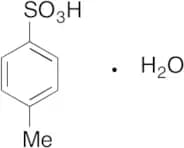
CAS:Purity:95+%Molecular weight:294.257995605468754-Methylbenzenesulfonic Acid Monohydrate
CAS:Controlled Product<p>Impurity Lisinopril EP Impurity B/ Anastrozole EP Impurity F<br>Applications 4-Methylbenzenesulfonic Acid Monohydrate (Lisinopril EP Impurity B) is used in the synthesis of resveratrol. Also used in the synthesis of oxane derivatives as antimalarial agents.<br> Not a dangerous good if item is equal to or less than 1g/ml and there is less than 100g/ml in the package<br>References Davis, M. et al.: Org. Prep. Proc. Int., 45, 304 (2013); Wang, X. et al.: J. Med. Chem., 56, 2547 (2013);<br></p>Formula:C7H8O3S·H2OColor and Shape:WhiteMolecular weight:190.22Ethyl 1-Thio-β-D-glucuronide
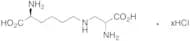
CAS:Controlled ProductFormula:C8H14O6SColor and Shape:NeatMolecular weight:654.615Lysinoalanine Hydrochloride Salt
CAS:Controlled Product<p>Applications This not naturally occurring amino acid was first observed after alkali treatment of different proteins. Synthetic Lysinoalanine was found to have a strong chelating ability for metals.<br>References Schwass, D., et al.: J. Agric. Food Chem., 32, 1377 (1984), Ahmed, M., et al.: J. Biol. Chem., 261, 8816 (1986), Wells-Knecht, K., et al.: Biochem., 34, 3702 (1995),<br></p>Formula:C9H19N3O4·xHClColor and Shape:NeatMolecular weight:306.193-Ethyl-3-methylheptane
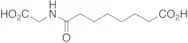
CAS:Controlled Product<p>Stability Volatile<br>Applications 3-ETHYL-3-METHYLHEPTANE (cas# 17302-01-1) is a useful research chemical.<br> Not a dangerous good if item is equal to or less than 1g/ml and there is less than 100g/ml in the package<br></p>Formula:C10H22Color and Shape:NeatMolecular weight:142.28Suberyl Glycine
CAS:Controlled Product<p>Applications Suberylglycine is one of the acylglycines, an important class of metabolites that have been used in the diagnosis of several inborn errors of metabolism (IEM).<br>References Costa, C., et al.: J. Pharmaceut. Biomed. Anal., 21, 1215 (2000), Garcia-Villoria, J., et al.: Clin. Biochem., 42, 2 (2009), Scalbert, A., et al.: Metabolomics, 5, 435 (2009),<br></p>Formula:C10H17NO5Color and Shape:Light Yellow To BrownMolecular weight:231.25Homocysteine-13C4,15N
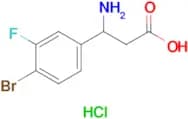
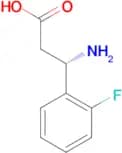
CAS:Controlled ProductFormula:C4H9NO2SColor and Shape:NeatMolecular weight:140.143-Amino-3-(4-bromo-3-fluorophenyl)propanoic acid hydrochloride
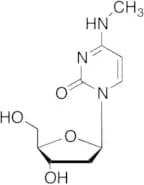
CAS:Purity:97.0%Molecular weight:298.54000854492192'-Deoxy-N-methyl-cytidine
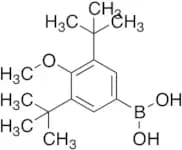
CAS:Controlled Product<p>Applications 2'-Deoxy-N-methyl-cytidine is a nucleotide derivative used as an analytical reagent.<br>References Dupret, D.: Biomed. Health. Res., 23(Human Genome Analysis), 244-255 (1998)<br></p>Formula:C10H15N3O4Color and Shape:NeatMolecular weight:241.244(3,5-Di-tert-butyl-4-methoxyphenyl)boronic Acid
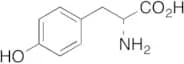
CAS:Controlled Product<p>Applications: (3,5-Di-tert-butyl-4-methoxyphenyl)boronic acid (cas# 233584-42-4) is a useful research chemical.<br></p>Formula:C15H25BO3Color and Shape:NeatMolecular weight:264.168D-Tyrosine
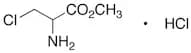
CAS:Controlled Product<p>Applications D-Tyrosine, the stereoisomer to L-Tyrosine (T899975), is an amino acid used in various organic syntheses for antibiotics. It is used in the synthesis of (-)-anisomycin, as well as BATSI (boronic acid transition state inhibitors) which act on β-lactamases. It has also been studied as an inhibitor of microbial growth on surfaces, reducing microbial attachment to hydrophillic glass and hydrophobic polypropylene surfaces.<br>References Li, Ji. et al.: Chin. Chem. Lett., 23, 647 (2012); Xu, H. et al.: Water Res., 45, 5796 (2011); Ke, W. et al.: Antimicrob. Agents Chemother., 55, 174 (2011);<br></p>Formula:C9H11NO3Color and Shape:NeatMolecular weight:181.19D,L-b-Chloroalanine Methyl Ester Hydrochloride
CAS:Controlled Product<p>Applications D,L-β-Chloroalanine Methyl Ester Hydrochloride (cas# 33646-31-0) is a compound useful in organic synthesis.<br></p>Formula:C4H8ClNO2·ClHColor and Shape:NeatMolecular weight:174.031-Chloro-3-methoxypropane
CAS:Controlled Product<p>Applications 1-Chloro-3-methoxypropane (cas# 36215-07-3) is a compound useful in organic synthesis.<br></p>Formula:C4H9ClOColor and Shape:NeatMolecular weight:108.57N-Methyl-p-tyramine
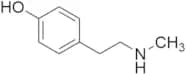
CAS:<p>Applications N-Methyl-p-tyramineúHCl (cas# 370-98-9) is a useful research chemical.<br></p>Formula:C9H13NOColor and Shape:BeigeMolecular weight:151.212,3-Diethyl-5-methylpyrazine-N4-oxide
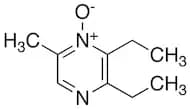
CAS:Controlled Product<p>Applications 2,3-Diethyl-5-methylpyrazine-N4-oxide (cas# 1076200-01-5) is a compound useful in organic synthesis.<br></p>Formula:C9H14N2OColor and Shape:NeatMolecular weight:166.22N-(2-Hydroxyethyl)glycine (~90%)
CAS:Controlled Product<p>Applications N-(2-Hydroxyethyl)glycine (~90%) (cas# 5835-28-9) is a compound useful in organic synthesis.<br></p>Formula:C4H9NO3Purity:>85%Color and Shape:NeatMolecular weight:119.12Calcium D-gluconate monohydrate
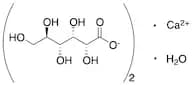
CAS:Controlled Product<p>Applications Calcium D-gluconate monohydrate (cas# 66905-23-5) is a useful research chemical.<br></p>Formula:C6H11O7·Ca·H2OColor and Shape:NeatMolecular weight:448.39N-Methyl-N-nitroso Urea-d5 (Wetted with water >20%)
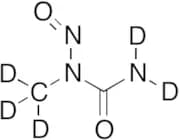
CAS:Controlled Product<p>Applications N-Methyl-N-nitroso Urea-d6 is the labelled form of N-Methyl-N-nitroso Urea (M325815), which is a precursor of Diazomethane. It has a cytotoxicity effect.<br>References Huggins, C., et al.: J. Exp. Med., 131, 321 (1970); Gullino, P.M., et al.: J. Natl. Cancer Inst., 54, 401 (1975)<br></p>Formula:C2D5N3O2Color and Shape:NeatMolecular weight:108.112-Methyl-d3-propyl-3,3,3-d3 Alcohol
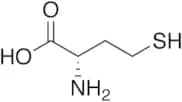
CAS:Controlled Product<p>Applications 2-Methyl-d3-propyl-3,3,3-d3 Alcohol (CAS# 72182-69-5) is a useful isotopically labeled research compound.<br></p>Formula:C4D6H4OColor and Shape:NeatMolecular weight:80.16L-Homocysteine
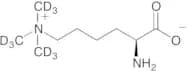
CAS:Controlled Product<p>Stability Air Sensitive<br>Applications L-Homocysteine is the hydrolysis product of adenosine (A280400), a purine nucleoside. Metabolic fate of L-Homocysteine is converted back to L-Methionine( M260440) via tetrahydrofolate.<br>References Liu, X.D., et al.: Org. BIomolec. Chem., 11, 4258 (2013); Chen, C.S., et al.: Nueroendocrinol., 97, 232 (2013);<br></p>Formula:C4H9NO2SColor and Shape:NeatMolecular weight:135.1848Nε,Nε,Nε-Trimethyllysine-d9
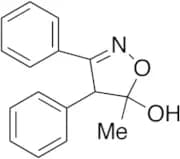
CAS:Controlled Product<p>Stability Very Hygroscopic<br>Applications 6-N-Trimethyl L-Lysine-d9, is the labeled analogue of Nε,Nε,Nε-Trimethyllysine, a metabolite and cofactor on the metabolic pathways.<br>References Rebouche C.J., et. al, J. Nutrition, 116(5), 751-759 (1986); Vaz, F.M et. al, J. Bio. Chem., 276(36), 33512-33517 (2001);<br></p>Formula:C9H11D9N2O2Color and Shape:NeatMolecular weight:197.324,5-Dihydro-5-methyl-3,4-diphenyl-5-isoxazolol
CAS:Controlled Product<p>Applications 4,5-Dihydro-5-methyl-3,4-diphenyl-5-isoxazolol is an intermediate for the preparation of Valdecoxib.<br></p>Formula:C16H15NO2Color and Shape:NeatMolecular weight:253.30Boc-4-azido-L-phenylalanine
CAS:Controlled Product<p>Applications Boc-4-azido-L-phenylalanine is used in the development of visible fluorogenic dyes for cellular imaging.<br>References Qi, Jianjun., et al.; Bioconjugate Chem., 22, 1758 (2011);<br></p>Formula:C14H18N4O4Color and Shape:NeatMolecular weight:306.321-Azido-2-(2-methoxyethoxy)ethane
CAS:Controlled Product<p>Applications 1-Azido-2-(2-methoxyethoxy)ethane (cas# 215181-61-6) is a useful research chemical.<br></p>Formula:C5H11NO2Color and Shape:NeatMolecular weight:145.16D-Lysine hydrochloride
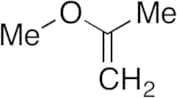
CAS:Controlled Product<p>Applications D-Lysine, HCl<br></p>Formula:C6H14N2O2·ClHColor and Shape:NeatMolecular weight:182.6492-Methoxypropene
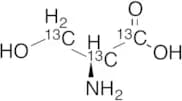
CAS:Controlled Product<p>Applications 2-Methoxypropene is used in the synthesis of Macrolactin A, a 24-member macrolide typically employed as an antibiotic. Also used in the synthesis of phenylalanine derivatives used as α4β1 and α4β7 receptor antagonists in the treatment of allergic asthma.<br>References Marino, K. et al.: J. Am. Chem. Soc., 12, 1664, (2002); Tilley, J. et al.: Bioorg. Med. Chem. Lett., 23, 1036 (2013);<br></p>Formula:C4H8OColor and Shape:NeatMolecular weight:72.11L-Serine-13C3
CAS:Controlled Product<p>Applications L-Serine-13C3 is the isotope labelled analog of L-Serine (S270995); a compound used in the synthesis of purines and pyrimidines as antibacterial/antifungal agents, as well as acting as a proteinogenic compound.<br>References Olivella, M. et al.: Bioorg. Med. Chem., 20, 6109 (2012)<br></p>Formula:C3H7NO3Color and Shape:NeatMolecular weight:108.07N,N-Diethyl-N’-1-naphthylethylenediamine Oxalate
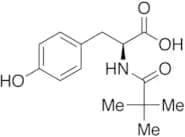
CAS:Controlled Product<p>Applications Used in the methods of detecting nitrotyrosine and aminotyrosine residues of peptides and proteins. Also used in the studies on the separation and photometric determination of antiepileptics.<br>References Quednow, B., et al.: Pharmazie, 34, 724 (1979),<br></p>Formula:C18H24N2O4Color and Shape:NeatMolecular weight:332.39N-Pivaloyl-L-tyrosine
CAS:Controlled Product<p>Stability Hygroscopic<br>Applications Used in peptide N-terminal amino acid determination.<br>References Prota, G., et al.: Biochimie, 53, 51 (1971),<br></p>Formula:C14H19NO4Color and Shape:NeatMolecular weight:265.38-methyl-4-(naphthalene-1-carbonyl)-1-oxa-4,8-diazaspiro[4.5]decane-3-carboxylic acid
CAS:Purity:95.0%Molecular weight:354.4060058593754-(4-fluorobenzoyl)-8-propyl-1-oxa-4,8-diazaspiro[4.5]decane-3-carboxylic acid
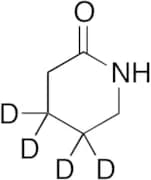
CAS:Purity:95.0%Molecular weight:350.3900146484375δ-Valerolactam-d4
CAS:Controlled Product<p>Applications δ-Valerolactam-d4 is a labeled analog of δ-Valerolactam (V091440), which is a useful synthetic intermediate. It is an intermediate used to synthesize Cenicriviroc (C256550), an experimental drug candidate for the treatment of HIV infection. It is also a starting material for a new route to hexahydrojulolidines, using intramolecular 1,4-cycloaddition.<br>References Potts, K., et al. J. Org. Chem., 58, 5040 (1993); Klibanov, O., et al.: Curr. Opinion Invest. Drugs, 11, 940 (2010);<br></p>Formula:C5H5D4NOColor and Shape:NeatMolecular weight:103.162-{8-[(tert-butoxy)carbonyl]-8-azabicyclo[3.2.1]octan-3-yl}acetic acid
CAS:Purity:98%Molecular weight:269.341003417968752-Bromo-3-methylbutenoic Acid Methyl Ester
CAS:Controlled Product<p>Applications 2-Bromo-3-methylbutenoic Acid Methyl Ester (cas# 51263-40-2) is a compound useful in organic synthesis.<br></p>Formula:C6H9BrO2Color and Shape:NeatMolecular weight:193.04L-Argininic Acid
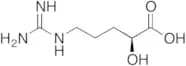
CAS:<p>Applications L-Argininic Acid is a guanidino compound, of which accumulation in tissue can cause Hyperargininemia.<br>References Deignan, J., et al.: Mol. Gen. Metab., 93, 172 (2008); Balz, D., et al.: Intl. J. Develop. Neurosci., 21, 75 (2003); Wyse, A., et al.: Brain Res., 923, 50 (2001)<br></p>Formula:C6H13N3O3Color and Shape:Off White SolidMolecular weight:175.19


































![8-methyl-4-(naphthalene-1-carbonyl)-1-oxa-4,8-diazaspiro[4.5]decane-3-carboxylic acid](/_next/image/?url=https%3A%2Fstatic.cymitquimica.com%2Fproducts%2F10%2Fthumb-webp%2FF525637.webp&w=3840&q=75)
![4-(4-fluorobenzoyl)-8-propyl-1-oxa-4,8-diazaspiro[4.5]decane-3-carboxylic acid](/_next/image/?url=https%3A%2Fstatic.cymitquimica.com%2Fproducts%2F10%2Fthumb-webp%2FF525715.webp&w=3840&q=75)

![2-{8-[(tert-butoxy)carbonyl]-8-azabicyclo[3.2.1]octan-3-yl}acetic acid](/_next/image/?url=https%3A%2Fstatic.cymitquimica.com%2Fproducts%2F10%2Fthumb-webp%2FF676183.webp&w=3840&q=75)